

We live in an age that prizes intellect, clarity, and knowing. Yet the story of Jia Luoyue — a man whose lifelong devotion to wisdom blinded him to its presence — offers a quiet rebellion against our modern obsession with appearances. What if wisdom is not something to be gained, but something we’ve lost the ability to notice? This story, deceptively simple, contains an awakening that cannot be learned through logic; it can only be seen through the heart.
The devotee who sought enlightenment: The parable revealing what truly counts as great wisdom
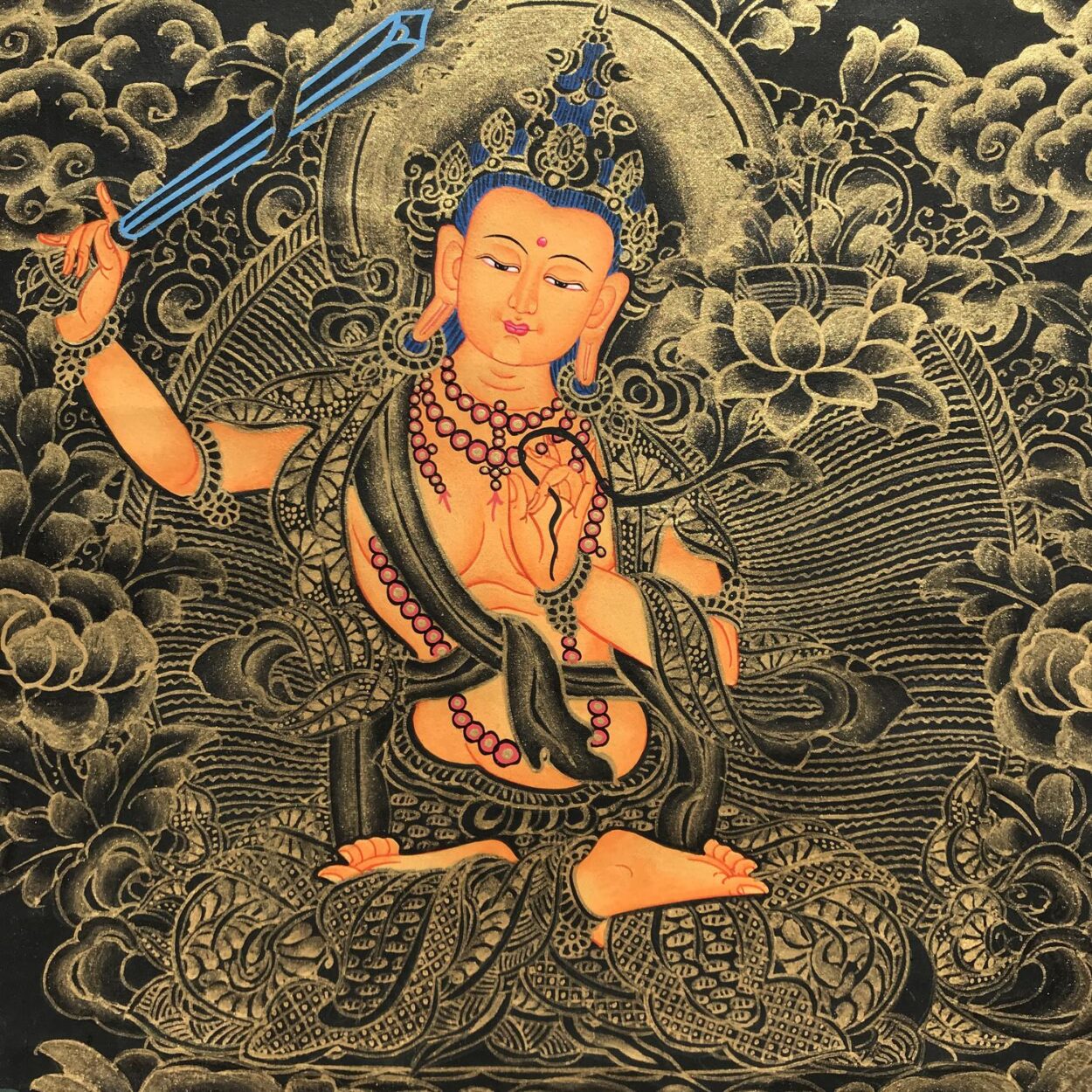
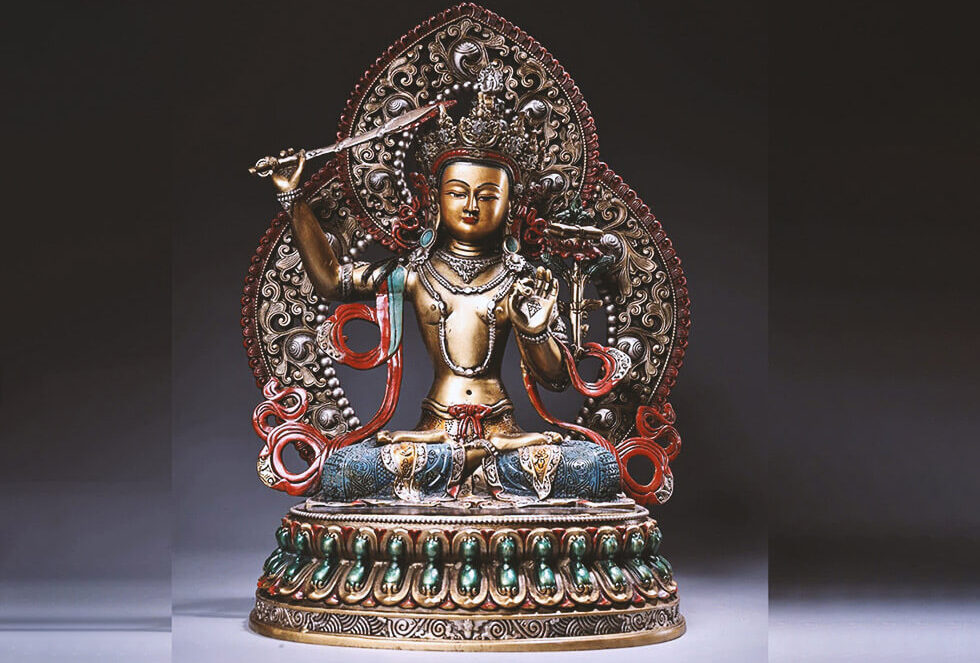
There once lived a man named Jia Luoyue, whose greatest aspiration in life was to gain the vast wisdom of Manjushri Bodhisattva — the embodiment of transcendent insight in Mahayana Buddhism. Whenever Jia Luoyue arrived at a temple, he would first wash his hands and face, arrange his robes, and bow deeply before the serene image of Manjushri Bodhisattva. The statue shimmered in soft candlelight: the Bodhisattva sat upon a lion of fearlessness, adorned with necklaces of precious ornaments, holding in his hand the sword of wisdom that cuts through ignorance.
Day after day, Jia Luoyue knelt before this image, joining his palms and reciting his heartfelt prayer: “Compassionate Manjushri Bodhisattva, your disciple Jia Luoyue earnestly requests you to appear and bestow blessings — to open great wisdom for your disciple.” To all who saw him, Jia Luoyue appeared sincere and devout. Yet as this story reveals, even sincere devotion may be clouded by subtle illusions.
The lavish offering
One day, hoping to deepen his merit, Jia Luoyue prepared a grand vegetarian feast for the monastic community. He placed rows of gleaming bowls filled with fragrant dishes, incense curling through the air like invisible silk. At the head of the hall, he positioned a tall, ornate chair — its wood polished, its cushions embroidered. That seat, he thought reverently, was for the Bodhisattva himself. Perhaps, if his heart were pure enough, the great Manjushri would accept his offering and bless him with wisdom beyond measure.
Soon, the monks arrived, humble and serene. Among them came a frail old man, his robe tattered, his face smudged with dust. He walked with a limp, leaning on a crooked staff. Seeing the splendid chair, the old man hobbled forward and began to sit down.
Jia Luoyue’s eyes widened in alarm. “This lofty seat,” he thought, “is meant for the dignified Manjushri Bodhisattva. How could a slovenly beggar sit there?” He hurried forward, lifted the old man gently but firmly, and said, “Venerable sir, please sit elsewhere. This seat is reserved for the Bodhisattva.” The old man nodded silently and shuffled aside. But moments later, he returned — and again, attempted to sit on the same chair.
Bewildered and slightly irritated, Jia Luoyue once again pulled him down. Then, a third time, the old man approached. Then a fourth. Then a fifth. Each time, Jia Luoyue’s patience thinned. “Why does he persist?” he wondered. “Does he not understand the sacredness of this place?” The strange scene repeated seven times. Finally, the old man sighed, limped to a corner, and sat quietly on the floor to eat his meal. Jia Luoyue, relieved that decorum had been restored, continued with the ceremony.
A dream and a revelation
That night, exhausted from the day’s activity, Jia Luoyue fell into a deep sleep. In the luminous realm of his dream, he suddenly saw Manjushri Bodhisattva standing before him, radiant as the morning sun. The Bodhisattva’s voice was calm but piercing: “Jia Luoyue, do you not recite day and night, hoping to see me? I came today to accept your offering. Yet each time I sat upon the chair you prepared, you pulled me down — seven times. To prevent you from giving rise to greater afflictions, I finally chose a corner to take the meal.”
Jia Luoyue’s heart froze. He awoke with a start, sweat on his brow, his mind flooded with realization. The lame old man — the one he had dismissed, the one he had deemed unworthy — had been Manjushri Bodhisattva himself, appearing in humble form to test his discernment. The shame struck him like a thunderclap. “Alas,” he cried, “because of my habit of judging by appearances, I failed to recognize the sacred presence before my very eyes!”
That night, he bowed toward the direction of the temple, tears wetting his robe. The great Bodhisattva, in her infinite compassion, had appeared not in splendor, but in humility — revealing that true wisdom is not about what we see, but how we see.
Beyond appearances: The hidden nature of wisdom
In Buddhist philosophy, Manjushri’s sword symbolizes the power to cut through delusion and dualistic thought — to see beyond distinctions of high and low, beautiful and ugly, worthy and unworthy. Jia Luoyue’s error was not malice, but ignorance — the subtle kind that hides behind virtue. He believed wisdom could be granted like a blessing, descending from the heavens upon a chosen devotee. Yet true wisdom arises only when the mind itself becomes mirror-clear, free from the dust of judgment.
In mistaking outer appearance for inner truth, Jia Luoyue revealed the very ignorance that the Bodhisattva’s sword is meant to sever. This parable recalls an ancient teaching from the Vimalakirti Sutra, where a Bodhisattva says, “To see all beings as equal is to see the Tathagata. To see without discrimination is to see with the eye of wisdom.”
Manjushri’s manifestation as a beggar was a living sutra — an enacted lesson. For one who seeks enlightenment, every encounter is a test of vision: Can we recognize the divine in what seems lowly? Can we see wisdom in the disheveled and the ordinary?
The quiet lesson of Jia Luoyue
The story of Jia Luoyue teaches that wisdom is not measured by scholarship, rituals, or even sincerity of devotion. These are the vessels — but not the content. True wisdom is recognition — the ability to see the sacred thread that runs through all forms of existence. It is the awareness that the Bodhisattva may appear in rags, in strangers, in discomfort, or in contradiction.
When our minds are filled with expectation — waiting for wisdom to appear in the way we imagine — it often passes us by, disguised as something unremarkable. In realizing this, Jia Luoyue’s prayer was finally answered: the Bodhisattva did bestow great wisdom upon him — not through celestial light, but through a painful awakening to his own blindness.
The sword of seeing clearly
What, then, truly counts as great wisdom? It is not intellect, nor ritual piety, nor the accumulation of teachings. It is the simple, steady clarity that sees all things without prejudice. It is to look at the beggar and see the Bodhisattva. To see the ugly and recognize beauty. To face the ordinary and sense the infinite.
When the mind ceases to divide the world into worthy and unworthy, sacred and profane, wisdom dawns naturally — like the morning sun breaking through the mist. And in that moment, one understands what Manjushri’s sword truly cuts: not the world, but the illusion that separates us from it.
Conclusion
The story of Jia Luoyue is not merely a parable of faith — it is a mirror held up to every seeker’s heart. In a world obsessed with appearances, credentials, and hierarchies of value, the tale reminds us that wisdom does not conform to our expectations of form or prestige. To possess great wisdom is not to know more, but to see rightly — to meet each moment, each person, and each challenge without the veil of judgment. As the Chan (Zen) masters would say: “When you meet the Buddha on the road, bow deeply. When you meet a beggar on the road — bow deeper still.”
Translation by Joseph Wu
Follow us on X, Facebook, or Pinterest
