
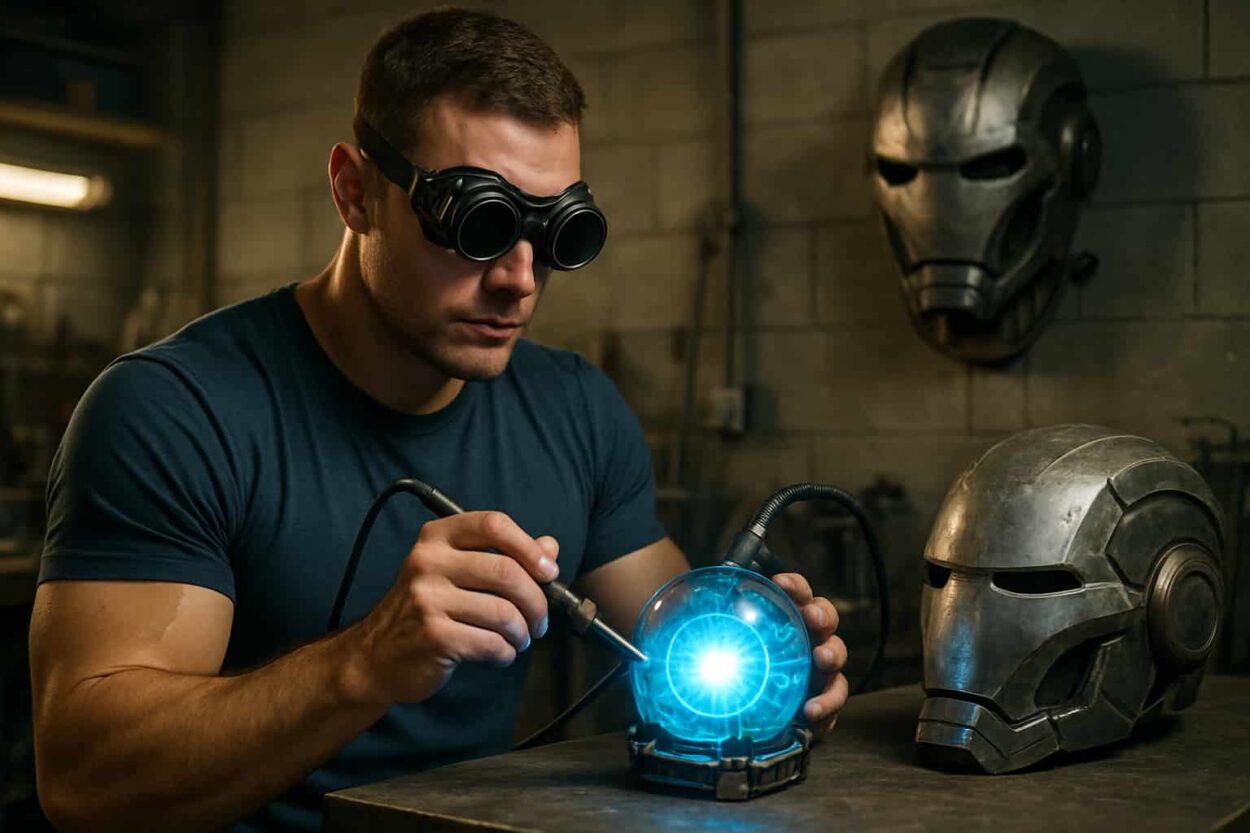
His videos are going viral on YouTube. There is a division between fans, believers, and skeptics about whether it’s possible to build a real-life Iron Man suit.
Late in the evening, a manifold of orange flame flickers across the corrugated steel walls of a small workshop. The air is heavy with the smell of welding smoke and the hiss of hydrogen under pressure. There, with one hand adjusting the mounts of a suit of armour and the other calibrating a thruster array, stands a man whose ambition brings to mind the comic-book dreams of flight, power, and an individual transformed.
He is Alex Burkan (also appearing as Alex Lab on social media), a Russian engineer who claims to have built a “real-life” suit inspired by Iron Man — complete, he says, with an onboard hydrogen reactor, carbon-fibre plating, repulsor-style thrusters and a complete exoskeleton support system. Interesting Engineering+2UNILAD+2
The story appeals in its daring: in an era when engineering marvels are typically announced by governments or large corporations, here is one man, working from a modest workshop, turning fantasy into hardware. And yet the narrative also invites skepticism: Is this suit truly operational, or is it a cinematic spectacle? Does the “hydrogen reactor” deliver viable power? What are the broader ethical, technical, and cultural implications when one person claims to approach the boundary between science fiction and reality?
In this article, we trace the project’s background, investigate competing perspectives, and explore the broader frame of power, ethics, and public perception this venture illuminates.
The origins of the project and the technical context of building a real-life Iron Man suit
Burkan’s online presence began years ago, with YouTube videos documenting his explorations in composite materials, 3-D printing, and hobby hydrogen experiments.
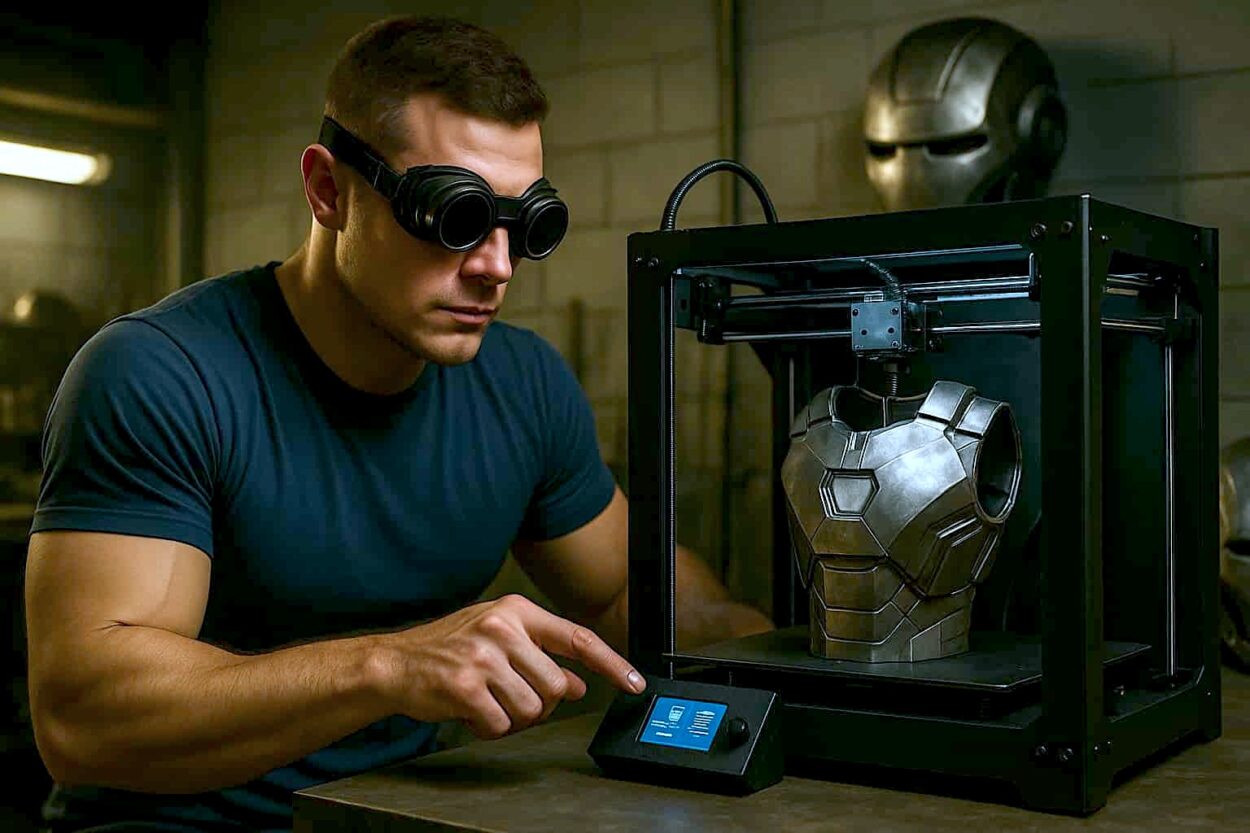
According to his channel, he builds metal shells, reinforces them with carbon fibre, and layers on actuator systems and thrusters.
A 2024 article by UNILAD noted that the project has spanned six years, built “from the comfort of his own garage … with a hydrogen reactor” claimed to power the suit. UNILAD A piece in Interesting Engineering described the effort as “more than cosplay” — highlighting a repulsor-blaster test and spoke of exosuit elements. Interesting Engineering
From an engineering perspective, the barrier that draws the most attention is the energy/power challenge: To build a wearable suit capable of sustained mobility (especially with flight or heavy actuation), one needs a high power-to-weight ratio, efficient thermal management, structural integrity, and a control system to coordinate motion. Many existing exoskeletons, whether for industrial or medical use, are tethered or limited by weight and power supply. The idea of a “personal hydrogen reactor” suggests Burkan is attempting to leapfrog conventional battery limitations by using an electrolyser + hydrogen combustion approach (HHO) to deliver greater energy density.
In short: the ambition is real. The challenge is enormous. The fact that this project is individually led rather than corporate-backed gives it a certain romance, but also invites scrutiny.
The case in favor: Why some believe there is substance here
Advocates of Burkan’s project argue that his work demonstrates unexpected avenues for individual innovation in advanced technologies. For one, the online documentation — videos of prototypes, thruster firings, exoskeleton components — provides at least a visual trail that many hobby projects lack. The Interesting Engineering article described an experimental repulsor/torch reaching 3,000 °C using an HHO chamber. The YouTube channel shows step-by-step builds, which adds credibility compared to purely speculative claims.
Moreover, in a cultural moment where maker-culture and democratization of technology are increasingly potent, this project fits a narrative: one person, driven by vision and persistence, challenging the conventional gatekeepers of advanced engineering. The fact that Burkan offers blueprints and community-led growth (“My blueprints, PDF guides, and 3D models are available for channel members”) underscores a certain openness. (See Alex’s official youtube.com Channel)
The ethical potential here also draws interest: a suit of this kind could — if genuinely operational — be used for rescue operations, hazardous-material work, disaster relief, or extravehicular mobility in industrial contexts. In that sense, the ambition is not purely spectacle but touches on mission-critical applications.
Finally, there is the symbolic power: when an individual builds what has previously been narrative fodder for fiction (the Iron Man suit), we are forced to ask how technological ambition intersects with human aspiration, identity, and the mythos of power. This is not merely a gadget: it is a story about who builds machines, who has access, and what it means to embody power.
The case against: Sources of skepticism and unanswered questions
And yet. The sceptics are loud. On Reddit, for example, one commenter writes rigidly:
“A personal hydrogen reactor? Prove it.” (Read the post on Reddit)
Another writes: “Sounds fake to me.”
These are not trivial concerns. First: the claim of a compact hydrogen reactor delivering sufficient power for flight or heavy actuation remains extraordinary. Hydrogen fuel cells or combustion systems in small form remain highly complex, particularly when factoring in weight, thermal management, fuel storage, safety, and overall durability. The fact that most video demonstrations focus on brief bursts or thruster tests rather than sustained flight suggests that the system might still be far from full operational capability.
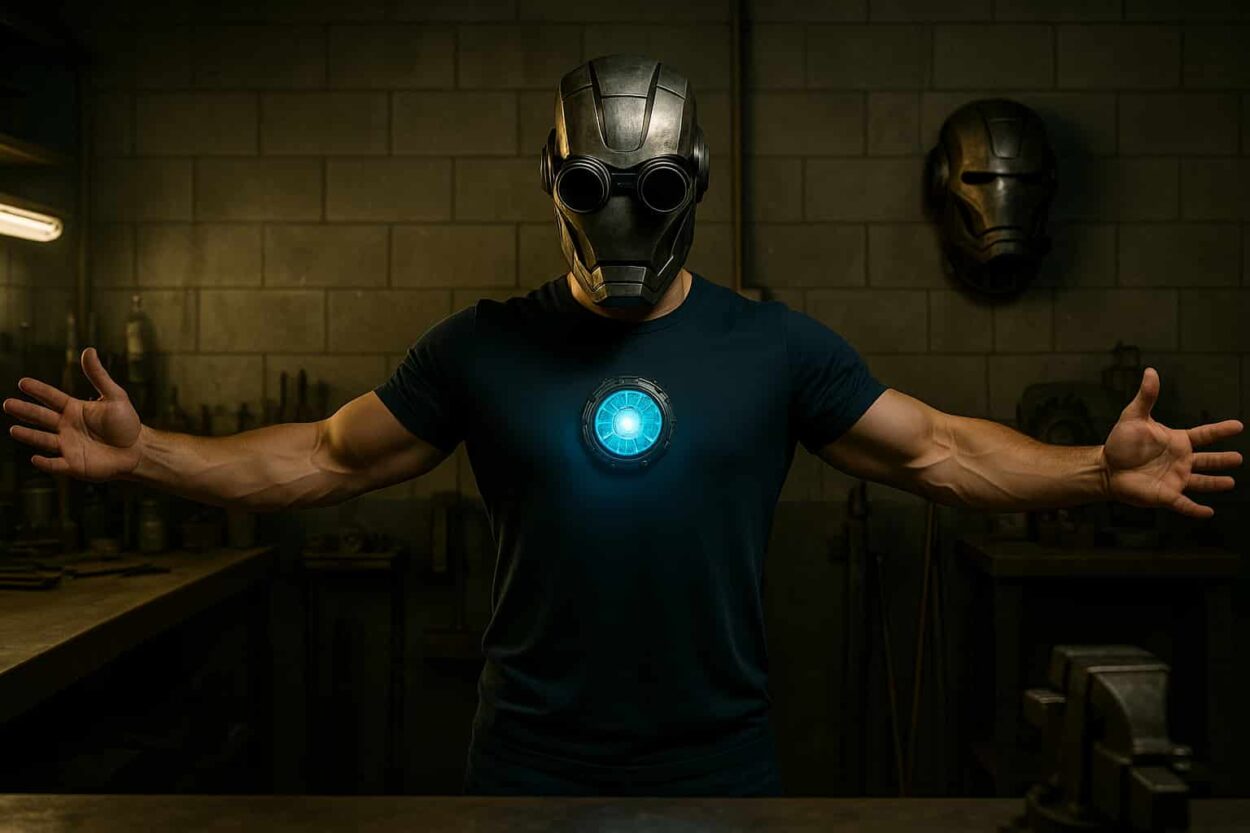
Second: many of the visual demonstrations could be theatrical. Flame bursts, glow-displays, and thruster firings look spectacular on film, but without third-party validation, it is difficult to assess how much of the system is fully functional, repeatable, and controllable under real-world conditions. There is a gap between “proof of concept” and “deployable system” — and observers argue the gap remains large.
Third: media framing and viral spread amplify spectacle and may gloss over realistic constraints. The UNILAD piece, for instance, while enthusiastic, acknowledges the most dramatic claims (“real-life Iron Man” “personal hydrogen reactor”) without deeply interrogating the engineering trade-offs.
Similarly, articles may not situate the project within rigorous peer-review or independent testing frameworks.
Fourth: if the suit were near-deployable for combat or rescue, one expects more formal partnerships, funding, safety certification, and institutional backing, none of which appear publicly documented at scale. That raises questions of scale, feasibility, and commercialisation.
In short: The claims are bold. The documentation is promising. But the full leap from home-brew prototype to operational power armor remains unproven.
The broader cultural, political, and ethical implications
Whether the suit succeeds or stalls, it lives at the intersection of technology, media, and power — and thereby invites a range of reflections.
Media framing and myth-making
The narrative of “one man builds an Iron Man suit” plays into the mythos of individual genius, startup-style disruption, and tech utopia. Viral videos emphasise spectacle, which draws attention but may sideline serious engineering scrutiny. The public appetite for “superhero brought to life” may inflate expectations and obscure limitations.
Power and personal empowerment
A suit of powered armour is as much a symbol as a machine. It raises questions: Who is empowered when such technology becomes accessible? If one person — possibly with modest resources — can approach this threshold, what then of regulation, safety, military, or non-state actors? The technology of personal armour touches on defence, deterrence, law enforcement, and even vigilantism.
Ethical and regulatory dimensions of building a military grade armoured suit
A personal suit with thrusters, high-temperature combustion, potential flight, or heavy loads introduces safety risks: structural failure, fuel explosions, uncontrolled flight, and use in hostile scenarios. If this becomes commercial or replicable, what regulatory frameworks govern it? There is an analogy to drones: rapid personal adoption outpaces regulation, and powered armour might follow a similar trajectory.
Innovation and access
On the positive side, the project embodies a democratising impulse: one maker, open-source blueprints, community engagement. That challenges the notion that advanced hardware is only the purview of industrial labs. But it also begs the question of who funds, certifies, and legitimates such technology, and whether the maker ethos can align with real-world safety and scalability.
Military implications of the Russian garage mechanic’s Iron Man suit
Even if the suit is not yet fully functional, the idea of a powered armour system is of clear interest to defence agencies. The cross-over between entertainment (Iron Man, superhero lore) and real engineering is more than novelty — it is a prototyping possibility. If the barrier of portable power falls, many downstream systems open up.
Conclusion: A reflection, not a verdict
In the steel-lit workshop of Alex Burkan’s garage, we witness something both familiar and strange: a project born of curiosity, persistence, and audacity. A suit of armour, once confined to comic-book panels, is being assembled piece by piece. And yet the narrative remains unfinished: The suit may fire thrusters, it may glow, and it may hum — but the question remains whether it can step into the world as a deployable machine of power rather than a viral spectacle.
What we gain from this story is not a definitive answer about whether the suit “works,” but a mirror held up to our age: where individual makers challenge assumptions, where media frames blur the line between possibility and hype, where questions of access, regulation, and power loom large.
The vision of a person donning armour that grants flight and strength may yet remain aspirational — but in the meantime, it pressures us to ask: when does ambition cross into responsibility? When does spectacle become engineering? And when does the myth of “Iron Man” become a question of real-world ethics and governance?
For the reader, the choice remains open. One can root for the individual engineer, for the democratization of advanced hardware, for innovation on the edges. Or one can remain cautious, demanding proof of durability, repeatability, and safety.
The story of the suit is, therefore, not just about metal and hydrogen — it’s about belief, technology, and the power of one person to challenge the boundaries of what’s possible.
Follow us on X, Facebook, or Pinterest
