
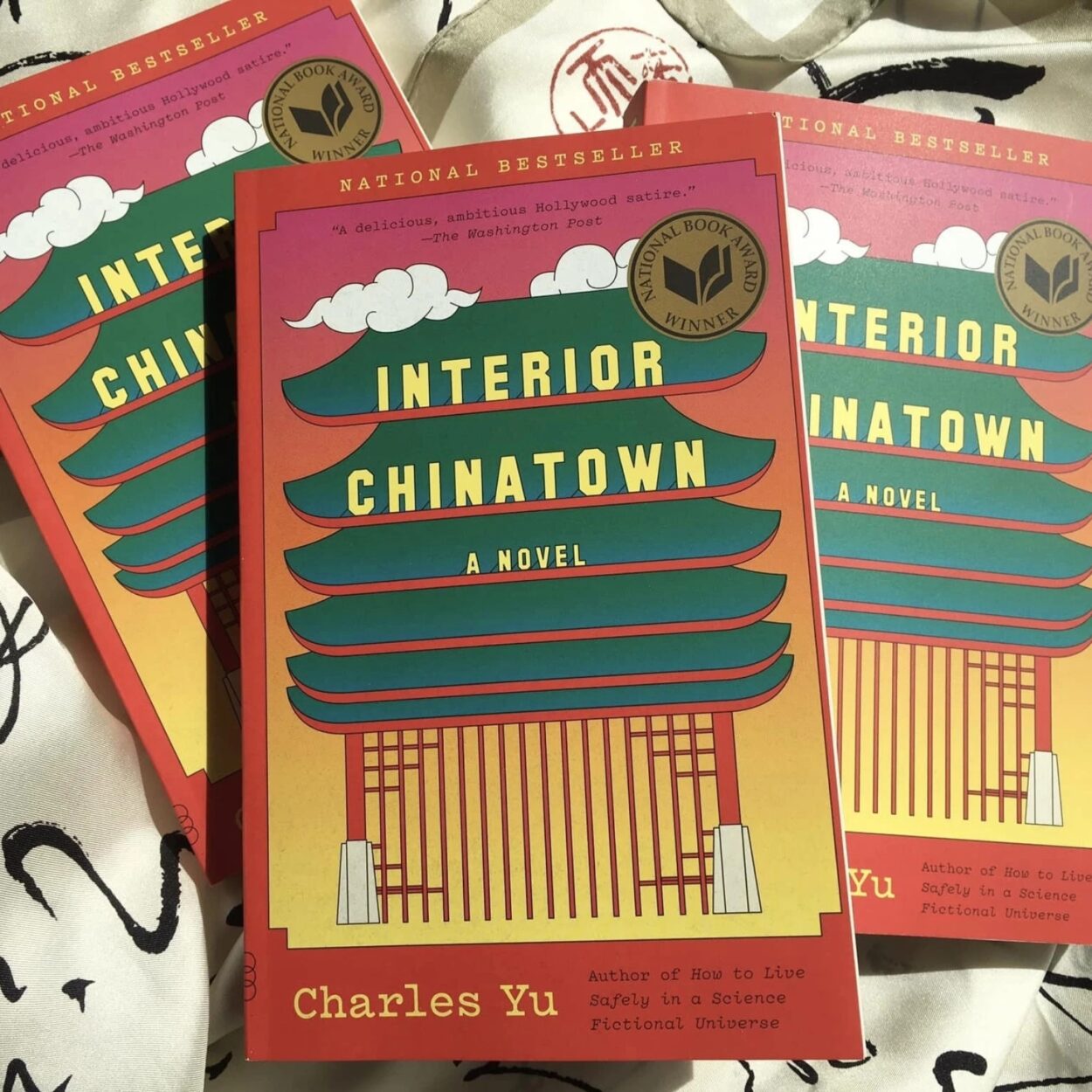
The popular Hulu and Disney+ series Interior Chinatown is adapted from Charles Yu’s 2020 National Book Award-winning novel of the same name. This Taiwanese-American author is gaining increasing attention in American literature and film.
Prior to winning the National Book Award, Charles Yu had already published three works — Third-Rate Superhero, The Time Machine and the Vanished Father, and Please, Thank You, I’m Sorry. His novels and essays have appeared in publications such as The New Yorker, The New York Times, and The Atlantic. He also participated in writing the hit HBO series Westworld, receiving two nominations for the Writers Guild of America Award (WGA Award). FX and AMC have also aired series with scripts written by Charles Yu.
However, Charles Yu always downplays these impressive achievements: ” I don’t know why I am chosen,” “Just lucky,” “Sales are so-so.” His humility is strikingly similar to the world he depicts. He never writes about heroes who save the world, but about ordinary people struggling to survive.
Stories for immigrants and families
Charles Yu’s works are diverse in form and highly experimental, yet they always revolve around the same core: family, parent-child relationships, and the identity anxieties of immigrants and their descendants. His characters are often marginalized, striving to find their place in mainstream society, a true reflection of many Asian immigrant families.
This creative axis was not deliberate; it stemmed from an inner drive to write. Charles Yu states that if you tell your own family story — for example, if your parents are immigrants from Taiwan — you’ll find that it’s actually the most interesting story.
When Yu truly began writing about his parents’ real experiences, he discovered that it was precisely the content people most wanted to read and that it resonated most with them. When a story is “sincere” enough, people are very willing to read. He advises young people who want to pursue writing as a career to have a strong passion for the creative process itself, rather than to worry about whether it’s enough to make a living.
A father’s perspective
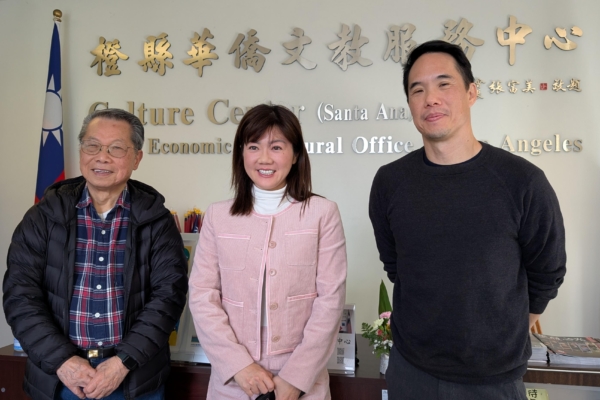
Charles Yu’s father, Mingchuan Yu, arrived in the U.S. as a student in 1965 and eventually settled in Los Angeles. It was an era when Taiwanese immigrants generally faced financial difficulties and uncertain futures. Therefore, Mingchuan Yu always believed that “ the STEM field offered better prospects and a more stable life,” and inevitably held reservations about Charles Yu’s dedication to a literary career.
Charles Yu displayed exceptional talent from a young age, and Mingchuan Yu recalls that his son took an IQ test at age five, and the results showed his score “exceeded the upper limit.” However, intelligence doesn’t guarantee a traditional career path. After growing up, Charles chose to study law and become a lawyer, which initially brought his parents some peace of mind. Despite working as a junior lawyer during the day, he still managed to engage in his passion for writing at night.
“Junior lawyers in the U.S. have very long working hours, sometimes not getting home until 2 or 4 a.m., yet he still managed to write a book.” Mingchuan Yu was proud of his son’s perseverance but also felt a pang of sadness.
Navigating between ideals and reality
Charles Yu began writing poetry during his university years but never considered earning a living from it. He knew all too well that literature couldn’t sustain a livelihood. Even after publishing books, his income stream remained unstable until about 10 years ago, when he began working as a television screenwriter. His life gradually stabilized after he resigned from his law practice and devoted himself to full-time writing.
He frankly admits that making a living solely through writing was far from easy, and he couldn’t support his family that way for very long. Charles Yu feels fortunate to have become a screenwriter in the film and television industry, and his next project will be a science fiction novel.
Mingchuan Yu witnessed all his son’s struggles and uncertainties on his chosen creative path. However, he always supported his son’s efforts towards achieving his ideals. Fortunately, Charles Yu persevered and forged his own path in writing. His younger brother, Kelvin, also won an Emmy Award for Outstanding Animated Program for his involvement in animation production and screenwriting. Seeing his sons establish themselves in their respective fields, Mingchuan Yu is finally at ease.
Establishing a literary award to encourage Taiwanese writers
Charles Yu has also founded the “Betty L. Yu & Jin C. Yu Creative Writing Prizes” in his parents’ names to encourage American and non-American Taiwanese writers to create works related to Taiwan — novels, poetry, essays, and other genres. The award is divided into high school, college, and adult categories. Winning works will be published, providing creators with exposure and opportunities for community interaction, thus giving back to their parents’ homeland, Taiwan, and encouraging more young people to engage in creative writing.
From a Taiwanese immigrant father who came to the U.S. in the 1960s to his son, who writes about Asian experiences in literature and film, Charles Yu’s story is not just about personal success, but a cross-generational immigrant narrative. He uses humor, absurdity, and tenderness to create a space for ordinary people who are accustomed to silence — those who strive to live in a foreign land but are never treated as protagonists. This is the most authentic and moving chapter in the development of Taiwanese immigrants in the United States. Charles Yu will continue to create and write about this generation’s collective memory.
Translated by Patty Zhang and edited by Maria
Follow us on X, Facebook, or Pinterest
