
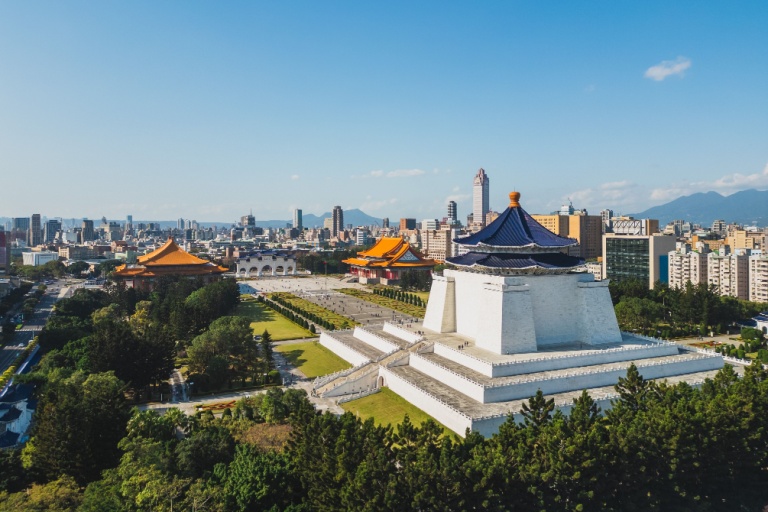
Earlier this year, a man from Beijing returned from Taiwan saying: “People there live with real dignity.” His observation drew attention online. Now, a new account has emerged — this time from a female university professor from Wuhan. The trip moved her so deeply that her eyes were often filled with tears.
She had once believed that mainland China was already a well-developed civilization. But during her trip, she noticed striking differences. “Only now do I understand what the true gap [between China and Taiwan] really means,” she said, realizing the difference was not just material, but in the dignity, civility, and harmony of daily life.
Small acts reveal the heart of a society
According to a video posted on October 9 by a Twitter user, a female university professor from Wuhan reflected: “I just came back from Taiwan, and I still haven’t recovered from the shock in my heart. I’ve taught at a university in Wuhan for more than twenty years. I always thought we were doing pretty well — skyscrapers rising higher and higher, new subway lines opening one after another. But this time in Taiwan, I realized the difference isn’t how tall the buildings are. It’s how warm people’s hearts are.”
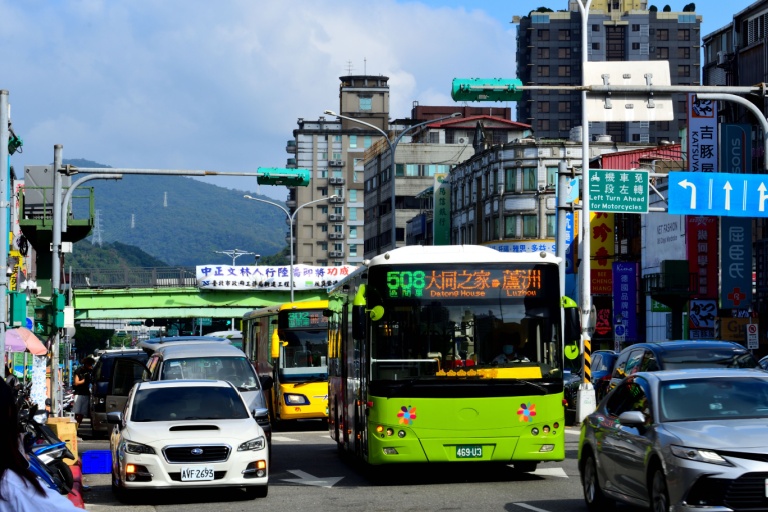
For example, on a Taipei bus, the priority seats stayed vacant. No one rushed to sit there. People preferred to stand, saving the seats for those in need. When a mother carrying a baby boarded, three or four passengers stood up at once to offer their seats. “It happened so naturally,” she said. “As a teacher, I even felt a little ashamed.” To her surprise, on escalators, everyone instinctively stood to the right, leaving the left side clear for those in a hurry. No signs. No reminders. It was simply the way people behaved — naturally, without being told.
One evening in Ximending, she got lost while looking for an old pastry shop famous for its pineapple cakes. A young man selling bubble tea heard her struggling with her phone map. He simply closed his stall and walked with her for nearly 20 minutes, escorting her all the way to the shop. “I wanted to buy him a drink to thank him,” she said. “He just smiled and waved his hand, saying: ‘It’s nothing — welcome to Taiwan.’ At that moment, my eyes really filled with tears.”
Another time, she boarded the wrong carriage on the high-speed rail. Feeling flustered, she didn’t know what to do. Several strangers gathered around her — one checked her ticket, one looked up the timetable, and another comforted her not to worry. They even accompanied her off the train to make sure she found the correct platform before leaving. “That kind of care between strangers,” she said, “felt just like the neighborhood warmth I remember from childhood.”
Night markets were packed with people, yet the ground was spotless — not a single cigarette butt in sight. Trash sorting was meticulous, even separating different kinds of food waste. Public restrooms always had toilet paper. Paper towels by the sink never ran out. “These tiny details may seem insignificant,” she said, “but they show what it means for civilization to be deeply ingrained.”
She continued: “We always talk about catching up, about GDP and skyscrapers. But in Taiwan, I saw that ‘gentleness, kindness, courtesy, thrift, and humility’ are not just words in textbooks — they live in people’s everyday actions. This heartfelt kindness, this politeness and consideration for strangers — that’s what we truly should learn.” The woman mused: “Skyscrapers can be built overnight. But the warmth of humanity and the civility of a society take generations to nurture and pass on. This trip to Taiwan made me, a teacher, become a student again.” Another female visitor recounted a small but telling experience that left a lasting impression on her during a visit to Taiwan.
After arriving at the airport, she needed transportation into the city. Taking a taxi would have been quite expensive, so she went to the airport bus counter instead. The ticket clerk patiently explained which bus to take and informed her that senior travelers were eligible for discounted fares. She purchased the ticket and continued on her way.
Later, after checking into her hotel, she realized she had accidentally left her credit card behind at the bus counter. The hotel staff immediately contacted the bus station on her behalf. The card had already been secured and carefully kept. When she asked whether it could be delivered to the city bus terminal near her hotel, the staff agreed without hesitation. The credit card was returned to her safely and intact.
She later reflected that it was not the system’s convenience alone that moved her, but the people behind it. The honesty, sense of responsibility, and willingness to help a stranger stood out to her as qualities she encountered repeatedly during her visit. Small as these incidents were, she felt they revealed something profound about the character of everyday life in Taiwan.
A Beijing man’s reflection
In another video shared on Twitter on October 1st, a man from Beijing said: “I’ve lived most of my life as an old Beijing man, but this trip to Taiwan really opened my eyes. I used to dismiss it when people raved about the other side. Now that I’ve seen it myself, I’m honestly humbled.” He described his experiences in Taiwan with a mix of admiration and surprise.
At the airport, he noticed the restrooms were cleaner than his own living room — a small detail, yet one that set the tone for his visit. During his stay, a taxi driver gave him a nighttime tour of Taipei without asking for any extra payment, a gesture of kindness and professionalism that left a strong impression.
At a guesthouse, the hostess went out of her way to make him feel welcome. She brought him homemade pineapple cakes every day and even bought soy milk and fried dough sticks, worried he might not enjoy the local fare. Though she was just an ordinary office worker, she lived comfortably and contentedly, embodying the everyday kindness and prosperity of her society.
She explained some of the practical ways life felt easier: medical care was affordable, children’s schooling was accessible, and older people had support with daily life. Overall, she said, the pace of life allowed people to live without constant pressure. Even an elderly farmer in his seventies described how he worked mainly for exercise, not necessity, at this point in life. Simple stability and support let people focus on living securely and maintaining dignity rather than being caught in constant struggle.
The man concluded: “When I returned to Beijing, friends asked me what Taiwan was like. I only said one thing: ‘They’re truly civilized, truly prosperous — and most importantly, people live with dignity. This trip wasn’t wasted. It washed clean my heart that had been deceived for decades.’”

The measure of a nation
In recent years, political slogans about “recovering Taiwan” have sometimes elicited ironic online responses. Some mainland users compare pension gaps and living standards and express admiration for the quality of everyday life they see across the strait. Many netizens envy the lives of Taiwanese people, lamenting that their own suffering has “no end in sight,” and hoping for the early collapse of the CCP.
The stories from Taiwan show that true prosperity is measured not by wealth or grand infrastructure, but by how people live — with dignity, respect, and freedom under a political system that cares for its citizens. Small acts of kindness, stability, and the freedom to pursue daily joys create genuine human fulfillment.
Under communist party rule in mainland China, by contrast, the political system prioritizes control, with the well-being of its people often ignored or sacrificed for the state’s goals. Taiwan’s example shows that the true measure of a nation is not its slogans or power, but how it treats its people — and what everyday life allows them to achieve, think, feel, and experience.
Translated by Katy Liu and edited by Tatiana Denning
Follow us on X, Facebook, or Pinterest
