
Imagine you are a military commander leading your army through unfamiliar southern lands. You reach a wide, raging river. The local people tell you the only way to cross safely is to offer 50 human heads to the spirits beneath the water. What would you do?
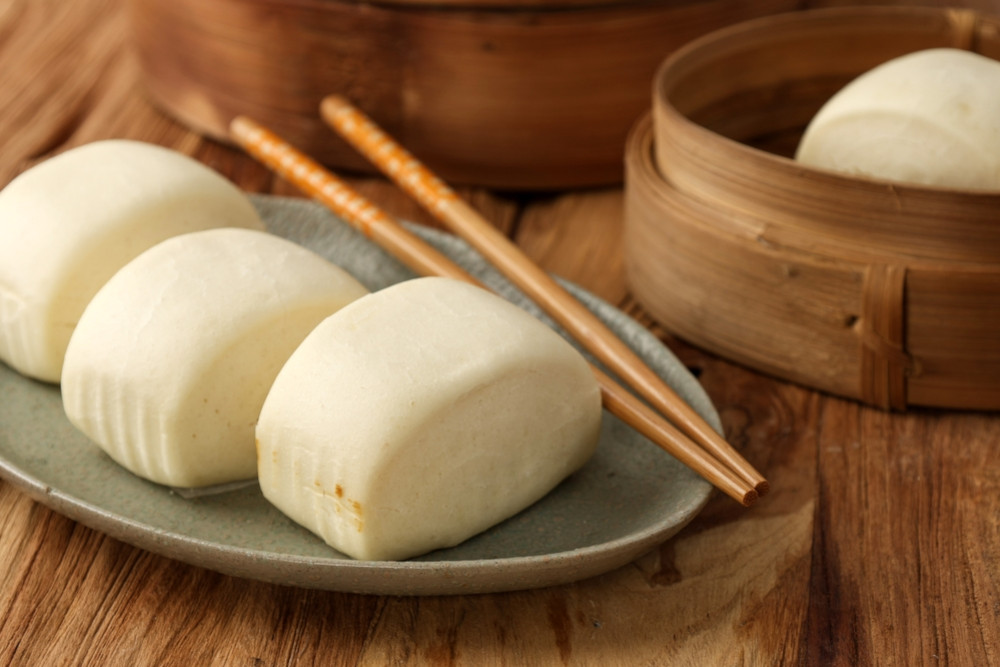
According to a long-standing Chinese legend, this was the dilemma Chancellor Zhuge Liang faced nearly 1,800 years ago during the Three Kingdoms period. His answer would become tied to one of the most beloved foods in Chinese cuisine. Rather than accepting a gruesome tradition, the story says he chose ingenuity and compassion, giving rise to the steamed buns known today as mantou (馒头).
The story is part history, part folklore, and part linguistic mystery. Together, these layers help explain how a humble ball of dough became a staple eaten across Asia.
The ancient roots: Before Chinese steamed buns had a name
Long before mantou had its modern name, people in ancient China were already experimenting with steamed flour dough. Historical sources trace early forms of steamed wheat foods back to the Eastern Zhou period, around 771 B.C., when fermented flour foods were already part of northern diets.
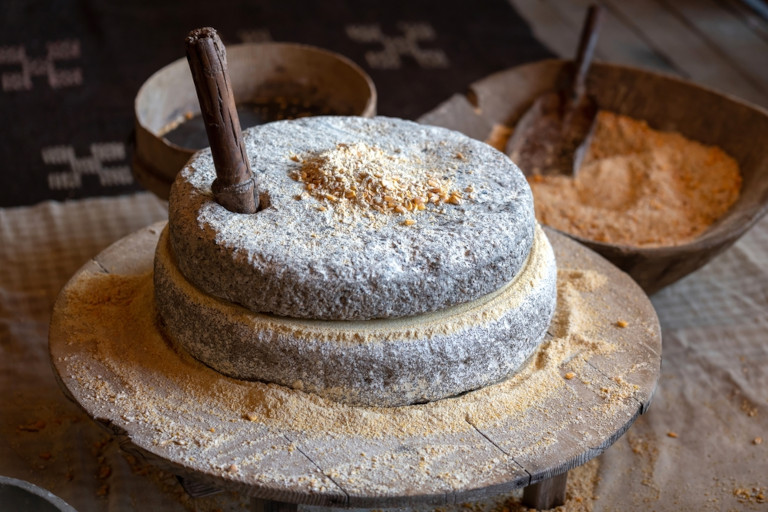
For centuries, these preparations remained relatively simple. Wheat grew abundantly across northern China, but turning it into flour required laborious hand grinding. Everything changed after the Han Dynasty (206 B.C. to A.D. 220), when stone mills became more widely available. Grinding wheat into fine flour became faster and more practical, and steamed wheat foods spread rapidly through the Yellow River regions.
Texts from later eras describe early steamed breads sometimes translated as “mianqi,” which many historians consider predecessors of fluffy steamed buns. These foods were not limited to everyday meals. They also appeared in ceremonial settings and imperial banquets, elevating what began as peasant fare into something worthy of court cuisine. By the time of the Three Kingdoms period, steamed dough was already deeply woven into daily life.
What it did not yet have was the name mantou.
Zhuge Liang and the raging river: The birth of mantou
The most famous chapter in mantou’s story takes place during the Three Kingdoms period (220-280), one of the most turbulent eras in Chinese history. At the center stands Zhuge Liang, chancellor of the Shu Han kingdom, remembered in Chinese culture for intelligence, strategy, and moral integrity.
According to later accounts recorded by Ming Dynasty scholar Lang Ying, Zhuge Liang was leading troops on a southern campaign when his army reached the Lu River. The water churned violently, and local beliefs held that the river spirits demanded human sacrifice before allowing safe passage.
Rather than accept the killing of his soldiers, the story says Zhuge Liang devised an alternative. He ordered livestock to be slaughtered and the meat wrapped inside balls of flour dough shaped to resemble human heads. Some versions of the story describe 49 of these buns arranged on a table at the riverbank, surrounded by lanterns to summon and appease the spirits.
The offering was said to work. The river calmed, and the army crossed safely.
In the legend, the soldiers named the creations “man tou,” sometimes interpreted as “barbarian’s head” or “deceptive heads.” Over time, the characters evolved into the modern word mantou. Whether historical fact or moral legend, the story reflects a cultural theme that continues to resonate: the idea that wisdom and compassion should triumph over fear and superstition.
What’s in a name? The surprising origins of ‘mantou’
The name mantou stands apart from most Chinese dish names, which typically describe ingredients or cooking methods. This unusual naming has led scholars to explore alternative explanations for its origin.
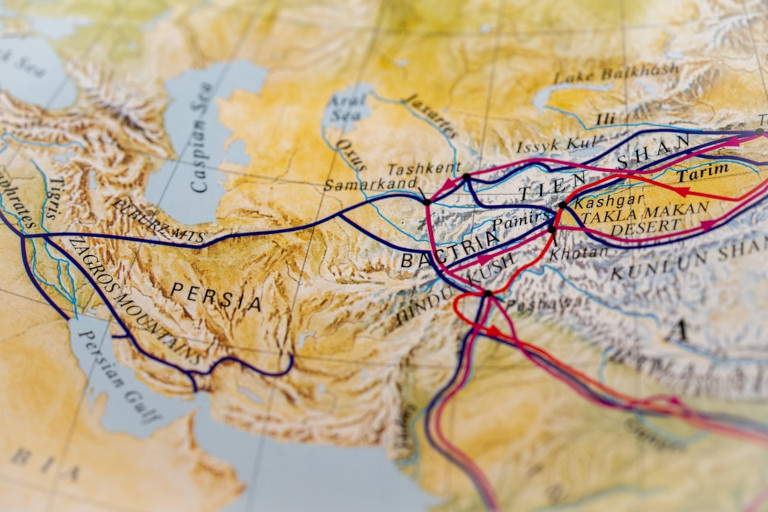
One theory points to Central Asia. The Uyghur language includes a word often rendered as “mantau,” referring to steamed bread. Because similar words appear across multiple Asian languages, some historians believe the term may have traveled along trade routes as foods and cooking traditions spread between cultures.
(Image: Erman Gunes via Shutterstock)
An early written reference comes from the Western Jin writer Shu Xi, who used the word mantou in his Ode to Boiled Cakes around the third century. This confirms that the name was already in use by that time.
Language continued to evolve during the Song Dynasty (960-1279). Before this period, mantou could refer to both plain and filled steamed buns. Over time, the terminology split. It came to mean plain buns, while baozi (包子) became the term for buns with fillings. This distinction remains standard today.
How mantou traveled the world: from northern China to every corner of Asia
From its northern Chinese roots, the steamed bun spread widely across Asia. The Mongol Empire played an important role in this journey. During the Yuan Dynasty (1271-1368), food traditions moved along military and trade routes that stretched across continents.
Steamed buns were ideal travel food. They were portable, filling, and easy to produce in large quantities. Historical texts from the Yuan court, including dietary writings by the physician Hu Sihui, document their preparation and their role in everyday life.
As steamed buns spread, each region adapted them to local tastes:
- Korea: Mandu, which evolved into a family of dumplings
- Japan: Manju, typically sweetened and filled with red bean paste
- Mongolia: Buuz and mantuun buuz, hearty meat-filled steamed dumplings
- Tibet and Nepal: Momo, perhaps the most famous adaptation, is now beloved worldwide
- Vietnam: Banh bao, large steamed buns often filled with pork and egg
- Philippines: Siyopaw, a steamed bun tradition brought by Chinese immigrants
- Thailand: Salopao, a sweet or savory steamed treat found in street markets
- Hawaii: Manapua, a beloved local comfort food with Chinese roots
The shared linguistic roots across these foods suggest a long history of cultural exchange and migration.
Mantou in Chinese festivals and daily life
In northern China, where wheat is the primary grain, mantou plays a role similar to bread in Western cuisines. Families tear apart soft white buns and use them to accompany soups, stews, and stir-fried dishes.
It also holds special meaning during the Lunar New Year. Tradition holds that the final days of the lunar calendar are a time for steaming buns in preparation for the holiday. The Chinese word for “steaming” sounds similar to a phrase associated with rising prosperity, giving the practice symbolic meaning.
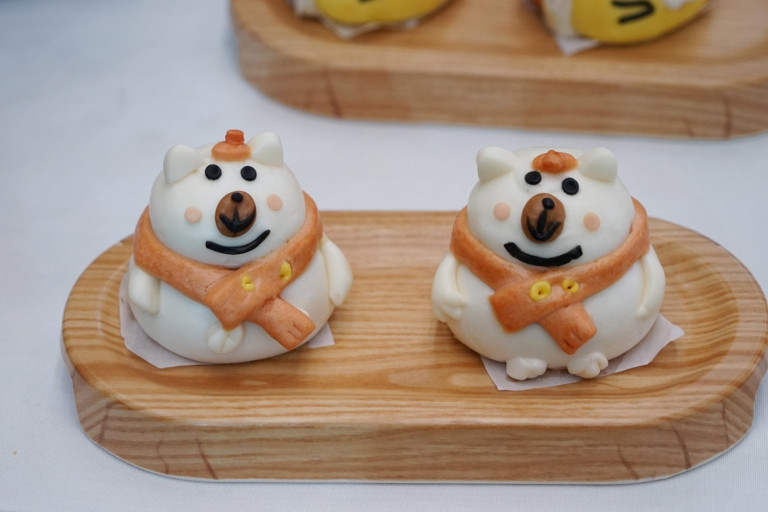
During celebrations, mantou often becomes edible art. Home cooks shape dough into flowers, rabbits, butterflies, and dragons, decorating them with red dates and bright colors to symbolize good fortune. In recent years, elaborate festival buns have gained attention online for their intricate designs.
In modern cuisine, mantou continues to evolve. Deep-fried mantou served with sweetened condensed milk has become a popular restaurant dish, and chefs sometimes use sliced mantou as the base for creative sandwiches filled with meats or vegetables.
Mantou vs. baozi: Understanding Chinese steamed buns
For newcomers to Chinese cuisine, the distinction between mantou and baozi can be confusing.
Mantou are plain steamed buns without filling. They are soft, lightly sweet from fermentation, and typically served as a side dish.
Baozi are steamed buns filled with savory or sweet fillings, such as pork, vegetables, or red bean paste. They are often eaten as a meal or snack.
Both foods share a common history, and earlier texts sometimes used the word mantou more broadly before the modern distinction developed.
A simple bun with a long legacy
The story of mantou stretches from ancient wheat fields to modern kitchens across Asia and beyond. It blends early food traditions, evolving language, and a legend about choosing compassion over sacrifice.
Whether approached as history, folklore, or cultural memory, mantou remains one of the most enduring staples of Chinese cuisine — a simple steamed bun with a story that continues to be told.
Follow us on X, Facebook, or Pinterest
