
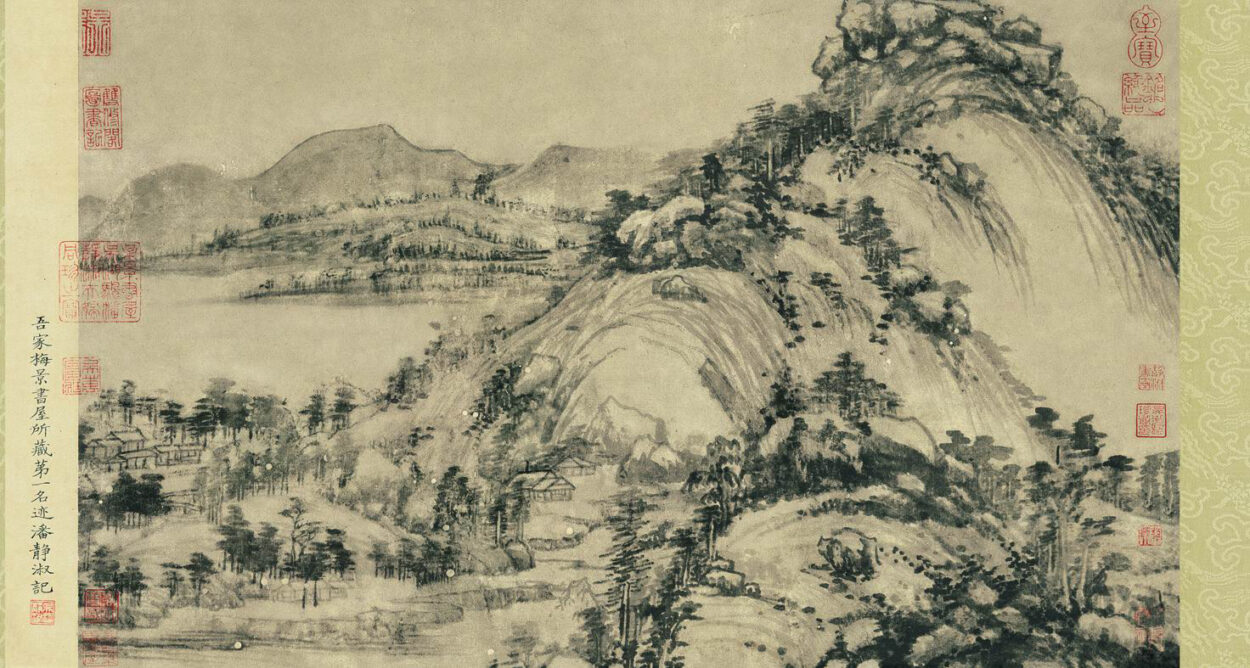
Throughout Chinese history, there has been a certain type of intellectual who was born with an unyielding spirit. Unarmed, they dared to defy an entire era; though they could have held official posts and received salaries, they turned their backs on such opportunities, preferring to go hungry rather than bow to powers they despised. In a world where those who “know when to adapt” are considered the true heroes, such people often seem out of touch with reality. Yet, strangely, over the course of thousands of years, while the smooth-talking and cleverness have largely been forgotten by history, the names of these uncooperative “stubborn donkeys” have been passed down through the generations, forming an unbroken river of integrity in Chinese culture.
We begin with an account of Tao Yuanming, who was a Chinese poet and politician. He was one of the best-known poets of the Six Dynasties period. Tao Yuanming spent much of his life in reclusion, living in the countryside, farming, reading, drinking wine, receiving the occasional guest, and writing poems that reflected on the pleasures and difficulties of life and his decision to withdraw from civil service.
Huang Gongwang was a Chinese painter, poet, and writer born at the end of the Song dynasty in Changshu, Jiangsu. He was the oldest of the “Four Masters of the Yuan dynasty” (1206-1368).
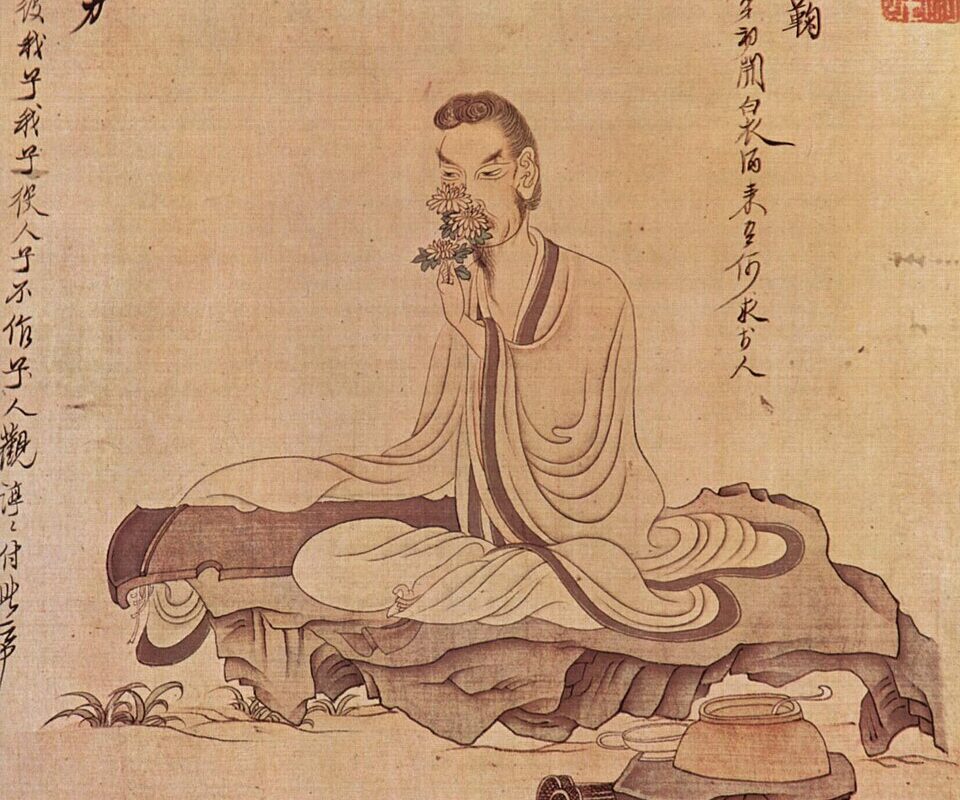
Tao Yuanming
Tao Yuanming (A.D. 365 — 427) embodied “non-conformity” with a sense of freedom and poetry that has been deeply admired by later generations. At the time, Tao Yuanming served as the magistrate of Pengze County. In today’s terms, he held a position equivalent to a deputy division-level official—a secure job within the system that guaranteed a steady income regardless of economic conditions. During the Wei, Jin, and Southern and Northern Dynasties, the aristocratic clan system was rigid, and the atmosphere in official circles was extremely extravagant and hypocritical, marked by daily displays of formalism and sycophantic flattery. Tao Yuanming was a man of genuine character, and he had already been feeling somewhat stifled in his role as county magistrate.
Finally, the trigger arrived. One day, the prefecture dispatched a “Duyou” (equivalent to a supervisory official or inspector sent down from higher authorities) to Pengze County to inspect operations. This Duyou, whose name has not even been recorded in history, was notorious for his love of putting on airs and bullying his subordinates. Upon learning that a superior official was coming, the county’s civil servants panicked and rushed to Tao Yuanming’s office, pleading with him earnestly: “You should don your official robes to receive him.” In other words: “Your Excellency, the superior inspector has arrived. You must quickly don your official robes, fasten your sash with meticulous care, prepare lavish gifts, and go to the pier to greet him with utmost humility and deference, speaking flattering words to please the man.”
Upon hearing this, Tao Yuanming’s long-suppressed anger and a scholar’s sense of dignity flared up instantly. Looking at the heavy, cumbersome official robes, he let out a long sigh and uttered the famous words that have been passed down through the ages: “I cannot bow my back for a bag of rice — must I serve the petty people of my hometown with such devotion?” No sooner had he spoken than Tao Yuanming, too impatient even to complete the formalities, immediately removed the seal and sash of the county magistrate from his body, slammed them down on the table, pushed open the gate, and walked out, resigning his post on the spot. Once he left, he never returned to public office.
Back in the countryside, Tao Yuanming’s life was actually quite hardscrabble. In his famous poem “Returning to the Fields and Gardens, Part Three,” he wrote: “Weeds thrive, bean sprouts are sparse.” These five characters read with a touch of humor, but they also reveal a harsh reality — this great poet simply wasn’t cut out for farming. While farmers typically hope for thriving seedlings and sparse weeds, in his case, the weeds in his field grew taller than the bean sprouts — and it’s safe to assume that year’s harvest was a complete disaster.
Later, as if fate hadn’t tormented him enough, his home was suddenly struck by a massive fire, which burned his already modest thatched cottage to the ground. At the lowest point of his struggles, Tao Yuanming even reached the point of “knocking on doors, at a loss for words.” This is taken from his poem “Begging for Food,” where five words vividly capture a scholar’s pride and helplessness: He was so hungry he could bear it no longer, so he went to knock on a stranger’s door to beg. But the moment the door opened, his scholarly pride kicked in — his face flushed, his speech stammered, and he stood there in such embarrassment that he couldn’t bring himself to ask for food for a long while.
Yet, even when his circumstances had become this dire, when the political winds shifted and a powerful minister, admiring Tao Yuanming’s reputation, sent envoys bearing large quantities of food and money and earnestly invited him to return to public service and assume a high-ranking position, Tao Yuanming still coldly refused. He traded a lifetime of modest poverty for absolute spiritual freedom.
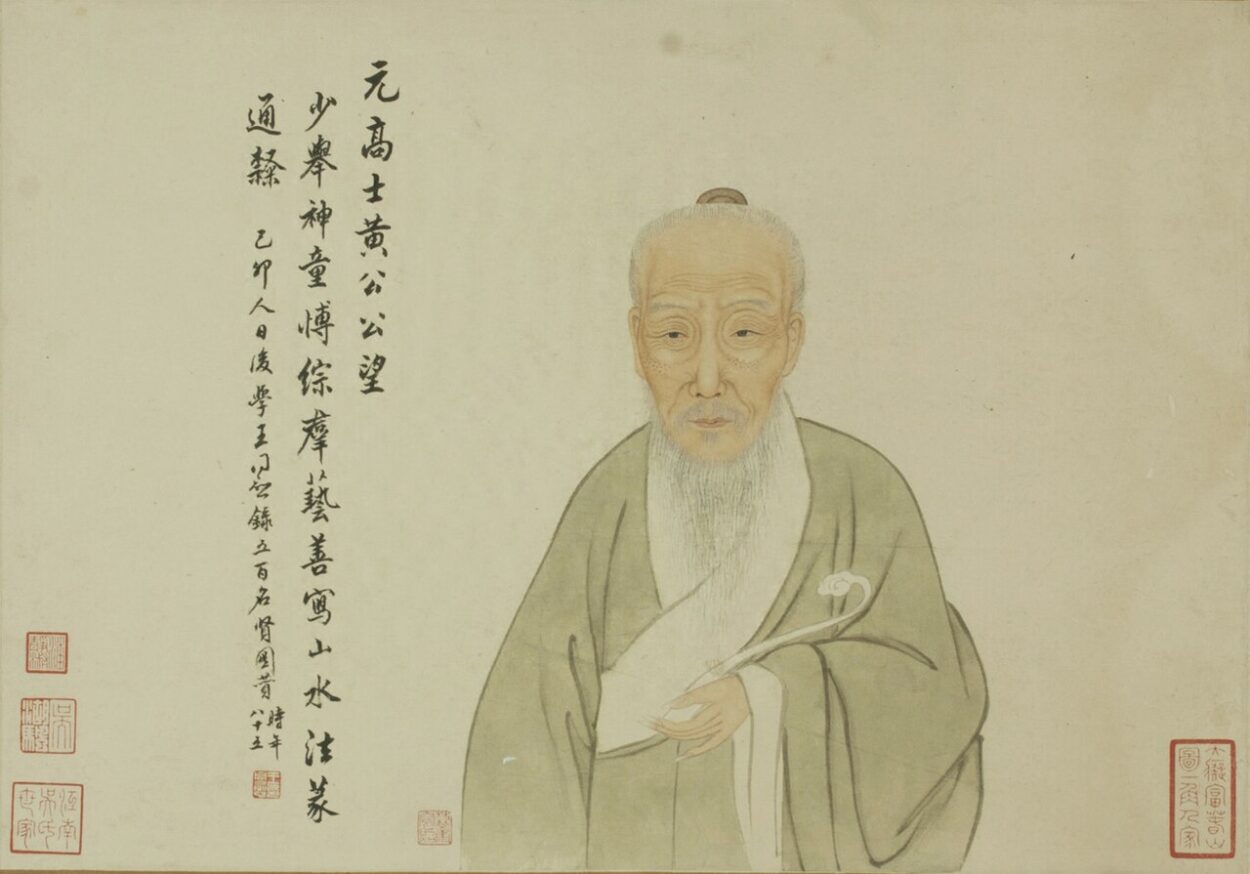
Huang Gongwang
During the turbulent times at the end of the Song Dynasty and the beginning of the Yuan Dynasty, faced with political upheaval and institutional corruption, another scholar chose to step back and withdraw from the world, relying on his craftsmanship to live a reclusive life among the common people. He was Huang Gongwang (A.D. 1269 — 1354), the master of landscape painting and a Taoist priest of the Quanzhen School, whose name would go down in history.
In his youth, Huang Gongwang had also harbored aspirations to serve the world through practical means and had worked as a low-level clerk in the Jiangsu-Zhejiang Provincial Administration. However, fate played a cruel trick on him. He was implicated in a corruption case involving his superior and was wrongfully arrested and imprisoned. By the time he emerged from behind the high walls and iron bars, he was already middle-aged. Having seen through the treachery of the bureaucratic world and the darkness of the system, and faced with the corruption of late Yuan politics, Huang Gongwang made the most significant decision of his life: he would no longer seek a career in public service but would sever all ties with the system entirely.
According to relevant historical records in the History of the Yuan Dynasty: Recluses and later accounts from the art world, after his release from prison, Huang Gongwang immediately joined the Quanzhen School, took monastic vows as a Daoist, adopted the monastic name “Da Chi Daoist,” and withdrew completely into seclusion in the Fuchun Mountain area. Living in seclusion in the mountains and forests, without the protection of the system or a government salary, how could he survive? Huang Gongwang refused to bow to any local officials or powerful figures. To make a living, he set up a small stall in the markets of Suzhou and Hangzhou, relying on his mastery of the Book of Changes (I Ching) to earn a living by “selling divinations” (fortune-telling). With the few silver coins he earned by reading fortunes and faces for ordinary people on the streets, he sustained an extremely simple life as a commoner.
It was precisely this freedom — completely untethered from the constraints of the establishment — that allowed Huang Gongwang’s latent artistic talent to fully blossom. He did not formally begin studying painting until he was 50; for years, he carried a leather bag on his back, sleeping under the open sky and eating outdoors in the Fuchun Mountains, observing the shifting light and shadow of the landscape. In his Treatise on Landscape Painting, he documented this scholarly approach rooted in the lives of the common people.
In his later years, Huang Gongwang made a living by telling fortunes at the market and painted in his thatched cottage, eventually completing Dwelling in the Fuchun Mountains, a work that would astonish future generations. Many officials of the Yuan Dynasty, drawn by his reputation, came to visit him and offered large sums of money in exchange for his paintings, but Huang Gongwang remained unperturbed by it all, content with just enough to get by for the day and asking for nothing more. Through his lifelong detachment, he embodied the purest spirit of Daoism while living among the common people.
Translated by Audrey Wang and reviewed by Laura Cozzolino
Follow us on X, Facebook, or Pinterest
