
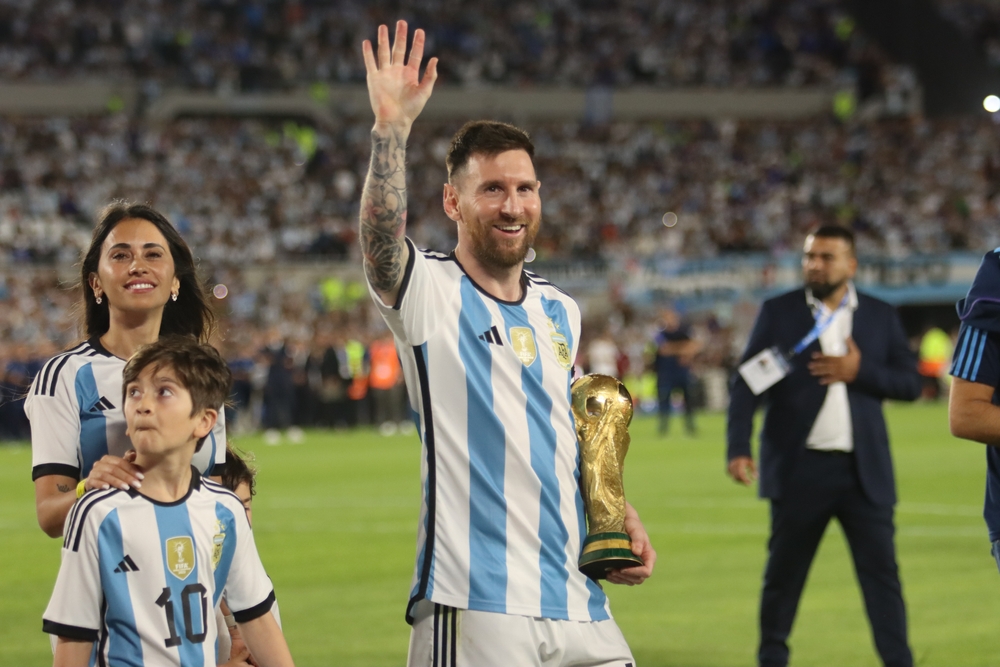
On July 7, 2026, when the final whistle sounded at Argentina’s Round of 16 World Cup match, another chapter was added to the remarkable story of Lionel Messi. At 39 years old, Messi once again stood on football’s greatest stage, adding to a career that has already become the stuff of legend. To millions around the world, he is the King of Football — a player whose name is forever linked with greatness. He has achieved nearly everything a footballer could dream of: a World Cup title, league championships, Ballon d’Or awards, countless records, and moments of brilliance that will be remembered for generations. Football history is filled with extraordinary figures.
Some are remembered for their natural talent, others for their trophies and achievements. Lionel Messi possesses all of these qualities — but his greatest story may not be found only in the stadiums where he made history. It began when he was nine years old. That year, he met a little brown-haired girl named Antonela Roccuzzo. Their story began in a small town in Argentina and has continued for nearly three decades. It is a story of two ordinary children who grew up together — through distance, separation, heartbreak, fame, criticism, and the many challenges that life brings — yet never lost sight of one another. While the world watched Messi become a football legend, Antonela remained the person who knew him before the fame, before the trophies, and before the world knew his name.
A promise was written in childhood
Sometimes, life’s most beautiful fairy tales don’t begin in castles. Sometimes, they begin in a neighbor’s backyard. In 1996, nine-year-old Lionel Messi was a shy little boy living in Rosario, Argentina. He was already obsessed with football, spending most of his time at Newell’s Old Boys youth academy. Smaller than the other children because of a growth hormone deficiency, Messi was quiet and somewhat self-conscious. On the football field, however, the ball seemed to obey his every command. One day, while visiting his friend Lucas Scaglia’s house, he met Lucas’s eight-year-old cousin, Antonela.
The moment was unremarkable to everyone else — but perhaps not to young Lionel. After that day, he somehow found many good reasons to visit his friend’s home. If Antonela happened to be playing in the yard, so much the better. For a boy who blushed when speaking to strangers, this was no small matter. Messi chose the most charmingly old-fashioned method of courtship imaginable: he wrote her letters. His handwriting may have been crooked and childlike, but one sentence carried remarkable confidence: “One day, you will become my girlfriend.” Looking back today, it almost sounds like something from a romantic novel. Yet sometimes children see life more clearly than adults do. They love sincerely, dream fearlessly, and make promises without wondering whether the world will call them impossible.
Dreams would take them apart
At 13, Messi’s life changed dramatically. Because his family could no longer afford his medical treatments in Argentina, they made the difficult decision to move to Barcelona. He joined the famous La Masia youth academy and began the long, demanding journey toward becoming a professional footballer. The move came with sacrifices. While his friends back home enjoyed ordinary teenage years, Messi spent his days training relentlessly and his evenings enduring painful growth hormone injections. The road to greatness was neither glamorous nor easy. Meanwhile, Antonela remained in Rosario, attending school and living the life of an ordinary young woman. An ocean separated them. Their contact gradually became less frequent as life carried them in different directions. If this were a typical love story, perhaps it would have ended there — a sweet childhood memory quietly tucked away in two separate lives. But life, it seems, had other plans.

Love shows up when it matters most
In 2005, tragedy struck Antonela’s life when her closest friend was killed in a devastating car accident. The loss shattered her emotionally. She withdrew into grief and shut herself away from the world. When Messi heard the news in Barcelona, he immediately canceled his commitments and booked the earliest flight home to Argentina. At eighteen years old, he was already beginning to attract attention as one of Europe’s brightest football prospects. His career was taking off, and every hour of his time was precious. Yet there are moments in life when love quietly rearranges our priorities. Messi did not send flowers. He did not send a message of sympathy. He got on a plane. When Antonela opened her door and saw him standing there, tired from his long journey, she was stunned. The shy little boy who had once written her letters had grown into a young man who had crossed the Atlantic simply to embrace her and tell her: “Don’t be afraid. I’m here.” There are many ways to say “I love you.” Sometimes, the most beautiful words are not spoken at all. They are found in the willingness to show up when another person needs you most. Many people consider that moment the true beginning of their love story.
Mate tea means family time
For several years, Messi deliberately kept their relationship private. Fame was arriving faster than he could have imagined, and he wanted to protect Antonela’s ordinary life from the glare of the spotlight. In 2009, during a television interview, the twenty-two-year-old Messi was finally asked about his love life. His face immediately lit up with the shy smile that football fans have since come to adore. “Yes,” he replied. “I have a girlfriend in Argentina, and we’re very happy together.” There was no grand announcement. No publicity campaign. Just a young man quietly sharing his happiness with the world. By 2012, Antonela moved to Barcelona, and the two finally began building a home together.
Later that year, their first son, Thiago, was born. Messi revealed something that millions of football fans had never seen — a softer side of the fierce competitor — he tattooed his son’s name and tiny handprints on his leg and said: “He is now the most important thing in my life.” Three years later, their second son, Mateo, was born. In interviews, Messi described his happiest moments not as lifting trophies, but as taking his children to school, drinking mate tea with his family, and spending peaceful afternoons in the park. It is somehow wonderfully amusing that the greatest footballer of his generation measures happiness in cups of mate tea and family time. Perhaps true success is much simpler than we imagine.
The wedding of the century brought tears to a football king
On June 30, 2017, Messi and Antonela returned to their hometown of Rosario to celebrate their wedding. The Argentine media called it “The Wedding of the Century.” Yet unlike many celebrity weddings, the guest list reflected who they truly were. Instead of politicians and socialites, those in attendance were childhood friends, neighbors, teammates, and loved ones who had walked beside them throughout their journey. When Antonela appeared in her wedding dress and slowly walked toward him, something remarkable happened. The man who had calmly faced Champions League finals and World Cup pressure suddenly became emotional. Lionel Messi — the football king feared by defenders across the globe — stood there fighting back tears like an overwhelmed little boy. Perhaps, at that moment, he wasn’t a football legend at all. He was simply the nine-year-old boy whose impossible childhood promise had finally come true.
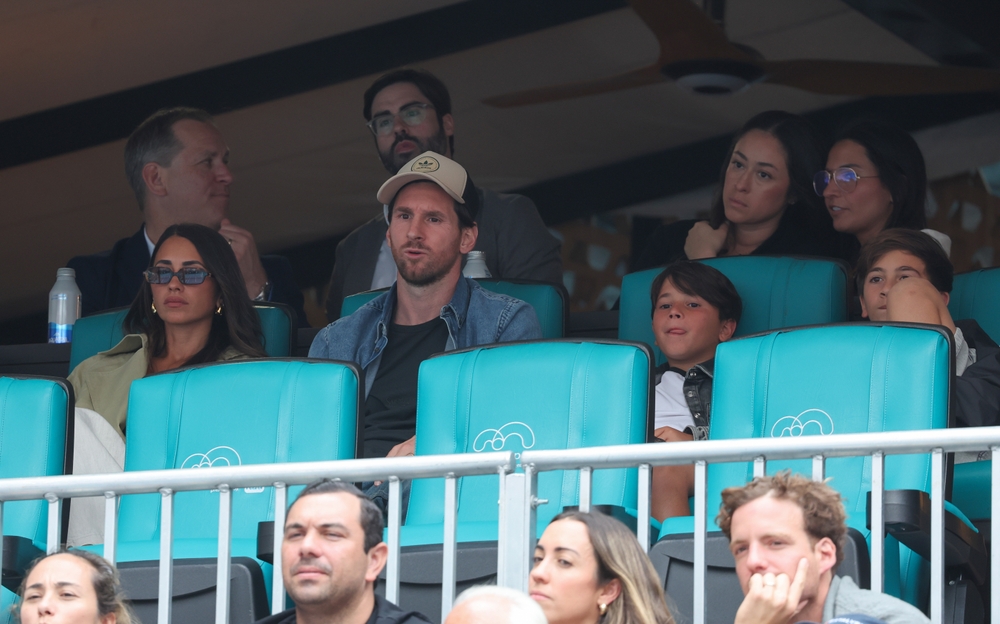
Later, Messi had Antonela’s eyes tattooed on his ankle — a deeply personal tribute to the woman who had watched over him through victories, disappointments, and everything in between. He wanted her gaze to accompany every step he took — every sprint, every goal, every moment on the field. In 2018, their third son, Ciro, was born, completing their family of five. Most of the photos he posted on social media are of him wearing shorts and flip-flops, sunbathing in the yard with his family, playing with his dog — far removed from the public’s imagination of the life of a top-tier athlete.
Love always becomes a safe harbor
Life did not always reward Messi with victory. The losses in the 2014 World Cup final and multiple Copa América finals brought him harsh criticism in Argentina. Some questioned his loyalty to his country. Others claimed he would never become Argentina’s true football hero. In 2016, overwhelmed by disappointment and criticism, Messi announced his retirement from the national team. Behind the world’s greatest footballer stood a tired and deeply discouraged man. During those difficult days, Antonela quietly became his refuge. She canceled his interviews, took him away from the media spotlight, and surrounded him with what mattered most — their family. She told him something profoundly simple: “Whether you win the World Cup or not, whether people praise you or criticize you, to us, you are simply our husband and our father.” Those words may have saved more than a football career. They reminded Messi that his worth had never depended upon trophies. Love has an extraordinary way of giving people the courage to begin again.
His greatest victory arrived
Messi eventually returned to international football and led Argentina all the way to the 2022 World Cup final in Qatar. At Lusail Stadium, after an unforgettable penalty shootout victory over France, he finally lifted the one trophy that had eluded him throughout his career. Amid the chaos of celebration, celebrities and reporters rushed toward the newly crowned champion. Messi looked elsewhere. He searched for Antonela. She was in the stands holding their children, overwhelmed by tears of joy. He waved her over, sat beside her on the grass, placed his gold medal around her neck, and used his phone to take photographs of her holding the World Cup trophy. It was one of the most touching moments of the entire celebration. Because long before the world crowned him its football king, she had already believed in the little boy with impossible dreams. The World Cup trophy belonged to Lionel Messi. The journey that led him there belonged to both of them.
This love story lasts for ages
Today, Messi’s family lives in Miami. Their three sons attend school, while Antonela pursues her own professional interests and serves as an ambassador for UNICEF and Special Olympics initiatives. Messi continues to play the game he has loved since childhood. Lionel Messi spent twenty years becoming one of football’s greatest players. He spent thirty years becoming something even more beautiful — a faithful husband, a devoted father, and a man who never forgot his original heart. His strength belongs to the football field — where he battles defenders, silences critics, and creates sporting history. His tenderness belongs at home — where he protects the brown-haired little girl who first captured his heart when he was only 9. The world will remember his goals, his records, and his trophies.
Football fans will debate whether he is the greatest player of all time for generations to come. But when all the cheering finally fades and history closes the final chapter of his remarkable life, one cannot help but notice that his most enduring victory was won long before any of those achievements. It began with a handwritten childhood promise. It survived oceans, grief, criticism, and the pressures of fame. And nearly thirty years later, it remains beautifully unchanged. Some people spend their entire lives searching for their soulmate. Messi found his when he was nine years old — and spent the rest of his life making sure he never lost her. Perhaps that is the greatest goal he has ever scored.
Translated by Katy Liu and reviewed by Tatiana Denning
Follow us on X, Facebook, or Pinterest
