
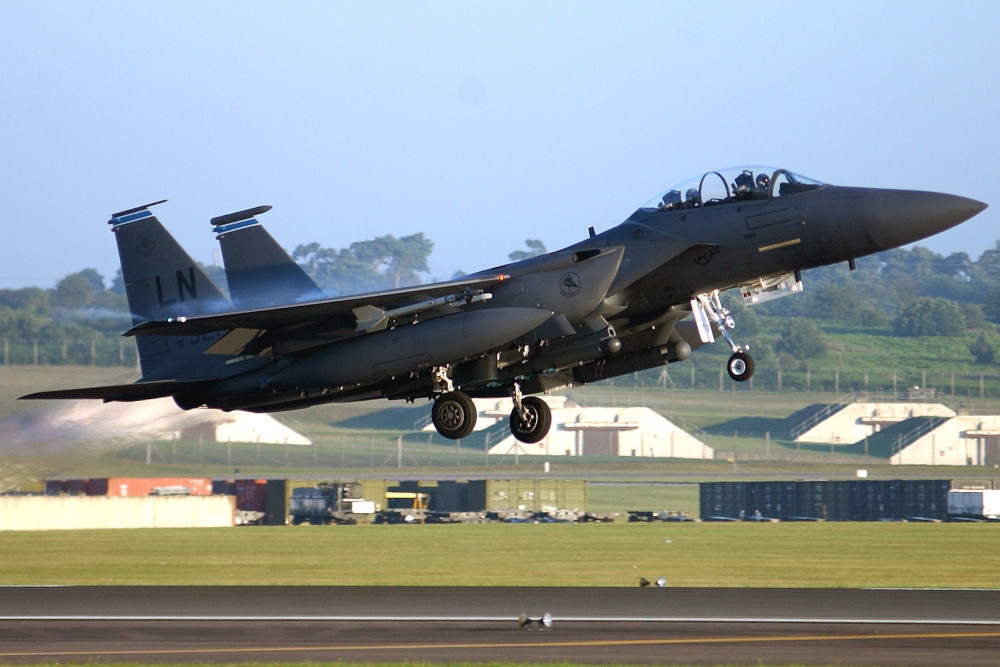
In April 2026, the U.S. military mounted an extraordinary operation inside Iran to rescue a missing F-15E crew member. The mission eventually involved 155 aircraft and hundreds of military personnel, with U.S. forces working to locate the injured airman while preventing Iranian forces from reaching him first.
Nspirement previously examined the rescue and the U.S. military tradition of leaving no one behind. But another comparison raises a different question: What happens when military technology designed to protect sensitive information may also put the soldier carrying it at risk?
Reports about digital combat systems developed for China’s People’s Liberation Army (PLA) offer a striking contrast.
An extraordinary effort to bring one man home
The F-15E went down over southwestern Iran on April 3. Both crew members ejected, landing miles apart behind enemy lines. One was recovered first, while the second, the aircraft’s weapons systems officer, remained stranded in mountainous terrain.
The effort to reach him became a major joint operation.
According to Air Force Times, the second rescue force included 155 aircraft — among them 64 fighters, 48 refueling tankers, four bombers, and 13 rescue aircraft — with hundreds of special operations personnel supporting the broader mission.
The CIA also carried out a deception campaign intended to confuse Iranian forces searching for the missing airman. Aircraft were directed toward seven different locations, while U.S. forces struck roads, convoys, and approaching Iranian units to prevent them from reaching the extraction area.
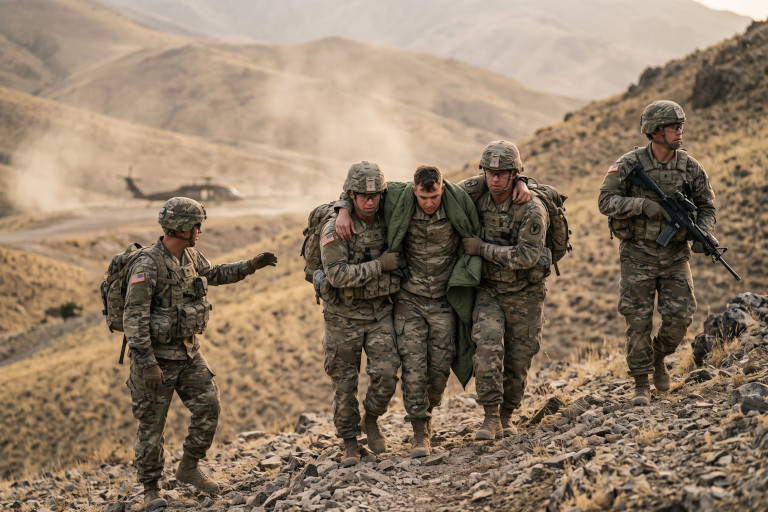
After locating the airman in a mountain crevice, the rescue force brought him to safety.
Retired Gen. Frank McKenzie, former commander of U.S. Central Command, later explained why accepting the loss of aircraft during such an operation made sense from the military’s perspective.
“It takes a year to build an aircraft,” McKenzie told CBS News. “It takes 200 years to build a military tradition where you don’t leave anybody behind.”
That trust has practical consequences. A service member sent into danger knows that enormous resources may be committed to bringing him home.
Reports concerning a Chinese military system present a very different picture.
A controversial self-destruct system
The PLA’s use of self-destruct technology in individual soldiers’ digital equipment is not merely an overseas allegation. As early as 2012, the PLA’s own newspaper reported that an individual combat information system could both self-destruct and be destroyed remotely if it fell into enemy hands, instantly erasing sensitive combat information.
A China News Service report reproducing the PLA Daily account described an integrated system that allowed commanders to track troops and communicate with them. When a reporter asked what would happen if the equipment fell into enemy hands, a soldier demonstrating it replied that the system contained a self-destruct device and could also be destroyed remotely.
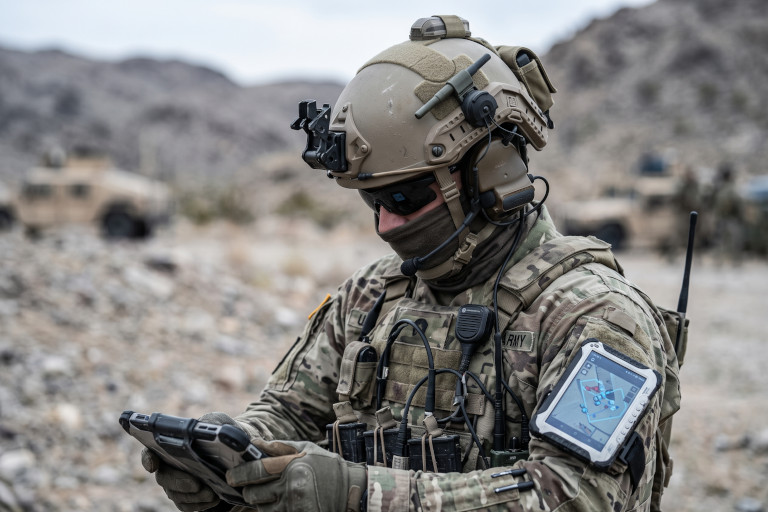
In December 2020, Chinese state media showed troops in Tibet using a newer digital combat system that let commanders monitor the location and status of individual soldiers while linking troops directly to battlefield communications and fire support.
Two days later, a Chinese military media account took the description considerably further. An article published through NetEase said the system contained a self-destruct mechanism that a seriously wounded soldier could activate if he did not want to be captured, thereby preserving his “military dignity” and preventing the enemy from obtaining information from the system.
More controversially, the article said commanders could also activate the self-destruct function remotely if a soldier had become separated from his unit and could no longer be contacted.
The wording was widely interpreted as describing a system capable of killing the soldier along with destroying his equipment. The article did not explain the mechanism, however, or explicitly state that an explosive charge would kill the wearer.
The original NetEase page subsequently disappeared. A 2021 NTD report documented the controversy and the reported removal, and noted that the surviving version of a related Observer Network article no longer contained the self-destruct description.
The distinction is important. Remote destruction of military electronics to protect classified information is not unusual. A system that could be triggered by a commander while still being worn by an unreachable soldier would raise a fundamentally different issue — whether protecting military information could take precedence over the life of the soldier carrying it.
Protecting equipment or protecting the soldier
The contrast becomes particularly stark when placed beside the U.S. operation in Iran.
In one case, aircraft, equipment, intelligence resources, and personnel were placed at risk to retrieve a single stranded service member. Aircraft could be lost or destroyed, but the objective remained bringing the person home.
The controversial Chinese report suggests the reverse order of priorities could apply in certain circumstances if its description of the self-destruct system was accurate. Protecting equipment and the information it contained could potentially place the soldier carrying it at risk.
This does not mean that every American commander will always be able to rescue every stranded service member, or that the PLA routinely kills soldiers who become separated from their units. War often forces commanders to make decisions in which rescue is impossible.
The distinction lies in what military institutions prepare for and what their systems are designed to do.
China’s handling of its fallen soldiers
Another episode illustrates why the issue has attracted attention.
Chinese and Indian troops fought a deadly clash in the Galwan Valley along their disputed Himalayan border in June 2020. India announced that 20 of its soldiers had been killed and publicly honored the dead.
Beijing, however, withheld its own casualty figures for months. It was not until February 2021 that Chinese authorities publicly identified four PLA soldiers as having been killed.
Reuters has since reported the accepted official toll as 20 Indian and four Chinese soldiers killed, although higher estimates of Chinese losses circulated before Beijing released its figures.
The months-long secrecy illustrated a broader difference in how military losses can be treated. Publicly identifying casualties allows families and society to recognize individual lives lost in service. Concealing such information gives the state far greater control over how the human cost of military actions is understood.
The value of trust
Military strength is normally discussed in terms of weapons, personnel, training, and technology. Yet trust between an institution and the people expected to fight for it can be just as important.
The Iran rescue demonstrated one way that trust can be built. An isolated airman had reason to believe that his military would make an extraordinary effort to reach him.
The controversy surrounding the PLA’s reported self-destruct system raises the opposite possibility: What happens to that relationship when a soldier must wonder whether the technology connecting him to his commanders could also be used against him?
No military can promise that every soldier will survive or that every rescue will succeed. What it can establish is a principle governing which should be sacrificed first when circumstances become desperate — the equipment, the mission, or the person.
That choice says something fundamental about the institution asking its people to fight.
This article was adapted from a Chinese-language report produced by NTD Television’s 100 Years of Truth program.
Follow us on X, Facebook, or Pinterest
