

In 1984, archaeologists working in Chengdu, in China’s Sichuan province, unearthed something startlingly familiar: a toothbrush. Its slender handle had been carved from animal bone, and two neat rows of tiny holes once cradled its bristles, looking remarkably like the brush resting on your bathroom sink today. Yet this one had lain in the earth for more than 1,000 years, a quiet relic of the Tang Dynasty (618-907).
Long before drugstore tubes and electric brushes, ancient Chinese teeth cleaning was a thoughtful, surprisingly advanced practice shaped by centuries of traditional Chinese medicine (TCM). Historical records suggest that very few people of the era suffered from bad breath. So how did they do it? The answer blends everyday ritual with herbal wisdom. Here are six time-tested ways ancient Chinese kept their teeth clean and their breath fresh, along with the gentle philosophy behind them, and a few habits still worth reviving today.
Ancient Chinese cleaned their teeth by rinsing with salt water and strong tea, brushing with frayed willow twigs, applying herbal toothpastes, and freshening their breath with aromatic fruits and spices. These habits, practiced for more than 2,000 years, were guided by TCM’s belief that healthy teeth reflect a healthy body. The roots run deep. The Book of Rites, compiled during the Zhou Dynasty (1046-256 BCE), records that each morning the household would rise at first light to wash and rinse the mouth. Oral care, in other words, has been part of daily Chinese life for over two millennia, a history detailed by cultural publications such as The World of Chinese and woven into the broader tradition of traditional Chinese health practices. What began as simple rinsing slowly grew into a rich toolkit of brushes, pastes, and remedies.
How ancient Chinese cleaned their teeth
1. Salt: The daily ritual for stronger teeth
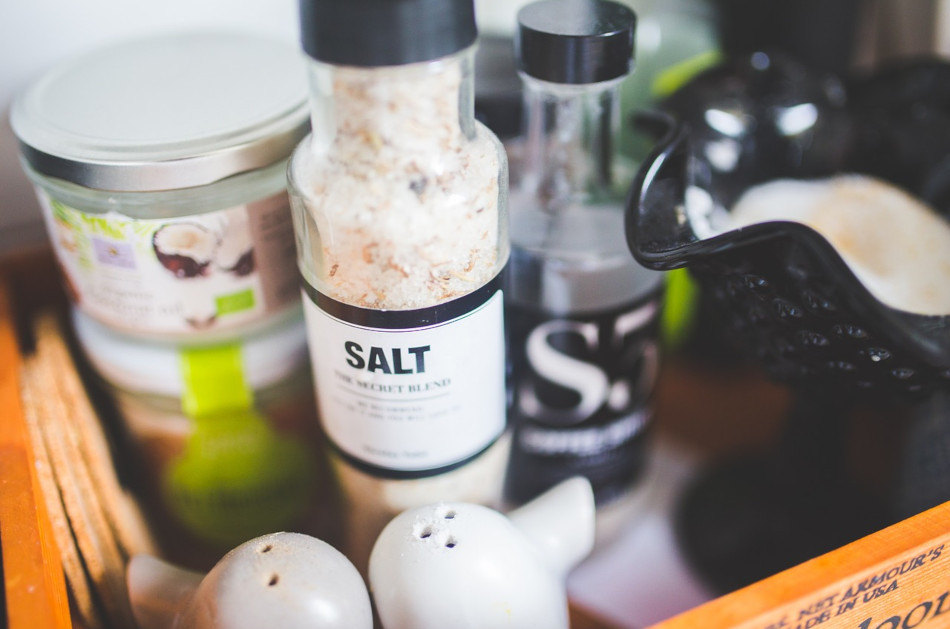
Salt was the cornerstone of daily oral care, valued for cleansing the mouth and firming the gums. Each morning, people rubbed a pinch of salt across their teeth or swirled warm salt water around their mouths, a simple act believed to strengthen their teeth and guard against decay. The habit reached every level of society. In the beloved classical novel Dream of the Red Chamber, the young nobleman Jia Baoyu is described cleaning his teeth with salt each morning, a small window into the refined routines of a wealthy household.
The great Tang Dynasty physician Sun Simiao (581-682), often honored as the King of Medicine, gave the practice its clearest instruction. In his medical classic the Qianjin Fang, or Thousand Golden Prescriptions, he advised taking a pinch of salt into the mouth each dawn, rinsing with warm water, and cleaning the teeth thoroughly. Keep this up, he promised, and within a few days the teeth would grow firm and tight. Salt’s great appeal was its sheer accessibility. It cost little, sat in every kitchen, and asked for nothing more than a moment of daily care. That spirit, meaningful change built from small and steady acts, still runs quietly through Chinese wellness today.

2. Strong tea and herbal rinses after meals
If salt ruled the morning, tea ruled the hours after eating. Ordinary tea, brewed thick and strong, was swished around the mouth after a meal to wash away grease and loosen trapped food. As a welcome bonus, the same cup was thought to settle the stomach and aid digestion. The poet and statesman Su Shi (1037-1101), better known by his pen name Su Dongpo, was among tea’s most devoted advocates. He recorded his own method of rinsing his mouth with strong tea after meals, praising how it left his teeth clean and his mouth refreshed. For a man so famous for his love of food, it was a fittingly practical ritual.
There is a thread of sense here that modern science can appreciate. Research suggests that the polyphenols in tea carry natural antibacterial properties, which may help hold problem-causing microbes in check. The ancients could not have named these compounds, yet through patient observation, they developed a habit that still holds up. You might think of it as an early version of today’s mindful after-meal habits. And for readers who enjoy a daily cup, the ritual pairs naturally with the quiet comfort of other traditional Chinese teas.
3. The willow twig: China’s first toothbrush
Long before bristled brushes, the humble willow twig did the work. By the Tang Dynasty, it had become common to soak a fresh willow branch in water overnight, then chew one end in the morning until the wood frayed into soft, comb-like fibers. Those fibers scrubbed the teeth clean. The practice was so widespread that it earned its own poetic name, chen jiao chi mu (晨嚼齿木), meaning to chew wood at dawn.
From there, craftsmanship took over. That Tang-era toothbrush unearthed in Chengdu shows how far the design had come: a long bone handle with two rows of drilled holes, ready to be threaded with stiff hairs from a horse’s tail. By the Song Dynasty (960-1279), brushes had become a genuine commercial product. The scholar Wu Zimu, writing in his memoir A Dream of Millet, recalled shops in the capital Lin’an (today’s Hangzhou) that specialized in making and selling them, some from bone, others from horn, bamboo, or wood.
It is a startling timeline. As the South China Morning Post has reported, China was producing recognizably modern toothbrushes centuries before they became common in Europe. Across the wider ancient world, people scraped their teeth with frayed sticks and chewed twigs, but few cultures refined the tool as thoroughly or as early as China did. The choice of willow was fitting, too. In TCM, willow bark is associated with cooling, anti-inflammatory qualities, making it a natural ally for sore or swollen gums.
4. Herbal pastes, poria, and breath-freshening pills
Ancient China did not stop at brushes and rinses. It developed early tooth pastes and powders that would not feel entirely foreign to a modern dentist. One recipe involved boiling honey locust fruit, ginger, foxglove, and lotus leaves into a paste meant to calm inflamed gums, ease toothache, and brighten the teeth. During the Song Dynasty, a paste made from poria (茯苓, fu ling), a pale medicinal fungus, grew especially popular. People spread it across the teeth with a fingertip or the frayed end of a willow branch. Poria remains a familiar TCM ingredient to this day, valued for its gentle, harmonizing qualities.
Then there were the breath-freshening pills, small marvels of herbal craft. One elaborate lozenge combined as many as 15 ingredients, including clove and musk, and was bound together with honey. Held in the mouth, it was meant to kill germs, reduce swelling, and leave the breath sweet. These were the ancestors of the modern breath mint, made not in a factory but in an apothecary, following principles refined over generations. What unites these remedies is intention. Each ingredient was chosen for a specific reason within the TCM framework, whether to cool heat, reduce swelling, or ease stagnation. Oral care was never an afterthought. It was one small branch of a vast and carefully reasoned medical tradition.
5. Fruits, spices, and the art of fresh breath
For fresh breath on demand, ancient Chinese turned to the fragrant contents of the pantry. Mandarin oranges, parsley, Sichuan pepper, and fennel were all chewed or carried to sweeten the breath, especially before social occasions. Their natural oils masked odors and left a pleasant scent behind. Fresh breath was more than personal comfort. It was a matter of courtesy, and sometimes of formal etiquette. Well-mannered men were known to carry small pouches of aromatic spices, drawing on them before gatherings. One long-standing custom held that officials would keep a clove tucked in the mouth before addressing the emperor, so that their words would arrive on sweet-smelling breath. To speak before the throne with a stale mouth was simply unthinkable.
Cloves earned a special place in this quiet art. Rich in aromatic oil, they freshen the breath while, in TCM, gently warming the body and easing discomfort. Fennel and Sichuan pepper played similar double roles, pleasing to the senses and useful to the body at once. This is where ancient Chinese teeth cleaning reveals its full character. It was never only about scrubbing away plaque. It was about presenting oneself with dignity, showing respect to others in close company, and treating the mouth as part of a whole and balanced self.
6. Tooth tapping and the TCM roots of ancient Chinese teeth cleaning
To truly understand ancient Chinese teeth cleaning, you have to look beneath the surface, to the medical philosophy that held it all together. In TCM, the teeth are not seen as isolated tools for chewing. They are, in a classic phrase, “the surplus of the bone” (齿为骨之余). And because the kidneys are said to govern the bones, the health of the teeth is read as a reflection of one’s kidney essence, or jing, the deep vitality stored within the body. Seen this way, strong teeth signaled a strong constitution, while loose or failing teeth hinted at depleted kidney energy. Caring for the teeth was therefore, in part, a way of caring for the body’s root reserves. It is also why so many longevity foods in Chinese tradition, from black sesame to walnuts, are prized as kidney tonics, part of the same wellness lineage as the revered lingzhi mushroom of immortality.
Out of this philosophy came one of the most enduring practices of all: tooth tapping (叩齿, kou chi). Sun Simiao recommended gently clicking the upper and lower teeth together each morning, some sources say 36 times, others as many as 300, before swallowing the saliva that gathers, poetically called the “jade fluid.” Done faithfully, tooth tapping was believed to firm the teeth, strengthen the kidneys, and support a long life. Modern eyes might explain it differently, as a gentle stimulation that encourages blood flow to the gums and the living tissue around each tooth. Either way, it costs nothing and takes barely a minute, one of many quiet no-cost wellness habits drawn from traditional Chinese practices.

Common questions about ancient Chinese tooth care
When did the Chinese invent the toothbrush?
The willow-twig brush was in common use by the Tang Dynasty, and a bristled version with a bone handle followed soon after. The one unearthed in Chengdu dates to that era, and by the Song Dynasty, dedicated toothbrush shops were selling them in the capital.
Did ancient Chinese people get cavities?
They did, as all people do. Yet historical records suggest that steady oral care kept decay and bad breath relatively uncommon. Salt, strong tea, and herbal pastes all helped, and by the Tang Dynasty, tooth doctors could even fill a cavity with a paste of melted silver and tin.
Does tooth tapping actually work?
In TCM, tooth tapping is believed to firm the teeth and nourish kidney essence. Modern thinking frames it more simply, as gentle stimulation that encourages blood flow to the gums. It costs nothing and carries little risk, but it complements daily brushing, not a replacement for it.
Ancient wisdom, still within reach
For all its herbal sophistication, ancient Chinese teeth-cleaning wisdom rests on a handful of simple ideas. Cleanse gently and often. Choose natural, accessible tools. And tend the mouth as one small part of a healthy whole. The remarkable thing is how much of it still works. You do not need a Tang Dynasty apothecary to borrow from this tradition. A few gentle habits, with roots two thousand years deep, are all within easy reach:
- A warm salt-water rinse in the morning, to cleanse the mouth and soothe the gums.
- An unsweetened cup of tea after a meal, swished briefly before you swallow, to wash away grease.
- A minute of tooth tapping, gently clicking the upper and lower teeth together, then swallowing the saliva that gathers.
As always with health, a modern dentist remains the right guide for any real trouble. But these small rituals cost nothing, take moments, and carry forward a long lineage of care. Across the centuries, ancient China treated something as ordinary as clean teeth with genuine thought and respect. That, perhaps, is the deeper lesson: even the smallest daily rituals, done with attention, can nourish the body and steady the spirit. A bright, healthy smile, it turns out, has always been a quiet form of self-respect.
Follow us on X, Facebook, or Pinterest
