
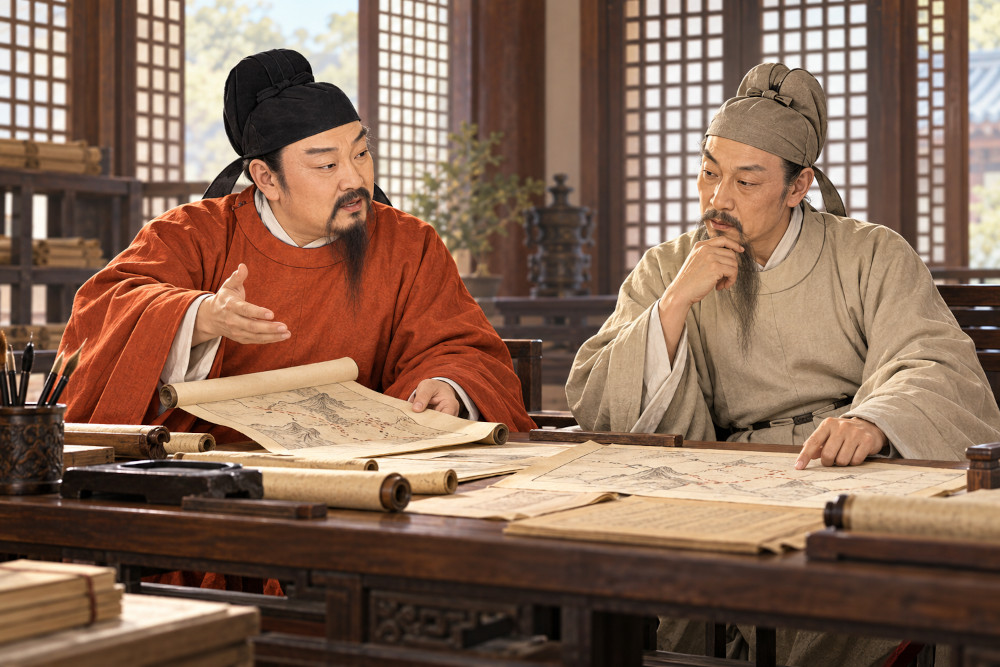
One day in the fourth year of the Zhenguan era of the Tang Dynasty (A.D. 630), Emperor Taizong, personal name Li Shimin, was having a meal when he tasted a melon of exceptional sweetness. Suddenly, however, he stopped eating. His expression darkened with sorrow, and he ordered that the remaining half of the melon be taken and offered before a memorial tablet.
The man commemorated there was Du Ruhui, the recently deceased Right Vice Director of the Department of State Affairs. Du had died after a serious illness in the fifth month of that year, at the age of only 46. Deeply grieved by his death, Emperor Taizong posthumously appointed him Minister of Works and changed his title to Duke of Lai.
For the ruler of an empire to be unable even to finish a melon because of the death of one minister raises a natural question: What kind of man was Du Ruhui?
A talent too valuable to lose
Du Ruhui (585-630), courtesy name Keming, was a native of Duling in Jingzhao, in what is now Xi’an, Shaanxi. Intelligent from childhood, he delighted in discussing literature and history. Gao Xiaoji, Vice Minister of Personnel under the Sui Dynasty, once met him and declared that Du “possessed a talent for responding to changing circumstances and would one day prove a pillar of the state.”
After Du entered the household of Li Shimin, then Prince of Qin, he found himself among a remarkable gathering of talented men. The imperial court repeatedly transferred members of the prince’s staff to posts elsewhere, and Du was appointed chief secretary of the area command at Shanzhou. He seemed certain to be separated from Li Shimin.
Seeing what was happening, Fang Xuanling hurried to advise the prince. Du, he said, was intelligent and perceptive, with the ability to assist a ruler. If the prince intended merely to guard his fief and govern without great ambition, he had no need of such a man. But if he intended to win the empire, “no one but this man will do.”
Li Shimin was startled.
“Had you not told me,” he exclaimed, “I would almost have lost this man!”
He immediately petitioned to keep Du. That single recommendation changed the course of Du’s life and preserved for the Tang Dynasty one of its most important ministers.
To tell the story of Du Ruhui, then, is impossible without speaking of another man: Fang Xuanling.
Fang Xuanling sees what others cannot
Fang Xuanling (579-648), personal name Qiao and courtesy name Xuanling, by which he was generally known, was a native of Linzi in Qizhou, in what is now Zibo, Shandong. From childhood he read widely and possessed extraordinary insight.
At a time when the Sui Dynasty appeared to be at the height of its power, most people believed peace would endure and the dynasty would last for generations. The young Fang, however, had already perceived hidden dangers. In private, he told those close to him that the Sui had gained the throne improperly and had failed to make lasting plans for its descendants. Beneath the apparent peace and order, he predicted, disorder and destruction would eventually come — and not in the distant future.
Events unfolded much as he had foreseen.
When Emperor Gaozu of Tang raised his army and Li Shimin led troops through the lands north of the Wei River, Fang “came with whip in hand to present himself at the army gate,” seeking to enter Li’s service. The two immediately found themselves of one mind, and Li appointed him a military secretary on the Weibei campaign staff.
Afterward, whenever Li’s forces captured a new place, officers and soldiers competed to search for gold, silver, and other treasures. Fang instead sought out talented men, recruiting capable individuals one after another into the Prince of Qin’s staff.
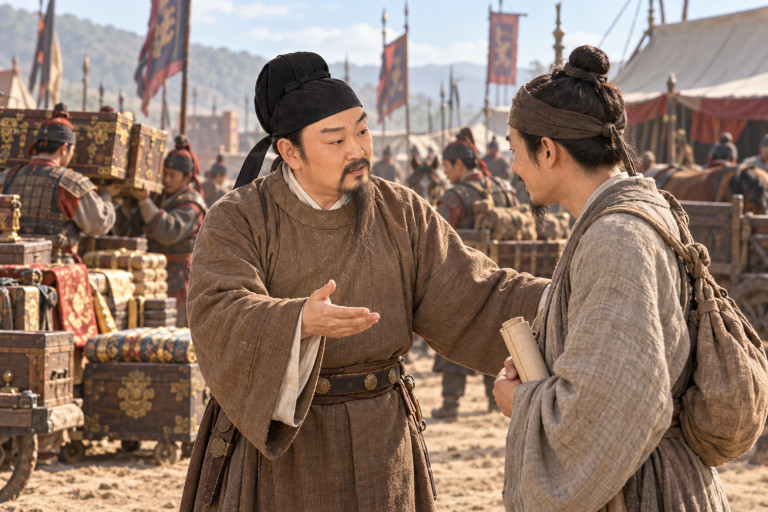
Among those he brought to Li Shimin was Du Ruhui.
The struggle for the throne
Toward the end of the Wude era, a bitter succession struggle developed among the sons of Emperor Gaozu, founder of the Tang Dynasty. His eldest son, Li Jiancheng, was the crown prince and designated heir. Li Shimin, Prince of Qin, had meanwhile gained enormous prestige through his military victories, while their younger brother Li Yuanji, Prince of Qi, sided with Li Jiancheng.
As the rivalry between Li Shimin and Crown Prince Li Jiancheng grew increasingly intense, Fang and Du repeatedly urged Li Shimin to act decisively. Li Jiancheng deeply mistrusted the two advisers and once told his brother Li Yuanji that among the men in the Prince of Qin’s household: “The only ones to be feared are Du Ruhui and Fang Xuanling.”
Li Jiancheng therefore contrived to slander Fang and Du before their father, Emperor Gaozu, and succeeded in having them expelled from Li Shimin’s household, with orders that they were “no longer permitted to serve the Prince of Qin.”
In the summer of the ninth year of Wude (626), Li Shimin finally resolved to confront Li Jiancheng and Li Yuanji. Once again, he thought of Fang and Du.
At first, the two men feared violating Emperor Gaozu’s prohibition and refused Li Shimin’s summons. Li pretended to be furious and sent Yuchi Jingde to tell them that if they refused again, Yuchi was to kill them with Li’s own sword. Yuchi repeatedly tried to persuade them, finally convincing them that Li Shimin had truly made up his mind.
Knowing that Li Jiancheng and Li Yuanji had informants within the Prince of Qin’s household, Fang and Du disguised themselves as Daoist priests and secretly entered Li Shimin’s residence. There, they helped plan the ambush of Li Jiancheng and Li Yuanji in what became known as the Xuanwu Gate Incident.
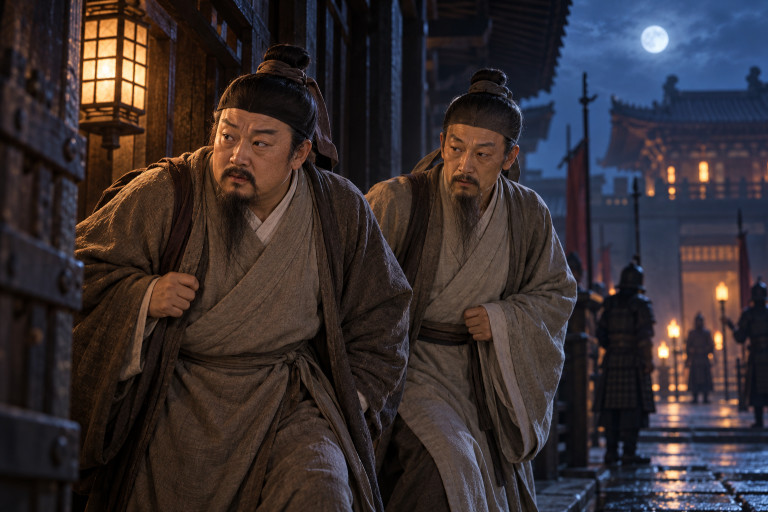
After the plan succeeded, Li Shimin was made crown prince and soon ascended the throne as Emperor Taizong. When rewards were distributed according to merit, Taizong placed Fang Xuanling, Zhangsun Wuji, Du Ruhui, and several others in the highest rank of meritorious officials.
Some senior members of the imperial clan, proud of their years of service, resented this. Taizong therefore publicly explained that these men had devised strategy and helped secure the state. Their achievements, he said, were comparable to those of Xiao He at the beginning of the Han Dynasty. Though they had not personally fought on the battlefield, their contributions deserved the highest recognition.
Later historians likewise frequently compared Fang and Du to the great early Han ministers Xiao He and Cao Shen.
‘Fang devised; Du decided’
What ultimately caused the names of Fang and Du to be remembered together for more than a thousand years, however, was their partnership during the Zhenguan era.
In the early years of Zhenguan, society had only recently begun to stabilize. Preserving that stability so people could live and work in peace became one of the Tang court’s central concerns.
Emperor Taizong placed enormous trust in Fang and Du. With a deep understanding between ruler and ministers, Taizong gave the two men considerable freedom to draw upon the institutions and administrative systems of the Sui Dynasty in establishing those of the Tang. Their work had a profound influence on later Chinese dynasties and was also transmitted eastward to Japan, where it helped shape Japanese society.
Their partnership rested on a rare mutual understanding.
Fang was resourceful and full of ideas. Whenever a problem arose, he could devise many sound plans, but he sometimes struggled to choose among them. Du, by contrast, could examine the alternatives Fang laid before him and quickly discern which was best.
This gave rise to the celebrated expression: “Fang devised; Du decided.”
A good strategy without firm judgment may remain nothing more than plans on paper. Decisiveness without careful planning, however, can easily become recklessness. Fang and Du complemented one another because each supplied what the other lacked. Many of the institutions and enlightened policies of the early Zhenguan era emerged from this combination of careful planning and sound judgment.
An untimely death
But Heaven did not grant Du many years.
Just as the two men were working together to establish a new order, Du fell ill. In the winter of the third year of Zhenguan, he resigned from office. Taizong was deeply concerned about his condition and repeatedly sent messengers to inquire after him. At first, he sent Crown Prince Li Chengqian to visit. Later, he went personally to Du’s home and sought renowned physicians and effective medicines from far and wide.
But Du’s allotted time had come, and nothing could save him. In the fifth month of the fourth year of Zhenguan, Du died at the age of 46. Taizong was overwhelmed with grief and posthumously appointed him Minister of Works.
For a long time afterward, whenever Taizong received a rare or precious object, he thought of Du and ordered that a share be sent to Du’s family.
On one occasion, he bestowed a yellow-silver belt upon Fang Xuanling. The sight of it brought memories of Du flooding back. “In those days, you and Ruhui served me together,” Taizong said sorrowfully. “Now, when I bestow rewards, I can still see you — but I can never see him again.”
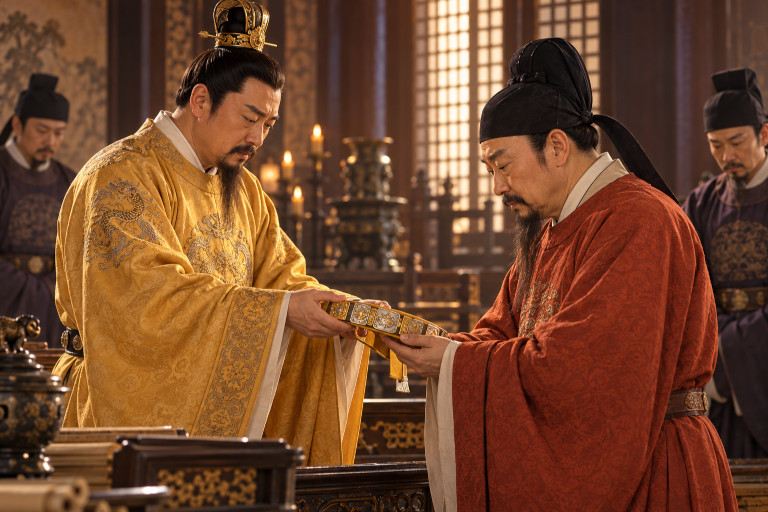
As he spoke, he began to weep.
The “deciding” in the famous phrase “Fang devised; Du decided” had itself been cut short. From then on, one of those four Chinese characters seemed to stand empty.
Fang carries on alone
After Du was gone, Fang walked on alone for another 18 years. He remained one of the foremost ministers of the Zhenguan era, serving at the highest levels of government for more than two decades and overseeing the empire’s officials. No matter how great or small the matter, he gave it his attention.
What was especially remarkable was that although he had risen to the highest rank a minister could attain, he never became arrogant about his achievements. He treated others with humility and kindness, and when he heard of another person’s virtues or accomplishments, he rejoiced as though they were his own.
Historians praised Fang for serving as chief minister for many years and keeping the affairs of state in excellent order, yet they could scarcely identify any sensational achievement for him to boast of. That apparent lack of drama was itself high praise.
Government functioned smoothly, harmony prevailed among the people, and ordinary subjects could almost forget that the chief minister existed at all. It was a fitting embodiment of the ancient maxim: “Governing a great state is like cooking a small fish.”
A final remonstrance
In the 22nd year of Zhenguan (648), Fang became gravely ill.
At the time, Emperor Taizong was determined to lead another campaign against Goguryeo personally. Fang remained deeply concerned about affairs of state. Though confined to his sickbed, he submitted a memorial urging Taizong to abandon the campaign and bring the fighting to an end. The realm, he wrote, was now at peace. This one matter alone was something he could not set his mind at rest about, even as death approached.
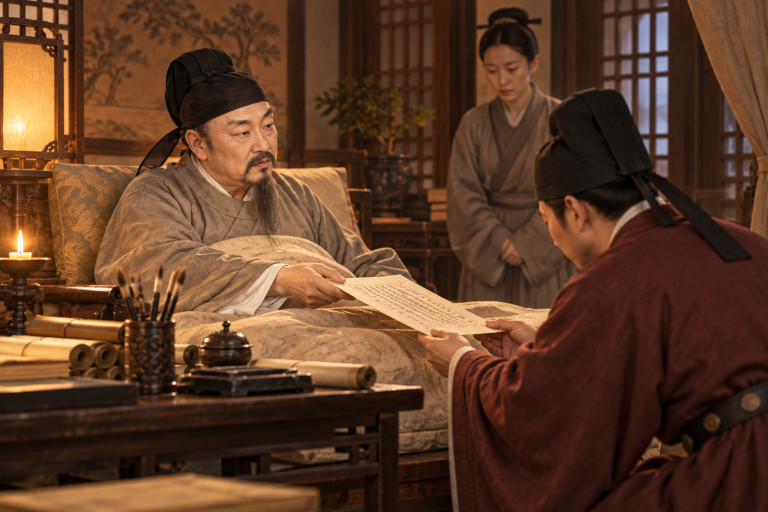
When Taizong read Fang’s final memorial, he was moved to tears.
That same year, Fang died at the age of 70.
From the day he first appeared at the army gate north of the Wei River, “whip in hand,” to the final remonstrance from his deathbed, Fang devoted his entire life to the dynasty he had chosen to serve.
Two ministers remembered as one
When later generations look back upon the Reign of Zhenguan, they often think first of Emperor Taizong’s enlightened rule and Wei Zheng’s fearless remonstrances. Yet beneath that flourishing age lay the quiet and solid foundation represented by the phrase “Fang devised; Du decided.” One excelled in planning; the other in decision. One lived to old age and saw his life’s work completed; the other died in his prime, leaving his ruler with a regret that would last a lifetime.
Historians placed their names side by side. The Old Book of Tang praised their partnership with the words: “As the sheng and the chime sounded in harmony, so did Fang and Du.” The sheng, a reed instrument, and the chime together evoked two distinct sounds blending into perfect harmony. So it was with Fang and Du.
More than a thousand years later, the image of that half-eaten melon set aside, and the emperor’s sorrowful words — “I can still see you, but I can never see him again” — remain deeply moving.
Such was the bond between ruler and ministers who understood one another and acted with one heart.
References: Old Book of Tang, vol. 66, “Biographies of Fang Xuanling and Du Ruhui”; New Book of Tang, vol. 96, “Biographies of Fang Xuanling and Du Ruhui”; Zizhi Tongjian (Comprehensive Mirror in Aid of Governance), Tang Annals, from the ninth year of Wude through the Zhenguan era; and Wu Jing, Zhenguan Zhengyao (Essentials of Government in the Zhenguan Era), “Appointing the Worthy”
Translated by Joseph Wu
Follow us on X, Facebook, or Pinterest
