
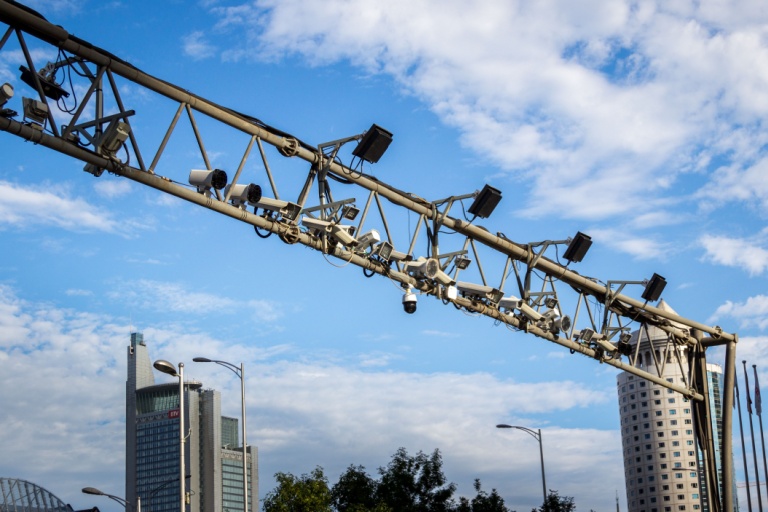
Across China, citizens are increasingly waking up to a reality where their private lives are no longer their own. The Chinese Communist Party’s (CCP) surveillance apparatus has evolved from simple public monitoring into an “unbelievable” degree of digital and physical intrusion, creating a pervasive environment of systemic control.
Real-time intervention: The Didi experience
The most jarring examples of this evolution occur in the most mundane settings. For instance, while conversing with a Didi driver about his daily struggles — earning only four to five thousand yuan for ten hours of labor — the conversation was abruptly halted by the car’s technology. A prompt window flashed on the driver’s phone, warning him to stop discussing sensitive topics.
This is not merely anecdotal; reports have long highlighted how ride-hailing platforms in China are integrated into state safety and monitoring systems. Drivers often face “Driver Facial Verification” and continuous audio monitoring, in which algorithms are trained to flag keywords deemed politically sensitive or socially destabilizing.
The breach of the private home
The surveillance net has stretched into the living room. Residents like Ms. Huang in Beijing have noted that private conversations about commercial products, such as lipstick, lead to immediate, targeted ads on mobile shopping sites — suggesting that smartphone microphones are “always-on” and feeding data into commercial and state-linked big data pools.
More frightening are reports of physical hardware being compromised. In Henan, a couple discovered their home security camera was transmitting a stranger’s voice in the middle of the night. Built-in cameras on smart TVs — particularly those from state-championed brands like Huawei — are increasingly viewed with suspicion. Huawei’s own privacy policies acknowledge the collection of data regarding “family and friends” and device interactions, and security experts have frequently warned that these “smart” features can function as dual-purpose monitoring tools.

International concern and cyber-precautions
The international community has taken note. During high-level visits, such as German Chancellor Olaf Scholz’s 2024 delegation to China, staff received rigorous cybersecurity training. The German Federal Office for the Protection of the Constitution (BfV) maintains strict advisories for travelers:
- Device isolation: Avoid bringing personal phones or laptops; use “clean” temporary devices.
- Network integrity: Never connect to local business or institutional Wi-Fi, which is presumed to be compromised.
- The “Skynet” architecture: Ms. Liu, a former Shanghai technology professional now living in the U.S., provides an “insider” view of the “Safe City” project, a key component of the broader “Skynet Project” (Tianwang).
As of 2019, Skynet boasted over 200 million public surveillance probes. By 2023, estimates suggested the number had climbed to over 700 million cameras — roughly one lens for every two citizens, far exceeding the number of public surveillance cameras in the United States. Managed by state-owned giants China Mobile, China Unicom, and China Telecom, the system uses AI to identify clothing, gender, age, and facial features in seconds.
Ms. Liu reveals that tech start-ups are regularly coerced into adding “monitoring features” to their apps, tracking everything from user location to “access time,” making it impossible for private companies to refuse state participation. She cited an example of a Shenzhen-based tech start-up that was asked by senior CCP officials to add monitoring features to an app they developed to track users’ access time. This made her realize that almost all widely used APPs are subject to this form of surveillance.
The final frontier: National internet ID
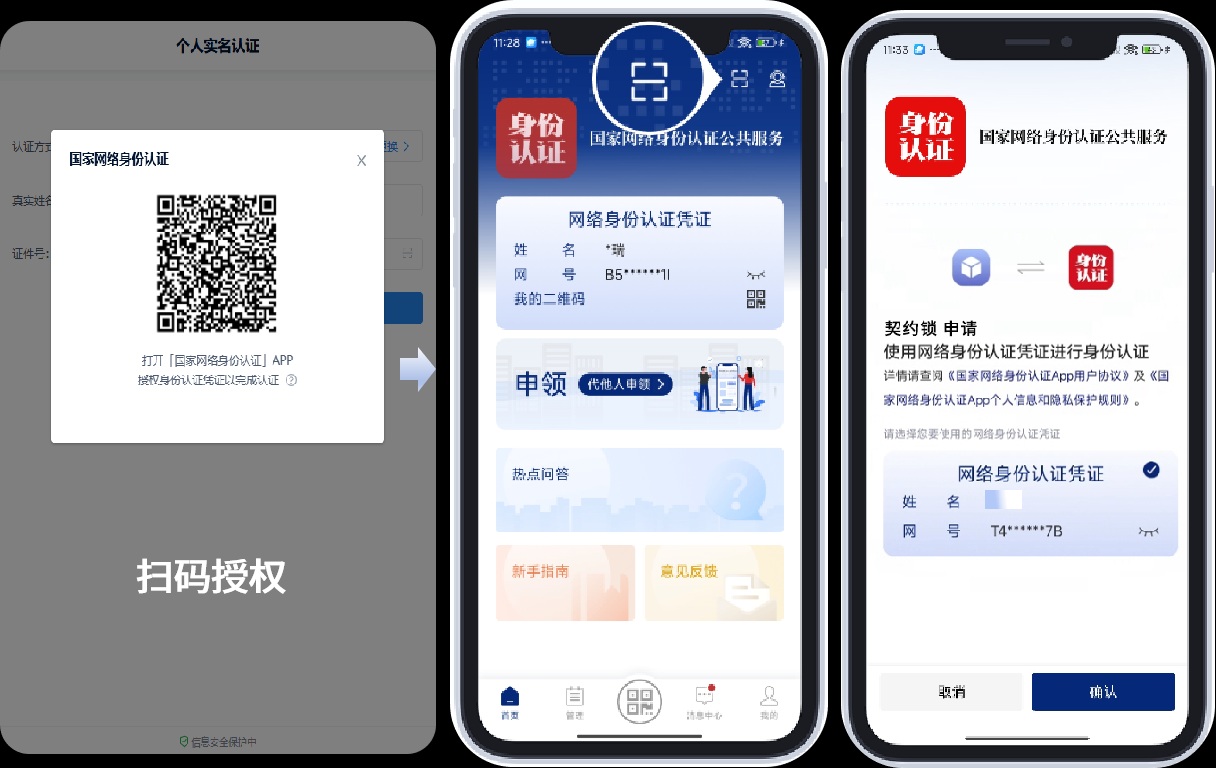
In 2025, the CCP officially launched the National Internet Identity Authentication system. This centralized platform issues “network numbers” and “network credentials” to users. While the government claims this protects privacy by hiding real names from private companies, human rights advocates warn it is the ultimate tool for “precise management.” It allows the state to track every website visited and every message sent under a single digital profile, enabling them to “disconnect” an individual from the digital world entirely if they are deemed a threat.
The human element: 10 million informants
High-tech surveillance is bolstered by low-tech human monitoring. A Deutsche Welle commentary noted that the CCP also relies on the Political and Legal Committee, a special party bureaucracy, to coordinate and operate this vast surveillance network. This network consists of about 10 million informants, five times the number of police officers in China, forming a labor-intensive surveillance system. In this way, the CCP is not only strengthening its control over society but also ensuring that potential threats are identified and addressed in a timely manner.
The Wall Street Journal reported that the CCP is deepening its systemic control, embedding the party’s power into the daily lives of Chinese society. This control is not merely to address specific threats, but also to consolidate the CCP’s long-standing rule. The core strategy is to infiltrate the Party and state’s power into every community, using the police and ordinary people to monitor and manage society. This “Grid Management” system uses ordinary citizens to monitor their neighbors, creating a social pressure cooker in which dissent is identified and dealt with before it can ever reach the public square.
No escape from the ever-seeing eye
The transformation of China into a high-tech surveillance state represents a profound shift in the relationship between the governed and the governors. By weaving together advanced artificial intelligence, a massive network of physical sensors, and a traditional, labor-intensive system of human informants, the CCP has created an environment where “privacy” is an obsolete concept.
This infrastructure — stretching from the interior of a Didi taxi to the private screens of a family’s smart TV — does more than monitor for crime; it functions as a digital cage designed to ensure total social compliance and enforces CCP rule. As the new National Internet ID system centralizes this control further, the boundary between public life and private thought continues to vanish, leaving both Chinese citizens and international visitors to navigate a society where an unseen, ever-present eye records and controls every word, purchase, and movement.
Translated by Chua BC and edited by Helen London
Follow us on X, Facebook, or Pinterest
