
In a person’s life, achievements, wealth, and honor all come from virtue. The amount of virtue accumulated in previous lives determines the quality of future ones. Some may also receive compensation in this life for their good deeds, reflected in prosperity, status, and career advancements; this is a manifestation of present rewards. “Spending a fortune will still bring it back,” reads the profound work of Li Bai, yet few can truly grasp its essence. The following stories of several individuals from the Qing Dynasty, who harbored good intentions and showed generosity in their giving, can inspire.
A scholar’s generosity alleviated hardship, leading to success in the imperial examination
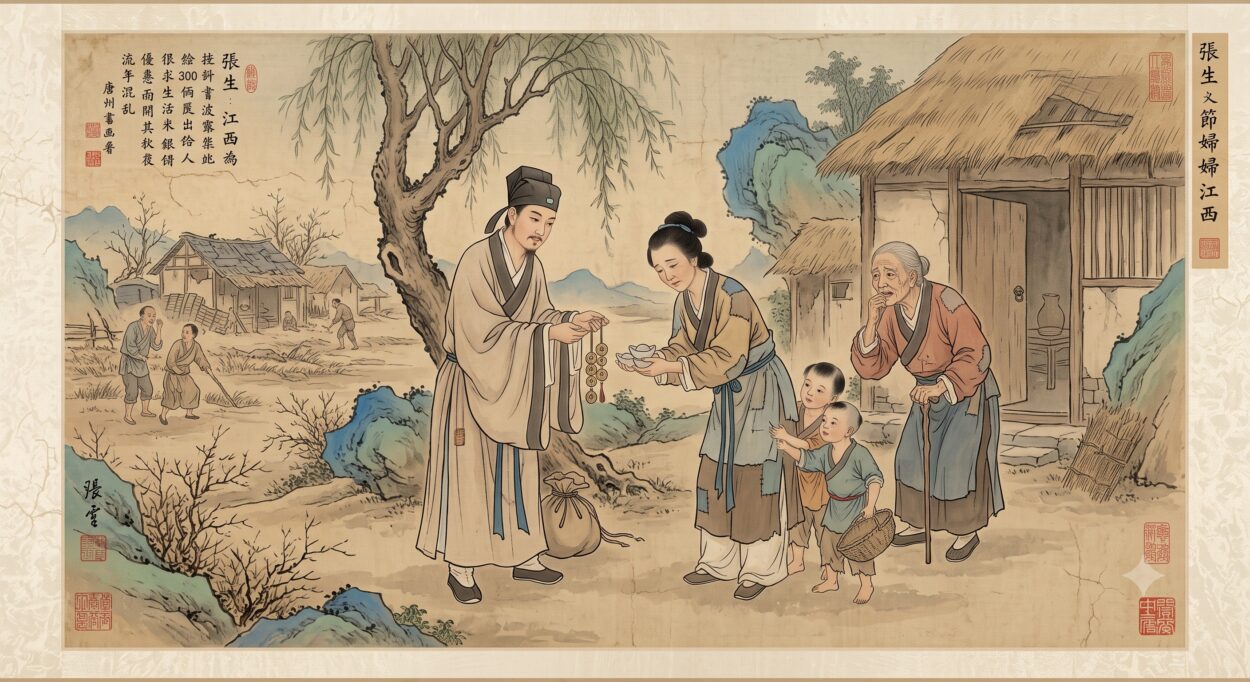
In the area of Siming (the ancient name for Ningbo), a scholar surnamed Zhang studied hard at an official school for over 20 years, yet he never passed the imperial examination or showed any sign of success in the civil service. One day, he traveled to Jiangxi and, unexpectedly, acquired a fortune of 1,000 taels of silver. At that time, he planned to use the money to buy an official position and returned to his hometown.
Another day, he happened to see a woman from his family. She was very virtuous; although she had lost her husband, she single-handedly cared for her sick mother-in-law and raised her young children. At that time, the region was in turmoil, with chaos, resource scarcity, and skyrocketing rice prices. Families with male members struggled to survive, let alone widows and orphans. Seeing this situation, Zhang immediately took out 300 taels to support the woman and her relatives. Later, a family surnamed Qi from a neighboring village came seeking refuge, having arrived with nothing. They were in dire straits, lacking food and shelter, and were even considering selling their child. Upon learning of this, Zhang again took out 300 taels and gave it to them.
Originally planning to use the 1,000 taels to buy an official position, Zhang had now given away most of it. Some laughed at him, saying he overestimated his capabilities, while others wanted to help, but felt powerless. With no other options, Zhang returned to the official school to continue his studies. Not long after returning, however, he passed the imperial examination with flying colors and was appointed as a county magistrate, eventually becoming a prefect.
Wang helped Cao while in distress; years later, they reunited to repay kindness
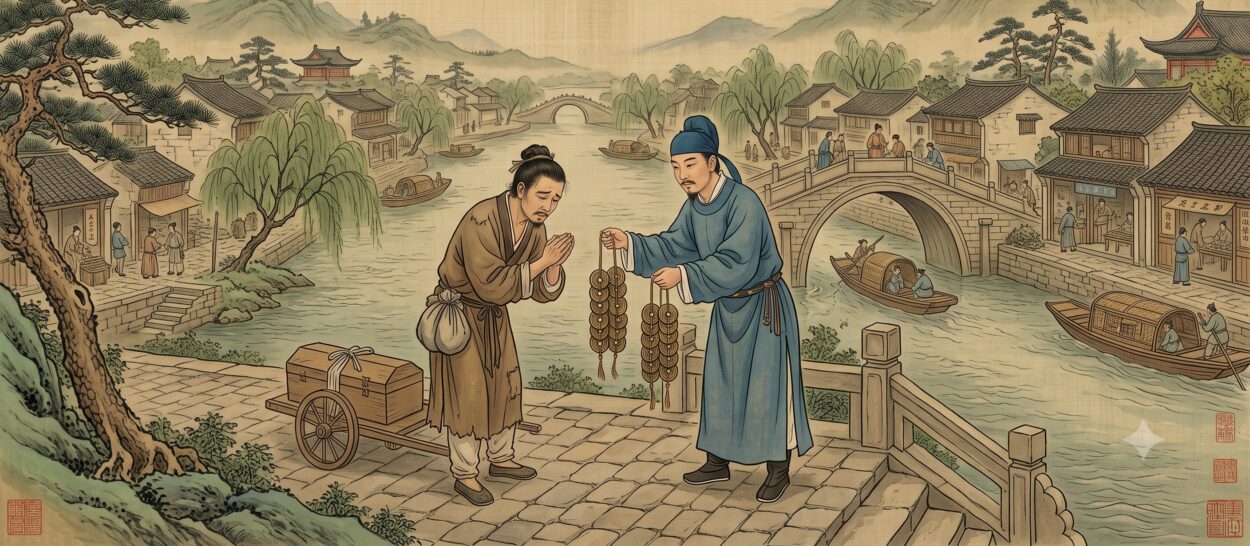
In Jiangnan, there were two young men, one surnamed Cao and the other Wang, who initially did not know each other and later became close friends. At first, Cao, who lived in Jiangning (the ancient name for Nanjing), went to Zhejiang with his father to seek relatives, but found none and lost his father on the way. Left with nothing, he had to beg for a living. To return his father’s body home for burial, he told everyone his story, hoping someone would help him with travel expenses. He then met Wang, who sympathized with his plight and, without hesitation, gave him four strings of copper coins. Cao felt very grateful and was able to take his father’s body back to his hometown.
Ten years passed in the blink of an eye, and Cao’s business in his town flourished. As he looked at the growing wealth in his home, he remembered his benefactor, Wang, and regretted that he could not repay him. Wang was from Ningbo, and one year, his town was attacked by foreign soldiers; all his possessions were looted. He fled with his wife and children to Jiangning, quickly ran out of money, and began begging. At that moment, Wang encountered Cao on the road and was shocked to see Wang in such a destitute state.
The poor man recounted his misfortunes to Cao, who immediately welcomed him into his home. Being mid-winter, he first provided Wang’s family with winter clothing, then rented a house for them to live in, and even offered his 20 acres of land to ensure they could live there in peace. Cao’s gratitude most likely moved heaven, and he unexpectedly received another fortune. He then gave Wang a portion of this wealth; from that point on, his situation completely turned around, and his family began to live without worry. Even Wang himself might not have realized that a single act of casual charity performed years earlier had helped him through the greatest challenge of his life.
A scholar gave a penny to a beggar; granted life again by the King of Hell
In Hangzhou, there was a scholar who, despite being well-versed in the classics, had a bad habit: He loved to drink and would curse people when drunk. Over time, this became second nature to him.
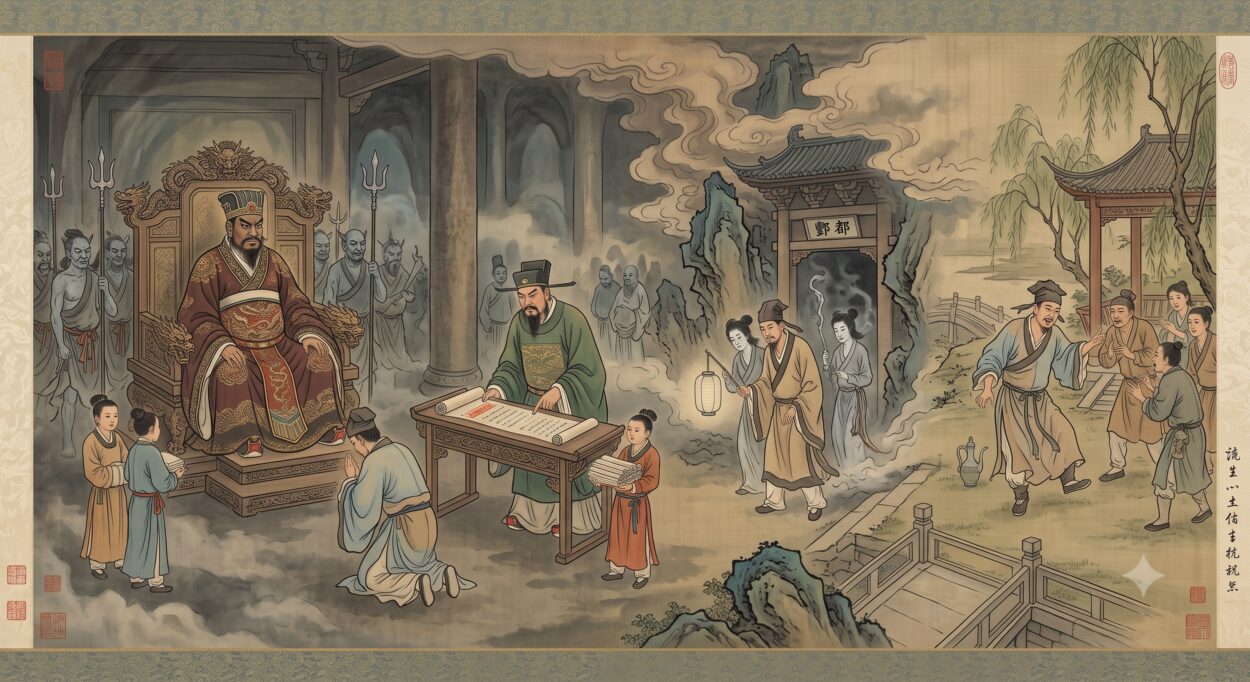
One New Year’s Day, he encountered a woman begging on the street. The woman was dressed in rags and looked pitiful. She begged for alms from passersby, but no one paid her any attention. Seeing her plight, the scholar felt a surge of compassion and, without hesitation, pulled a penny from his sleeve and handed it to her. Later, he fell ill and lost consciousness. His family thought he was beyond saving, but unexpectedly, he suddenly woke up. He told them that he had gone to the underworld and even met the King of Hell. The King of Hell let him know that he had acted frivolously and had committed many wrongdoings in his life. He ordered the judge to check the scholar’s record of good and bad deeds, and found that one good deed was recorded.
The King of Hell was surprised and asked the judge about the good deed that could completely offset the scholar’s wrongdoings. The judge replied that he had given a penny to a begging woman. However, the woman was no ordinary person, but an incarnation of Guanyin Bodhisattva. Other passersby ignored her, but the scholar was willing to give. Upon hearing this, the King of Hell granted the young man a second chance at life and extended his lifespan.
After waking up, the scholar never drank again. He spent the rest of his life doing good deeds and accumulating virtue, living many more years before passing away. The amount of money given is not important; the key is the sincere intention to help and relieve others selflessly. A single thought of kindness will surely bring future blessings!
Translated by Joseph Wu and reviewed by Laura Cozzolino
Follow us on X, Facebook, or Pinterest
