
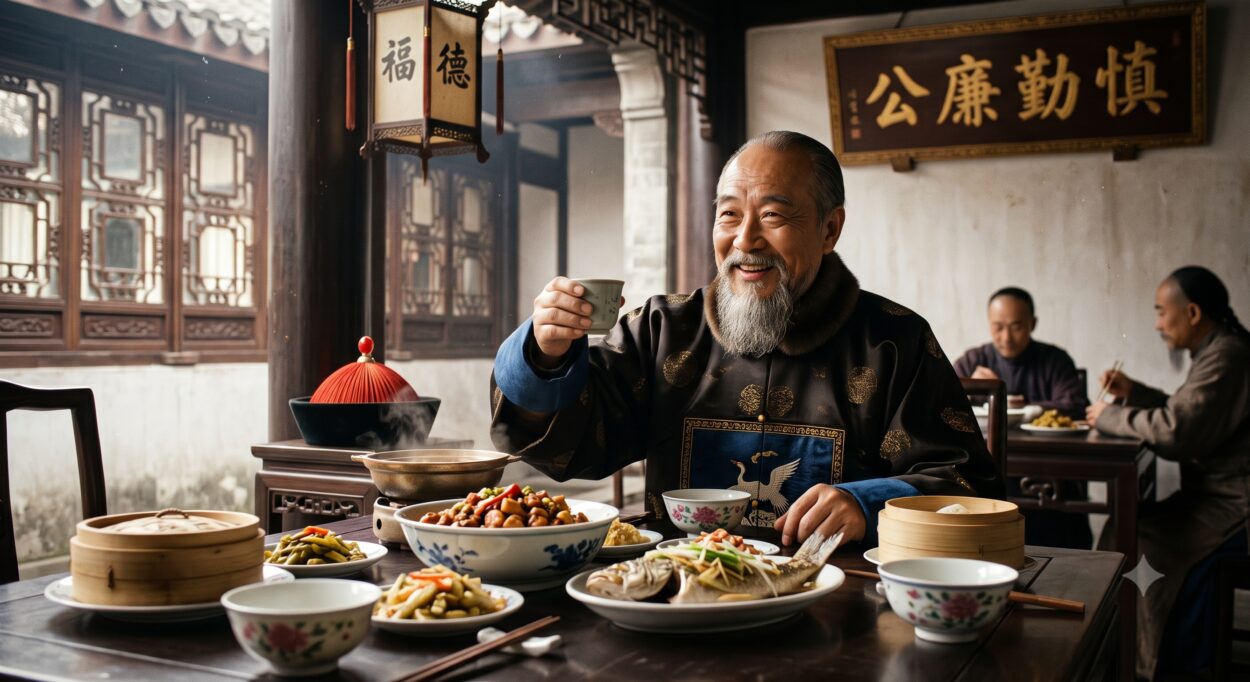
Throughout his long career, Ding Baozhen remained remarkably honest. He never sought personal wealth or devoted himself to building a family fortune. Instead, he poured his energy into public service, dedicating his life to the responsibilities entrusted to him and the welfare of the people under his care. Yet behind the image of the stern and fearless iron-willed statesman was another side of Ding Baozhen. Those who knew him remembered not only his determination and discipline, but also his warmth, appreciation for fine food, and genuine interest in culinary traditions. Perhaps it was this combination of strength and humanity that allowed his memory to endure. More than a century after his death, millions of people around the world unknowingly speak his name whenever they order Kung Pao Chicken — a beloved dish that carries with it the legacy of a man whose life was defined not by wealth or power, but by integrity and service.
The story behind the famous dish
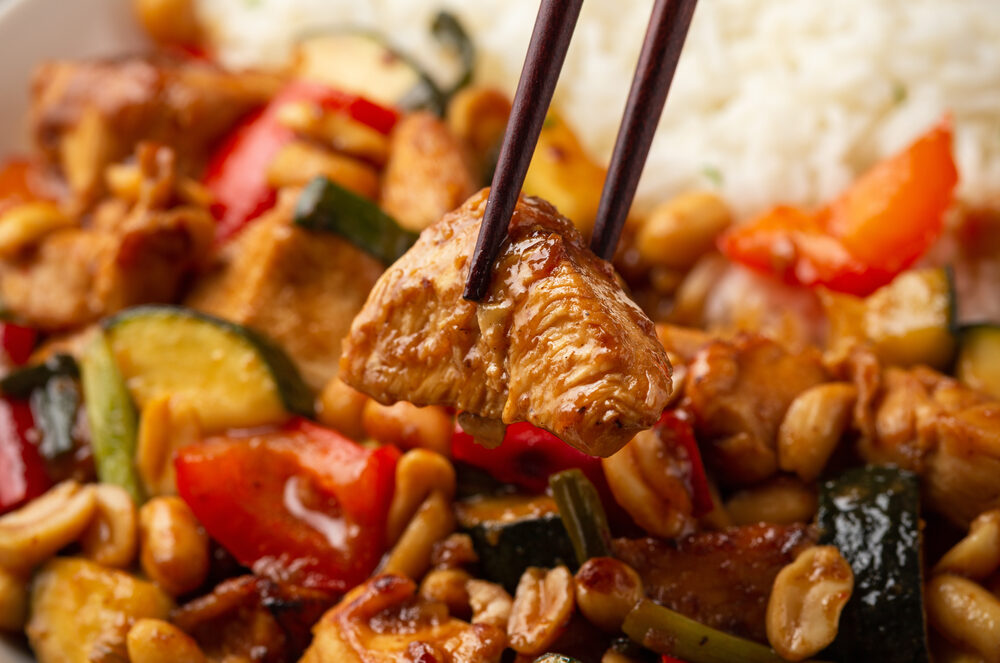
The exact origin of Kung Pao Chicken has been lost to history, and several traditions have been passed down over the generations. One popular account traces the dish to Ding Baozhen’s years as Governor of Shandong. According to this version, Ding enjoyed a stir-fried chicken dish prepared with a savory sauce, peanuts, and dried chilies. His household chef gradually refined the recipe, and after Ding was later honored with the title Grand Guardian of the Crown Prince (Taizi Taibao), the family dish became known as “Kung Pao Chicken” — meaning, in essence, “Grand Guardian’s Chicken.”
Another widely told story places the dish’s origins in Sichuan. According to this account, Ding Baozhen once traveled through the province in disguise and stopped at a humble roadside restaurant. There, he tasted a flavorful stir-fry made with diced chicken and peanuts that left a lasting impression. After returning home, he asked his own chef to recreate the dish, adding the distinctive Sichuan peppercorn that gives the cuisine its famous, fragrant, numbing spice. Whether either story is entirely accurate may never be known. What remains certain is that this beloved dish became forever linked with Ding Baozhen’s name, allowing the memory of a remarkable iron-willed statesman to endure in an unexpected way — through a flavorful dish enjoyed by people around the world.
A life spent in service
By 1886, decades of relentless service had taken a heavy toll on Ding Baozhen’s health. Years of overseeing military campaigns, public works, economic reforms, and provincial administration had gradually exhausted the strength of the man who had devoted his life to serving others. At the age of 66, while still serving as Governor-General of Sichuan, Ding Baozhen passed away in office. The news spread quickly throughout the provinces he had governed.
When his family and former subordinates gathered to sort through his personal belongings, what they discovered astonished them. This was a man who had governed two of the Qing Empire’s wealthiest provinces for more than two decades. He’d held immense authority and influence. Yet he left behind almost nothing. In fact, the official residence contained so little money that there was not even enough to cover his funeral expenses. Even more remarkable was the discovery that Ding Baozhen had accumulated substantial personal debts — not because of extravagance or luxury, but because he had personally advanced funds to keep important public projects moving, including the restoration of Dujiangyan and the operation of the Sichuan Machinery Bureau.
Those debts had been incurred for the benefit of the people. Not a single portion had been spent on himself. In an era when many officials used their positions to accumulate wealth and influence, Ding Baozhen left behind a very different legacy: a life of authority without greed, achievement without vanity, and service without personal gain.
The people’s farewell
When news of Ding Baozhen’s death reached Chengdu, thousands upon thousands of ordinary citizens poured into the streets to mourn. The elderly and the young stood along the roads with tears in their eyes. Shopkeepers closed their businesses. Farmers left their fields. People from every walk of life came not because they were required to, but because they wished to offer a final farewell to the official who had devoted himself to their welfare. In the end, it was not the imperial treasury that provided for his funeral. His former colleagues, local merchants who admired his character, and grateful citizens throughout Sichuan came together to contribute the necessary funds. They repaid his debts and ensured that his coffin could be escorted with dignity back to Jinan for burial.
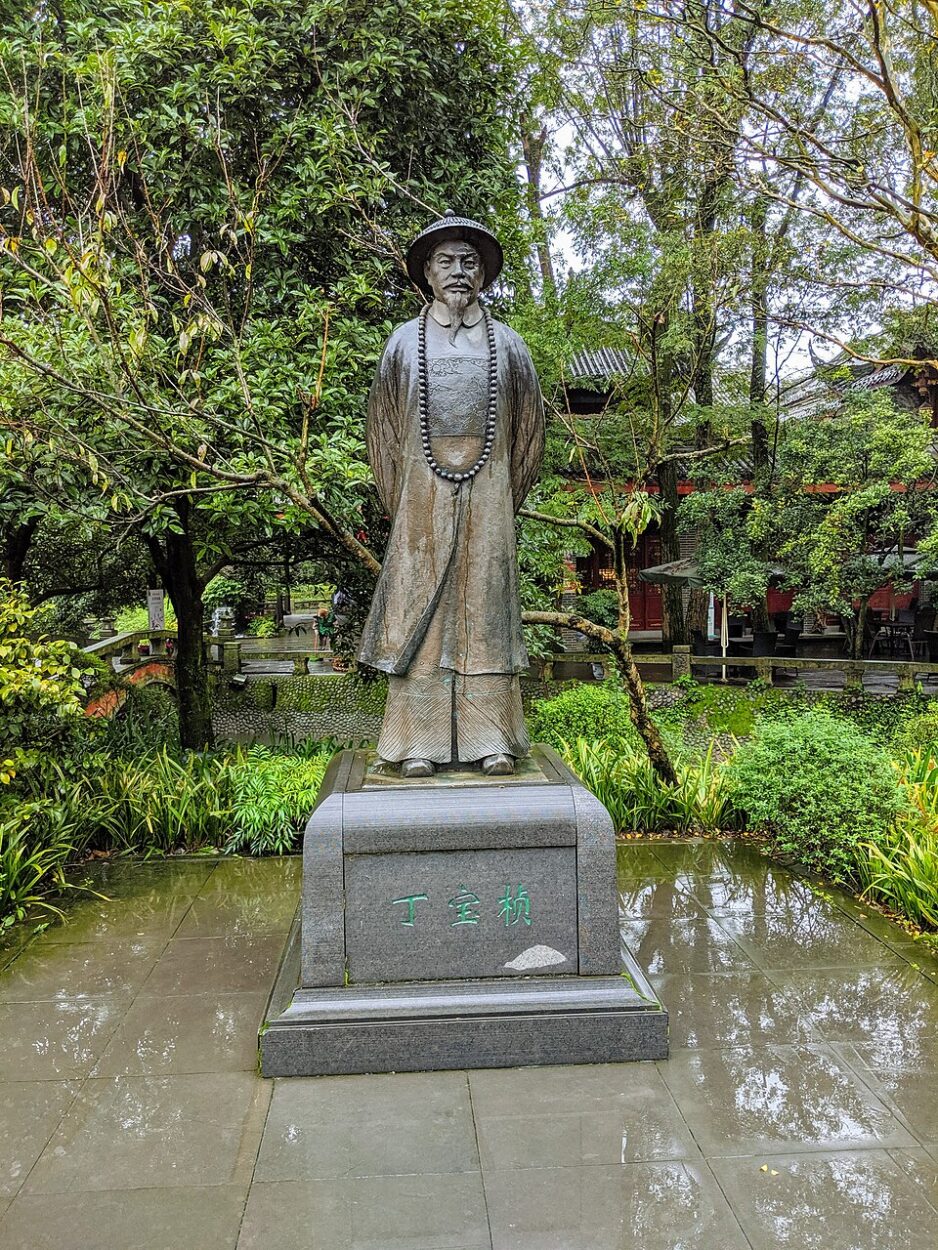
When the Qing court learned of the circumstances surrounding his death, it was deeply moved. Ding Baozhen was posthumously honored with the title Grand Guardian of the Crown Prince (Taizi Taibao), the honorific that would later give rise to the name “Kung Pao.” Memorial shrines were also established in his honor in Guizhou, Shandong, and Sichuan. It was a fitting tribute to a man who had given his life in service. Yet perhaps the greatest monument to Ding Baozhen was not built from stone. It lived on in the gratitude of the people whose lives he had touched.
A legacy greater than a famous recipe
Ding Baozhen’s life stands as one of the most remarkable examples of integrity and devotion among the officials of the late Qing Dynasty. With compassion for the people and the courage to uphold what was right, he left behind a legacy that endured long after his era. Today, whenever a steaming plate of Kung Pao Chicken arrives at the table — its vibrant peppers, fragrant spices, and tender pieces of chicken filling the air with its lovely aroma — it is worth pausing for a moment to remember the story behind the name.
Behind this beloved dish was not merely a title or a recipe. It was the memory of a white-haired, iron-willed statesman who spent his life serving others, who held great power yet sought no wealth, and who left behind something far more valuable than possessions: a name remembered for integrity, courage, and compassion.
Translated by Katy Liu and reviewed by Tatiana Denning
See Part 1 here
See Part 2 here
See Part 3 here
Follow us on X, Facebook, or Pinterest
