
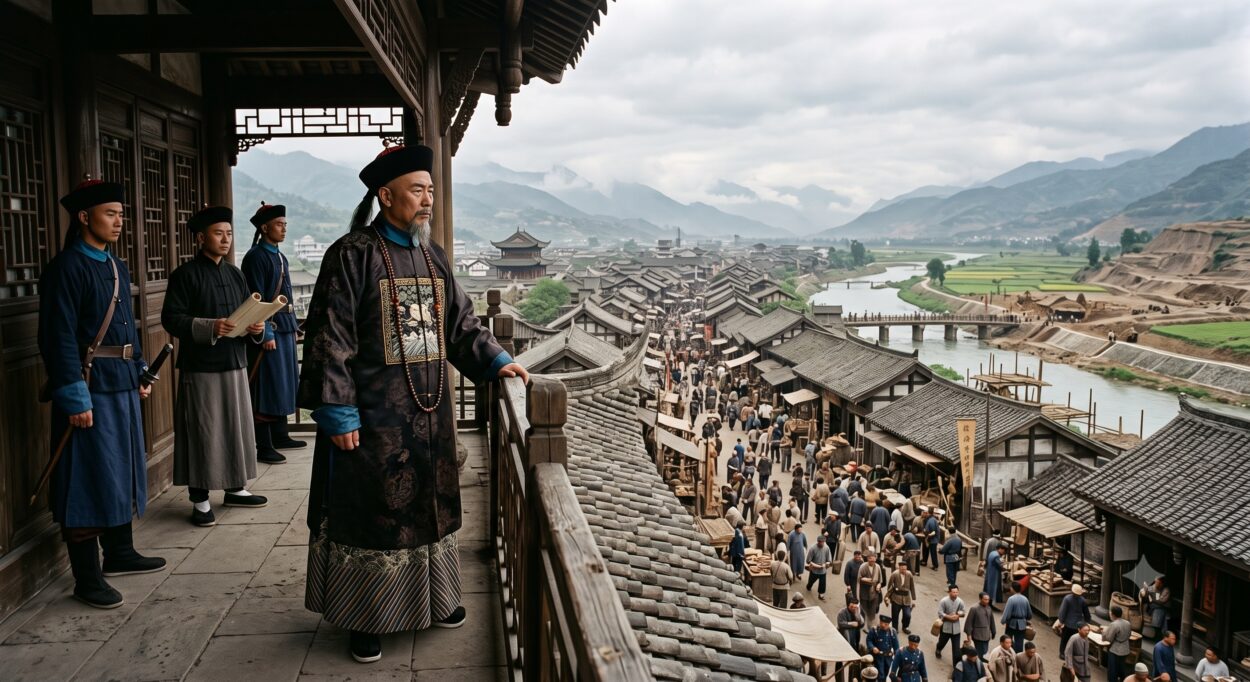
In 1876, at the age of 56, the iron-willed statesman Ding Baozhen reached another milestone in his distinguished career when he was appointed Governor-General of Sichuan. The province he inherited was rich in natural resources and economic potential, yet it faced deep challenges. Official corruption had become widespread, government finances were under strain, and recurring floods and droughts brought hardship to countless farming communities.
Ding Baozhen arrived in Sichuan with the same determination that had guided every stage of his public service. The corrupt officials who had grown accustomed to using their positions for personal gain soon discovered that the new Governor-General was neither easily deceived nor easily intimidated. Ding launched investigations into dishonest administrators and removed those who had abused their authority.
The message was clear: Under his leadership, integrity — not connections or influence — would determine a person’s standing. But Ding understood that eliminating corruption was only the first step. A government could not truly serve its people simply by punishing wrongdoing. For Sichuan to recover and prosper, its people first needed stability, reliable food supplies, and opportunities to rebuild their lives. With this belief, Ding turned his attention from confronting problems to creating solutions.
Restoring the lifeline of Sichuan
Among all the challenges facing Sichuan, none was more urgent than the condition of Dujiangyan — the ancient irrigation system built more than two thousand years earlier that had sustained the region for generations. For centuries, Dujiangyan had been the lifeblood of western Sichuan, transforming the Chengdu Plain into one of China’s most fertile agricultural regions. Years of neglect, however, had taken their toll. Rivers had become clogged with sediment, irrigation channels had fallen into disrepair, and the delicate balance of the water system had been disrupted. During the rainy season, the Min River overflowed its banks, flooding villages and farmland across the Chengdu Plain. During dry seasons, insufficient water left fields struggling to produce crops. The people suffered from both extremes.
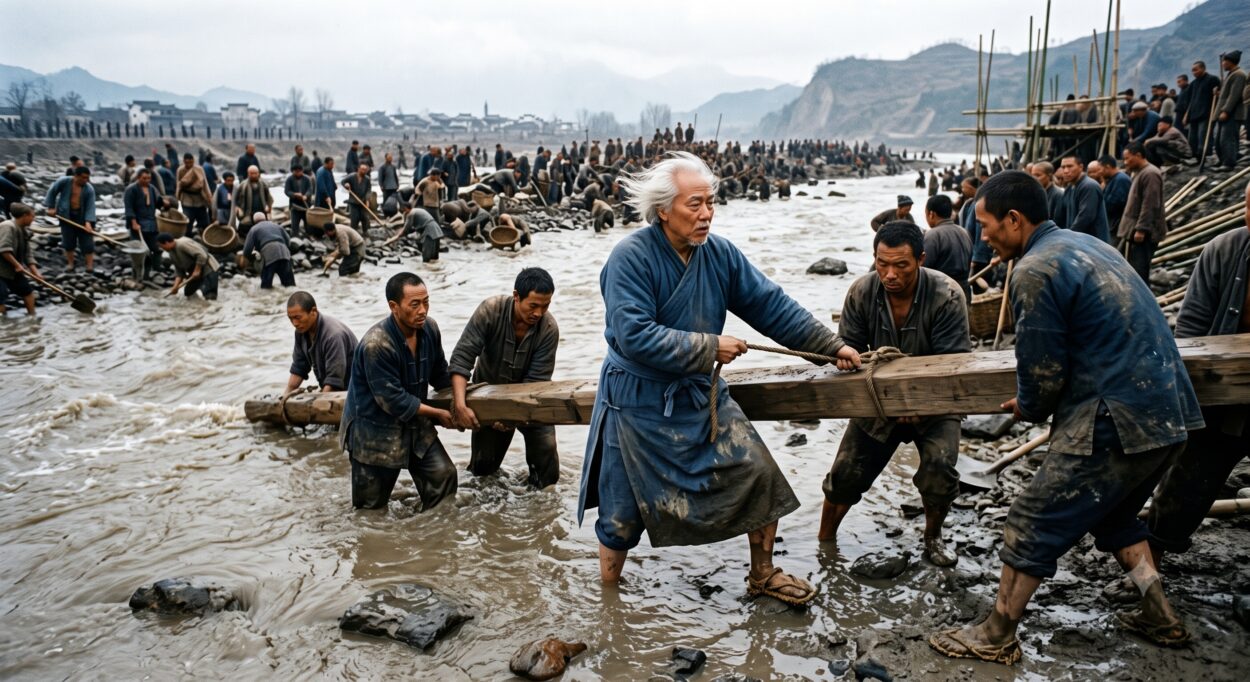
Ding Baozhen understood that restoring the water system was essential to restoring the province itself. He held a simple principle: “To govern Sichuan well, one must first govern its waters.” In 1877, he submitted a request to the imperial court for 90,000 taels of silver to carry out the most extensive restoration of Dujiangyan in many years. The request was approved. But Ding did not oversee the project from the comfort of his official residence. Instead, he moved his headquarters directly to the construction site in Guan County (present-day Dujiangyan City).
He was nearly sixty years old, and his health had already begun to decline. Yet each day, he exchanged his official boots for straw sandals and worked alongside tens of thousands of laborers. He stood with them in the freezing winter waters, personally inspecting dredging operations and monitoring every stage of the restoration. Workers saw that their Governor-General shared their hardships rather than merely issuing orders from afar. They often recalled how Ding endured the same cold, exhaustion, and difficult conditions they faced. A saying soon spread throughout the work camps: “When we see Governor Ding’s white hair blowing in the cold wind, how can any of us be lazy?”
Inspired by his example and guided by his exacting standards, the workers completed the enormous restoration project with remarkable efficiency. When the work was finished, western Sichuan experienced renewed prosperity. Flooding became far less destructive, harvests became more abundant, and the fertile “Land of Abundance” regained much of its former vitality. Grateful villagers erected memorial tablets in honor of the man whose leadership had transformed not only the landscape, but also the lives of the people who depended upon it.
Building industry for a stronger nation
Ding Baozhen understood another important truth. A nation could not depend solely on agriculture if it hoped to withstand the challenges of a rapidly changing world. As foreign powers advanced technologically and military conflicts became increasingly shaped by modern weapons, China needed to strengthen its industrial foundation. For Ding, modernization was not merely about adopting new machines — it was about ensuring the nation could protect itself and provide greater security for its people. As a supporter of the Self-Strengthening Movement, he established the Sichuan Machinery Bureau in Chengdu in 1877, creating the first modern military manufacturing enterprise in southwestern China. The undertaking was far from easy. Funding was limited. Modern equipment had to be imported from abroad. Skilled technicians had to be recruited, trained, and organized. Every step presented new challenges. Yet Ding remained determined.
After its completion, the factory began producing rifles, ammunition, and modern artillery to strengthen regional defense. More importantly, it introduced new technologies and cultivated a generation of skilled craftsmen, helping lay the foundation for industrial development throughout southwestern China. To Ding Baozhen, modernization was never about simply copying foreign nations. It was about using knowledge and innovation to strengthen China, preserve its independence, and allow its people to live with greater security and dignity.
Taking on the salt monopoly
Perhaps Ding Baozhen’s most difficult struggle came not on the battlefield or at a construction site, but in the complicated world of economic reform. At the time, Sichuan’s salt industry had become deeply corrupted. Powerful merchants, illegal smugglers, and dishonest officials had formed networks that controlled the trade for their own benefit. Government-operated salt enterprises suffered heavy losses, while the imperial treasury received only a fraction of the revenue it should have collected. Meanwhile, ordinary families were forced to pay high prices for poor-quality salt as enormous profits flowed into the hands of those who controlled the market.
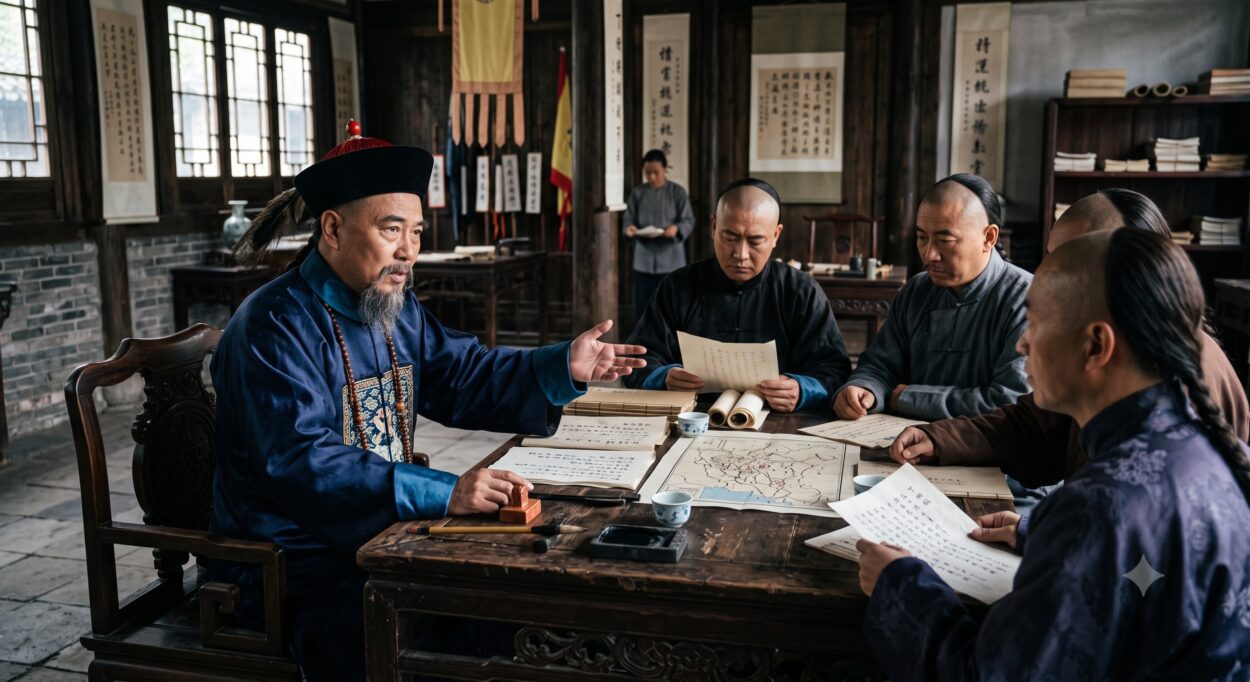
Ding Baozhen believed the system could not continue. He introduced sweeping reforms that placed transportation under stronger government oversight while allowing merchants to participate in distribution through a more regulated system. At the same time, he launched a determined campaign against illegal salt trading and official corruption. The reforms struck directly at powerful interests that had profited from the old system. Those who stood to lose their wealth fought back fiercely. Influential figures submitted accusations against Ding in Beijing. Rumors spread throughout Chengdu, and threats against his life became increasingly common. Many urged him to compromise. He refused.
In a memorial statement addressed to the Guangxu Emperor and Empress Dowager Cixi, Ding expressed his conviction: “My purpose in serving as an official is to serve the sovereign and the people — nothing else. I would rather be dismissed from office than sacrifice my principles to please powerful interests.” These were not merely words written in an official document. For years, Ding endured intense political pressure while continuing to advance his reforms. He was willing to risk his position because he believed that an official’s duty was not to protect his own power, but to uphold what was right.
The results were remarkable. Government salt revenues increased severalfold within a relatively short period, helping to reverse Sichuan’s long-standing financial difficulties. At the same time, salt prices declined significantly, allowing ordinary families to access cleaner, more affordable supplies. What began as a dangerous challenge to powerful interests became one of the Qing Dynasty’s most successful fiscal reforms. Once again, Ding Baozhen had shown that integrity, when combined with wisdom and determination, could transform even the most deeply rooted problems.
Leadership rooted in service
Whether restoring an ancient irrigation system, establishing modern industry, or confronting deeply entrenched corruption, Ding Baozhen remained guided by the same conviction that had inspired him when he first took up arms to defend his hometown: “Government exists for the benefit of the people.” For Ding, leadership was never defined by rank, privilege, or authority. It was measured by the willingness to accept responsibility, endure hardship, and carry burdens that others would rather avoid. Through his efforts, Sichuan was transformed. Its waters were restored, its industries strengthened, and its government brought closer to the principles of integrity and accountability.
But such dedication came at a tremendous personal cost. Years of demanding work gradually weakened his health. The same determination that had driven him through battlefields, reform campaigns, and countless days of service also consumed his own strength. The official who had spent his life carrying the burdens of others was now approaching the final chapter of his extraordinary journey. Yet even in his final years, Ding Baozhen’s legacy was still being written.
See Part 1 here
See Part 2 here
Translated by Katy Liu and reviewed by Tatiana Denning
Follow us on X, Facebook, or Pinterest
