

Many people who have undergone near-death experiences insist that they briefly left their physical bodies. Because such experiences are difficult to reproduce or measure objectively, their nature remains a subject of debate. Yet accounts of out-of-body experiences have appeared throughout history, including some associated with prominent writers, physicians, and other public figures.
Hemingway’s brush with death
The renowned American writer and Nobel Prize winner Ernest Hemingway described an extraordinary experience after being seriously wounded during World War I.
On the night of July 8, 1918, the 18-year-old Hemingway was serving with the American Red Cross near the Italian front. Having initially volunteered for ambulance duty, he was distributing supplies to Italian soldiers when an Austrian trench mortar shell exploded nearby. Metal fragments tore into his legs, leaving him badly wounded.
Hemingway later told his friend Guy Hickok, a correspondent for the Brooklyn Daily Eagle, that he felt his soul, “or something,” leave his body. He compared the sensation to pulling a silk handkerchief from a pocket by one corner. It seemed to float away, then return and slip back into place.
Eleven years later, Hemingway incorporated a remarkably similar experience into his celebrated 1929 novel A Farewell to Arms. The novel’s protagonist, Frederic Henry, describes what happens when an explosion strikes his position:
“I felt myself rush bodily out of myself and out and out and out and all the time bodily in the wind. I went out swiftly, all of myself, and I knew I was dead and that it had all been a mistake to think you just died. Then I floated, and instead of going on, I felt myself slide back. I breathed, and I was back.”

The passage reflects the experience Hemingway had described after his own near-fatal injury, transforming a terrifying episode of war into one of the novel’s most memorable scenes.
An extraordinary account presented by Sir Auckland Geddes
British anatomist Sir Auckland Geddes also brought an unusual account of apparent separation between consciousness and the physical body to the medical community’s attention.
In a medical address, Geddes presented the recorded experience of an unidentified man who had become critically ill with acute gastroenteritis. The man’s condition deteriorated rapidly, leaving him in severe pain and too weak to summon assistance.
As his physical condition worsened, he reported feeling his consciousness separate from his body. He seemed able to look down at himself lying in bed while simultaneously observing the surrounding house and garden. His awareness appeared to extend beyond his immediate surroundings, allowing him to perceive scenes in London and Scotland.
According to the account, the man then saw a woman enter his bedroom and react with alarm to his condition. She hurried to the telephone, and he perceived a doctor interrupting his work to come to his aid. The man recalled hearing, or somehow knowing, the doctor’s assessment that he was nearly gone.
Although he could perceive the doctor speaking to him, he felt unable to respond. When the doctor administered an injection, he experienced a sudden return to his physical body. The extraordinary clarity of his perceptions disappeared, replaced by a dim awareness of intense pain.
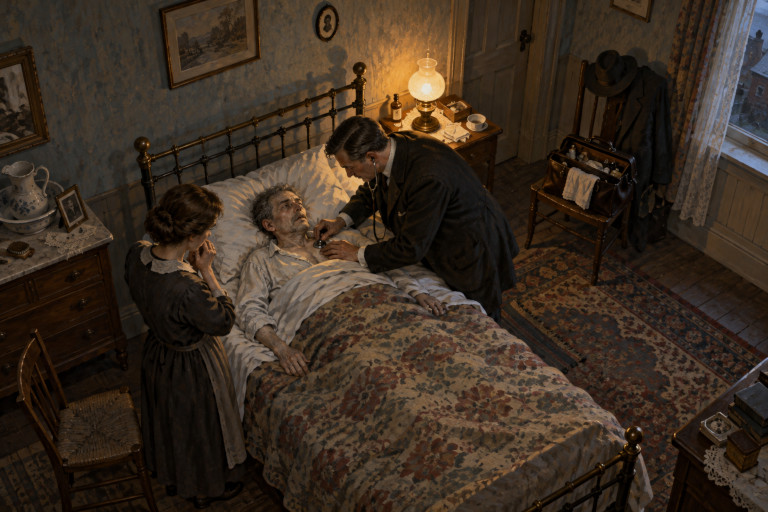
The man described the experience as exceptionally vivid and unlike an ordinary dream. Geddes considered the account worthy of serious attention, although it did not establish whether consciousness existed independently of the body.
Ed Morrell’s experiences in San Quentin Prison
Another remarkable account came from Ed Morrell, an American prisoner who endured severe physical punishment at San Quentin Prison in California.
Morrell received a pardon in 1908 and later became an advocate for prison reform. In his 1924 memoir, The Twenty-Fifth Man, he described the suffering he had endured and the unusual experiences that accompanied it.
According to Morrell’s account, prison authorities accused him of concealing weapons and subjected him to punishment with a straitjacket in an effort to force him to reveal their location. The garment was tightened around his body, restricting his movement and causing extreme pain. He described a suffocating sensation resembling that of being buried alive, accompanied by worsening numbness and severe irritation of his skin.
At first, Morrell recalled sinking into despair as the punishment continued. Then something unexpected happened.
While lying on the cell floor, bound in the straitjacket, he began to feel his consciousness separating from his physical body. He described a sensation of drifting freely beyond the prison walls, leaving behind the pain and confinement that had dominated his existence.
For a time, he felt released from the suffering of his imprisoned body. The experience seemed to carry him into a world filled with life and freedom. When his awareness returned to his cell, he recalled feeling unusually calm and refreshed.

Morrell wrote that prison officials were astonished by his apparent resilience. When repeated punishment failed to break his spirit, the warden ordered an additional straitjacket placed over the first. Yet Morrell continued to emerge from these ordeals in surprisingly good spirits.
His punishment with the straitjacket eventually ended after a new warden took charge.
Morrell’s account remains a striking example of an experience in which a person undergoing extreme physical suffering reported a profound sense of freedom from the body.
Scientific investigations into out-of-body experiences
Accounts like these have drawn the attention of researchers seeking to understand whether consciousness can function independently of the physical body.
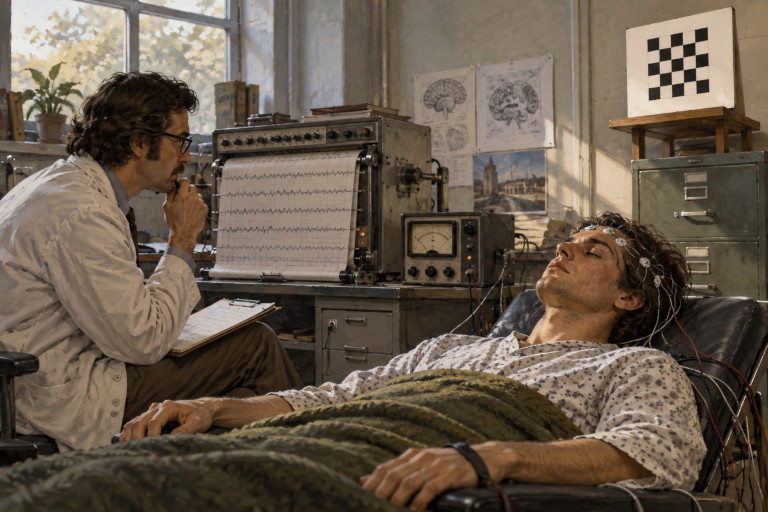
During the 1970s, the American Society for Psychical Research conducted experiments involving people who claimed they could deliberately induce out-of-body experiences. Among those leading such investigations was parapsychologist Dr. Karlis Osis.
Researchers attempted to test whether participants could perceive objects or information hidden from their ordinary senses. Some experiments also employed sensitive instruments to investigate possible physical effects associated with the reported experiences.
Although certain findings attracted interest, the experiments did not produce conclusive, widely accepted evidence that consciousness had separated from the body.
Researchers elsewhere explored different explanations. Some Soviet scientists proposed that the human body possessed an energy system capable of producing a separate form of consciousness, sometimes described as an energy body or “bioplasma.”
American parapsychologist D. Scott Rogo also explored theories suggesting that consciousness might use some form of energy as a vehicle during an out-of-body experience. Such proposals offered possible explanations for the reported phenomena but remained speculative rather than scientifically established.
Other researchers approached the subject through psychology and the study of human experiences. Dean Sheils examined beliefs about out-of-body experiences across numerous non-Western cultures, while British parapsychologist Celia Green, founder of the Institute of Psychophysical Research in Oxford, investigated unusual states of consciousness. Researcher John Palmer also conducted experimental studies of out-of-body phenomena at the University of Virginia.
Near-death experiences and continuing research
Interest in out-of-body experiences grew alongside the study of near-death experiences during the 1970s and 1980s.
Two influential figures were psychiatrist Dr. Elisabeth Kübler-Ross and physician Dr. Raymond Moody, whose 1975 book Life After Life brought widespread attention to accounts from people who had come close to death.
Researchers collected reports describing a variety of experiences, including feeling like they left their physical bodies, observing events from an elevated perspective, encountering unusual light, and experiencing a profound sense of peace.
Although many accounts shared certain features, the experiences were not identical. Some people reported tranquility and freedom from pain, while others described confusion, fear, or distress. Moreover, not every out-of-body experience occurred near death.
Scientific interest has continued to this day. In September 2026, researchers at the University of Virginia reported results from an experiment conducted in Brazil in which participants attempted to identify objects displayed in another room.
The participants’ descriptions were no more accurate than chance would predict. However, two participants subsequently gave unexpected descriptions of researchers’ activities in separate rooms. Because these observations were not part of the experiment’s predefined tests, investigators emphasized that they could not be regarded as proof of out-of-body perception. Nevertheless, the findings suggested possible directions for future research.
Hemingway’s description of his brush with death, the case presented by Geddes, and Morrell’s account of his imprisonment illustrate how profoundly such experiences can affect those who undergo them. Although scientists continue to investigate their nature, the relationship between consciousness and the physical body remains a subject of profound interest.
For those who believe they have experienced a separation of the two, the memories can remain extraordinarily vivid, raising enduring questions about the nature of human consciousness and the boundaries of physical existence.
Translated article
Follow us on X, Facebook, or Pinterest
