
When people hear the words “nourishing the kidneys,” they may imagine expensive medicinal herbs or bitter herbal remedies, or assume it is something they need not consider until later in life. But according to traditional Chinese medicine (TCM), supporting kidney health doesn’t have to be complicated or costly.
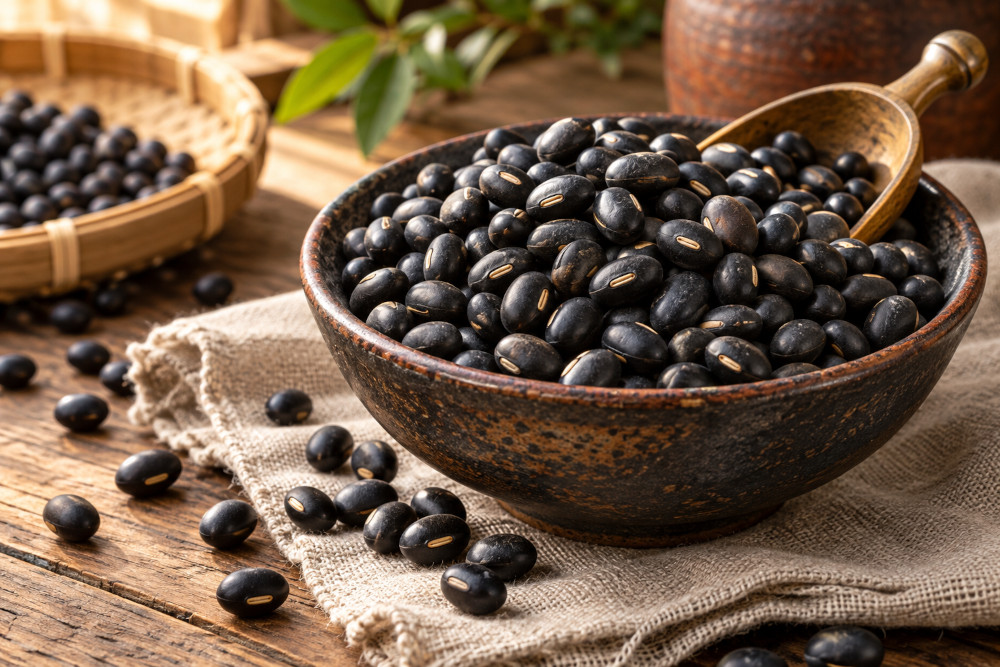
TCM has long emphasized the importance of nourishing the body through food rather than relying solely on medicinal tonics. One affordable ingredient traditionally valued for its nourishing properties is the black soybean.
In TCM, the kidneys are associated with a broad range of functions, including growth, vitality, and reproduction. This traditional concept differs from the role of the kidneys as understood in modern medicine.
Why are black soybeans considered good for the kidneys?
According to the Five Elements theory, the color black corresponds to the kidneys. TCM holds that five colors correspond to five internal organs, with black foods having a particular affinity for the kidney meridian.
Black soybeans have long been praised as the “king of beans” and the “grain of the kidneys.” Beyond their shiny black exterior, they offer valuable nutritional benefits.
From the perspective of traditional Chinese medicine
In TCM, black soybeans are considered neutral in nature and sweet in flavor. They are traditionally believed to nourish yin and kidney qi, strengthen muscles and bones, promote blood circulation, encourage urination, darken the hair, and improve eyesight.
For those experiencing soreness or weakness in the lower back and knees, dizziness, or blurred vision attributed to kidney deficiency in TCM, black soybeans have traditionally been recommended as a nourishing food.
From a nutritional perspective
Black soybeans are an excellent source of plant-based protein and dietary fiber. They also contain vitamin E, minerals, and anthocyanins, the antioxidant pigments that give their outer coats their dark color.
These nutrients make black soybeans a valuable addition to a balanced diet, regardless of their traditional associations with kidney nourishment.
Traditional benefits associated with black soybeans
1. Relief from lower back soreness
In TCM, kidney qi is considered a foundation of physical strength. Nourishing kidney qi is likened to reinforcing a house’s foundation, helping the body maintain strength and stability.
Black soybeans are traditionally believed to help relieve soreness, weakness, and a feeling of heaviness in the lower back and knees when these symptoms are associated with kidney deficiency.
2. Greater energy and vitality
According to TCM, sufficient qi and healthy blood circulation contribute to physical energy and mental alertness. Black soybeans are traditionally valued for replenishing vitality and addressing fatigue associated with kidney deficiency.
From a nutritional standpoint, their protein and other nutrients can also help meet the body’s daily nutritional needs.
3. Healthier, more lustrous hair
Traditional Chinese medicine teaches that hair condition reflects kidney health. People with abundant kidney qi are believed to have thick, dark, and lustrous hair.
Black soybeans have therefore been associated with maintaining healthy hair. Although preliminary animal research has explored their potential effects on hair growth, no established evidence shows that eating them can restore gray hair to its original color.
4. A healthier-looking complexion
In TCM, healthy qi and blood circulation are associated with a naturally radiant complexion.
Black soybeans also contain anthocyanins and other antioxidant compounds that help protect against oxidative damage at the cellular level. However, their direct effects on skin appearance remain unproven.
Three delicious ways to enjoy black soybeans
Some people avoid beans because they find them hard, bland, or difficult to digest. But with the right preparation, black soybeans can become a delicious part of everyday meals.
Here are three ways to enjoy this traditional ingredient.
1. Vinegar-soaked black soybeans: a traditional snack
Vinegar-soaked black soybeans are a traditional Chinese snack with a distinctive tangy flavor. In TCM, they are believed to stimulate the appetite, aid digestion, and help nourish the kidneys.
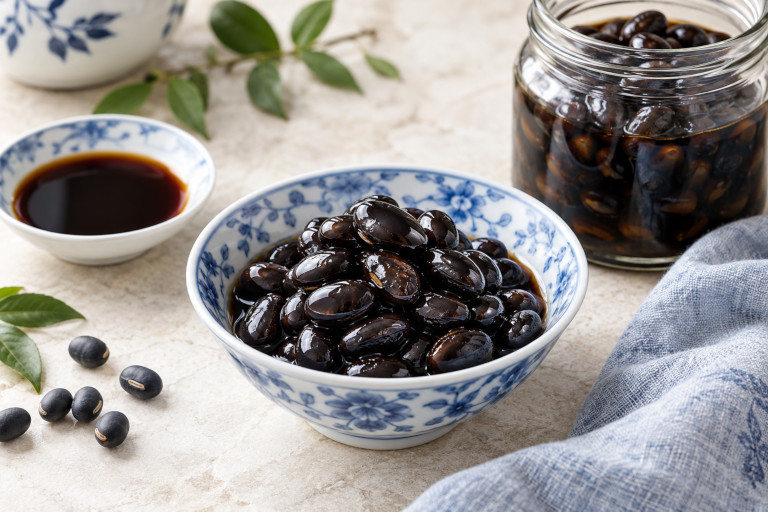
For those unfamiliar with this preparation, ready-to-eat vinegar-soaked black soybeans (醋泡黑豆) are available at online Asian grocery retailers and may also be found at specialty Asian markets.
2. Black soybean milk: a smooth, nourishing breakfast drink
If you’re looking for a simple, nutritious breakfast, homemade black soybean milk is an excellent option.
Preparation:
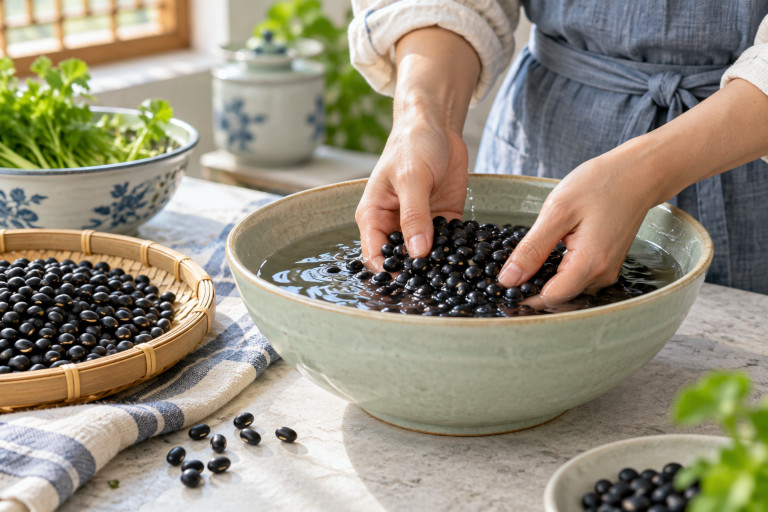
Soak the black soybeans overnight, then drain and rinse them. Place the beans in a soy milk maker—a countertop appliance that automatically grinds and cooks soybeans to make fresh soy milk. Add water and, if desired, some regular soybeans, black rice, or oats. Follow the manufacturer’s instructions to prepare the drink, and be sure to use a full cooking cycle.
The resulting drink has a rich bean aroma and a subtle natural sweetness. Served warm, it makes a comforting and nutritious start to the day.
3. Black soybean and pork rib soup: comforting and nourishing
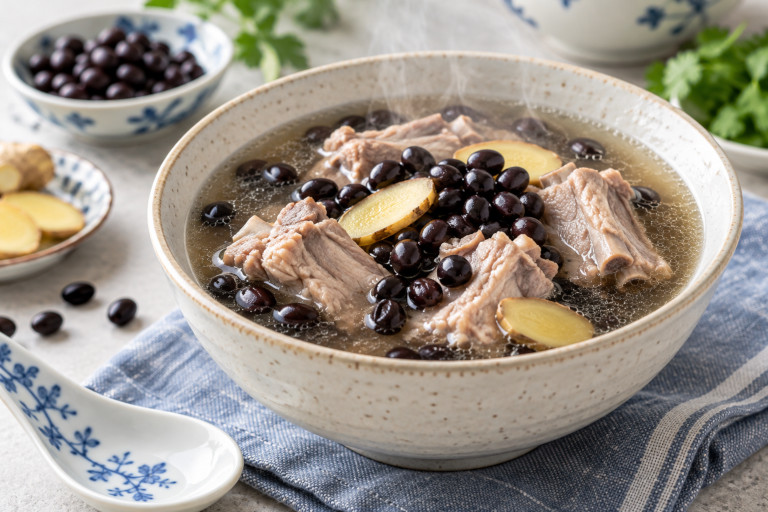
There is something especially satisfying about preparing a pot of black soybean and pork rib soup for the family over the weekend. This traditional dish combines savory pork ribs with tender beans and the warming flavor of ginger.
Preparation:
Soak the black soybeans overnight, then drain and rinse them. Briefly boil the pork ribs, then drain and rinse them before adding them to the soup.
Place the ribs, soaked black soybeans, and a few slices of ginger into a large pot. Add enough water to cover the ingredients, bring to a boil, then reduce the heat and simmer gently for approximately 1.5 hours, or until the pork and beans are fully cooked and tender.
Season with a little salt just before serving.
The resulting soup is rich and savory, with tender pork ribs and soft, creamy black soybeans. It provides protein and other nutrients and, according to TCM, is also believed to gently nourish the spleen and kidneys.
Three more ways to support kidney nourishment
As a traditional Chinese saying goes, “Treatment accounts for thirty percent, while proper care accounts for seventy percent.”
From a TCM perspective, maintaining vitality requires more than eating nourishing foods. Daily habits, including adequate rest, moderate exercise, and emotional balance, matter just as much.
1. Maintain a regular sleep schedule
According to TCM, yin energy predominates at night, and yang energy retreats to rest and replenish itself. Adequate sleep is therefore considered essential for maintaining the body’s vitality.
Frequently staying up late is like continually withdrawing money from a bank account without replenishing it. Even a nutritious diet cannot fully compensate for consistently inadequate rest.
Modern health research also recognizes that sufficient, regular sleep supports physical and mental well-being.
2. Exercise moderately to strengthen muscles and bones
Movement is essential to good health, but TCM emphasizes moderation and consistency over exhausting exertion.
Gentle activities such as tai chi, light jogging, Baduanjin (the Eight Brocades qigong exercises), and stretching can be incorporated into everyday life.

TCM also recommends gently rubbing or massaging the lower back, especially around the Shenshu acupuncture points on either side of the spine. This practice is traditionally believed to warm the area and promote the smooth flow of qi through the meridians.
3. Maintain a peaceful state of mind
Traditional Chinese medicine teaches that “fear harms the kidneys” and “anger harms the liver,” reflecting the belief that emotional well-being and physical health are closely connected.
Modern life can be stressful, and even minor frustrations can sometimes trigger irritability or anger. Learning to regulate emotions and maintain inner peace can make everyday challenges easier to manage.
In TCM, emotional balance is also believed to support the smooth circulation of qi and blood, helping the body’s internal systems function harmoniously.
A simple food with a long tradition
Whether enjoyed in a warming soup, a cup of homemade soybean milk, or a traditional vinegar-soaked snack, black soybeans offer an affordable source of plant-based nutrition.
Their long-standing place in traditional Chinese medicine reflects a broader wellness philosophy — one that emphasizes nourishing food, adequate rest, moderate exercise, and a balanced state of mind.
While black soybeans can be part of a healthy diet, they are not a treatment for kidney disease or other medical conditions. People with kidney disease should follow dietary guidance appropriate to their individual health needs.
Translated by Joseph Wu
Follow us on X, Facebook, or Pinterest
