
When Peking Opera master Zhou Xinfang was released from detention in 1969, his wife, Qiu Lilin, was no longer waiting for him at home. She had died the previous year after enduring repeated beatings and being denied medical treatment. Yet no one dared tell Zhou what had happened.
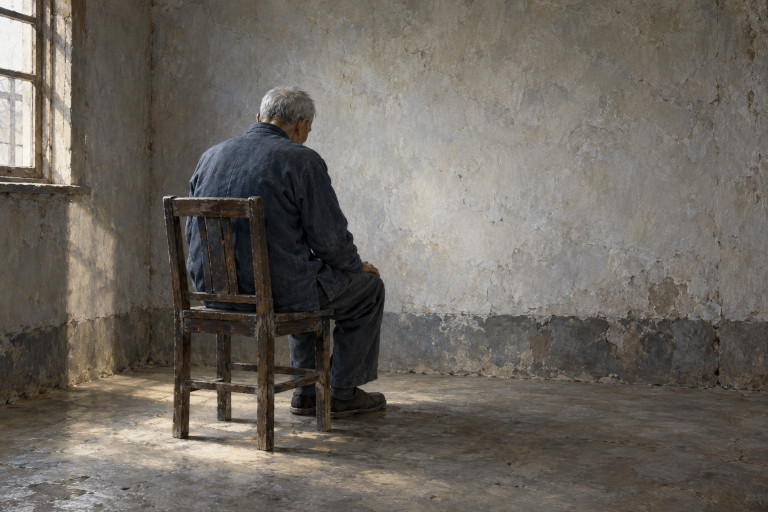
Before long, he understood that his wife was dead. He did not ask questions or speak of her again. Instead, according to accounts of his final years, he frequently sat alone facing a wall, overcome with grief.
He apparently never learned the full extent of her suffering: how she had been seized by the hair and hurled against walls and floors until she lost consciousness, or how she had been left without treatment as she lay dying. The family’s account suggests that learning the details of her ordeal might have been more than he could bear. But even after his release, the political persecution that had devastated their lives was far from over.
Persecution until the end
Zhou Xinfang kept hoping that Mao Zedong or Zhou Enlai would eventually intervene to clear his name. Such hopes were not entirely unreasonable, as Zhou Enlai had used his influence to protect certain individuals during the Cultural Revolution. But power struggles within the Chinese Communist Party often took precedence over personal relationships and political loyalty.
Zhou Enlai himself had accommodated Jiang Qing and participated in the persecution of those targeted by the regime. Even people close to him were not immune: he authorized the detention of his own younger brother and approved the arrest of his adopted daughter, Sun Weishi, who later died in custody. Despite Zhou Xinfang’s prominence and his past connections with Communist leaders, the intervention he hoped for never came.
In 1970, authorities arrested his eldest son, Zhou Shaolin (William Chow), again. He criticized Jiang Qing’s political faction after a campaign against the playwright Xia Yan and his play Sai Jinhua. His remarks referred to an earlier controversy involving Jiang Qing, who had once pursued an acting career under the name Lan Ping. Zhou Shaolin was arrested the following day and, accused of spreading politically objectionable ideas, sentenced to five years in prison at a forced-labor camp in Anhui Province.
Meanwhile, the persecution of his father continued. In 1974, Zhang Chunqiao, one of the senior officials directing Shanghai’s political campaigns, reportedly declared: “For people like Zhou Xinfang and Ba Jin, not executing them by firing squad is already an act of leniency.” Zhou Xinfang was formally branded a counterrevolutionary and placed under public surveillance.
In February 1975, after completing his prison sentence, Zhou Shaolin was sent to the outskirts of Shanghai for further labor reform. He was allowed to return home only on weekends and saw his father only once or twice during this period. On March 8, 1975, Zhou Xinfang died of a heart attack at Shanghai’s Huashan Hospital at the age of 80. When his body was wheeled out of the hospital ward, other patients reportedly followed behind to pay their respects.
The celebrated artist who had dedicated his life to Peking Opera, remained in China after the Communist takeover, and joined the Party in 1959 had spent his final years subjected to humiliation, detention, and political persecution.
A daughter sent away at 13
While Zhou Xinfang and his eldest son endured persecution in China, the five children Qiu Lilin had sent overseas were building lives that would otherwise have been impossible. For the youngest daughter, Zhou Caici, also known as Vivian Chow, the memory of leaving home remained especially vivid.
In the summer of 1959, an opportunity arose for her to settle in Hong Kong, where her older sister, Zhou Caiyun, had already arrived after leaving mainland China. Qiu seized the opportunity and arranged for 13-year-old Caici, who had just completed primary school, to travel there.
The day before her departure, Qiu brought the girl to her father and gently told him: “Caici is leaving for Hong Kong tomorrow.” Zhou Xinfang stroked his daughter’s head and said only: “Be good, and study hard.” He had offered a similar farewell to her older siblings. Caici later recalled that her father was a man of few words, seldom expressing his feelings openly.
Shortly before the Cultural Revolution, Caici returned to Shanghai to visit her parents. Her mother immediately became uneasy about the timing. Caici had intended to stay for two months, but after only two weeks, her parents insisted that she leave China again.
She later understood that their apparent harshness had been an act of protection. “In reality, my parents saved my life,” she recalled. Had she remained, she believed she might have been caught in the violence of the Cultural Revolution or sent to the countryside, perhaps never returning to Shanghai. That hurried departure became her final farewell to both parents.
Tsai Chin’s remarkable acting career
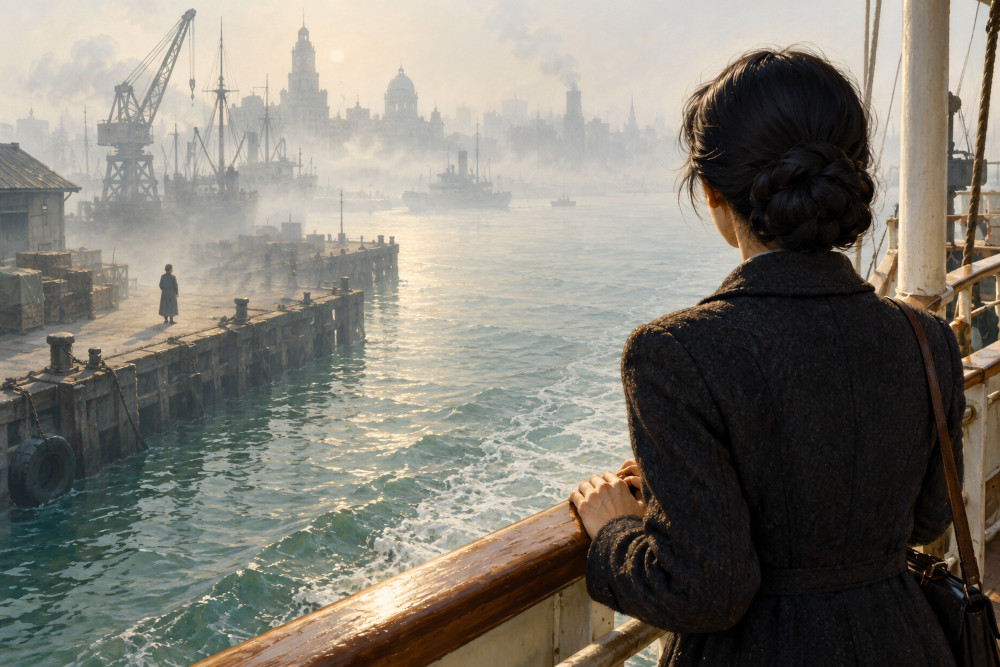
Zhou Xinfang’s third daughter, Zhou Caiqin, became internationally known as Tsai Chin. She remembered leaving Shanghai for Britain at the age of 20. On a misty October morning, she stood on the boat and watched her mother’s figure gradually disappear into the white haze. The scene remained etched in her memory for decades.
Before she left, Qiu gave her daughter a memorable instruction: “You must bring honor to the Chinese people, to the acting profession, and to women everywhere.”
Tsai Chin went on to establish an extraordinary international career. She became the first Chinese student to attend London’s prestigious Royal Academy of Dramatic Art (RADA), graduating in 1956. In 1959, she starred in the London stage production of The World of Suzie Wong, which ran in the West End for nearly two years. Her performance brought her widespread recognition and established her as one of the few Chinese actresses to achieve major success on the British stage at that time.
Her career later took her to Hollywood. In 1967, she appeared as Ling in the James Bond film You Only Live Twice, becoming the first Chinese Bond girl. She continued acting for decades, appearing alongside Michelle Yeoh, Gong Li, and Zhang Ziyi in Memoirs of a Geisha (2005). Much later, she portrayed the grandmother of Jay Chou’s character in Now You See Me 2 (2016).
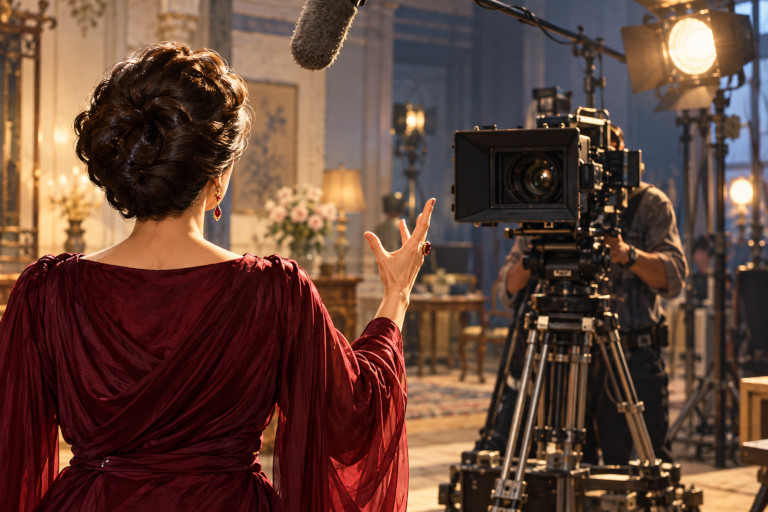
From London theater to Hollywood films, Tsai Chin built the international career her mother had encouraged her to pursue. Yet her professional achievements could never erase the pain of losing her parents.
One final reunion in London
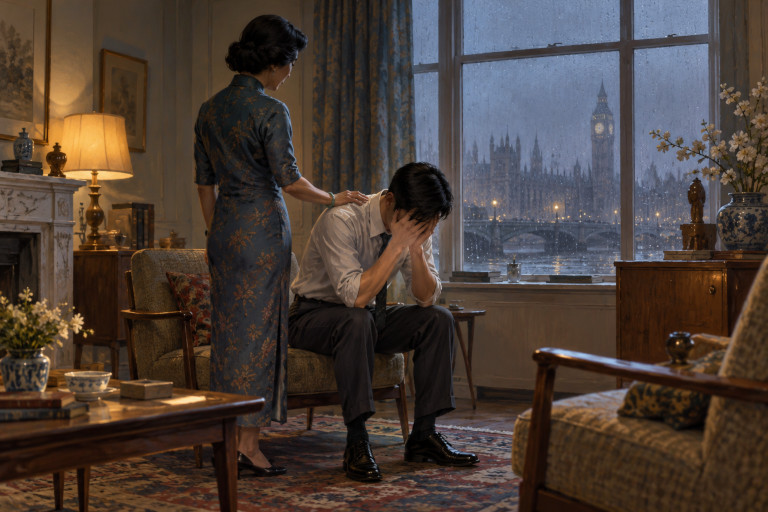
In 1961, Qiu Lilin traveled to London to visit Tsai Chin. Her other four children living overseas also came to see her, gathering from different parts of the world. For Qiu and those five children, it was their first reunion after years of separation — and their last.
During her visit, Qiu accompanied her actress daughter to a social gathering attended by prominent figures in the entertainment industry. According to the family’s recollections, Qiu’s fluent English and elegant manner made a strong impression on those she met.
Among the guests was Hollywood star Cary Grant, who was not particularly well acquainted with Tsai Chin at the time. The account says Grant telephoned the next day to invite Qiu to the premiere of his forthcoming film, That Touch of Mink, set for release in 1962. The anecdote offers a glimpse of the Shanghai socialite Qiu had once been: confident, sophisticated, and entirely at ease among internationally famous performers.
Her younger son had an especially poignant memory of the visit. Michael Chow, born Zhou Yinghua, was sent to Britain at 13. During his mother’s visit, he reportedly covered his face with his hands and murmured: “Mother, why did you make me leave you when I was so young?” He had spent years struggling with the separation, unable to understand why his mother had insisted that he leave home. Like his sisters, he would eventually discover that her decision had spared him from the terrible persecution inflicted upon his family.
Michael Chow’s success and sorrow
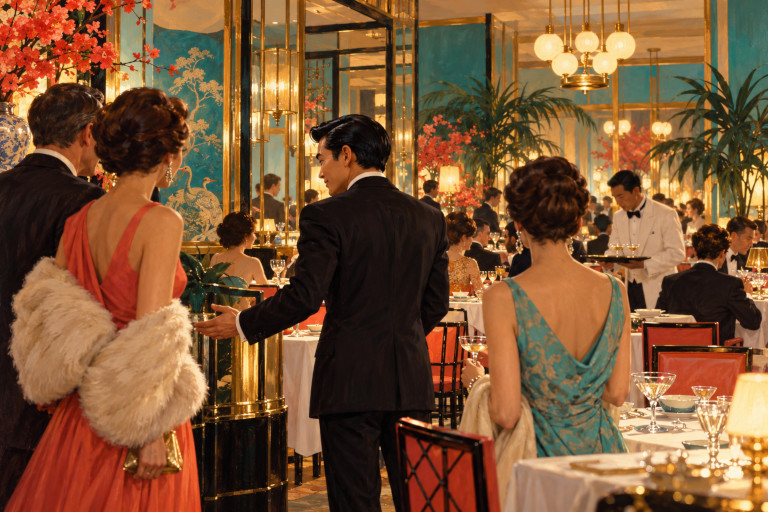
Michael Chow pursued art and design in Britain before establishing himself in the restaurant industry. On February 14, 1968, he opened the first Mr Chow restaurant in London’s Knightsbridge district. His approach blended Chinese cuisine, contemporary art, elegant design, and a distinctive dining experience that drew celebrities and prominent figures from London’s cultural scene.
The restaurant became the foundation of an international business. Chow opened additional locations in Beverly Hills, New York, and other American cities, while also establishing a reputation as an artist and art collector. His success reflected an ambition to bring Chinese culture into international society in a form that would command admiration.
But the timing of his first great professional achievement carried a heartbreaking irony. He opened his London restaurant in February 1968. On March 27, just six weeks later, his mother died in Shanghai after suffering fatal injuries from political persecution. As Michael Chow began building the career that would make his name internationally famous, the woman who had made his escape possible was dying thousands of miles away. The devastating news from China did not reach the family immediately.
The lives of the other children
Qiu Lilin’s eldest daughter, Zhou Caizao (Susan Cha), had left Shanghai for the United States in 1947 and eventually settled in Maryland. Her sisters remembered her as quiet and reserved, much like their father. She devoted herself to her husband, children, and extended family, often helping care for her younger siblings in their parents’ absence. Although she knew about the persecution her family suffered in Shanghai, she never returned to mainland China after leaving in 1947.
The second daughter, Zhou Caiyun, also known as Cecilia Chung and the writer Zhou Yi, took a different path. After moving to Hong Kong, she continued her studies in the United States at St. John’s University. She was said to closely resemble her mother, sharing her elegance and commanding presence. She later established a business career in San Francisco.
Together, the five children who had left China pursued lives in acting, business, the arts, and family life. They achieved different kinds of success, but all carried memories of the home and parents they had lost. Their elder brother, Zhou Shaolin, had remained behind, and his loyalty to his parents came at an enormous personal cost: detention, beatings, imprisonment, and years of forced labor. Qiu Lilin had saved five of her children from the worst of the Cultural Revolution, but she couldn’t protect them all.
A mother’s love and a family’s lasting grief
Even many years later, the Zhou children struggled to speak about their parents without becoming emotional. Tsai Chin recalled that she was at the height of her career when news of their deaths reached her. She felt as though the very purpose that had sustained her life had been taken away.
Although she had enjoyed acclaim on international stages and screens, Tsai Chin continued to regard her father as the family’s true artist. Whatever success his children achieved, she believed they could never surpass his accomplishments.
The children also came to understand the courage behind their mother’s decisions. Qiu Lilin had recognized the gathering danger and acted while there was still time. She had endured the heartbreak of sending her children far from home, knowing they might never return, because she believed their safety mattered more than keeping them close. She herself remained in China out of devotion to her husband.
When the Cultural Revolution arrived, the violence she had feared engulfed their household. Her husband was publicly humiliated and persecuted, her eldest son was imprisoned, and she was brutally beaten and left to die without medical care. The five children she had sent away survived, but distance denied them the chance to protect their parents, care for them in their final years, or say goodbye.
For the Zhou family, the Cultural Revolution was not merely a political upheaval recorded in history books. It meant the destruction of their home, the persecution of a great artist, the death of a devoted mother, and the loss of years that could never be recovered.
Qiu Lilin could not save herself or her husband. But through her foresight and determination, five of their children escaped the catastrophe and lived to preserve the memory of the family they had left behind.
See Part 1 here
Translated by Chua BC
Follow us on X, Facebook, or Pinterest
