
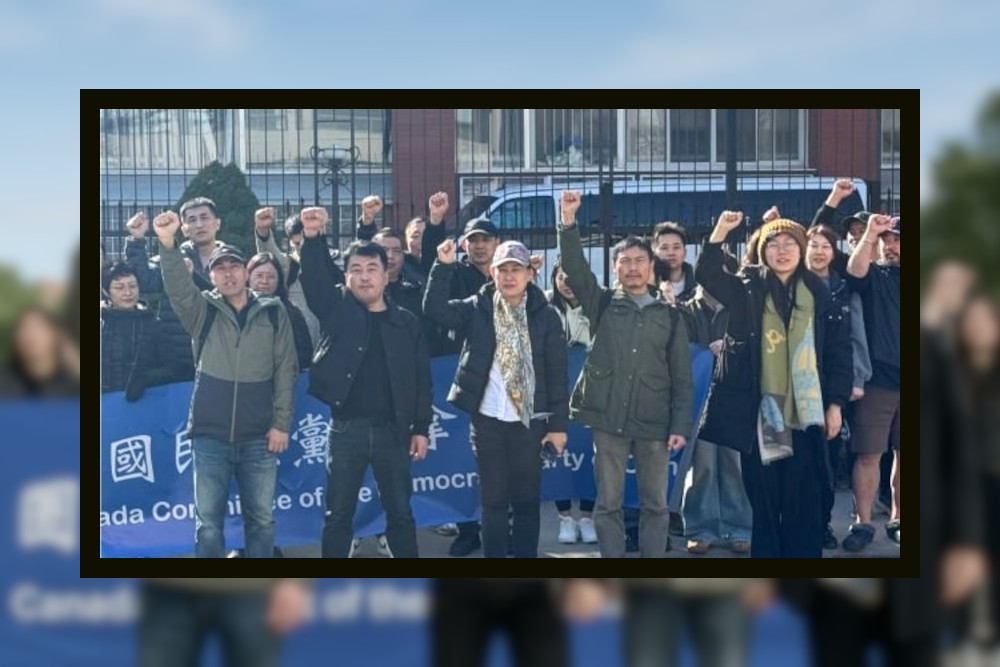
Since Xi Jinping took power, more than 1.15 million Chinese citizens have sought asylum abroad — a 1,426 percent increase since 2012. Among them is Xu Lifeng from Shaoxing, Zhejiang Province. Once a soldier and textile factory owner, Xu is now an active voice in the overseas movement opposing the Chinese Communist Party (CCP). His transformation reflects not just one man’s search for freedom, but also a broader reckoning with a system he once trusted.
Early life and military service sowed the seeds of doubt
Xu Lifeng’s childhood was marked by bullying due to his small stature. “No matter where I went, I was picked on,” he said. “I always wondered — why is this world so unfair? Why does seeking justice often come at such a high cost?” Though the feelings were unclear at the time, they planted seeds of skepticism about the system he lived under.
In 1989, as a high school freshman, Xu Lifeng’s worldview was shaken by the Tiananmen Square massacre. A close friend told him that his father, who had been in Beijing on a business trip, witnessed the aftermath firsthand — describing rivers of blood on the streets. At first, Xu refused to believe it. “We were taught the army was the people’s army. How could they possibly open fire on students?” He convinced himself it was a counterrevolutionary riot provoked by foreign forces, as the textbooks claimed. But the doubt lingered.
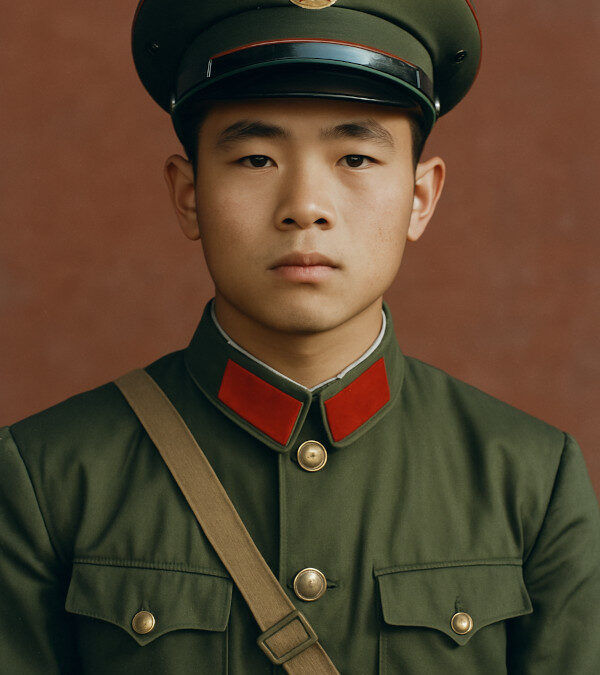
Hoping to find answers, Xu Lifeng enlisted in the army after graduating fromhigh school. Like many young men, he believed it could lead to opportunity and a better future. But what he witnessed instead destroyed his idealism.
Disillusionment inside the military
Two incidents left an indelible mark on Xu Lifeng. The first occurred during new recruit training, when a platoon leader ordered them to chase down civilians who had jokingly mimicked military commands. “We dragged them off a tractor and beat them,” Xu recalled. “I intentionally held back and didn’t join in. But watching my fellow soldiers beat innocent people until their faces were bruised… I was stunned.”
Later, he was reprimanded by the platoon leader for not participating. “In the military, your future depends on your superiors — from awards to party membership to promotions,” he said. “I told myself I’d have to work twice as hard to make up for this ‘mistake.’” But the incident sparked a realization: if soldiers could follow orders to beat civilians, then shooting unarmed students during the Tiananmen protests wasn’t unimaginable.
The second incident occurred after nearly two years of hard work when Xu Lifeng had earned the top trumpet position in the military band. But a superior, favoring his hometown connections, blocked Xu’s chance to join a more prestigious band. “I didn’t want to climb the ranks — I just wanted a fair shot based on skill. But even that wasn’t allowed.”
These experiences led him to conclude that the problem wasn’t with individuals, but with the system itself. He decided to leave the military and later declined an offer from his village party secretary to groom him for local leadership.
A small factory undone by the pandemic and policy
After leaving the army, Xu Lifeng returned to Shaoxing and eventually started a small textile workshop in 2001. He borrowed money to buy his first two looms and slowly built the business. For years, profits were meager, barely enough to cover debt and living expenses. But after 17 years of hard work, his factory finally began to thrive. By 2018-2019, production had peaked, and profits were substantial.
“In those two years, I made 500,000 yuan [equivalent to about US$120,000 in terms of purchasing power]. I had big plans for 2020,” he recalled. “But then the pandemic hit.”
His clients, affected by strict lockdowns, canceled all orders in the first half of the year. Xu Lifeng predicted that the pandemic and China-U.S. tensions would lead to a prolonged decline in the industry. He closed the factory, sold his equipment at a substantial loss, and abandoned entrepreneurship. “The pandemic was the final blow,” he said. “But it was the system that truly crushed me. I gave it 19 years of my life — my health, my effort — and this was the result.”
His factory joined the ranks of countless small businesses that went under during the COVID-19 era.
Fighting for his daughter’s future
Xu Lifeng also blamed China’s rigid education system for stifling young minds. He described himself as a “victim of Chinese education,” raised under authoritarian parenting and oppressive schooling. His father, a staunch Communist village official, used corporal punishment under the guise of discipline. “He beat me to show others he was strict. That twisted form of authority is part of the whole system.”
Determined to break the cycle, Xu Lifeng raised his daughter, Xu Zhiyan, with strong values of independence and critical thinking. She excelled in school and ranked first in her junior high class. But when he refused to let her join the Communist Youth League, tensions flared with his wife, who feared it would hurt their daughter’s chances of getting into a top high school.
Despite the odds, Xu Lifeng personally tutored her to earn first place in her class at a top public high school in Shengzhou. But just one week into the term, he made a dramatic decision — he pulled her out of school. “Up at 6 a.m., home at 10 p.m., sleeping less than 7 hours. Half her dormmates showed signs of depression,” he said. “That’s not school — it’s prison. It’s brainwashing. It’s abuse.”
When his daughter was in elementary school, a teacher instructed students to lie to government inspectors about poor food and physical punishment. Xu Lifeng advised her to stay silent: “Don’t lie, but don’t speak. Use your silence to show contempt for a broken system.” That experience also deepened her understanding of China’s education model.
In January 2022, Xu Lifeng used all his savings to send his daughter to high school in Canada. “Even if I had to work menial jobs, I’d support her,” he said. “She’s freer here — even without school.” In September 2023, he joined her in Canada as a guardian. “This isn’t just for her. It’s for me. I won’t let her live the life I had.”

From whisper networks to public protests
Xu Lifeng began resisting the regime even before leaving China. In 2020, he started WeChat groups to share uncensored news and expose CCP atrocities. Twice, the police summoned him for questioning — commonly referred to as being invited for “tea.” “They threatened my daughter’s future, my reputation in the village, even said they’d take me home in a police car,” he said. “That’s when I knew it was only a matter of time before I’d be imprisoned.”
These run-ins solidified his decision to leave China. After arriving in Canada, he learned about the China Democracy Party’s Canada branch and joined with his daughter in March 2025.
He now actively participates in rallies and demonstrations. “It’s not just about protesting — it’s about inspiring those still inside China,” he said. “If we can get even one person to think, it’s worth it.”
A dream for a free and democratic China
Life in Canada has given Xu Lifeng a new perspective. “People here treat each other more equally. You don’t need connections for everything. There’s no constant fear of corruption,” he said. “The CCP is not China. Loving your country doesn’t mean loving the Party.”
Xu Lifeng believes China’s core problem lies in its authoritarian rule, which lacks the rule of law and protection of human rights. His greatest wish is to see a free, democratic China in his lifetime.
“As long as I can help others see the truth, my life will have meant something,” he said. “I want to live to see a China without the communist party.”
Translated by Chua BC
Follow us on X, Facebook, or Pinterest
