
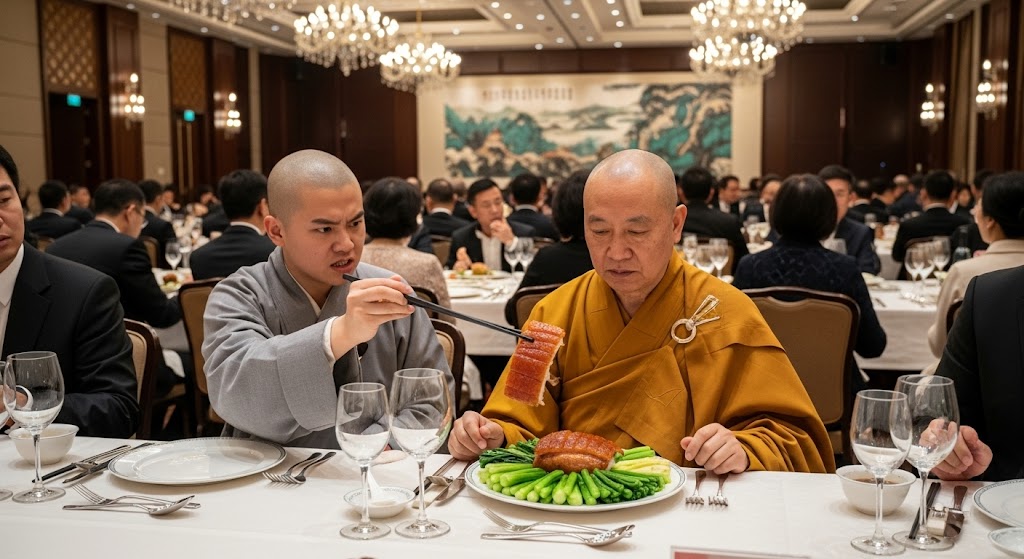
During a seemingly ordinary dinner, a revered high monk taught a lesson not through preaching, but through profound restraint. When a single piece of pork was mistakenly — or perhaps intentionally — served in a vegetarian dish, his response defied expectations. For those seeking to become truly immune to anger, this story reveals how compassion and humility can transform even uncomfortable moments into life-changing insights.
When virtue is tested at the dinner table
The monk had been invited to a formal vegetarian banquet, accompanied by one of his young disciples. As they sat down to eat, a glistening piece of pork unexpectedly appeared on the monk’s plate among the vegetables. The disciple, incensed, instinctively reached for his chopsticks and flipped the meat to the top of the dish — hoping the host would notice and reprimand the chef.
But before the host could react, the monk calmly used his chopsticks to cover the meat once more. The disciple tried again. The monk, again, silently repositioned the food. Then, leaning toward his student, he whispered with a gentle smile: “If you uncover it again, I will eat it myself.” The disciple froze. He said no more, and the meal continued.
Later, another guest spotted the pork. The host, clearly embarrassed, was about to call in the chef when the monk subtly intervened. With a wave of his hand and a serene expression, he picked up the pork with his chopsticks and placed it to the side — continuing to eat as if nothing had happened. His calm demeanor diffused the tension and saved the evening from turning sour.
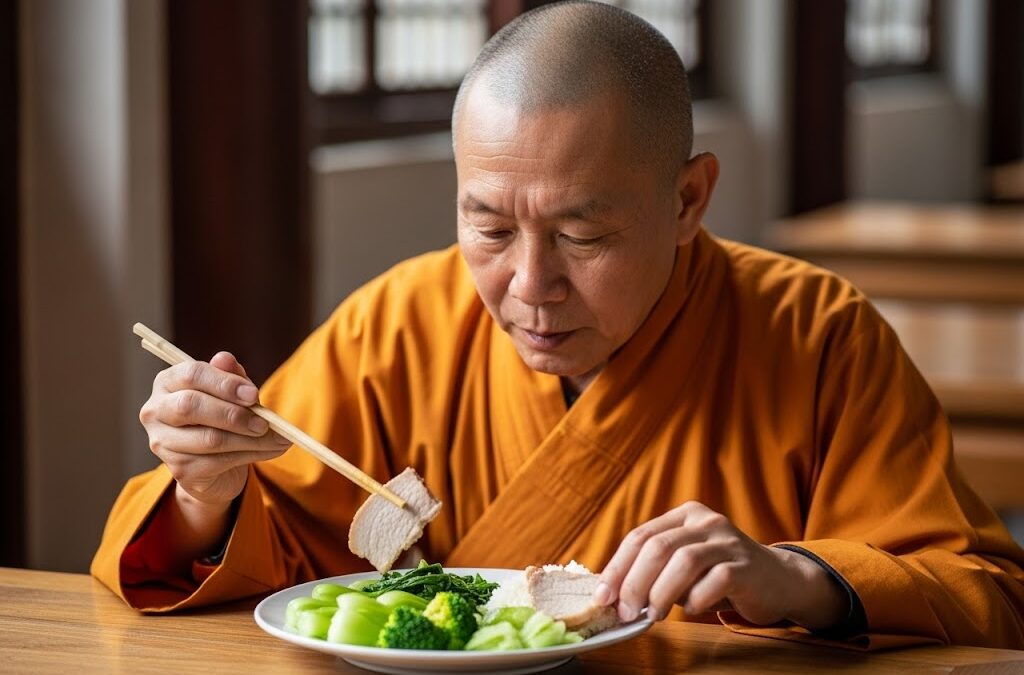
How to be immune to anger by embracing restraint
On the journey back to the monastery, the disciple, still troubled, finally voiced his thoughts. “Master,” he said, “the chef knew we didn’t eat meat. The whole table was vegetarian. That pork must have been placed there on purpose! I just wanted the host to know, so the chef could be held accountable.”
The monk replied gently: “Intentional or not, everyone makes mistakes. If the host had seen it, he might have been so ashamed that he would have severely punished the chef — perhaps even fired him. That would only add to the harm. We must seek justice, yes, but never forget compassion. Being right is not a license to be merciless.” The disciple was humbled. He bowed his head and whispered, “I understand now. I was too harsh.”
When forgiveness does more than punishment ever could
We never learn whether the chef had ill intent or simply made a mistake in the kitchen chaos. Perhaps he was hoping to humiliate the monk and felt ashamed upon hearing the monk’s gracious words. Or maybe it was a simple slip-up — a dish meant for another table that got mixed up. Whatever the case, the monk’s choice not to escalate changed the entire tone of the night.
This story is not just about food. It’s about how we respond to human error. Most of us are quick to point fingers, especially when we’re clearly in the right. However, the monk teaches a different path: to be right and kind simultaneously.
When being too “right” becomes wrong
We often think being rational and “correct” is always virtuous. But there’s a hidden danger in pushing reason too far — when we insist on justice without mercy, we risk becoming self-righteous. That’s when truth becomes a weapon, rather than a guide. “Getting even” might feel satisfying in the short term, but “letting go” leaves a lasting legacy. True strength doesn’t lie in asserting dominance — it lies in mastering the ego. The ancient Chinese proverb “Great virtue carries all things” reminds us that kindness isn’t weakness. It’s the force that holds relationships, communities, and even entire civilizations together.

What the monk teaches us about emotional mastery
In today’s fast-paced, hyper-reactive world, moments like these are rare. Most people feel the need to be heard, to be seen, to win the argument. However, the monk embodies something radical: the ability to remain composed in the face of pressure. By remaining calm, he not only avoided unnecessary conflict — he planted a seed of awareness in everyone present. Whether or not the chef made a mistake on purpose, he witnessed something extraordinary: compassion instead of condemnation. When we respond to others’ faults with understanding instead of fury, we invite growth, not guilt. We heal, instead of harm.
To be truly immune to anger, choose forgiveness over pride
So the next time someone offends you — deliberately or accidentally — pause. Ask yourself: Do I need to win this moment? Or can I leave space for grace? When you’re right, you have a choice: punish or pardon. Only one of them makes you stronger.
Follow us on X, Facebook, or Pinterest
