
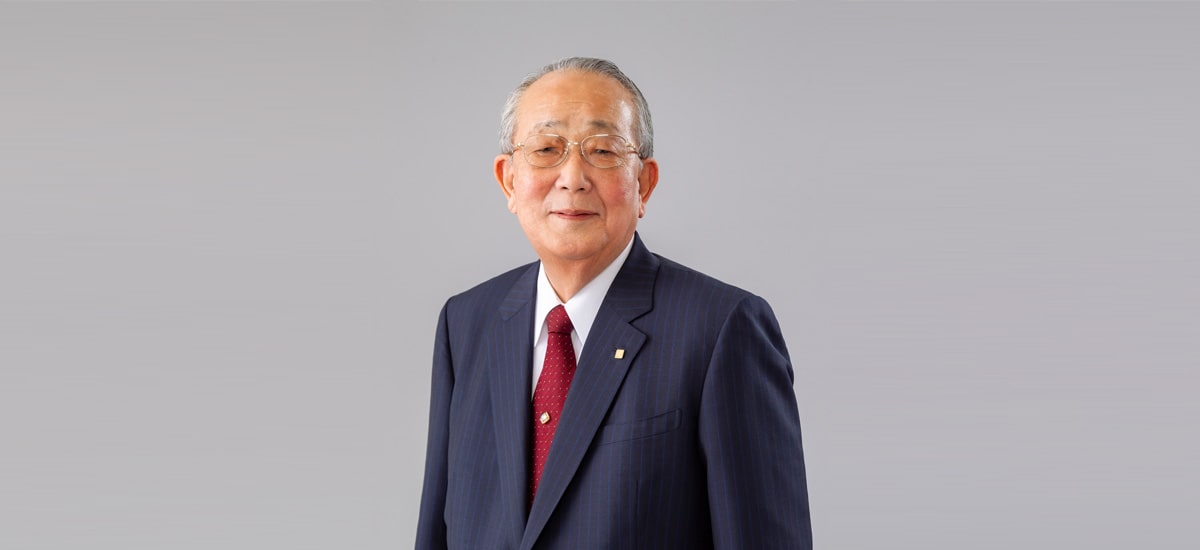
Kazuo Inamori was a billionaire industrialist who founded two Fortune 500 companies — and then gave them all away in pursuit of a more profound truth. The founder of Kyocera and KDDI, he was revered not only for his business acumen but also for his lifelong dedication to spiritual discipline, ethical leadership, and personal growth. His life stands as a rare fusion of material success and moral clarity — and his story offers a profound answer to the question: What does it mean to truly live?
A diagnosis that changed everything
In 1997, Kazuo Inamori — a man worth 200 billion yen — received a diagnosis that would change his life: cancer. The doctor delivered the news with a grave face as Kazuo Inamori’s assistant stood by, visibly shaken. But he himself remained composed. After a brief silence, he quietly put on his coat and walked calmly out of the room. He returned to the office and led Kyocera’s regular company meeting as usual. His tone was steady, his demeanor unchanged — no one in the room would have guessed that this man had just received what many would consider a death sentence.
The next morning, reporters crowded the entrance to Kyocera’s headquarters. At the press conference, Kazuo Inamori appeared poised and serene, showing no trace of distress or illness. Then came two stunning declarations that sent shockwaves through Japan’s business world: He would step down from all positions at the company, effective immediately. And he would donate all of his shares in both Kyocera and KDDI — entirely free of charge — to the employees.
The business world was stunned. There was no attempt to retain control, no succession plan, no conditions. Kazuo Inamori had simply walked away, leaving only a brief note behind: “This is not a retreat, but a return to zero. What I seek now is the true meaning of life.”

The Way of the Heart: All principles begin with the heart
No one expected the legendary founder of two Fortune 500 companies to walk away so completely. Kyocera was at its peak. The telecom division was preparing to enter the 5G era. And yet, Kazuo Inamori chose not to fight for his life — but to renounce it.
He entered a quiet temple in the southern hills of Kyoto. He donned gray monk’s robes and shaved his head, taking the dharma name Yamato. He no longer signed documents. He no longer held board meetings. He left behind his mansion, his titles, and his identity. He laid down his ego and embarked on the path of asceticism — walking barefoot, begging for alms, meditating through the night.
In the depths of winter, he would stand motionless on the street for hours, waiting silently for a single coin from a passerby. In alleyways, he was mistaken for a madman and chased away. But this was his chosen path: to shed the label of “the god of management,” and to live without power, wealth, or prestige. As he often said: “Life is a form of spiritual training. Hardship is our greatest teacher. All truth comes from a pure heart.”
Kazuo Inamori believed that every action begins in the heart. Each day in the temple, he asked himself: “Were my thoughts today pure? Were my motives truly for the sake of others?” He taught that an impure heart leads to wrong action, and an unclean heart inevitably brings failure. Through the austere life of begging and meditation, he came to understand: “The heart of philosophy is not technique — it is spiritual elevation. When the heart is pure, the universe reveals its truth.”
This, to him, was the essence of the Way of the Heart: “To touch hearts with your own heart. To inspire with sincerity.” Many believed he had lost his mind. Others thought he feared death. But in his journal, he wrote only these words: “Revere Heaven. Love People. Return to your True Self.” Kazuo Inamori wasn’t retreating from life. He was trying to understand what it truly meant to be alive.
The Way of Work: Lead with the heart, act with sincerity
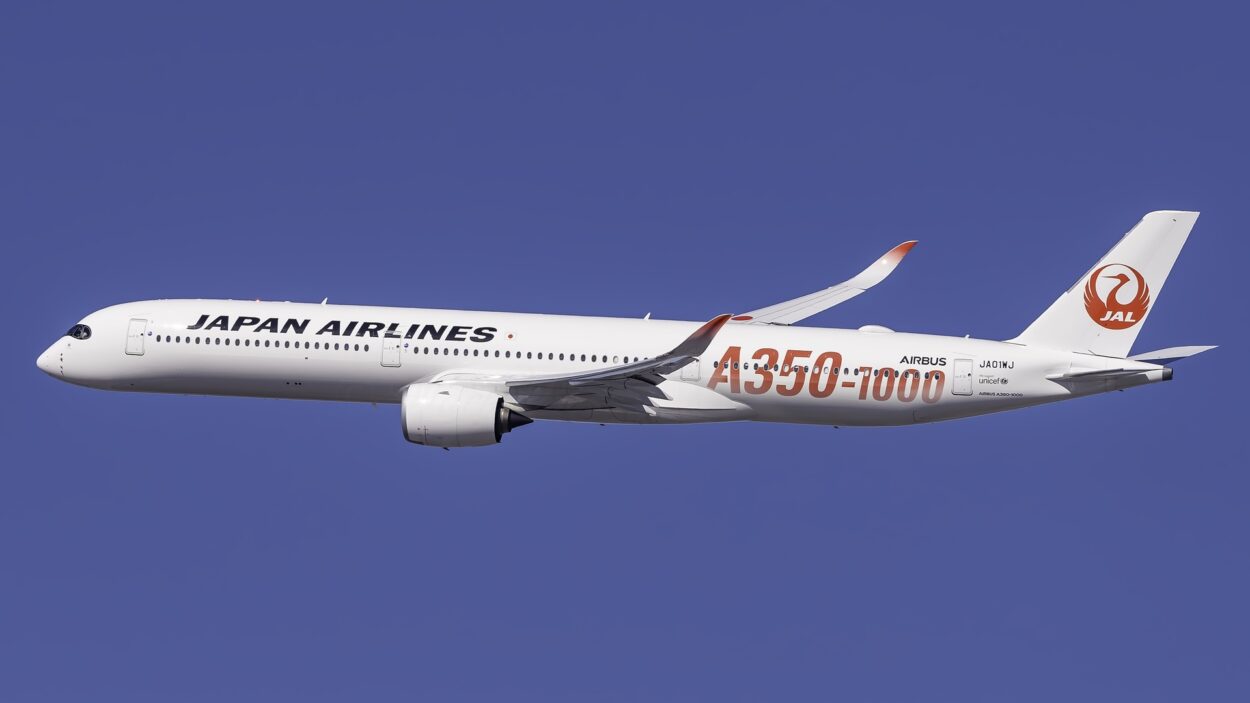
Three years later, Japan Airlines was on the brink of bankruptcy with 2 trillion yen in debt. The government and banks turned to Kazuo Inamori for help. He agreed — on one condition: he would take no salary, no benefits — not a single yen.
Appointed as Honorary Chairman, he entered JAL with no assistants, no fanfare. He ate in the company cafeteria with flight attendants and mechanics. Then, he began implementing sweeping reforms: cutting bloated management, trimming excess staff, closing VIP lounges, and requiring executives to fly economy class.
But he did not simply slash costs. He introduced his unique Amoeba Management philosophy, which divides the large company into numerous micro-teams, each responsible for its profits and losses. Every employee could see their contribution and accountability. Most importantly, he infused the company culture with his heart-centered philosophy. In every employee meeting, he would say: “Work is spiritual training. Every role is a path to self-cultivation. We are not just working for the company — we are refining our hearts and elevating our souls.”
He urged leaders to ask themselves three questions each day:
- Were my decisions selfish?
- Did I truly act with care for my employees?
- Did I honor the trust of our customers?
As Kazuo Inamori taught: “The true purpose of business is not to maximize profit, but to ensure the physical and spiritual well-being of employees. All management problems are, at their core, problems of the heart.”
Within three months, JAL stopped losing money. In 18 months, it returned to profitability. In two years, it was publicly listed again — its stock price soaring. Western media referred to it as a “Japanese management miracle.” He fixed the wings of JAL’s flight with a loving heart as his guiding light. Once the company recovered, Kazuo Inamori took no credit for it. He resigned and left behind only a few thin volumes: The Way to Work, The Way to Live, and The Way of the Heart. He had woven his life’s wisdom into his management philosophy.
The Way to Live: Only through selflessness can it endure
“A company is not a profit machine, but a place of spiritual practice. The goal of business is not wealth, but self-cultivation.” This philosophy influenced countless entrepreneurs across Japan. Kazuo Inamori founded the Seiwajuku Leadership Academy, where he taught for free, refusing all payment.
“I am not a professor,” he often said. “I don’t lecture on theory. I just share the mistakes I’ve made, the sweat I’ve shed, the lessons I’ve learned — so others don’t have to repeat them.” On stage, Kazuo Inamori would often say: “Life is a mirror of the heart. Whatever is in your heart, the universe will return to you. “In all things, examine your motives: Are they pure? Are your goals reasonable? Are your methods upright? In cultivating the heart, let it be clearer and purer every day.
“Don’t complain when it’s hard. Don’t boast when it’s easy. Always keep a heart of humility and gratitude.” This, he believed, was the true essence of The Way of the Heart: “To touch hearts with your own heart. To inspire with sincerity.”
The final teaching: Inner reflection transforms into outer compassion
In the end, Kazuo Inamori distilled all his wisdom into one core practice: “Spiritual training begins with daily self-reflection: Did I act out of selfishness today? Whom did I help today? Am I closer to my true self today than I was yesterday? The Way of the Heart is not mystical. It is grounded, solid cultivation. It begins with awareness of every thought, word, and action. When the heart is pure, wisdom arises. When the heart is clean, compassion flows. True success is not measured by wealth, but by how much goodness you bring into the world. When your heart is pure enough, you can feel the love of the universe — and you will share it freely.”
Revering heaven, loving people — a return to the truth of life
In 2022, Kazuo Inamori passed away peacefully at the age of 90. There was no grand funeral, no inheritance scandal. He left behind two global enterprises, a timeless philosophy of life, and a new generation of business leaders shaped by the principle: “Revere Heaven. Love People.” He never ran away — he saw everything. He stepped back at the height of success, turned inward in suffering, and stood firm when it mattered most.
On that quiet afternoon in 1997 when he walked out of the hospital, he had no bitterness, no fear — only one thought in his heart: “The true value of life is not what you possess, but what you give. The highest state of the heart is selfless love.”
These words were later engraved on his tombstone — unsigned, yet unmistakably his. Kazuo Inamori, the sage of management, spent his life showing the world what it truly means to “Revere heaven, and love people.”
“Life is the path to elevate the soul. The Way of the Heart is the way of humanity, and the way of humanity is the way of heaven. When your heart is in harmony with universal love, you have found the true meaning of life.”
With the span of ninety years, he gave us life’s most profound lesson: Success is not measured by riches amassed, but by the purity of one’s soul. True mastery of the heart is to greet each day with unwavering sincerity and to embrace all beings with a boundless, compassionate spirit.
Translated by Katy Liu and edited by Tatiana Denning
Follow us on X, Facebook, or Pinterest
