
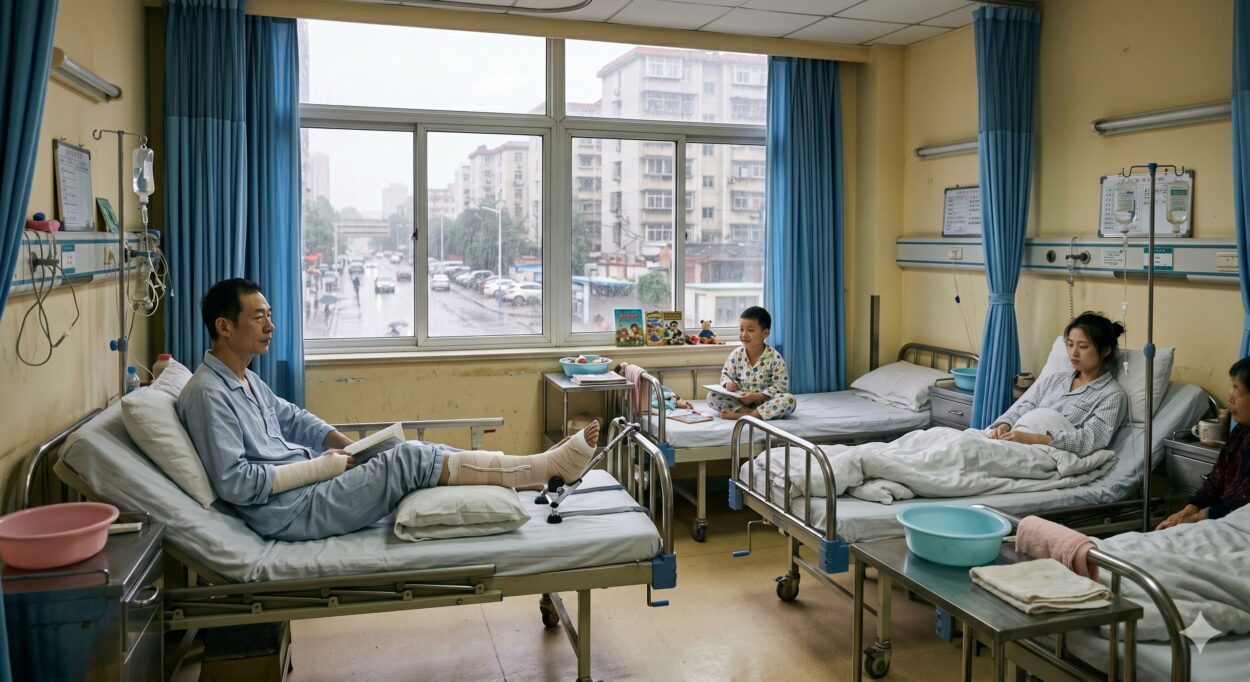
Several years ago, a man I’ll call Mr. R was hospitalized for months following a bicycle accident. There were four beds in the ward. Mr. R and a little boy occupied the two by the window; another belonged to a young girl. The girl was pale and quiet, rarely speaking, drifting much of the time in and out of a half-waking, half-sleeping haze. Her condition worsened steadily. When she first arrived, she could still hold onto the wall and walk a few steps. Later, she could no longer leave her bed.
She came from another county. Her parents had divorced, and she had come to this town with her mother to earn a living. Then, in a sudden car accident, her mother was gone forever. She had no family here. No friends. Only the meager savings her mother left behind to extend her young but dying life. Yes — she was not so much living as helplessly prolonging life.
Once, Mr. R passed the nurses’ station and overheard them discussing her illness. “The girl won’t make it,” the head nurse said quietly. While the little boy was sick too, he was lively, restless, and full of motion. He often tugged at Mr. R, begging for stories, his voice echoing through the room. Whenever he did, Mr. R would steal a glance at the girl and see her brows tightly furrowed. She seemed unable to bear noise.
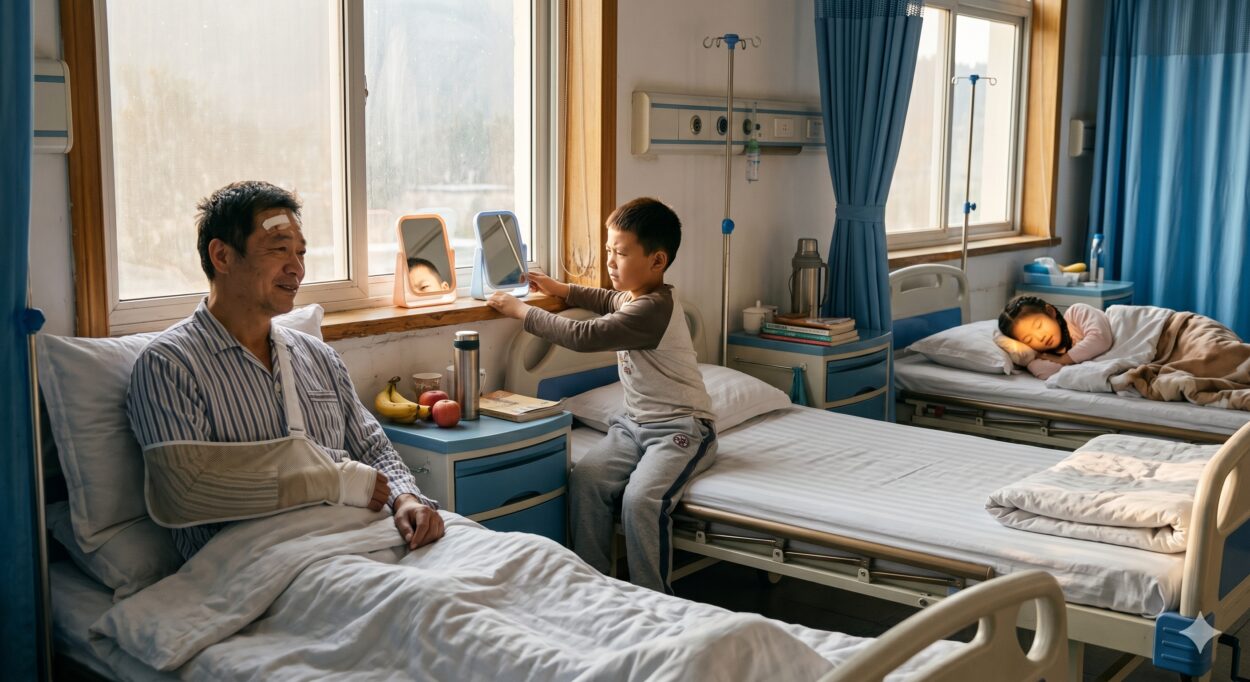
Springtime shadows
The boy’s parents visited every day, bringing him treats, books, and toy robots. He generously shared them with everyone — including the girl. If she pretended to be asleep, he would pile the gifts by her pillow and then make a silly face. One day, Mr. R saw the boy’s father crouched outside the hospital, holding his head and weeping by the roadside. After much asking, the man confessed: His son had a terminal illness. The doctors believed he would not survive the winter.
Four beds in one ward. Four patients. And two of them — two children in the springtime of life — were expected to die. Mr. R felt powerless. A feeling of hopelessness and depression swept over him. And then, one afternoon, everything began to change. The boy once again brought a little heap of gifts to the girl’s bedside. That day, she was in better spirits, listening to music on the radio. She thanked him. And even smiled. The boy, delighted beyond measure, lingered beside her bed. “Sister,” he said, “you look beautiful when you smile.” She smiled again.
Then the boy announced with great seriousness: “When I grow up, will you marry me?” The whole ward burst into laughter. Even the girl laughed — and this time, truly laughed happily. “All right,” she said, touching his head gently. Then the boy asked: “Why is your face so pale?” “Because I have no sunlight,” she replied. He thought very hard. Then, tapping his forehead like a little inventor struck by genius, he said: “I know! I’ll make the sunlight turn a corner!” Everyone assumed it was just one of those marvelous absurdities only children can produce. But the boy took it to heart and actually made sunlight turn a corner.
Chasing the light
The boy found a mirror and set it on the windowsill, adjusting the angle again and again, trying to reflect sunlight onto the girl’s bed. But hard as he tried, he couldn’t make it work. Just when everyone thought he would give up, he found another mirror. Using both mirrors, he kept experimenting. And finally, the afternoon sunlight bounced from mirror to mirror and landed softly on the girl’s face. In that instant, her face bloomed like a summer flower.
For the whole afternoon, she lay there bathed in that little beam. Her eyes stayed closed, but tears slipped constantly from their corners. She tried to wipe them away. But somehow they kept returning. From that day on, the first thing the boy did each morning was carefully polish the two mirrors, adjust them just so, and send the day’s first sunlight to her bed. And she began waiting for it.
Sometimes, she smiled and held the light in her hands. Sometimes, she pretended to paint it across her forehead. She told him stories about roses and snails. She folded paper frogs and cranes for him. And slowly — miraculously — the girl’s face lost its pallor. It began to carry the color of sunlight.
Sometimes, the boy would tease her, reflecting the light high onto the wall where she could not reach it. She would lift herself and stretch toward it. And just as she was about to give up, he would lower the sunlight back into her hands. During those days, laughter often filled the ward. The light that lingered, but Mr. R still remembered the doctors’ astonishment. After each examination, they would exclaim, almost incredulously: “Better again today!” Both the boy and the girl were recovering. It felt like a miracle. By the time Mr. R was discharged, the girl could walk again. She and the boy held hands and came to see him off. Their faces glowed in golden sunlight — two happy, healthy faces.
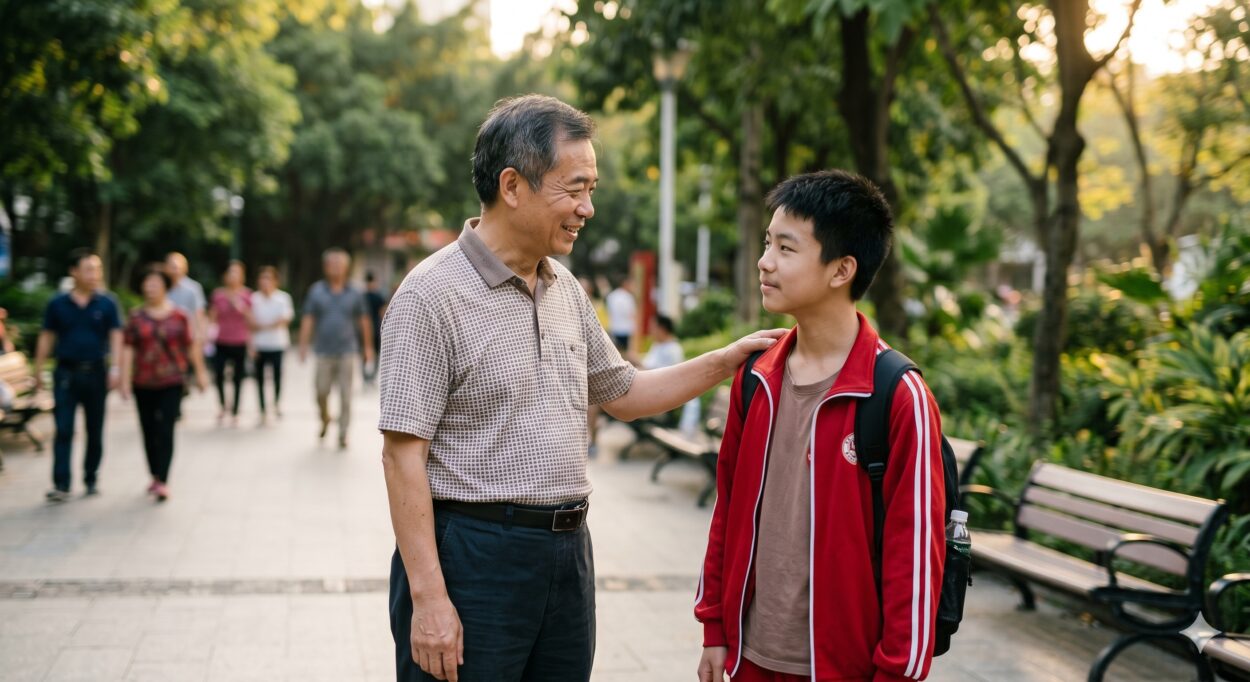
Years later, Mr. R saw the girl again. No, she had not become the boy’s bride. (Childhood engagements negotiated over hospital beds can be difficult to enforce.) She had just been married and carried that unmistakable radiance of a new bride. She said she was thankful for that “kind little joke” every day. “It was the boy,” she said, “and that beam of sunlight that kept me alive.”
Each night before sleeping, she would tell herself: I must wake early tomorrow to receive the first ray he sends me. She didn’t want the innocent little boy to wake one morning and suddenly find her gone. “There was always a beam of sunlight shining in my heart,” she said. “It gave me warmth. It gave me hope.” Then she said quietly: “I didn’t dare die.”
Mr. R later met the boy, too. He had grown up. Soft brown fuzz lined his upper lip — the first shy signature of manhood. Sitting together one day, Mr. R asked him: “Back then, did you know you had been sentenced to die?” Yes,” he said. “I was little. I didn’t fully understand death… but I was terribly afraid.” Then he smiled. “But there was that sister. Every night before sleeping, I would think — tomorrow I must wake early and make the sunlight turn a corner for her…” “After all,” he added, grinning with pure embarrassment, “she was going to be my bride!”
It was only a beam of sunlight. And yet, a miracle happened. Perhaps every heart carries such a warm beam within it. And the more sunlight we bend toward others, the more light returns to us.
Translated by Katy Liu and edited by Tatiana Denning
Follow us on X, Facebook, or Pinterest
