
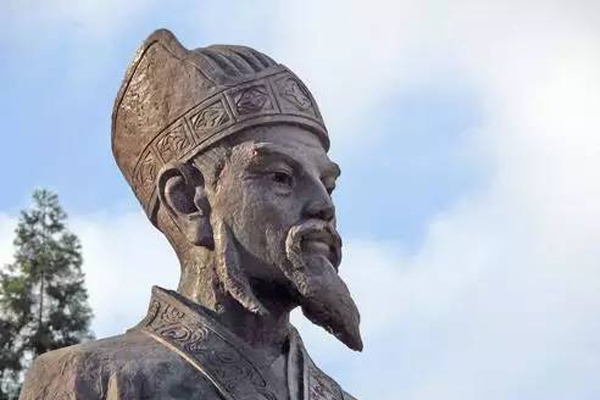
Allegories of Yu Li Zi is a collection of allegorical essays by Liu Bowen, composed in the late Yuan and early Ming dynasties, around the mid-14th century. The work is narrated through a fictional character, “Yu Li Zi,” who uses concise stories, dialogues, and allegories to explore principles of governance, social relationships, and ways of living.
This work is characterized by its allegorical reasoning, comprising many short pieces that carry deep, layered meanings. Its content spans a wide range of themes, including political criticism, analysis of power dynamics, observations on everyday life, and moral reflection. Through specific stories, it reveals the workings of power and the weaknesses of human nature.
Allegories of Yu Li Zi integrates Confucian and Taoist perspectives, emphasizing, on the one hand, that governance should follow moral principles and the right path, and on the other hand, revealing the complexities of power tactics and practical politics. Liu Bowen expresses concern and critique of contemporary conditions, particularly warning against rulers who control the populace through methods lacking legitimate principles.

The story of the Monkey Master
In an essay titled “The Master of Artifice,” Liu Bowen tells the following story.
In the State of Chu, there was a man who earned his living by raising monkeys, and people called him the Monkey Master. Every morning, he would gather the monkeys in the courtyard and send them into the mountains to collect various fruits, with the older monkeys leading the group. One-tenth of the fruit they worked hard to gather had to be handed over to the Monkey Master for his income. If any monkey failed to meet the quota, it would be whipped and punished. Over time, the monkeys lived under this system, constantly laboring and in fear; they dared not resist and could only silently endure the oppression.
The monkeys did not rebel because they were unaware of the unreasonable nature of their situation. In their view, everything seemed as it should be: the Monkey Master had the power to command the monkeys, and the monkeys could only obey. This state continued for a long time until one day, a young monkey raised several seemingly simple yet crucial questions that completely changed everything.
The little monkey asked the other monkeys: “Does the Monkey Master plant the fruit on the mountain?” Everyone replied: “No, the fruit grows naturally.” He then asked: “If there were no Monkey Master, would we be unable to pick these fruits?” Again, they answered no — each monkey could freely go into the mountains to gather fruit on its own. Since the fruit did not belong to the Monkey Master, the right to gather it was not exclusively his.
The little monkey then concluded: “In that case, why should we depend on him, work for him, and give him a portion of our hard-earned fruit?” These words enlightened the monkeys. They suddenly realized that the rules they had long accepted had no real justification. The Monkey Master had not created the resources nor provided any irreplaceable value, yet he relied on intimidation and habit to maintain obedience. Once the monkeys understood this, they began to harbor thoughts of rebellion.
The collapse of illusion
That night, while the Monkey Master slept, the monkeys quietly gathered together. Working as one, they broke down the barriers and cages that held them, took back the fruit that had been stored, then escaped in pairs back into the mountains, refusing to return to the Monkey Master’s control.
When the Monkey Master woke up, he discovered that all the monkeys had escaped and the food source he relied on for survival had vanished. He could no longer depend on them to gather fruit, nor did he have any other means of sustenance. In the end, he starved to death, as the once seemingly solid structure of control collapsed in an instant. On the surface, this story tells of the fate of a monkey keeper, but in reality, it contains deeper truths.
In society, some people rely on various means to control others, making them work for them and surrender the fruits of their labor, even without reasonable or legitimate grounds. Such control is often built on deception, habit, or fear rather than fairness and justice. Once those being controlled begin to think critically and recognize their own rights and contributions, these structures can quickly collapse.

The fragility of illegitimate power
The little monkey in the story symbolizes the power of awakening and thought. The monkey did not resort to violence or propose complex theories; instead, it guided everyone to re-examine reality with a few simple questions. It was this clear return to common sense that led to a fundamental change in the entire situation. This shows that what truly shapes human action is often not external coercion, but internal perception. Once perception changes, behavior naturally follows. At the same time, this story reminds us that any power maintained through improper means is unlikely to last.
The Monkey Master was able to control the monkeys only because they were unaware of the true nature of their situation, not because his authority was legitimate. Once this mistaken understanding was broken, the illusion collapsed, and his control lost its foundation. Therefore, a truly stable order should be built on fair systems and commonly accepted principles, rather than on intimidation, coercion, and manipulation.
In fact, the story also reflects the nature of governance in society. When those in power rely solely on methods of control without grounding their authority in legitimate principles and systems, their rule becomes much like the Monkey Master’s control over the monkeys — seemingly effective on the surface, yet fundamentally fragile. Liu Bowen’s allegory thus stands as a timeless reflection on the fragility of power without legitimacy, and on how awakened awareness — once sparked — can quietly but decisively reshape even the most established systems of control.
Translated by Joseph Wu and edited by Tatiana Denning
Follow us on X, Facebook, or Pinterest
