
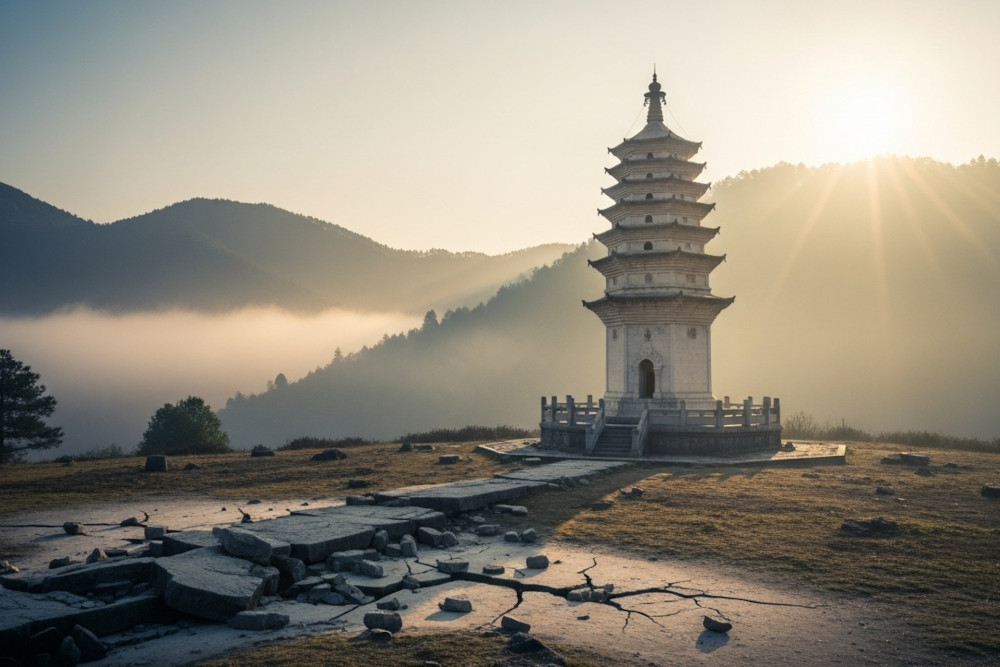
Ancient China is full of stories that blur the line between history and the supernatural. In Yunnan Province, two centuries-old pagodas became the center of such stories when they cracked during violent earthquakes — only to restore themselves without human intervention. For those who witnessed it, the only explanation was divine.
A mysterious crack that vanished
In the mountains of Yunnan Province, an ancient pagoda once split down the middle during a powerful earthquake — only to mysteriously mend itself after another tremor. This baffling event, which defies modern explanation, was long believed by locals to be a sign of divine power.
Known as the White Pagoda of Baofa Mountain, it stands in Jinbi Town, Dayao County, in the Chuxiong Yi Autonomous Prefecture. Built in the year 746 AD during the Tang Dynasty, it is considered Yunnan’s only Tibetan-style Lamaist pagoda. Remarkably, it predates more famous White Pagodas — such as those in Beijing, Tibet, and Mount Wutai — by around 500 years.
According to inscriptions on the bricks, it was constructed under the supervision of Monk Weichi from Shuangliu in present-day Sichuan. Unlike traditional Chinese-style towers, the entire structure was built from blue bricks imprinted with Sanskrit scriptures and Chinese Buddhist inscriptions, including phrases like “Great Buddha Peak” and “Eight Great Spiritual Pagoda Mantra.”
During the Hongzhi reign of the Ming Dynasty (late 15th to early 16th century), a devastating earthquake struck the region. Records say that a deep vertical crack split the pagoda down the middle. Then, in an astonishing turn of events, another earthquake struck — and the structure appeared to heal itself. The crack vanished, and the pagoda stood whole once again. Locals at the time believed this was no coincidence but a miraculous sign of Buddha’s presence, meant to deepen their faith.
The legendary Three Pagodas and their hidden treasures
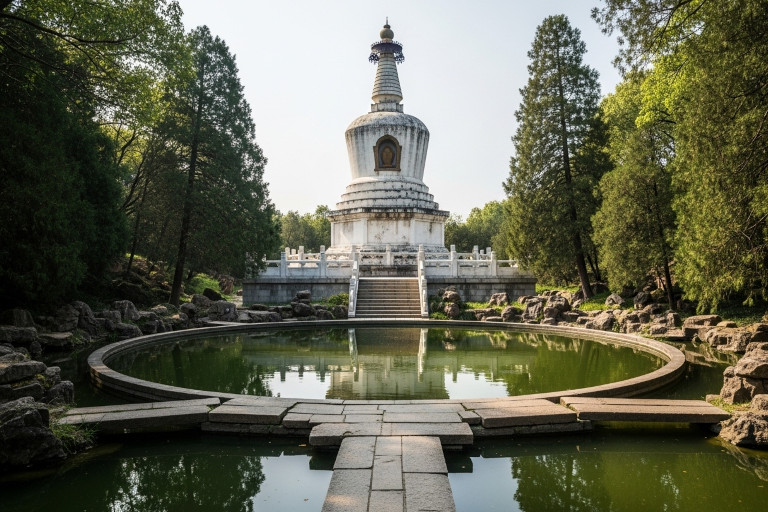
Another iconic religious structure in Yunnan is the Three Pagodas of Chongsheng Temple, located just northwest of the ancient city of Dali. This temple, which once served as the royal monastery of the Nanzhao and Dali Kingdoms, was built after the three pagodas were completed.
The Three Pagodas served more than just religious purposes. In ancient times, Dali was prone to severe flooding and was nicknamed the “lake of dragons.” According to local legends, dragons revered pagodas and feared the mythological bird peng, which was said to transform from a massive fish. The towers were believed to help subdue destructive forces and prevent disasters.
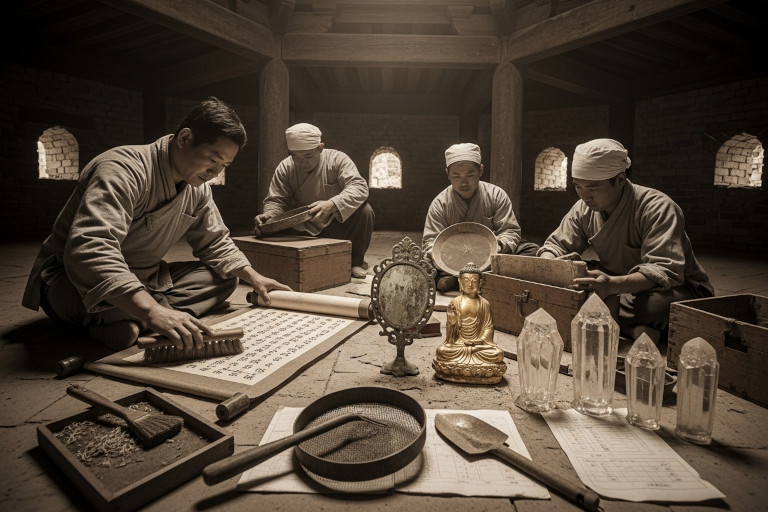
The pagodas themselves are covered in Buddhist mantras written in both Sanskrit and Chinese, many from the Tantric tradition. During a restoration of Qianxun Pagoda — the tallest of the three — in 1979, workers discovered more than 600 ancient relics sealed within the structure. These included hand-copied scriptures, bronze mirrors, Buddha statues made of gold, silver, crystal, and wood, and even medicinal herbs. The discovery gave historians a glimpse into the spiritual life of the region during the Tang and Song dynasties.
A second miracle: The Dali pagoda heals itself
The flood-control legends were only part of the story. The Three Pagodas would go on to display a miraculous quality of their own.
In 1514 AD, during the ninth year of the Zhengde reign, a powerful earthquake shook Dali. According to historical records, buildings collapsed throughout the city, and the central pagoda cracked by more than two feet. Yet within ten days, the crack closed completely — without any human repair. Locals saw it as another sign of divine intervention, echoing the earlier miracle in Dayao. Despite being located in a region prone to seismic activity, the Three Pagodas have remained standing for over a thousand years.
A Buddhist kingdom where faith shaped daily life
The Dali region was more than just a place of miracles — it was also a deeply spiritual society. The Nanzhao and Dali Kingdoms, which ruled the area during the Tang and Song dynasties, were profoundly influenced by Buddhism. Known as the “Buddhist Kingdom in the South,” Dali integrated the faith into every level of life.
Out of 23 monarchs in the Dali Kingdom, nine eventually gave up the throne to become monks. Whether rich or poor, most households kept Buddhist shrines. People of all ages carried prayer beads, and nearly half the year was spent observing vegetarian fasts, during which meat and alcohol were avoided. The surrounding mountains were filled with temples — so many that ancient texts could not list them all.
What the ancients believed
To the people of Yunnan, these events weren’t just coincidences. They saw them as sacred signs — proof that Buddhas and deities were watching over them. For those who lived in these mountain kingdoms, miracles were a reminder that faith had power, and that the spiritual realm was never far from the physical world.
Translated by Patty Zhang
Follow us on X, Facebook, or Pinterest
