

General George S. Patton Jr., one of the most formidable U.S. commanders of World War II, was famed for his aggressive tactics and unflinching leadership. Some believed Patton was “born for war,” and he seemed even more convinced of it — not just as a matter of personality, but as a destiny spanning multiple lifetimes.
A warrior through the ages
From boyhood, Patton envisioned himself as a future war hero. He was deeply drawn to the idea of reincarnation, believing he had fought in many of history’s great armies: serving under the Carthaginian general Hannibal, riding as a Roman legionary, charging as one of Belisarius’s cavalry in the Eastern Roman Empire, standing among Napoleon’s troops, and more.
In 1942, his first mission in World War II was to restore the morale of the U.S. II Corps in Tunisia after a defeat by German forces. While scouting with General Omar Bradley, Patton suddenly told his driver to turn right, away from the current battlefront. When the driver hesitated, Patton insisted: “I can smell the battlefield.” Moments later, they came upon the ruins of an ancient site. Crouching down, Patton murmured:
“The battle was here. Three Roman legions surrounded the Carthaginians… they fought bravely, but the city fell. They were all slaughtered, their bodies left in the sun. Two thousand years ago — I was here.”
Bradley and the driver were baffled — Patton had never set foot in North Africa before.
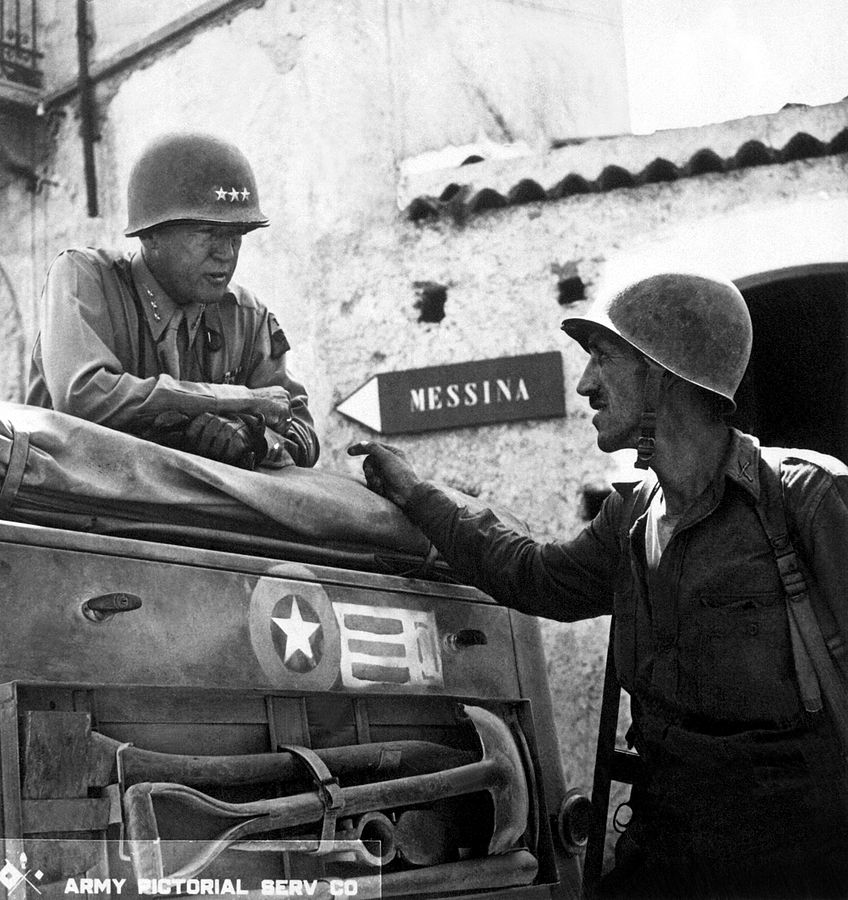
Memories beyond this lifetime
Patton often spoke openly about reincarnation. When his nephew once asked if he genuinely believed in it, Patton replied: “I’ve been to many places — not in this life.” He recounted visiting a French town for the first time, yet guiding a local officer unerringly to ancient Roman ruins: an arena, a drill ground, temples to Mars and Apollo. “It’s like a voice whispering in my ear,” he explained.
A poem of centuries of war
In 1944, as he led the Third Army across France, Patton wrote Through a Glass, Darkly — a reflection on his visions of fighting through countless eras:
As a Carthaginian warrior in North Africa
As a Roman soldier under Caesar
As a marshal at Waterloo under Napoleon
As a French knight in the Battle of Crécy during the Hundred Years’ War
As a Greek fighter against the Persians in the Siege of Tyre, 332 BCE
And further back, hunting beasts with spear in hand
In the poem, he lamented his endless return to the battlefield:
Through the travail of the ages, midst the pomp and toil of war
Have I fought and strove and perished countless times upon this star
He also offered a note of surrender to divine purpose
Though I do not know the reasons for my battles through the ages
I know God’s will is greater than human quarrels and that it was through His will I fought

The family’s warrior spirit
The Patton lineage carried a tradition of military service. Many in the family claimed to have seen ancestral spirits, suggesting a bond between past and present warriors. Whether Patton’s strategic brilliance came from inherited instinct or the echoes of lives already lived remains a mystery.
And if the general’s soul takes up arms again in another life — one wonders — what new campaigns will it recall?
Follow us on X, Facebook, or Pinterest
