
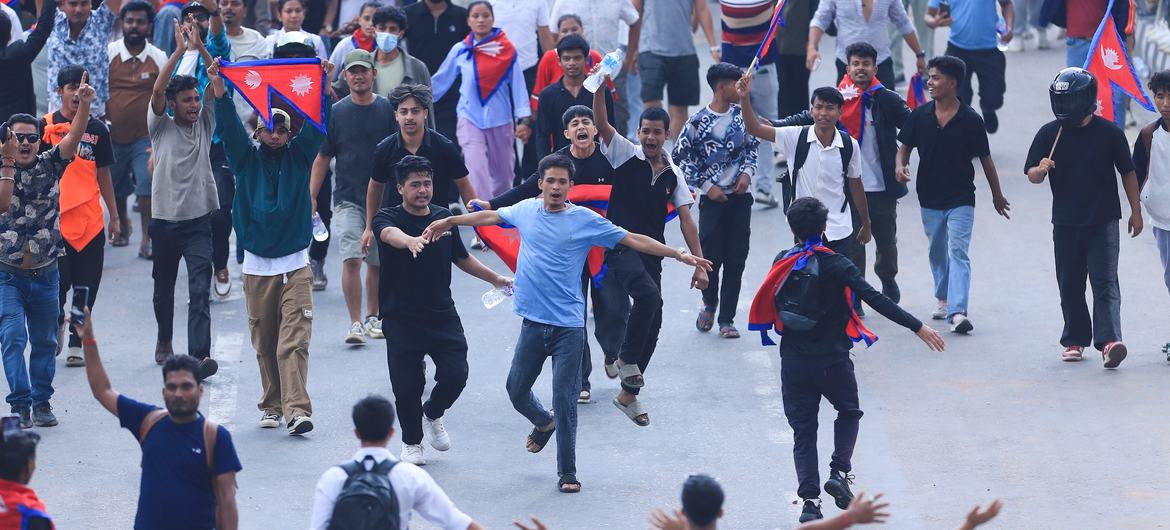
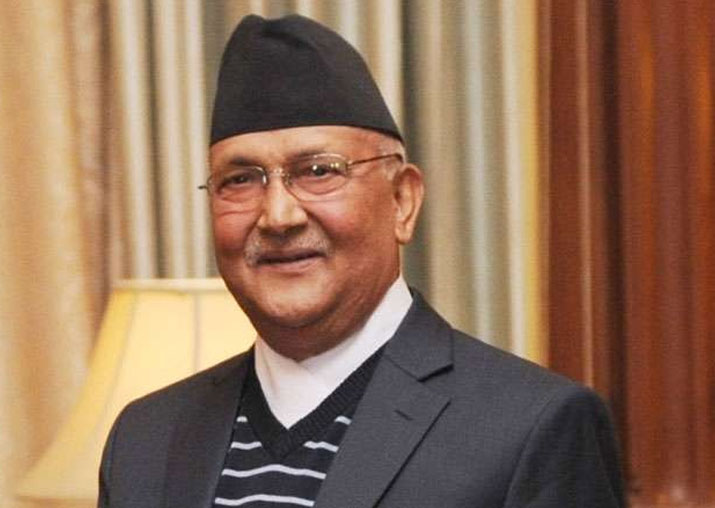
Nepal, the birthplace of Buddha, has recently undergone a remarkable political upheaval. News broke out of large protests in the capital, Kathmandu, and several other cities. Young people took to the streets to demand an end to authoritarian rule. Prime Minister K.P. Oli went from ruler to fugitive in a matter of days, while senior cabinet members resigned one after another. This rapidly spreading movement is a rebellion led by Generation Z.
The trigger seemed accidental. But overnight, the Nepali government, inspired by the Chinese Communist Party’s Internet blockade, blocked Twitter, YouTube, Facebook, and other social media platforms, citing non-compliance with “registration regulations.”
However, for a generation growing up on the Internet, this was tantamount to severing their connection. Young people set fire to the streets with anger, declaring through their actions that they wanted to reclaim the freedoms they had been deprived of.
The fragility and fate of Communist autocracy
Prime Minister Oli’s return from a military parade in Beijing coincided with a political reversal, a seemingly ironic moment in history. Communist authoritarian regimes often boast of their stability, but they are frequently the most vulnerable. Once they lose popular support, even the most stringent Internet blockades and state apparatus cannot prevent the awakening of free will.
This also begs the question: “Is the same scenario repeating itself in China today?” Internet censorship, suppression of speech, and the suppression of young people’s thought, can these seemingly solid walls truly stifle the new generation’s yearning for freedom?”
This story shocked the world. Even more devastating is the fact that a communist regime has ruled Nepal since the abolition of the monarchy in 2008. An atheist party rules the Buddha’s birthplace, a stark contrast to the ethos of this sacred Buddhist land.
What the old monk saw with his clairvoyant eyes
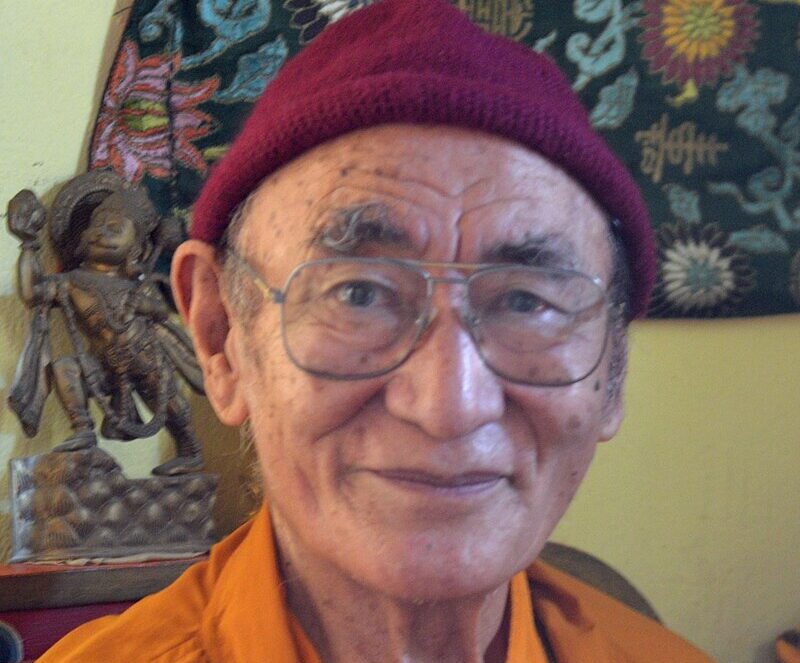
Yet, the Buddhist spirit remains undeterred. Just before the unrest, Karma Rinpoche, an 87-year-old Nepali monk, spoke publicly about his visions of the future at the Deva Monastery in Kathmandu. In meditation, he foresaw the future: “a light rising from the East, representing countless awakened souls, converging into a force powerful enough to transform the ages.”
In the Book of Unsolved Mysteries, the social media personality Fu Yao recounts a prophecy made by Karma Rinpoche. Although he is 87 years old, he remains energetic, and his eyes sparkle. When a visitor inquired about his visions during meditation, he gazed silently out the window at the sky for a long moment before slowly saying: “This isn’t a random experience. Three months ago, whenever I went into deep meditation, I could sense a clearer image, as if some important message was being urgently conveyed to me.”
He closed his eyes and recalled that initial scene, describing it to the visitor. It was a bright moonlit night. A powerful, vibrant energy surged from the East. Following this energy, he saw countless points of light twinkling across a landscape, like stars, yet carrying the breath of life. These points of light converged to form a vast energy field, radiating a dazzling light that illuminated the entire East.
‘What do these points of light represent?’
The old monk was asked about these points of light. He slowly replied: “They symbolize every awakened heart, every soul seeking the truth. When they gather together, it signifies that a profound transformation is about to take place, not just a superficial change, but a complete awakening within humanity.”
The monk paused for a moment, his tone solemn. “I speak of this today because the time has come. After years of practice, I have learned to follow the guidance of karma. This time, the scene was compelling, like a clear signal. The world is at a turning point. People need hope and direction.”
He continued: “What I’m witnessing is not just a political shift, but a major leap forward in human consciousness. And the starting point of this leap is right here in the East. Just as the Buddha attained enlightenment under the Bodhi tree, bringing the light of wisdom to the world, this light will be the fusion of technology and the mind.”
Rinpoche explained: “The integration of technology and the mind signifies the unification of matter and spirit, a dialogue between ancient wisdom and modern civilization. This is just the beginning; the more profound change lies in the fundamental renewal of people’s thinking and lifestyles. A whole new era is about to unfold.”
Finally, he looked at the crowd, his tone solemn and steady. “I don’t want you to interpret this as a prophecy simply, but rather to understand its deeper meaning. Behind this change lies the responsibility and action that each of us should take. The core message I see is this: “In that vast land of the East, an unimaginable future is brewing. It will not only transform that land, but also influence the course of all humanity. Its significance may even be more profound than the Buddha’s awakening.”
Could the vast land of the East that the old monk spoke of be the land of China with 5,000 years of civilization? Although this land has been seized by the Chinese Communist Party for over 70 years, leaving countless people overpowered, it will eventually return to its former glory. The changes in Nepal tell us that when the time is right, history will turn the page without hesitation.
The revelation of the eminent Monk: The fusion of technology and the mind
Karma Rinpoche’s words are worth pondering. He sees more than a change of power; he sees a leap forward in the level of human civilization. He believes that the future power will come from the fusion of technology and the mind.
This point is particularly relevant today. Social media is primarily a technological product. Precisely because it carries the voice and spirit of humanity, it has become a weapon of young people’s rebellion. When technology ceases to be a cold tool and becomes a vehicle for awakening the soul, it has the potential to propel a nation, and even humanity as a whole, into a new stage.
Perhaps, this is the revelation that the birthplace of the Buddha has given to the contemporary world: True revolution is not just a change of political power, but an awakening of consciousness and spirit.
Will the East shine again?
The shining point of light in the East that the old monk saw in meditation might suggest not just Nepal, but the entire Eastern world. Once upon a time, the Buddha’s wisdom spread from here, illuminating Asia and influencing all of humanity. Today, does this new point of light signify another profound awakening?
Whatever the answer, one thing is sure: Humanity is reaching a new turning point. As Karma Rinpoche said: “The time has come.”
Translated by Chua BC
Follow us on X, Facebook, or Pinterest
