
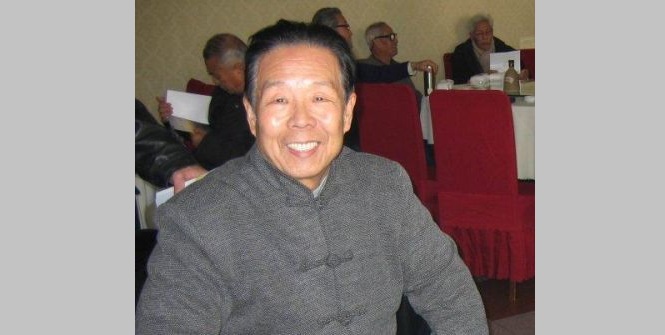
Who was Xin Ziling?
Xin Ziling (1935-2021) from Anxin, Hebei Province, was the director of the editorial department at the National Defense University of the People’s Liberation Army (PLA).
After retiring, he wrote numerous works that recorded historical truths and advocated political reforms, including The Complete Biography of Mao Zedong, The Fall of the Red Sun, and The Code to Unlock the Black Box of the Cultural Revolution. He also published articles in overseas journals, calling for genuine constitutional reform.
Xin Ziling became famous for his book The Fall of the Red Sun, which criticized Mao Zedong, and for supporting former Premier Wen Jiabao’s calls for political reform. Because of his status as a “Party insider,” his critiques carried significant weight until he was placed under various forms of surveillance and restricted from speaking in his later years.
In 2011, at the invitation of the Ministry of Science and Technology of China, Xin Ziling delivered a speech entitled “The Situation and Future,” citing data indicating that 30.04 million people died of starvation during the Great Leap Forward, bringing the total to 37.558 million when combined with those who died in 1962.
Xin Ziling also quoted an unnamed American official as saying that “China’s problem was actually quite simple. It is roughly rooted in the monopoly of power by ‘approximately 500 privileged families,’ forming a core of interests for about 5,000 people.”
These public remarks immediately led to his being monitored, subsequently subjected to isolation, investigation, and house arrest for five years.
Regarding his father, Xin Ziling, Song Yue recalled: “This was probably after 2010 or 2011; he was placed under house arrest.” “Even after my mother passed away, when he went to pay respects at her grave, he was stopped at the gate of the compound.” “There were cameras installed in the corridors……The surveillance cameras would know as soon as you went out.”
When Song Yue obtained his Canadian lawyer’s license in 2014, he invited his father to Canada to attend his induction ceremony, but his father was denied approval for the overseas travel, and no reason was given.
He questioned: “What threat could a 70-year-old retired man who has dedicated his life to the Communist Party pose when going abroad to attend his son’s induction ceremony?” Xin Ziling was banned from leaving the country without any written restrictions. Song Yue said: “This reflects the evil of the rule of law advocated by the system.”
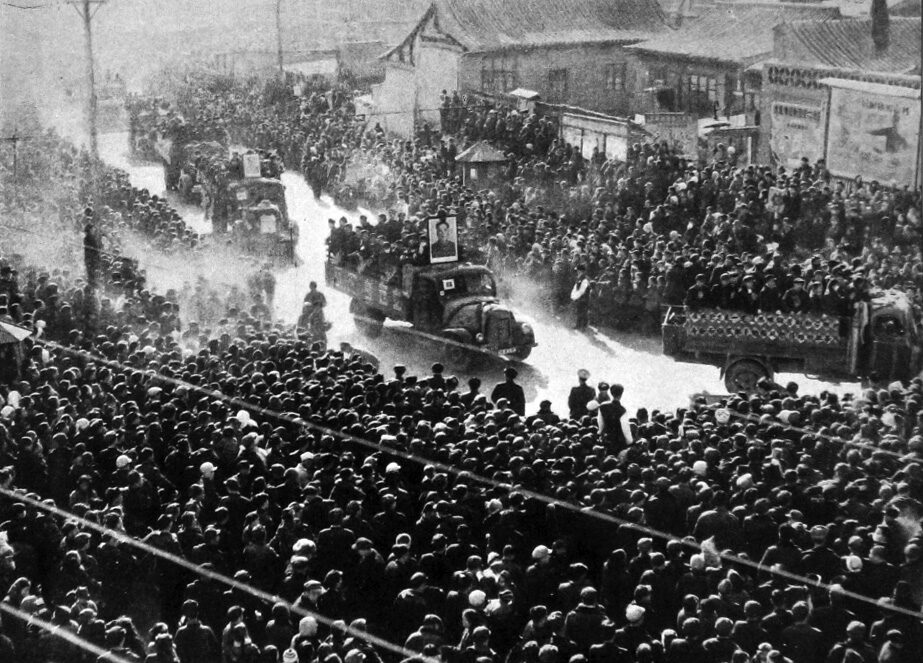
Why was Xin Ziling suppressed?
Song Yue’s analysis was that his father “spoke out for justice” and criticized the Chinese Communist Party’s (CCP’s) left-leaning policies and the corruption of the powerful.
During his lifetime, Xin Ziling had repeatedly called for an end to the persecution of Falun Gong and the liquidation of Jiang Zemin. He believed that the persecution of Falun Gong was “the most reactionary thing.”
Xin Ziling once revealed that “six out of seven Standing Committee members opposed it, only Jiang Zemin insisted on going his own way” and that “the forced live organ harvesting has aroused global outrage.”
Money and corruption or knowledge and integrity?
As a child of a military compound, Song Yue was also asked to compare himself to today’s incredibly wealthy second-generation elites and officials. He believes the difference lies in their educational environment and the formation of their values.
“My father did not pursue money. He pursued knowledge and integrity. His financial integrity impressed me deeply, so I don’t pursue wealth.”
Song Yue recalled that when his father was the president of a publishing house, he raised funds through the military calendars and “earned 600,000 yuan” in the first year. However, he did not use this to seek personal gain. Instead, he was investigated for “giving too little in employee benefits.”
Regarding the CCP’s anti-corruption campaign, he pointed out a contradiction: “During the June Fourth incident, students shouted ‘Fight against corruption, fight against official profiteering.’ However, today, the more they fight corruption, the more corrupt it becomes.”
He believes that corruption is not only a problem of the system, but also a matter of people’s faith. “If people don’t know God and their greed is endless, no matter how the system is designed, it is useless.”
‘The Party’ and ‘Faith’
To immigrate to Canada, Song Yue returned to school in his forties to study Canadian law. He said that he was grateful for Canada’s inclusiveness: “In China, if I went back to school in my forties, schools won’t accept me; Canada doesn’t have that concept.”
Song Yue studied law in both China and Canada. He has a profound understanding of the two types of rule of law. “The Canadian Constitution is founded on the principle of ‘recognizing the Supremacy of God,’ while the rule of law in China (the Communist Party) is based on the supremacy of the political party.”
These two fundamental spirits yield markedly different outcomes. The fundamental differences between the rule of law in China and the West are that: “The Western rule of law is based on reverence for God, with freedom and checks and balances; the rule of law in China ultimately depends on the will of those in power.”
Although he has been away from China for more than 20 years, he lamented the current restrictions on speech in China. “The environment is more severe than it was back then. To prevent people from speaking is to put society in a state of ‘silence.’ If a system is confident, it is not afraid of criticism.”
He cited the case of Lin Zhao, a Peking University alumna, who was executed by shooting after the Anti-Rightist Campaign for criticizing Mao Zedong. He believed that the CCP’s long-term suppression of speech is a deep-seated disease of society. “A society without freedom of speech is very sick.”
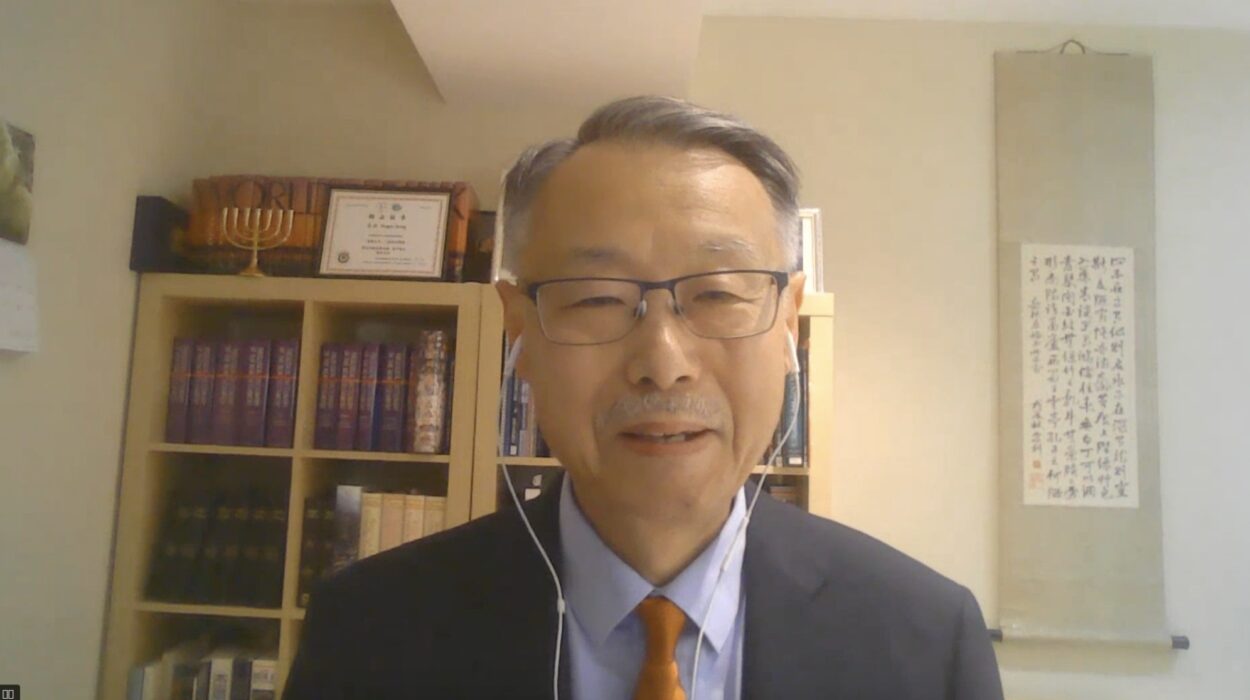
Freedom, truth, and peace of life
When discussing how overseas Chinese are still held hostage by the CCP’s so-called “patriotic” narrative, Song Yue believes that the main reasons, besides being driven by self-interest, are that “the political indoctrination that has been carried out for decades in China has not been “emptied out” when they go abroad, nor has the truth been instilled into their lives.”
He said that only by seeking the truth can one achieve true freedom. He said he left China because he wanted the freedom of a normal person, saying: “I don’t want to think about whether every word I say will have political implications, or whether it will affect my promotion or business.”
Song Yue also reminded those who are still within the system, whether they are children of high-ranking officials, children of government officials, or children of privileged families: “I have worked on projects in China, and have seen many corporate executives who had a glorious life, only to be suddenly placed under investigation, or even commit suicide…. People live in illusions and eventually fall into sin, which will surely lead to their demise.”
Looking back on his journey, Song Yue has experienced “many blessings and peace.” He believes that what truly changes lives is faith. “Whether you have money, status, or power, you can’t buy peace,” he says.
Song Yue concluded with: “Truth sets you free,” a profound reminder to the Chinese world.
Translated by Chua BC and edited by Helen London
Follow us on X, Facebook, or Pinterest
