

Chromosome 2, the fused strand that sets humans apart from other primates, may be the most compelling clue yet in an ancient puzzle about human origins. Could the story of who made us be written not in the stars, but in our cells? When a U.S. intelligence officer told Congress in 2023 that the government possessed “non-human biologics,” the claim sounded more like science fiction than sworn testimony, yet amid the growing wave of UFO disclosures, a quieter mystery has resurfaced in the scientific world — one that’s been hiding in our own DNA.
The testimony that changed everything
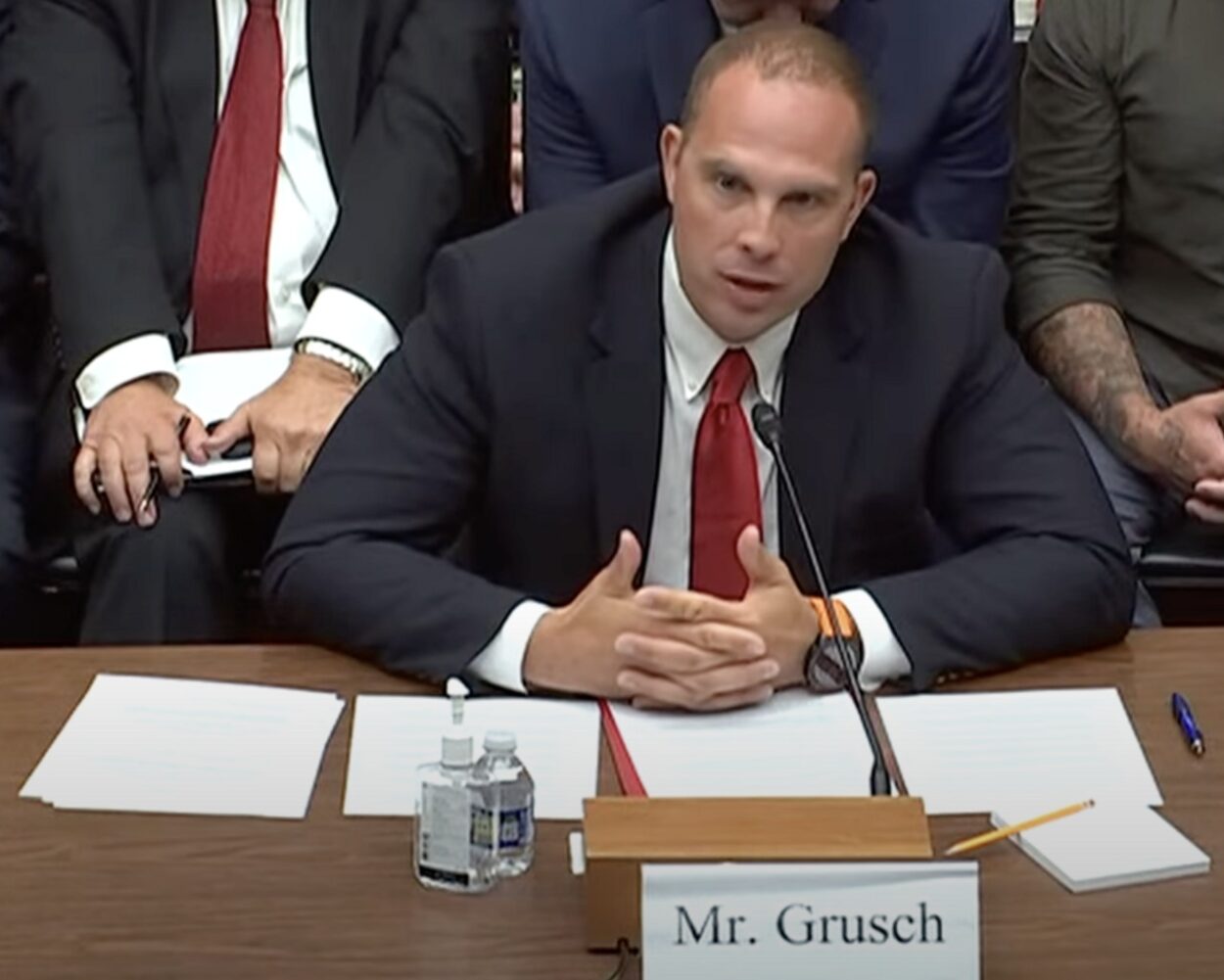
In July 2023, a decorated Air Force veteran named David Grusch testified under oath before the U.S. Congress that the government possesses “non-human craft” and even “biologics” of unknown origin. It wasn’t the first time someone had claimed such things — but it was the first time those claims entered the official record, under oath, before elected representatives. The effect was seismic.
Suddenly, the question of whether humanity is alone in the universe was no longer a fringe topic — it was a matter of public policy. But behind the headlines and the politics, a quieter, older question reemerged: If we are not alone, then who are we? For centuries, our species has looked outward to the stars for answers. But what if the most compelling evidence of other intelligence has been hidden within us all along — written into our very DNA?
Chromosome 2: The genetic puzzle scientists can’t explain away
Every human cell carries a genetic anomaly so distinct that it separates us from every other known primate. It’s called chromosome 2 — a massive, fused strand of DNA that appears to have formed when two ancestral ape chromosomes joined end-to-end. Other primates, such as chimpanzees, bonobos, and gorillas, have 48 chromosomes; humans have 46. The difference lies entirely in this fusion: two ancient chromosomes (now known as 2A and 2B) combined to form a single, longer structure in humans.
When researchers first mapped this region in the 1980s and 1990s, they found something astonishing — traces of telomeres (the protective caps that usually sit at chromosome ends) embedded in the middle of chromosome 2, and a dormant centromere from one of the originals. These are unmistakable signs of fusion.
To most geneticists, this is conclusive evidence of natural evolution. But others point out that such an event should be biologically catastrophic. Chromosome fusions usually lead to infertility or developmental failure — not the emergence of a stable, thriving species that eventually dominates a planet. Could it be that this was not a random accident, but an act of design?
What ancient cultures might have known
Long before modern science could read DNA, civilizations across the globe spoke of beings who descended from the heavens and shaped early humanity. In Sumerian texts, the Anunnaki were said to have created humans as a hybrid labor force — mixing their own essence with that of earthly beings. In the Book of Genesis, divine entities “made man in our image.” In Hindu cosmology, the gods (devas) seeded life through cosmic cycles of creation and destruction. And in Mesoamerican lore, the Quetzalcoatl figure is credited with “giving blood and knowledge” to humankind.
These stories, scattered across continents and millennia, share striking motifs: genetic creation, hybridization, and celestial teachers. While mainstream anthropology treats them as myths, their thematic consistency raises questions about whether they preserve distorted memories of real encounters. If such beings once visited Earth, could the fusion of chromosome 2 — the single event that separates humans from other primates — represent a biological signature left by those who engineered us?
From labs to light-years: Rethinking creation
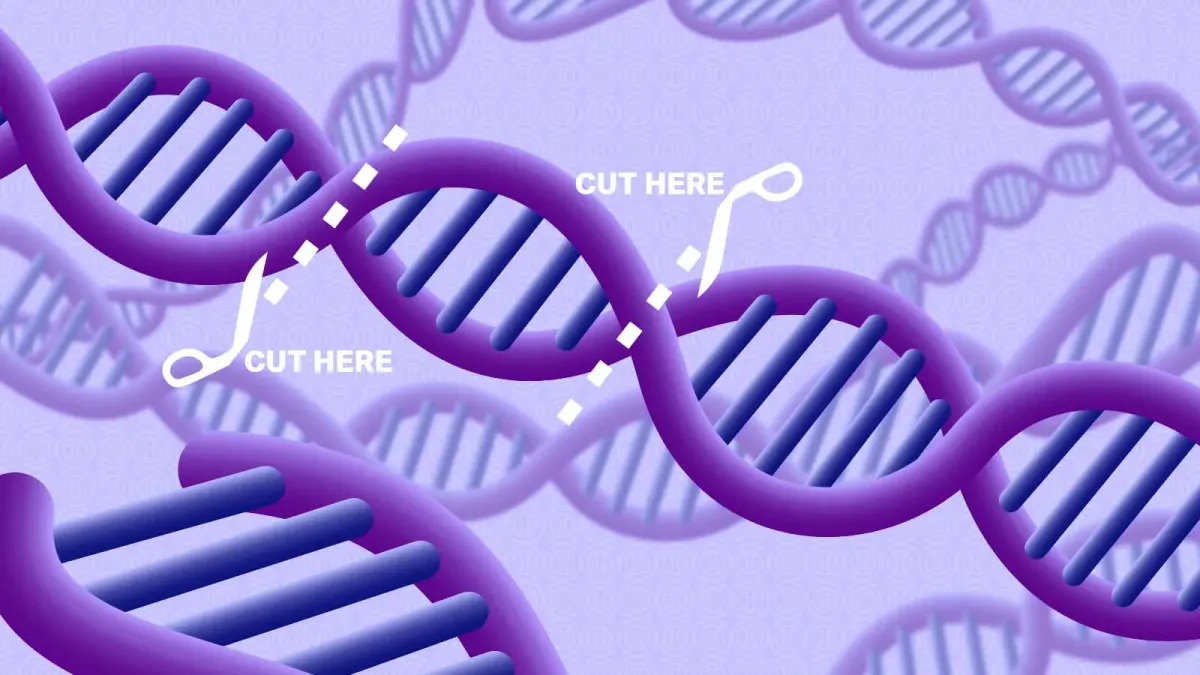
Today, we stand on the edge of our own bioengineering revolution. With CRISPR-Cas9, scientists can now cut, fuse, and rewrite genetic material with surgical precision — something that would have been unthinkable a generation ago.
It’s worth remembering that Francis Crick, who co-discovered the structure of DNA, once proposed the theory of directed panspermia — the idea that life on Earth may have been seeded by an advanced civilization elsewhere. For Crick, this wasn’t science fiction; it was a rational hypothesis to explain the complexity of biological coding. The line between “evolution” and “engineering” may be thinner than we think. Evolution describes the process; engineering describes the intent. Both could be true simultaneously — nature as the medium, intelligence as the author.
If humanity today is learning to modify its own genome, it stands to reason that another civilization — far older, perhaps far wiser — could have done the same long ago. Chromosome 2 could then be viewed not as an accident but as a designed adaptation—an upgrade that set in motion the rise of self-awareness, language, and technology.
What we risk by ignoring the evidence
To dismiss such ideas outright is to repeat an old human pattern: confusing consensus with truth. History shows that paradigms shift only when people dare to question what “everyone knows.” The question isn’t whether aliens “made us” — it’s whether our story is more complex than we’ve been told. Science excels at describing how things happen; myth and philosophy attempt to explain why. Somewhere between those two languages lies the fuller story of our species.
Perhaps chromosome 2 is the physical remnant of a meeting between matter and mind — the moment when biology became conscious of itself. Whether that consciousness arose through divine intervention, extraterrestrial design, or an intelligent universe capable of creating beings who question their origins, we may never know for sure.
But as government officials testify about “non-human intelligences” and geneticists uncover new mysteries in the code of life, one truth becomes inescapable: The deeper we look into the sky — or into ourselves — the more the question of who made whom begins to blur.
Follow us on X, Facebook, or Pinterest
