
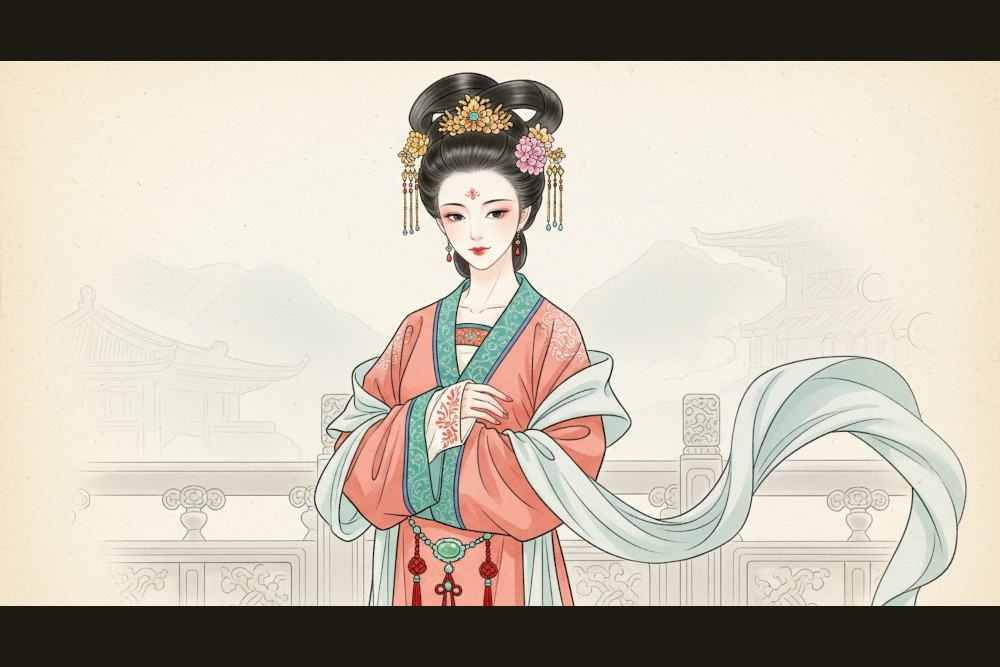
Diao Chan, celebrated as one of ancient China’s Four Great Beauties, has long been remembered for her breathtaking grace and tragic fate. Yet behind the legendary image of a woman who turned heroes against one another lies a deeper truth: she was also a model of loyalty to her country and filial devotion to her family.
The child found at the nunnery
During the late Eastern Han Dynasty, outside the capital of Luoyang stood a humble Buddhist nunnery.
One stormy night, a young nun found a baby girl wrapped in a mink-fur vest lying in the snow. She brought the infant inside, and the abbess, moved by her delicate features and gentle nature, decided to raise her. Because the child’s cry was as clear as the song of a cicada and she had been found wrapped in mink, the abbess named her “Diao Chan” — Diao for mink and Chan for cicada.
Little Diao Chan grew up lively and bright. At three, she could already sing and dance. One day, Lady Wang, the wife of the imperial minister Wang Yun, visited the nunnery to pray for a child. Seeing the charming girl, she was instantly taken with her. Upon learning Diao Chan was an orphan, Lady Wang offered to bring her home and raise her as her own. The abbess agreed, and with a generous donation, Lady Wang carried the girl back to the Wang household.
A gifted and grateful child
Minister Wang Yun was immediately struck by the girl’s intelligence and calm presence. He personally taught her the classics and the principles of conduct, while masters of music and dance refined her natural grace.
Diao Chan’s talent flourished. She mastered poetry, song, and dance, and her beauty shone from within — a reflection of her pure and grateful heart. Each time she returned to the nunnery with Lady Wang, she brought offerings to thank the abbess who had once saved her.
The Wangs cherished her as their own daughter, and Diao Chan, in turn, longed to repay their kindness. By the time she came of age, she was not only accomplished and wise but so beautiful that people said her radiance could “outshine the moon and shame the flowers.” But fate would soon place that beauty in the midst of a nation’s turmoil.
The tyranny of Dong Zhuo
At that time, the Han Empire was descending into chaos. The brutal warlord Dong Zhuo seized control of the imperial court through military power. With the fierce warrior Lü Bu as his adopted son, Dong Zhuo ruled through greed and violence. He deposed the young emperor, murdered officials who opposed him, and allowed his soldiers to loot and abuse the people.
Even as noblemen like Yuan Shao, Cao Cao, and Sun Jian rose in resistance, their rivalries kept them divided, and the empire sank further into despair. In the capital, Dong Zhuo’s tyranny reigned unchecked, and few dared to challenge him — except for one old minister, Wang Yun.
A beauty’s brave vow
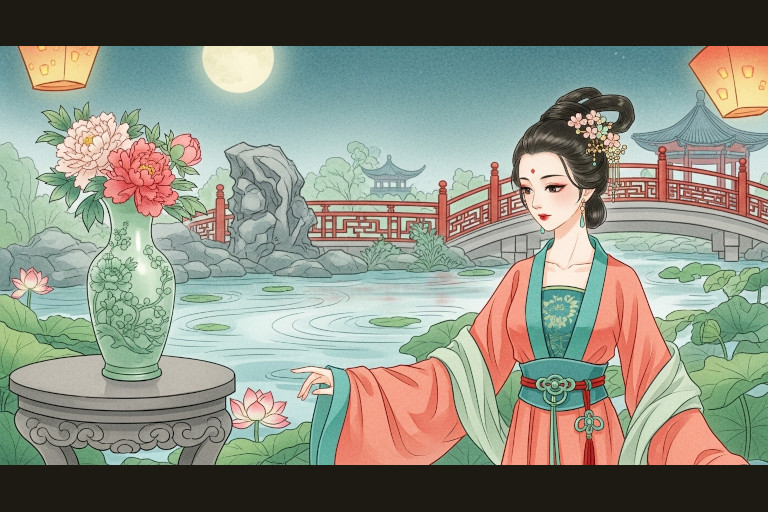
Haunted by the nation’s suffering, Wang Yun often sat in silence, weighed down by grief. One day, Diao Chan found him sighing in the garden and asked gently: “Father, you’ve always treated me with such kindness. If there’s any way I can help, even at the cost of my life, please let me do so.”
Wang Yun hesitated but finally spoke. “The empire is in danger. Dong Zhuo means to seize the throne, and no man can stop him. There is one way — if you are willing to sacrifice yourself.”
He explained his plan: Dong Zhuo and Lü Bu were both consumed by desire. If Diao Chan’s beauty could turn them against one another, Lü Bu might kill Dong Zhuo and end his reign of terror.
Diao Chan turned pale. To be given to two men, both ruthless and immoral, would mean the loss of her honor and her peace. Yet when she thought of her country’s misery and her adoptive father’s loyalty, her resolve hardened. Kneeling before Wang Yun, she said firmly: “For the sake of our nation and my duty to you, I will do whatever is required. I do not fear death.”
From that moment, her gentle heart carried the weight of a nation’s fate.
The Chain Plan
Wang Yun’s “Chain Plan” soon began. He first invited Lü Bu to a feast, where Diao Chan poured wine and danced. Lü Bu was instantly captivated. Delighted, Wang Yun promised to marry her to him, and Lü Bu left, overjoyed.
Soon after, Wang Yun hosted Dong Zhuo. When Dong saw Diao Chan, he was entranced and took her back to his palace that very night. When Lü Bu discovered what had happened, jealousy and rage consumed him. Diao Chan deepened his fury through tears and words of sorrow, until father and son turned against each other completely.
Eventually, Wang Yun persuaded Lü Bu to kill Dong Zhuo. Pretending that Emperor Xian would grant Dong the throne, Wang Yun lured him into the palace. There, instead of receiving a crown, Dong heard a decree condemning him as a traitor. Lü Bu stepped forward and struck him down, ending the tyrant’s rule and saving the Han court.
The uncertain fate of Diao Chan
Though Wang Yun’s plan succeeded, fate soon turned cruel. In A.D. 192, Dong Zhuo’s loyalists Li Jue and Guo Si led an army into the capital, killing Wang Yun and his family. Lü Bu fled, and Diao Chan’s whereabouts became a mystery. Over time, legends offered two possible endings.
Version one: The nun of remembrance
After learning of Wang Yun’s death, Diao Chan was overcome with grief. She wished to die beside him but thought, “My father died unjustly and lies unburied. I must live long enough to complete my duty of filial piety.”
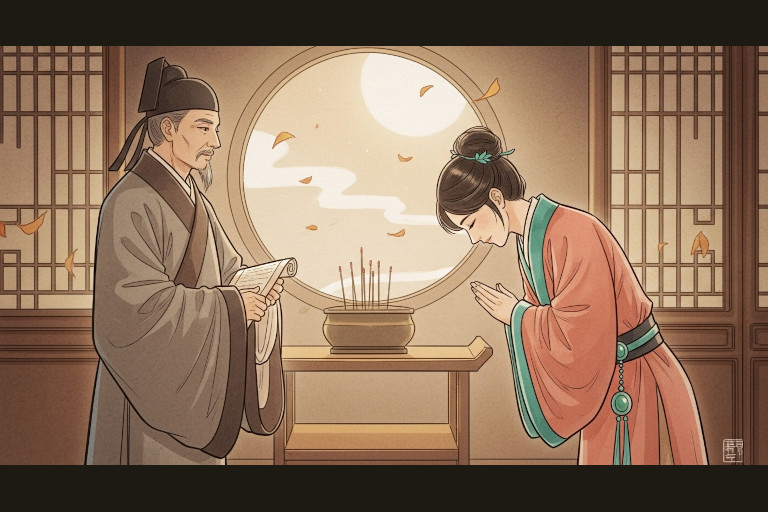
She returned to the nunnery of her youth, where the abbess helped her recover Wang Yun’s remains. Diao Chan carved a wooden likeness of his head and buried it with his body. After fulfilling her vow, she shaved her head and became a nun, spending the rest of her life in quiet devotion. She passed away peacefully in her eighties.
Version two: The warrior’s mercy
In another tale, after Lü Bu’s defeat by Cao Cao and Liu Bei, Diao Chan was captured. That night, General Guan Yu heard weeping in the darkness and found her imprisoned. Believing her to be a temptress who brought kingdoms to ruin, he prepared to execute her.
Diao Chan knelt and pleaded, telling him how Wang Yun had sent her to sacrifice herself for the nation. Guan Yu, moved by her sincerity, spared her life and gave her silver for her journey.
She returned to Luoyang, found the official who had buried Wang Yun, and mourned him for three years. Later, Emperor Xian honored Wang Yun with a noble title and a proper reburial. Diao Chan, her final duties fulfilled, returned to the nunnery and donated all her silver to repay the kindness she had received. She spent her remaining years in peace, her heart at rest.
Diao Chan’s story endures not only because of her beauty, but because she embodied the virtues that beauty alone could never hold — courage, loyalty, and the devotion of a daughter who placed righteousness above self.
Translated by Katy Liu
Follow us on X, Facebook, or Pinterest
