
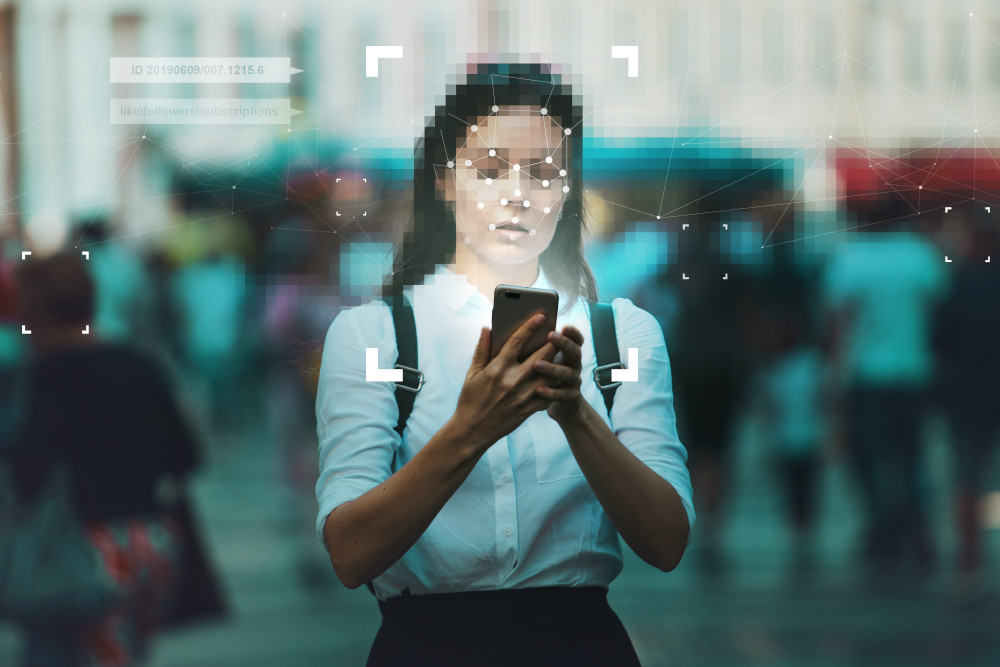
Digital IDs are transforming how governments and corporations identify, track, and rank citizens. Promoted as tools for security and convenience, they are increasingly being used to control access to housing, travel, and public services — echoing the logic of China’s social credit system. As nations from the UK to India adopt these programs, experts warn that digital identity could become the foundation for a new kind of social exclusion.
The homeless of the algorithm
It began with a glitch — or at least that’s how it felt to Mr. Li, a 43-year-old factory worker in northern China. One morning, his phone app refused to generate the green QR code he needed to enter his dormitory. His “trust score,” he later learned, had fallen below a certain threshold. He was never told why. Perhaps it was the unpaid utility bill, or a traffic fine he had forgotten to pay. Within days, he lost both his job and his housing. And without a valid code, he couldn’t buy a train ticket to search for work elsewhere.
Across the ocean, a single mother in Boston experienced her own quiet exile. After months of saving, she applied for an apartment using a housing voucher — only to be rejected by an algorithm called SafeRent that had silently labeled her a “high risk.” No human being ever reviewed her appeal.
Two stories, two continents, one disturbing parallel: lives derailed not by crime or choice, but by code.
We are entering a new moral era — one in which algorithms replace judges and data replaces context. Where punishment no longer comes through law, but through quiet exclusion. And from Beijing’s “social credit” pilots to Westminster’s digital ID proposals, one central question looms: What happens when a machine decides your right to exist?
The China mirror: Fact and fiction of social credit
China’s “social credit system” has become a global symbol of digital totalitarianism — a dystopia of rankings, shaming, and algorithmic exile. But scholars argue that this caricature obscures a more fragmented — and perhaps more insidious — reality.
There is no single, unified scoring system. Instead, there are layers: judicial blacklists for debt defaulters, credit registries managed by local governments, and private platforms modeled on Western credit scoring. Each region decides how to implement and enforce the rules. Some link scores to business licenses or travel permissions; others reward civic behaviors like volunteerism or recycling.
This patchwork does not make the system harmless. In practice, it creates Kafkaesque traps: citizens blocked from boarding planes, renting apartments, or starting businesses — sometimes with no clear path to redemption. According to a 2021 report by the Bertelsmann Stiftung, over 23 million people in China had been denied access to air or high-speed rail travel due to being classified as “untrustworthy.”

The psychological toll is as real as the material one.
“Even if the punishments are localized,” writes human rights scholar Maya Wang, “the fear is national.”
That fear becomes the organizing principle of “social harmony” — a form of soft coercion that enforces obedience not through force, but through the dread of becoming invisible.
In that sense, China’s experiment isn’t an outlier. It may be a preview.
The Western echo: Scoring citizens by proxy
It’s easy for Western governments to frame China’s model as an authoritarian extreme. But digital control rarely arrives with jackboots — it comes cloaked in efficiency.
In the United States, tenant-screening algorithms like SafeRent and RealPage are already determining who deserves housing. Plaintiffs in a 2024 class-action lawsuit allege that these tools disproportionately exclude applicants with housing vouchers or nontraditional credit histories. Designed to “streamline” leasing, these systems have quietly become gatekeepers of class and race.
In the UK, the government’s proposed digital ID framework promises to simplify access to public services. On paper, it’s optional; in practice, it’s on track to become essential — a passport not only to welfare and healthcare, but to economic participation. The government’s vision of a “trusted digital identity” ties into banking, benefits, and mobility. What’s left unsaid is that the same system that grants trust can also revoke it.
India’s Aadhaar program — the world’s largest biometric ID system — offers a cautionary tale. Celebrated for increasing inclusion, it has also excluded millions due to authentication errors that cut people off from food rations or pensions. In rural Jharkhand, at least a dozen deaths by starvation have been linked to Aadhaar failures, according to the Right to Food campaign.
From Beijing to Boston, Birmingham to Bangalore, the logic is the same: To exist, you must be legible to the system. To dissent, you must risk erasure.
The politics of convenience: How freedom erodes by design
Every surveillance regime begins as a service.
When China launched its social trust pilots, officials framed them as tools to “build a culture of sincerity” and fight fraud. When Western firms develop AI governance systems, they promise transparency and fairness. When the UK markets digital ID, it’s wrapped in the language of modernization and convenience.
“It’s not tyranny we fear,” philosopher Byung-Chul Han once wrote, “but inconvenience.”
This is the genius of modern control: It doesn’t require violence — only optimization. People comply not because they’re forced to, but because it’s easier.
Tap to pay. Scan to board. Auto-fill your medical records. Each layer of convenience tightens the loop of visibility.
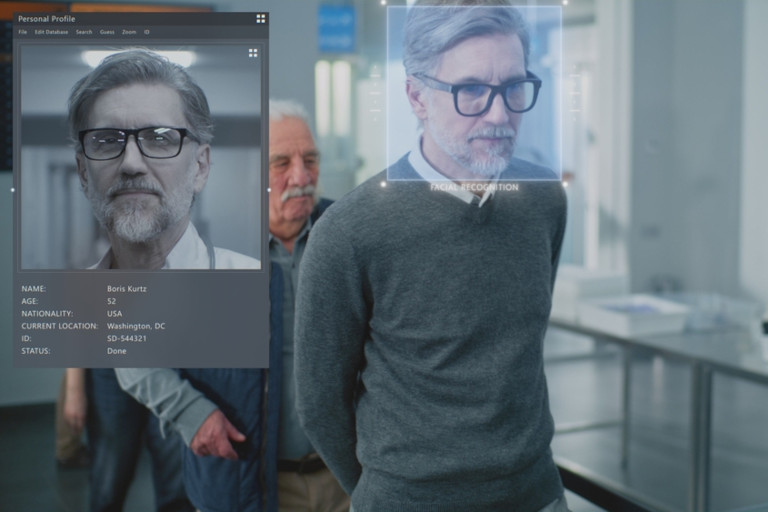
What begins as a password becomes a leash.
And the deeper danger is moral. As we normalize total visibility, privacy becomes deviance. Those who decline to participate — who pay in cash, avoid tracking, or refuse biometric scans — aren’t seen as cautious. They’re seen as suspicious. The system creates its own dissenters.
“Surveillance began as protection, evolved into convenience, and ends as control.
When every action is a data point, the unmeasurable parts of being human disappear.”
The collapse of context: When data becomes destiny
The cruelty of algorithmic governance lies not in brutality, but in indifference.
A human judge can hear your story. A machine cannot.
When Mr. Li lost his QR code, no one told him how to fix it. When the Boston mother was rejected, the algorithm cited “proprietary reasons.” Both were trapped in black boxes — their lives reduced to scores in an opaque equation.
Hannah Arendt warned that the greatest evils of the modern age often come “not from hatred, but from thoughtlessness.” Digital systems amplify that thoughtlessness at scale. They erase narrative, leaving only output. A person becomes a risk profile. A life becomes metadata.
Even when correction is possible, redemption is not. Once labeled “untrustworthy,” a citizen may never regain full access. Once flagged as a rental risk, a tenant may face closed doors forever. These systems lack any vocabulary for forgiveness. Their logic is permanent suspicion.
“The problem,” writes technology ethicist Virginia Eubanks, “is not that machines make mistakes — it’s that their mistakes are treated as truth.”
And so the excluded drift. Not as political prisoners, but as administrative ghosts. Not exiled — simply unrecognized.
The price of being known
Digital identity began as a promise: a way for technology to recognize us, fairly and securely. But that promise has inverted. Identity now grants permission, not recognition.
We’re told that if we have nothing to hide, we have nothing to fear. But we’re never told who gets to decide what counts as “hiding.”
In the end, collapse won’t come through revolution or resistance. It will come through quiet compliance — a society trading liberty for convenience, humanity for legibility.
The Chinese citizen and the Boston renter share a fate: both became unpersons in databases designed to manage trust. Their stories are not anomalies. They are prototypes.
Digital IDs may begin as tools of governance. But they risk ending as instruments of social collapse — systems that punish deviation, erase nuance, and reduce the human spirit to code.
To live freely in the digital age, we must reclaim something older than any algorithm: the right to be more than the sum of our data.
Follow us on X, Facebook, or Pinterest
