
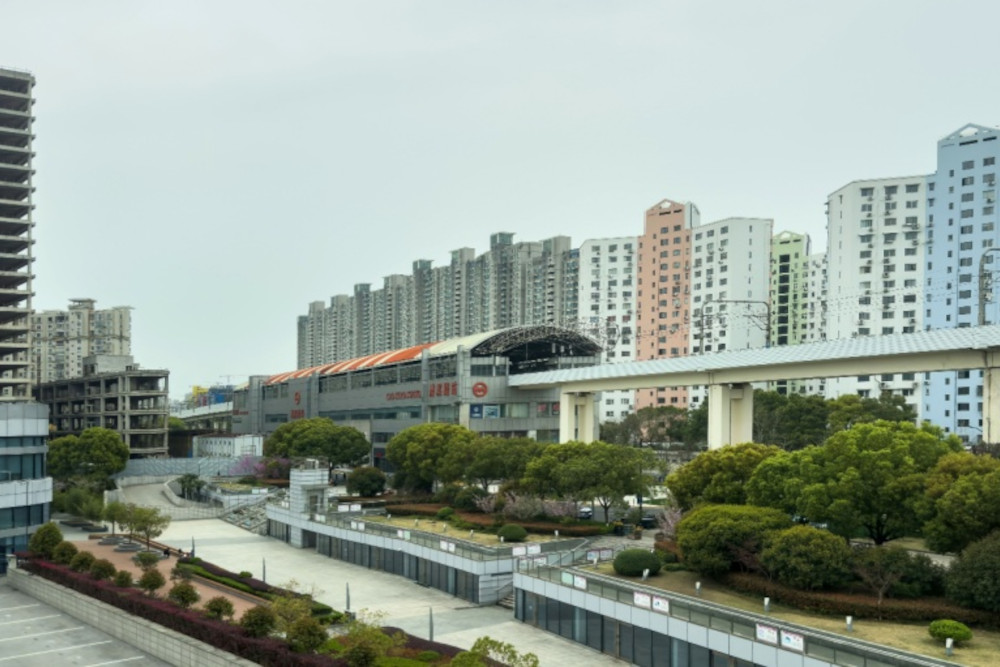
Shanghai’s economic decline is visible not only in its empty storefronts and shrinking job market, but also in the dramatic contraction of its real estate sector. Once considered one of China’s most valuable property markets, Shanghai’s housing prices have fallen sharply. The downturn reveals deeper structural issues — capital flight, strained household finances, and the fading confidence of the city’s middle class.
Housing prices fall across the city
According to Cao Peng, both the real estate and construction industries are in serious trouble. Prices for second-hand homes have dropped across the city: by around 25 percent inside the inner ring road, 35-40 percent within the middle ring road, and 40-50 percent outside the middle ring.
He cited CapitaLand Maoming Mansion as an example. At its peak in 2021, units sold for 180,000-200,000 yuan per square meter (US$25,000-$28,000). Recently, a unit was auctioned for just over 110,000 yuan (about US$15,500) — a more than 40 percent drop. For a city once defined by soaring property prices, that decline is extraordinary.
Yet the regime continues to present a façade of prosperity. Cao Peng noted that authorities highlight a handful of new “sunshine sale” developments, where apartments appear to sell out instantly at 200,000-300,000 yuan per square meter. These high-priced transactions represent only a tiny fraction of the market, driven by capital that cannot leave China due to strict controls. To residents actually living through the downturn, the illusion rings hollow.
A personal collapse amid a city’s downturn
As foreign companies downsized or relocated, Cao Peng lost his longtime position at the French firm, Aden Group (see Part 1). Matters worsened when he posted critical comments about Xi Jinping on Twitter and gave interviews to international media. He condemned Xi’s support for the Russia-Ukraine war, Shanghai’s lockdown, and the revival of communist fundamentalism — actions he believed were driving the country toward disaster. Soon after, police began monitoring him.
Facing unemployment and a worsening family situation, Cao Peng found himself with nothing left. To save enough money for a plane ticket out of China, he drove a ride-hailing car for two months.
The brutal reality of ride-hailing work
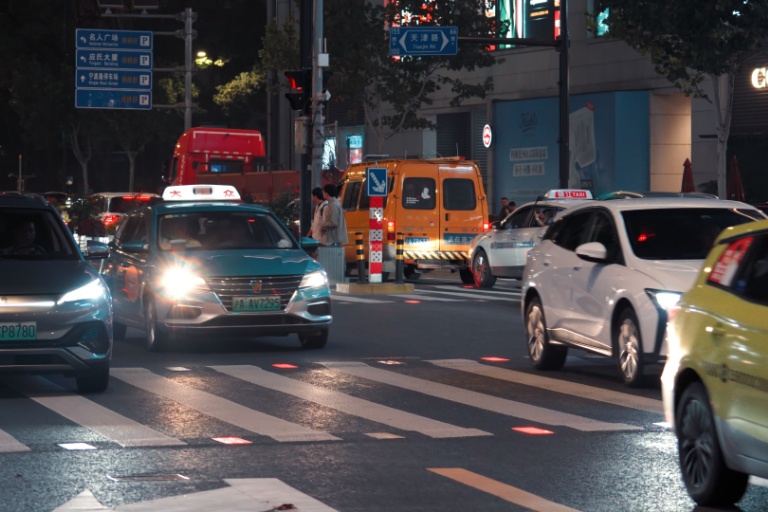
In Shanghai, he said, ride-hailing drivers cannot take time off. Taking more than three days off per month leads to accusations of laziness. If a driver rents a room and buys meals, working 13 or 14 hours a day for 28 days yields only 5,000-6,000 yuan (roughly US$700-$850) in savings. That amount would barely cover basic rent in many Western cities, yet in Shanghai’s gig economy, it represents an entire month of grueling labor.
With no medical or social insurance, the risks are severe. Any accident or ticket erases a month’s income. Most locals avoid this work because it is exhausting and hazardous. Cao Peng recalled seeing drivers suddenly collapse while waiting in line at the airport. After sitting in a car for long hours, blood clots can form, and a clot can end a life without warning. “It isn’t a job that humans should have to do,” he said.
A stark contrast with life in Europe
After escaping to the Netherlands, Cao Peng was struck by the difference in labor protections. In the Netherlands, people work 40 hours per week, and the minimum wage exceeds 20,000 yuan (about US$2,800). Health insurance covers major illnesses. For an ordinary worker, it is possible to maintain dignity and stability.
In China, people commonly work 10 or more hours each day — 300 to 400 hours per month — yet their income amounts to one-third of what Europeans earn for far fewer hours. The contrast in social security is even more striking.
The Netherlands, with a population of 18 million, holds more than two trillion euros in pension funds — roughly 17 trillion yuan. China, with 1.4 billion people, has only 11 to 14 trillion yuan in total pension reserves. The average Dutch pension is 125 times higher than China’s.
Cao Peng asked: “Where do people get the nerve to say Europe is going bankrupt?” Even countries considered less wealthy — such as Greece and Portugal — offer minimum wages of 7,000-8,000 yuan per month (US$985-$1,125). That level would feel like an inner-ring-road lifestyle in Shanghai, yet few people in China can reach it. Shanghai’s minimum wage is only 2,690 yuan (about US$380), making it nearly impossible to live independently without a higher-paying job.
What Shanghai’s decline reveals
Cao Peng’s account provides a stark portrait of a city transformed by political repression, economic mismanagement, and shrinking opportunity. Foreign companies have departed, technology theft has damaged trust, and Party interference has distorted hiring and investment. The middle class is cutting back, migrants are pushed to the margins, and wealthier residents are leaving the country altogether.
The tragedy of Shanghai’s decline is not only economic. It reflects a broader collapse of confidence in China’s direction. As investments shrink and daily life grows harsher, more people with means are choosing to leave Shanghai. Cao Peng’s story — once a successful manager, later a monitored dissident driving punishing shifts — captures the uncertainty facing millions.
His testimony suggests that beneath the surface of China’s showcase city lies a landscape of recession, disillusionment, and quiet flight. The Shanghai that once symbolized China’s future has become a warning about what happens when political control overrides economic reality.
See Part 1 here
Translated by Chua BC
Follow us on X, Facebook, or Pinterest
