
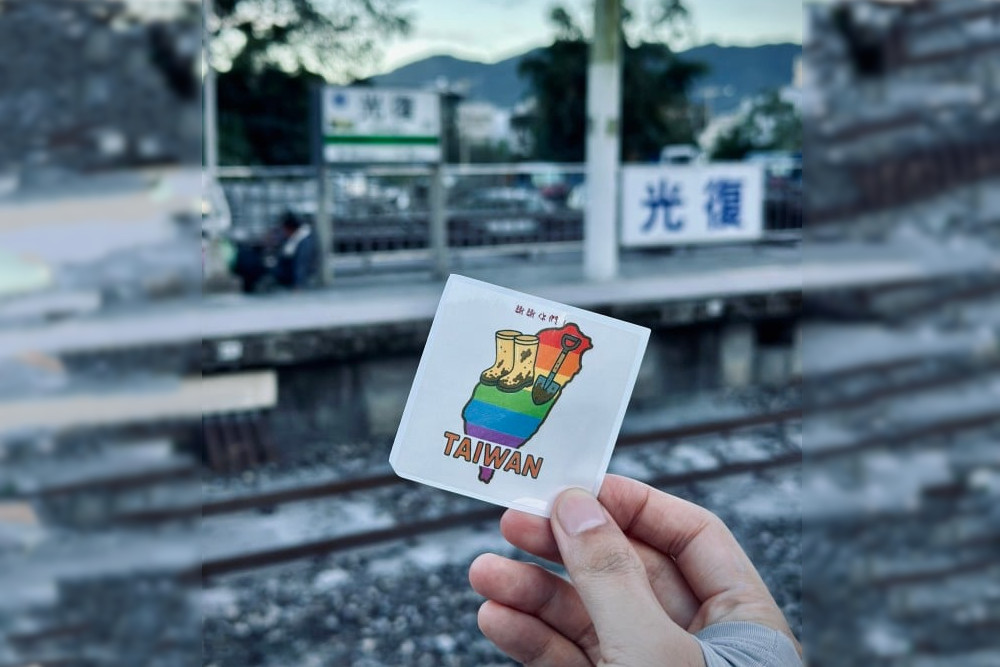
Floods strike without mercy, yet compassion rises just as quickly. In September 2025, a massive mudflow in Hualien, on Taiwan’s eastern coast, surged downstream after days of extreme rainfall. Within moments, black, debris-filled water poured into Guangfu Township, swallowing the community in scenes that stunned the entire island.
How the disaster unfolded
The roots of the catastrophe stretch back to the 2024 Hualien earthquake, which left the surrounding mountains fractured and unstable. Loose soil and weakened slopes meant that landslides were already common. When Typhoon Vipa struck on July 25, 2025, heavy rain triggered a massive collapse in the upper reaches of Matai’an Creek, forming a temporary “landslide dam” — a natural blockage that creates a lake behind it. At its deepest point, the lake reached an extraordinary 1,322 feet.
These natural dams are notoriously fragile. With Typhoon Hagibis bringing torrential rains in late September, the water level rose rapidly. At 2:50 p.m. on September 23, the lake surged over the top. A massive volume of mud and water — comparable to the release of an entire reservoir — rushed downstream, destroying the Matai’an Creek Bridge and slamming into Guangfu Township. A second surge followed at 4:30 p.m., overwhelming streets and trapping residents on rooftops, pillars, and any structure sturdy enough to cling to. Furniture, appliances, farming tools, and even vehicles were swept away in the torrent. Continuous downpours made rescue operations nearly impossible, and more than one hundred people were temporarily unaccounted for.
Xiao Yi’s rescue and the strength of ordinary families
As the rain finally eased, military units, firefighters, police, and elite rescue teams from across Taiwan launched high-risk operations, racing against time to find survivors. Pingtung County’s special rescue brigade worked nonstop for 60 hours, rescuing more than sixty people.
Among the stories that touched the island most deeply was that of 6-year-old Xiao Yi. When the mudflow hit, her non-blood-related aunt and uncle lifted her onto the roof beam of their house, stacking themselves beneath her so the rising water would not pull her under. The mud nearly covered the roof, and after hours of straining against the flood, the exhausted couple could no longer hold their position.

Xiao Yi remained trapped in a dark, confined space for two days without food or water. Initial assessments suggested survival was unlikely, but her family insisted that rescuers try once more. When the team cut through the roof, a small voice — “I’m here” — broke the silence, signaling a miracle. The couple who protected her did so at the cost of their own lives, leaving behind an act of love that moved the nation.
Volunteers step forward in overwhelming numbers
In the days after the flood, Guangfu Township was devastated. Mud-filled first floors, belongings were ruined, and debris blocked entire neighborhoods. Volunteers were scarce — until an unexpected spark ignited a movement.
A father and son who ran a braised-meat stall traveled to Guangfu to help. They filmed their efforts, and in one clip the father joked: “Coming to Hualien is easy — buy a train ticket, find a house covered in mud, and start digging.” The lighthearted comment struck a chord. His video spread quickly, reminding people that ordinary citizens could make a difference.
Almost overnight, a wave of volunteers descended on Guangfu. During the three-day Teachers’ Day holiday, Taiwan Railways trains were packed with what people began calling the “shovel volunteers” — everyday citizens armed with shovels, gloves, and masks, determined to help. They included teenagers, elementary school students, older adults, migrant workers, foreigners living in Taiwan, and even well-known entertainers. All gave up their holiday to clear mud, carry debris, and offer comfort to residents.
The rush continued into the Mid-Autumn Festival. More than 20,000 volunteers arrived each day, overwhelming Guangfu Station. Taiwan Railways added emergency trains to handle the surge. By October 15, over 500,000 people had traveled to Hualien to help with the cleanup — a number unprecedented in Taiwanese civil society.
Daily life in the disaster zone
Conditions remained extremely challenging. Volunteers shoveled thick layers of mud into wheelbarrows, pushing load after load to roadside piles where heavy machinery could remove it later. They cleared collapsed furniture, ruined belongings, and broken appliances from homes whose first floors were almost entirely destroyed. The humid heat drained energy, and many volunteers were too exhausted to finish their simple lunch boxes.
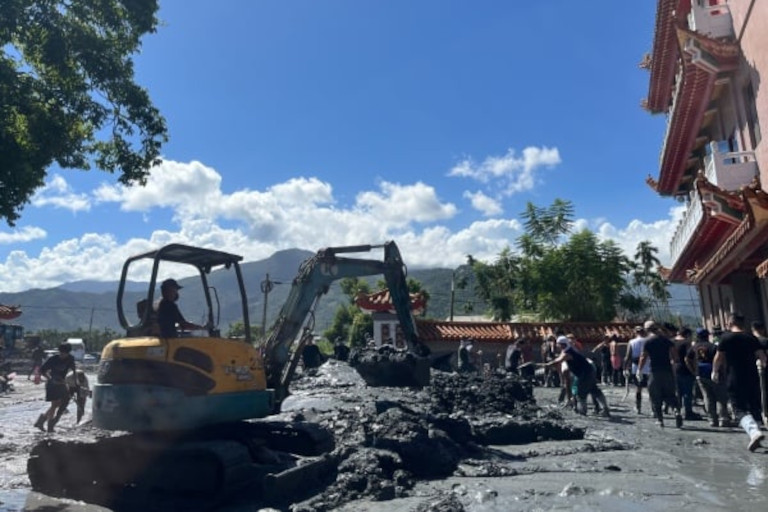
Despite the chaos, organization gradually took shape. In front of Guangfu Station, makeshift medical tents, supply stations, disinfecting points, and volunteer coordination centers were set up. They provided tools, food, drinking water, and protective gear. As the days passed, the initial confusion slowly gave way to a system that allowed thousands of people to work safely and efficiently.
Why landslide dams are so dangerous
Taiwan’s geography — steep mountains, short rivers, frequent typhoons, and regular earthquakes — makes landslide dams a recurring threat. Since the 1970s, 88 such temporary lakes have formed. Most are small and eventually overflow or collapse naturally within a year, which is why the general public rarely hears about them.
However, when a landslide dam forms in a remote mountain area and grows to a massive scale, the risk becomes severe. These natural dams are unstable and can fail with little warning. Attempting large-scale engineering work in such terrain is often dangerous and sometimes impossible. For enormous lakes like the one on Matai’an Creek, continuous monitoring and evacuation planning are the only practical options.
A shared fate and a call for preparedness
In the early hours of the disaster, miscommunication and delays contributed to chaos. The contrast between official shortcomings and the overwhelming civilian response became a powerful reminder of the importance of preparation. Strengthening river management, early warning systems, and disaster response capabilities is essential as Taiwan faces increasingly extreme weather.
Yet out of this devastating flood came a renewed sense of civic responsibility. The sight of tens of thousands of people arriving with shovels — ready to help strangers rebuild their lives — became one of the most inspiring images of 2025.
As Taiwan Railways wrote in a heartfelt message to volunteers: “When you step through the train door, you become a protector of Taiwan. A shovel and a pair of willing hands can unite the courage and solidarity of the Taiwanese people.” May Hualien heal quickly. Taiwan, stay strong.
Translated by Audrey Wang
Follow us on X, Facebook, or Pinterest
