
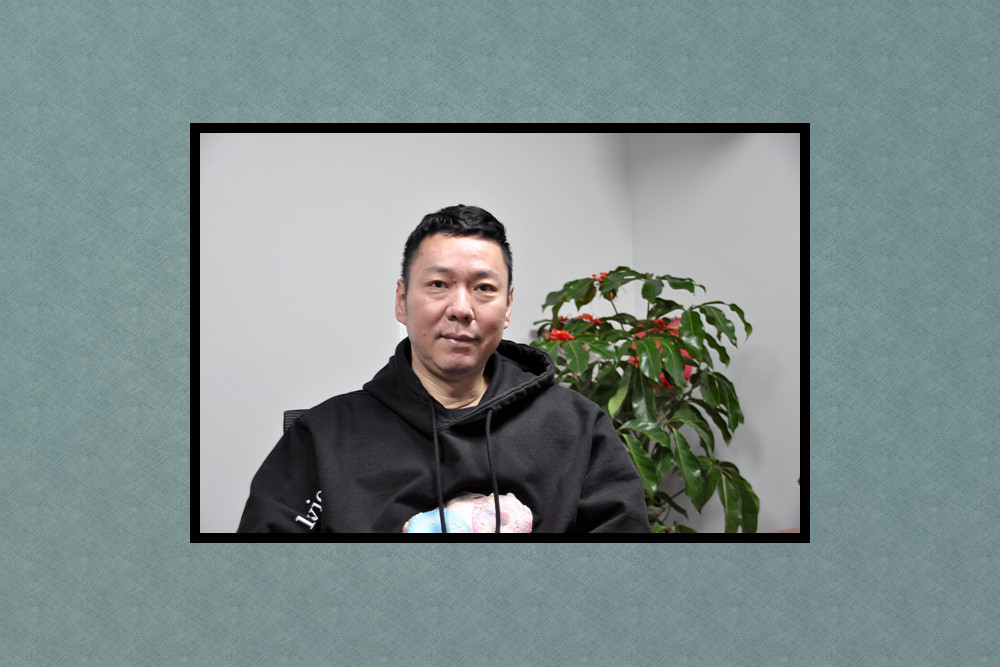
Liu Haiyang once believed he could build a successful and meaningful life in China. For years, nothing suggested otherwise. But after the shock of the COVID-19 lockdowns and a series of painful setbacks, he reached a point where he felt he “couldn’t see a future” anymore. By then, he was approaching fifty.
A graduate of Shanghai University with a degree in investment management, Liu worked exclusively for large foreign companies. His supervisors trusted him, his career advanced smoothly, and he enjoyed the type of professional stability many aspire to. While friends moved abroad in search of new paths, he never imagined doing the same.
After an early internship at a FedEx joint venture, he joined Lam Research’s Shanghai office, a Fortune 500 semiconductor company based in Silicon Valley. He handled global materials control and was frequently sent to the United States for training and meetings. In 2004, he transitioned to Nike China and soon spent several months at the company’s headquarters in Oregon working on an SAP project. He was later promoted to project manager.
Several years after that, Liu climbed even higher, joining Eaton Corporation’s China operations as supply chain management director, overseeing the construction of a 20,000-square-meter warehouse. In 2016, he moved to ITA Group as a senior analyst, returning to his passion for investment.
Then the pandemic arrived in China, and everything shifted.
Lockdown life pushes a family to the edge
Shanghai’s phased lockdown began on March 28, 2022. At first, Liu believed the restrictions were temporary measures to slow the spread of the virus. But when his five-year-old son suddenly developed a high fever unrelated to COVID-19, the situation took a frightening turn.
The neighborhood pharmacy was directly across the street — a one- or two-minute walk — yet the security guard refused to let him pass. Liu tried reasoning with him, explaining that he was not leaving the area or risking others’ safety. Still, the answer was no.
He tried several times, and each attempt failed. With no access to proper medication, Liu reluctantly gave his son adult medicine. Fortunately, the child recovered.
Food in China became another daily worry. The lockdown lasted three months, and residents received only weekly supplies. Liu still remembers opening one delivery to find a slightly spoiled pumpkin, a single cabbage, two carrots, and a few sausages — enough to stretch across a full week for a family of three.
Each morning at six, residents lined up for testing or vaccinations. While waiting, Liu overheard grim news about neighbors’ elderly relatives who had passed away or were close to it. He occasionally saw vans parked below the buildings, arriving to collect bodies. No one dared discuss the cause of death openly.
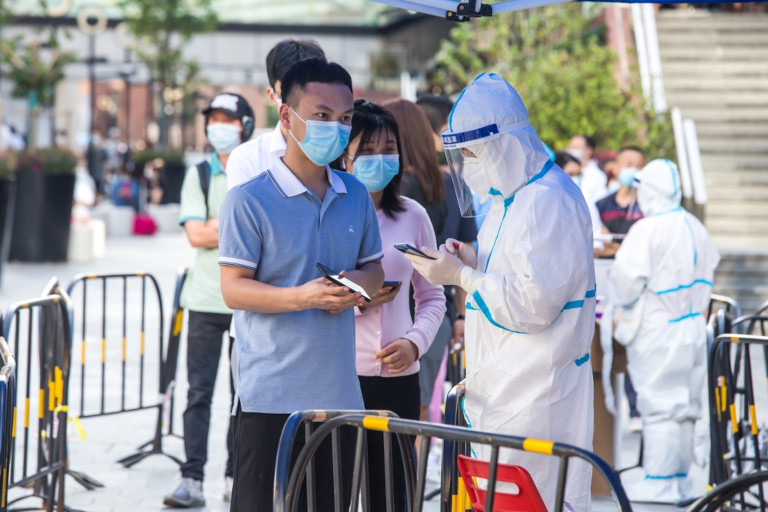
Across the city, those who tested positive were taken to makeshift quarantine sites set up inside abandoned buildings. People slept on narrow beds, surrounded by canvas partitions, cut off from the outside world with limited phone access. The isolation slowly ate away at people’s mental strength.
“It felt like we were going mad,” Liu recalled. “You could hear people screaming every day — shouting for food, shouting to be let out. Three months locked indoors is enough to break people.”
A silent protest leads to detention
When the lockdown finally ended in late November 2022, Liu happened to pass along Urumqi Middle Road, where a crowd was gathering to mourn the victims of a deadly apartment fire in Xinjiang. It was one of several vigils across the country that would later be known internationally as part of the “white paper” protests. Participants held blank sheets of paper to express frustration with censorship and prolonged lockdowns.
Someone handed Liu a sheet of A4 paper. He accepted it, feeling that speaking up — even silently — was necessary.
By early evening, the street was packed. When police arrived with shields and batons, people were unable to leave. Officers pushed the crowd toward a line of police vans and loaded people inside. Liu was taken with the others to a large square, then divided into groups and confined to small rooms with barred doors. Ten or more people stood shoulder-to-shoulder with no space to sit.
Each detainee received a single bottle of water for the night. There was no food.
The next morning, detainees were taken one by one into a separate room to sign and fingerprint a prepared statement. It required them to admit their actions had disrupted social order and to promise never to participate in similar gatherings again. It also warned of formal detention if they repeated the offense.
Because so many people had been arrested, Liu was not released until the third day. He remembers the hunger vividly. “My stomach is weak. The acid reflux was painful. When I was too hungry, I took tiny sips of water, making it last.”
After the lockdowns, every path seemed blocked
Once restrictions ended, Liu returned to the job market, but the world had shifted. Many foreign companies had already withdrawn or downsized, including his own firm, which had relocated to Hong Kong. Though his résumé earned him interviews at large state-owned enterprises, he found the interview process unsettling. Instead of discussing skills or experience, interviewers asked about his parents’ occupations and whether he had relatives working in other state firms. The experience left him feeling out of place.

He then turned to entrepreneurship, renting a seafood stall at a local market. He paid six months’ rent in advance, and the management office agreed to process the business license. Nearby vendors had operated without licenses for over a year, so Liu assumed the license would eventually come through.
His business grew quickly thanks to good quality and fair pricing. But less than two months later, officials from the Administration for Industry and Commerce arrived and demanded to see his license. Liu asked them to verify the paperwork with the market office, but they refused and threatened to fine him 5,000 yuan (around US$700) or seal the stall.
The shop was shut down. Only later did he learn that other unlicensed stalls had avoided trouble by paying bribes.
With his business gone, Liu tried stock trading. He avoided domestic markets due to volatility and instead traded U.S. stocks through his Hong Kong account. Although he made money, most of it was lost to taxes — first in Hong Kong, then again when the funds were transferred back to mainland China. “After both taxes, it felt like everything I earned went straight to them,” he said.
By this point, he felt he was running out of options.
Leaving China to start over
Unable to find stable work and increasingly worried about supporting his family, Liu began reassessing everything. He felt he had done what any responsible adult would do — try to support himself, start a business, put his skills to use — yet he kept running into barriers he could not overcome.
“The moment I couldn’t even cross the street to buy medicine for my sick child, something broke,” he said. “And when there was no food or water later, I felt completely abandoned.”
His experience during the Urumqi memorial only deepened his disillusionment. After being forced to sign a statement he did not believe in, he felt something fundamental had shifted in his understanding of the country he once loved.
In October 2024, Liu left for the United States and eventually settled in Toronto in March 2025. After arriving abroad, he took steps to formally withdraw from all Communist Party-related organizations he had joined as a youth.
“I hope to see a China without communism someday,” he said.
Translated by Eva
Follow us on X, Facebook, or Pinterest
