

Throughout history, imperial physicians — known as Taiyi — were among the most esteemed medical practitioners of their time, often inheriting exceptional skills from their ancestors. Because most imperial physicians were male, female patients usually had difficulty receiving treatment. In ancient China, women — especially unmarried women — were generally not permitted to meet with male strangers. To overcome this, physicians developed a remote diagnostic method known as “suspending threads,” in which threads were attached to the patient or to objects connected to them, allowing the physician to palpate the pulses and assess the patient’s condition from a distance.
Some scholars argue that the apparent success of this method was due to the physicians’ exceptional tactile sensitivity. Yet beyond their skillful touch, these doctors were said to possess what was called the “celestial eye” — an extraordinary ability to perceive illness and hidden imbalances beyond ordinary senses. They neither publicized nor boasted of this talent, leaving the world largely unaware of the full extent of their abilities.
Below, we will explore the story of the divine doctor Hua Tuo and the imperial physicians of the Tang Dynasty, shining a light on their remarkable skills and celestial insight.
Hua Tuo’s ability to diagnose remotely
Hua Tuo’s fame is so great that almost no one is unaware of him. Alongside Dong Feng and Zhang Zhongjing, he is regarded as one of the “Three Divine Doctors of Jian’an,” and he is also celebrated with Bian Que, Zhang, and Li Shizhen as one of the “Four Great Ancient Doctors of China.” Though Hua was not an imperial physician, the public widely recognized his precise medical skills.
That said, Hua occasionally faced skepticism regarding his expertise. Countless individuals — including high-ranking officials and even royal relatives — sought his treatment. Strictly speaking, referring to him as an imperial physician is not an exaggeration. Compared with other imperial physicians, Hua had far more opportunities to treat patients in the broader community, thereby gaining valuable experience and developing highly reliable medical skills.
On one occasion, while treating a female patient from a wealthy family, Hua Tuo was unable to examine her directly. To assess her condition, he used the diagnostic method known as “suspending threads.” However, the head of the family did not trust Hua’s skills and intentionally set a challenge to test his medical abilities.
At that time, the head of the family tied three threads — one to a chair, one to a maid’s hand, and one to a cup of water — and challenged Hua Tuo to diagnose them. To the astonishment of everyone present, Hua confidently stated that the three pulses represented a worm pulse, a yin pulse, and a water pulse.
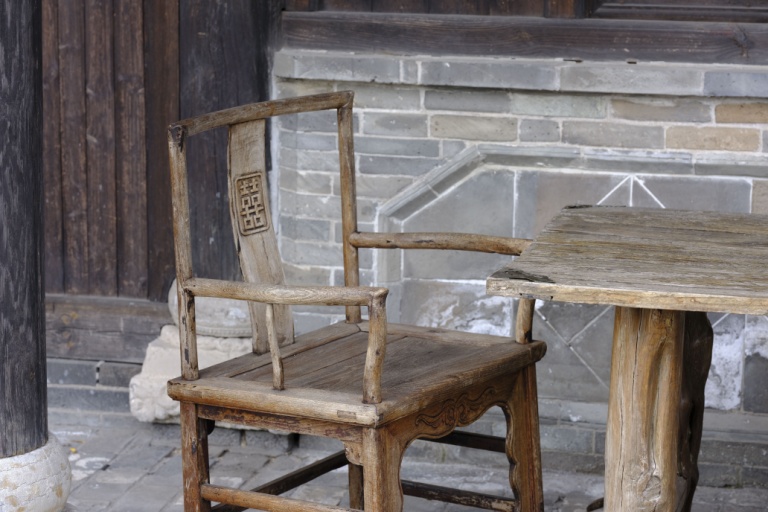
The head of the family acknowledged Hua’s precision but was puzzled. The yin pulse indeed corresponded to the maid, and the water pulse correctly referred to the cup. But how could the worm pulse be accurate when the thread was tied to a chair?
Pressing Hua further, he asked: “Sir, you say the yin pulse and water pulse refer to the maid and the cup — but what exactly does the worm pulse refer to?” Hua smiled and calmly replied: “Did you tie the thread to the chair?” When the head of the family confirmed, Hua instructed him to split the chair open and examine it.
When the chair was opened, an astonishing discovery was made: inside, there was a live worm. Everyone present instantly understood what Hua had meant by “worm pulse.” The so-called worm pulse referred to the worm concealed within the chair.
From that moment on, the head of the family no longer dared to question Hua and was utterly in awe of his abilities.
What few realized, however, was that Hua Tuo did not rely solely on his naked eye for diagnosis. He possessed extraordinary abilities that allowed him to perceive levels of reality invisible to ordinary people, enabling him to detect subtle details, even within an object as mundane as a chair.
Seeing a ghostly apparition
During the reign of Wu Zetian, Zhou Yunyan, a minister, had just finished court proceedings and was walking toward the pavilion. At that moment, an imperial physician summoned by Princess Taiping was entering the palace through the Zhengguang Gate, when he suddenly saw a ghostly apparition appearing to threaten Zhou. The physician noticed ghostly hands reaching toward Zhou as he walked, following him all the way to Jingyun Gate.
Upon returning, the imperial physician reported the strange occurrence to Princess Taiping, who then informed Wu Zetian. Curious and alarmed, Wu sent someone to check on Zhou Yunyan. At first, everything seemed normal — Zhou was resting in his room after dinner. Later that afternoon, Zhou went to the toilet, but did not return for an unusually long time. Concerned, his attendant went to investigate and found Zhou collapsed on the bathroom floor. The attendant hurriedly helped him up, only to see Zhou staring blankly, silent, with saliva dripping from his mouth.
The official rushed to report the incident to Wu Zetian, who immediately asked the imperial physician how long Zhou might survive. The physician replied that Zhou could last at most two or three days, and perhaps only one. Wu Zetian promptly ordered attendants to carry Zhou back to his residence on a bed, and that very night, he passed away.

Wisdom beyond the senses
The stories of Hua Tuo and the imperial physicians of the Tang Dynasty reveal a truth that modern medicine often overlooks: true mastery is not measured by tools or instruments, but by vision, insight, and moral clarity. These physicians saw what others could not — hidden dangers, subtle imbalances, even threads of fate — and acted with skill, precision, and compassion. Their celestial eyes enabled them to save lives and uncover truths invisible to ordinary perception, demonstrating that medicine was as much an art of the spirit as of the body.
In an age when technology dominates our understanding of health, we would do well to remember the ancient physicians’ legacy: that knowledge alone is not enough, and that wisdom, vigilance, and a virtuous heart are what truly preserve life. The greatest healers are those who see both the world and the human soul with clarity.
Translated by Joseph Wu and edited by Tatiana Denning
Follow us on X, Facebook, or Pinterest
