
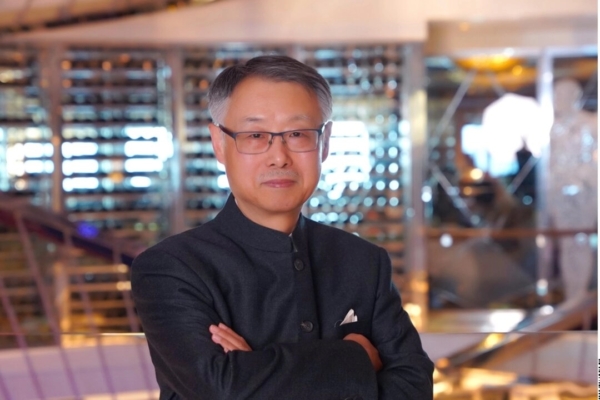
Song Yue, a practicing lawyer in Calgary, Alberta (known professionally as Roger Song), was born into a prestigious military compound in Beijing and recently looked back on a life spanning more than 60 years. His journey is a rare window into the heart of the Chinese Communist Party (CCP) elite and the eventual “escape” from it.
Song Yue learned the truth about the founding of the CCP during his studies abroad. He summarizes his transformation from two profound turning points: “The turning points stemmed from the June Fourth Tiananmen Square Massacre, and also from freedom.”
Early family influences
Song Yue was born in 1964 in the Hongshankou military compound in Haidian District, Beijing. He recalled his childhood, a time of scarcity. Although life in the compound was relatively isolated, his parents worked hard to create a stable family environment.
He said: “My father, Xin Ziling, whose real name was Song Ke, was a soldier…. He worked at the Higher Military Academy his entire life.” His mother, Jia Lijuan, was the principal of the CCP’s Beigongmen Primary School.
Song Yue’s father, Xin Ziling, joined the army at the age of 15. Despite only having a primary school education during the Republic of China era, he became a military academy instructor, a renowned scholar, and a writer through study and self-improvement.
Song Yue vividly remembers his father’s diligence and hard work. “The tables and chairs in our house were all provided by the government. My father’s room contained bookshelves filled with books. He was very diligent in his pursuit of knowledge.” He said that his military background also emphasized family education. “My father was very strict with me, which left a deep impression on me.”
Song Yue’s political family background meant he received CCP education from a young age, joined the Young Pioneers and the Communist Youth League, and then joined the Party in college. “I grew up entirely under the discipline of this system,” he admitted.
The books that had the most profound impact on his future life, besides the Bible, were those that contained his father’s criticism of the CCP after its establishment.
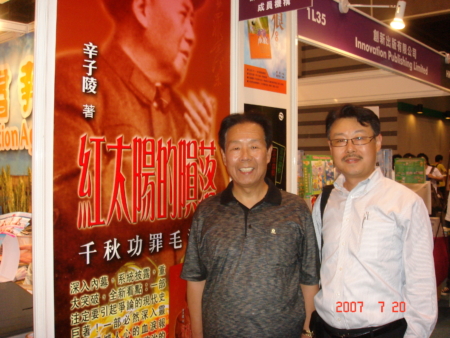
Xin Ziling had written books on various movements launched by Mao Zedong and the disasters they brought to the Chinese people. Song Yue was studying at New York University School of Law at the time, and he discovered this set of books while browsing Chinatown bookstores. “As soon as I saw the author’s name was Xin Ziling, I knew it was written by my father… I bought several sets.”
He said that the books’ extensive descriptions of “the history after the founding of the People’s Republic of China in 1949, the history of the Cultural Revolution, the history of natural disasters, and the history of the Great Leap Forward” allowed him to see a lot of information that he could not see in schools or through other channels in the past.
After China resumed the college entrance examination in the late 1970s, Song Yue was successfully admitted to the Department of Law at Peking University. He said: “As soon as I stepped into the campus of Peking University, a brand new window to the world opened up for me.”
Tiananmen Square massacre
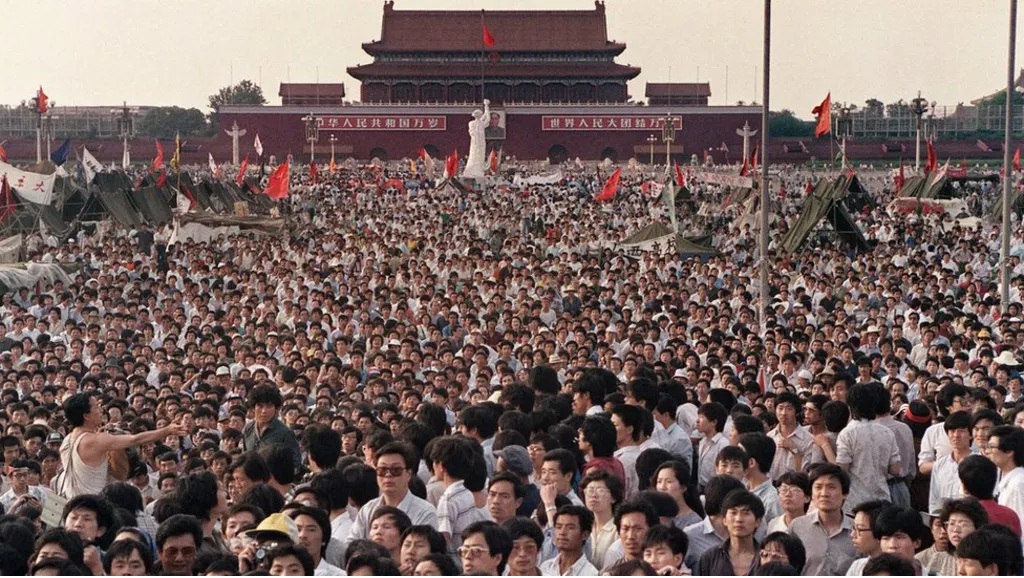
The first major turning point in his life was the Tiananmen Square protests of 1989. At that time, he had graduated from the Department of Law of Peking University. After graduation, he stayed on as a teaching assistant. Song Yue said: “I witnessed the entire democratic movement of the students, and I accompanied them from the campus to Tiananmen Square….opposing corruption, yearning for democracy, and yearning for freedom.”
What shocked him most was the army firing its guns. “If a political party is willing to shoot at civilians in Beijing in order to maintain its power… that is a complete failure,” he said.
After the Tiananmen Square incident, Peking University required him to report whether he had been to Tiananmen Square and whom he had contacted. He felt suffocated and decided to leave China. “I can’t continue living like this, and I can’t let the next generation live under this system.” So he first visited South Korea, then studied at New York University, and finally immigrated to Canada.
Crisis of conscience
Song Yue described the second turning point in his life as a crisis that transformed his faith. After arriving in Canada, Song Yue discovered that his academic qualifications earned in China and the United States, as well as his New York State lawyer’s license, were “completely useless” and were not recognized in Canada.
He called it a “midlife crisis”, saying: “I had no job and was not qualified to use my original academic qualifications in the industry. The pressure of life was immense, and I was desperate, which is why I was able to humbly open the Bible to read.”
In 2004, Song Yue was baptized as a Christian in Canada. He realized that faith can change lives. “Pride is a hurdle in the process of getting to know God…… When people humble themselves, experience suffering, and turn to God, their lives will be transformed.
Song Yue recalled that during the Cultural Revolution’s “Destroy the ‘Four Olds’” campaign, his father “rescued” an exquisite Bible from a pile of books intended for burning and placed it on the bookshelf at home.
“But I grew up with a Chinese atheist education in China and never really opened this book.” Song Yue admitted that it was not until many years later, when he experienced a low point overseas, that he understood his father’s intentions back then.
Translated by Chua BC and edited by Helen London
Follow us on X, Facebook, or Pinterest
