
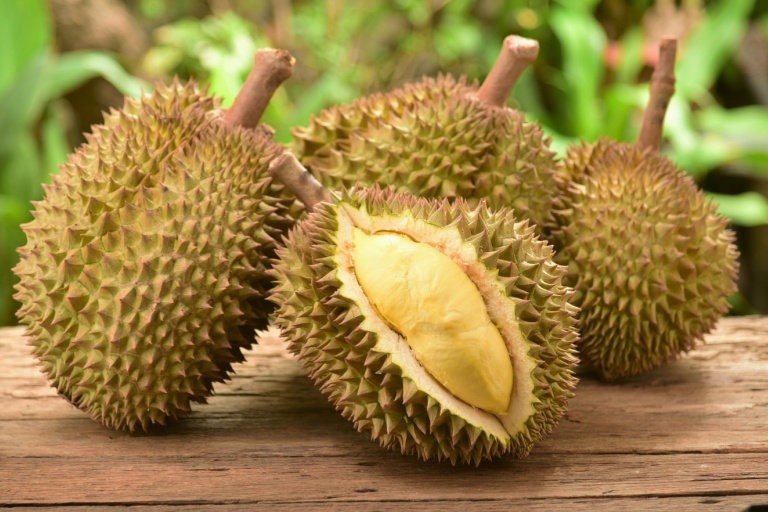
China’s appetite for luxury durian has transformed a once-polarizing tropical fruit into a global status symbol, reshaping taste, trade, and rural economies across Southeast Asia in the process.
For decades, durians lived a double life. In much of Southeast Asia, it was revered as the king of fruits — dense, custard-like, and complex. Elsewhere, it was banned from hotels, subways, and airplanes, its smell caricatured as unbearable, almost offensive. Today, that contradiction has collapsed. Durian has crossed a threshold few foods ever do: it has become a luxury commodity, and China is the force pulling it there.
How China’s appetite for luxury durian reshaped taste, trade, and farming
In China’s major cities, premium durians are no longer curiosities. They are wrapped like jewelry, sold in temperature-controlled displays, and gifted with the seriousness once reserved for wine or rare tea. Some varieties sell for prices that rival those of fine dining. What changed is not only the taste, but also the context. China’s appetite has transformed durian from a divisive tropical fruit into an object of prestige, reshaping agriculture, trade, and the fate of small towns across Southeast Asia. That transformation begins, as many modern food revolutions do, not in orchards, but in culture.
When a smell becomes a signal
Durian’s defining feature — its smell — was long its greatest liability. In Western narratives, it was framed as a dare, a test of tolerance rather than taste. In China, however, the odor became something else: a marker of authenticity. On social platforms like Douyin, videos of first tastings proliferated, turning shock into spectacle, and spectacle into curiosity. Curiosity, in a culture increasingly driven by experiential consumption, became desire.
This shift coincided with a broader transformation in Chinese food culture. As disposable incomes rose and urban middle-class consumers sought foods that signaled discernment rather than abundance, durian found a niche. Its intensity set it apart from standardized sweetness. Its rarity elevated it above the everyday. It was not merely eaten; it was chosen.
By the early 2020s, durian cafés, pastries, ice creams, and even hotpot variations appeared across Chinese cities. According to the South China Morning Post, durian has become one of China’s most valuable imported fruits, with imports reaching several billion dollars annually, far surpassing those of apples, cherries, or grapes. China now accounts for the overwhelming majority of global durian imports.
Yet this demand could not be satisfied at home. China’s climate allows only limited cultivation, making the fruit almost entirely dependent on foreign soil. And that dependence pushed attention outward — toward Southeast Asia, where durian had always been more than a novelty. As Chinese consumers leaned in, growers half a continent away began to reorganize their lives around that pull.
The rise of a luxury cultivar
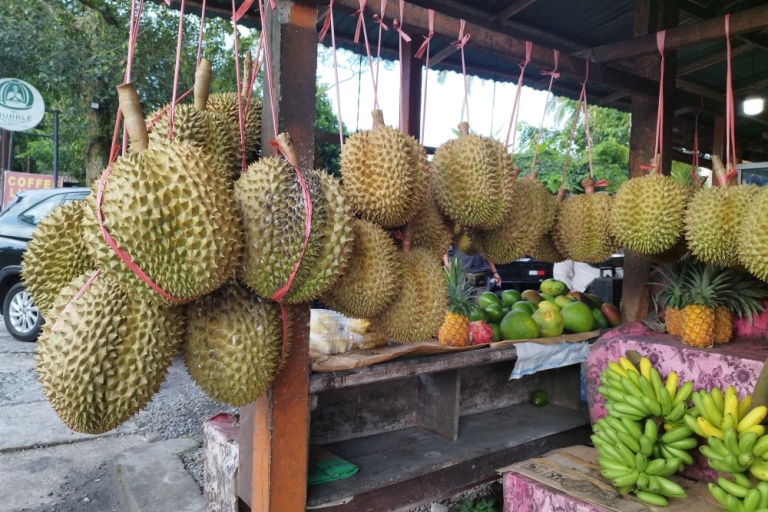
Not all durians are equal, and China’s appetite sharpened distinctions that once mattered mostly to enthusiasts. Among dozens of varieties, one rose above the rest: Musang King.
Known in Mandarin as Mao Shan Wang, Musang King is prized for its deep yellow flesh, dense creaminess, and a flavor profile that balances sweetness with a subtle bitterness. In China, it is often described using the language of connoisseurship — layers, finish, mouthfeel. This vocabulary matters. It places durian in the same cultural register as wine, tea, or coffee.
Scarcity amplified that effect. Genuine Musang King trees are limited, and the fruit is notoriously difficult to cultivate consistently. As Malay Mail has reported, top-grade Musang King can fetch prices many times higher than standard Thai Monthong varieties. In China’s premium markets, single fruits can sell for hundreds of yuan, sometimes more, depending on season and provenance.
The result is a familiar economic pattern: when demand concentrates on a narrow band of “authentic” goods, the value of origin explodes. Labels, certifications, and traceability become crucial. Fraud — mislabeling lower-grade durians as Musang King — emerges alongside new enforcement regimes. But the most profound changes occur far from Chinese storefronts, in places where durian trees shape landscapes and lives. And nowhere is that transformation more visible than in a small Malaysian town once known for little else.
A town remade by fruit
Nestled in the hills of Pahang state, Raub was once a quiet market town. Today, it sits at the center of Malaysia’s durian boom. Drive its roads, and you pass warehouses, sorting facilities, and signs advertising orchards to Chinese buyers. The local economy has reorganized itself around a single question: how to meet China’s demand.
A BBC report on Raub describes how farmers who once struggled with volatile rubber or palm oil prices have turned to durian, sometimes earning multiples of their former income. Land values have surged. So have tensions — over land rights, environmental impact, and who benefits from the boom.
Durian trees take years to mature. Investment is long-term, capital-intensive, and risky. But China’s appetite has altered the calculus. With buyers willing to pay premiums for quality and freshness, growers have adopted new grafting techniques, digital monitoring, and coordinated harvesting schedules. The fruit’s journey from tree to table is now a carefully engineered process.
Cold-chain logistics play a critical role. According to industry reports cited by FreshPlaza, new export routes allow Malaysian durians to reach Chinese consumers faster and fresher than ever before. Speed, in this context, is a value. The closer a durian is to its peak ripeness, the more it is worth.
Raub’s story is not unique. Similar transformations are unfolding in Thailand, Vietnam, and Laos. But Raub illustrates something deeper: how global desire can rewire local realities, turning agriculture into an export-driven, prestige-oriented enterprise. Yet as the fruit moves faster and farther, it also becomes more abstract — less about soil and season, more about brand and perception. And perception, in China’s luxury economy, is everything.
Durian as status, gift, and symbol
In China, luxury is rarely solitary. It is social, relational, and often performative. Premium durians are increasingly purchased as gifts — for business partners, family gatherings, and festivals. Their value lies not only in taste but in what they communicate: generosity, discernment, and access.
This gifting culture helps explain why durian prices remain resilient even as supply expands. As economists often note, luxury goods behave differently from staples. Higher prices can reinforce desirability rather than suppress it. Durian, particularly elite cultivars, has entered that category. Social media reinforces the cycle. Influencers unbox durians like designer goods. Cafés design entire menus around a single fruit. Consumption becomes content, and content becomes demand.
China’s durian craze also reflects a broader shift toward food as identity. In a market saturated with options, choosing the unusual becomes a way of signaling individuality within conformity. Durian’s once-derided smell becomes a badge of confidence: I understand this; I belong. But while China dominates the narrative, it is not the only place where durian’s reputation is changing. Its rise has ripple effects far beyond Asia, hinting at a future where it may no longer be an acquired taste, but a global one.
Beyond China: A global echo
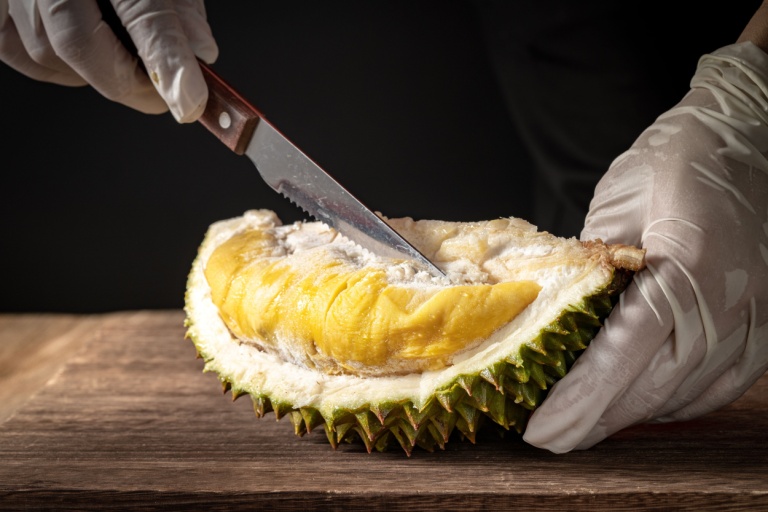
In the United States, the United Kingdom, and Germany, durian remains a niche product — but a growing one. Market research firms like MarkNtel Advisors estimate the U.S. durian market at hundreds of millions of dollars, driven largely by frozen pulp and specialty retail. In Germany, imports remain small in volume but high in value, concentrated in ethnic markets and gourmet circles.
What distinguishes these markets from China is not curiosity, but commitment. In Western countries, durian is still an experiment. In China, it is an institution. That difference matters. China’s scale allows it to reshape production itself, setting standards, prices, and expectations that ripple outward. Southeast Asian growers increasingly design their operations with Chinese consumers in mind, from sweetness profiles to packaging aesthetics.
Durian’s story, then, is not just about a fruit. It is about how modern desire moves — how a cultural shift in one country can redraw agricultural maps in another. And that movement raises a final, uncomfortable question: what happens when luxury appetite meets ecological limits?
The cost of craving
Durian cultivation is land-intensive and long-term. As demand grows, concerns about deforestation, monoculture, and land disputes intensify. Environmental groups in Malaysia and Thailand have warned that unchecked expansion could mirror the ecological damage caused by palm oil decades earlier. For now, high prices incentivize care rather than exploitation. Premium durians require healthy trees, precise timing, and skilled labor. But history suggests that booms rarely remain disciplined forever.
China’s appetite has elevated durian into something extraordinary. Whether that elevation proves sustainable — for farmers, ecosystems, and consumers alike — remains an open question. What is clear is this: a fruit once mocked for its smell now moves billions of dollars, reshapes towns, and signals status across borders. In the global economy of taste, durian has crossed a line. And once a food becomes a luxury, it rarely goes back.
Follow us on X, Facebook, or Pinterest
