
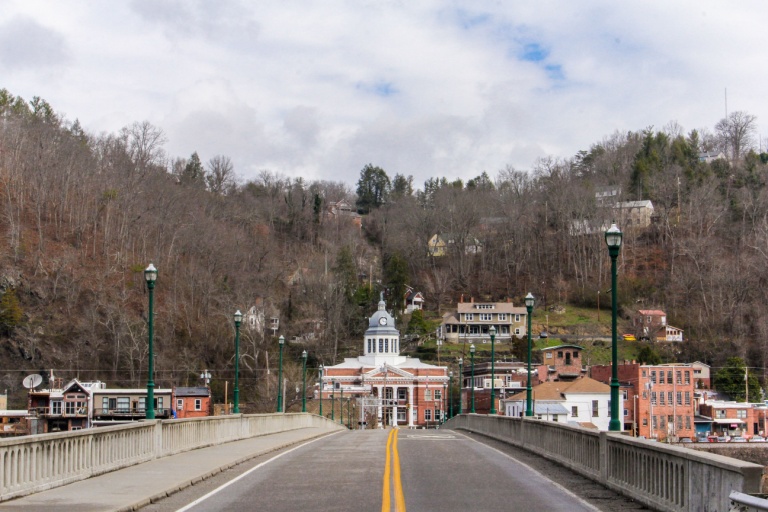
The following story unfolded in a small town in the Southern United States at the dawn of the last century. It tells of a little girl named Susanna and a boy named Sam, whose childhood would be shaped by friendship, wonder, and a bond that would echo across lifetimes — a bond to the Buddha.
What is darkness?
Sam and Susanna were neighbors who grew up side by side, becoming inseparable friends. Susanna’s parents were farmers, while Sam was the son of a carpenter. When Susanna was 1 year old, she fell ill and lost her vision. Sam would often ask his father to make little toys, such as trains, wooden horses, and figurines, and he would bring them to Susanna to play with her.
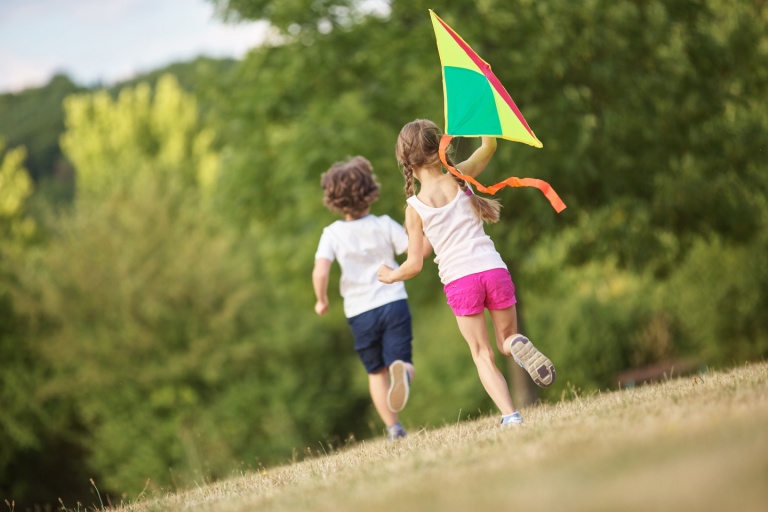
Susanna didn’t learn to walk until she was three, while Sam was already eight. He took her to the river and the mountain, taught her to fly kites, and herded geese with her. He didn’t mind that she was blind. By the age of four, Susanna could discern the direction of the wind, the fragrance of flowers, and the songs of birds. She wore two neat braids, spoke little, and was shy and introspective. Other children mocked Susanna and wouldn’t play with her.
Once, a boy made a funny face at Susanna. Sam stepped in to defend her, but the boy sneered: “Susanna can’t see! She’s blind and will forever live in darkness.” This was the first time Susanna heard the word “darkness.” Though she’d lived in darkness all her life, she couldn’t grasp what it meant. She asked Sam what darkness was, but he didn’t know how to answer. “You only need to tell what is light.”
When Susanna was five, Sam visited her one sunny afternoon. He led her to the windowsill and turned her face toward the sunlight. “What do you feel?” he asked. The little girl stood quietly, letting the warmth wash over her. After a long moment, she said: “Warm.” Then, hesitantly, she added: “A little hot.” Sam smiled and said: “Susanna, you only need to tell what is light. You don’t need to know what darkness is.”
Susanna began learning Braille when she turned six, while Sam was already in school. They were very close, and Sam never treated Susanna as blind. Together, they climbed mountains, tended flocks, and even scaled trees. Sometimes she’d fall asleep in the treetops, and Sam would carry her home. These were the moments that shaped their childhood; the two were inseparable.
One morning, just after a heavy rain, Susanna heard a chorus of excited voices outside — children laughing, clapping, and shouting in delight. “Look! Hurry up and look!” they cried. Curious, Susanna stepped outside and asked: “Sam, what’s happening?” With shining eyes, Sam exclaimed: “It’s a rainbow! It’s magnificent!” For the first time, Susanna cried. She had never seen, yet tears ran down her cheeks as if her heart recognized the beauty she could not perceive with her eyes.
Longing for the mysterious East
By the time Susanna turned nine, she had mastered Braille and could tell stories that captivated anyone who listened. Every Sunday, the children in her town gathered to listen to her tales, and no one else bullied her. Even the adults were astonished—how could a girl who had never seen the world know so much? By then, Sam had moved away to attend middle school in another town. He returned every week to tell Susanna about his school adventures. He brought her treasures he collected from his travels — colorful glass marbles that clinked in her hands.
Sam’s favorite subject was history, and he loved to recount the wonders of distant lands. He told Susanna that on the other side of the Earth lay an ancient country called China. This nation in the East was home to noble emperors and princesses with black hair. From that moment on, they both yearned for this mysterious China.
A giant figure emerges from a halo
Sam and Susanna had always treated each other with a gentle sweetness and kindness. When Susanna was 11, and Sam was 16, they encountered something strange during a summer evening. They were by the river, catching fireflies, their laughter mingling with the soft hum of the evening.
As Sam carefully placed a firefly into Susanna’s pocket, a sudden, radiant halo appeared before his eyes — a light unlike anything he had ever seen. It was soft yet brilliant, luminous yet warm, and it filled the air with an indescribable beauty. Sam was astonished! He called softly to Susanna, and she sensed a warm glow, too. “Sam… what is it? Is it light?” she whispered.
Almost as if in a dream, Sam watched a giant figure slowly emerge from the radiant halo. His presence was awe-inspiring, beyond words, and he looked upon Sam and Susanna with a deep, gentle kindness that seemed to fill the entire world. The light seemed to wrap around them, and a serene voice echoed softly in their minds: “You are my children.” In that instant, the halo’s warmth enveloped everything, and peace settled deep within their hearts.
What a wondrous moment it was! As the giant figure and the halo disappeared into the evening breeze, Sam and Susanna remained motionless, immersed in the magical atmosphere. It was a moment they would never forget. At first, Susanna wondered if Sam had seen God. But Sam shook his head. “It wasn’t God,” he said quietly. “He wore a golden-yellow robe.”
When Sam returned to school, he began to research the meaning of the golden robe. Soon, he told Susanna what he had discovered: Only Eastern deities wore golden robes and stood within large halos. People called them Buddhas. Yet he still couldn’t understand why this Buddha had called them his children. They didn’t dare to share their experience with the adults. Their mysterious encounter that summer only deepened their longings for the East. They promised each other that when they grew up, they would make a journey to the East together to look for the giant deity.

Fate is not ours to command
Time moved on, and Sam and Susanna grew into adulthood. Their bond grew stronger over the years, and they understood each other without saying a word. Eventually, they left their small town, said farewell to their parents, and ventured into the bustling city.
Sam worked as a mail carrier and took a second job at a restaurant, saving every penny with a dream in mind: to travel to India, drawn by the mysteries of yoga and the East. Susanna found work at a welfare agency and nurtured her aspiration to become a writer. Yet, no matter how far life carried them, they never forgot that magical summer and the promise they had made under the halo of light. Fate, however, is not ours to command. No one knows the path that lies ahead. At 23, Susanna contracted malaria — a terrifying illness in those days, one that could easily claim a person’s life.
Susanna gained a miracle from that summer: the ability to see the wonders of the world within her mind. She often told Sam that her memories of light originated from that unforgettable halo, that radiant figure. Though she could sense the inner world, the physical world remained veiled in darkness. Malaria tormented Susanna’s body for 11 days. At dawn, Susanna’s frail body finally gave way. With her last breath, she whispered to Sam: “Promise me… if I find myself in darkness in my next life, please help me again. Promise me, we will go to the East to find the giant deity in our next life.”
It was a heartbreaking parting. Sam nodded, tears streaming down his face. Their hearts had been steeped in the teachings of the East and the belief in reincarnation, yet even with that understanding, the pain of loss was unbearable. Death had come too suddenly, leaving words unspoken — words that had burned quietly in their hearts all along: “I love you.”
Reunited this lifetime to fulfill their vow
Sam and Susanna met again in this lifetime, becoming practitioners of Falun Dafa, a spiritual path guided by the principles of Truthfulness, Compassion, and Forbearance. They recounted their past life story, like a film shown before Susanna’s eyes: “Hey Sam! The wooden toys and the colorful glass marbles are still there, a little dusty. Perhaps you don’t remember our past, but I want to thank you for keeping your promise. You came to my aid again when I found myself in darkness once more.”
Susanna’s voice softened. “We should be grateful, for we have found the Buddha — and that is the most important thing in our lives.” In that shared moment, they felt a certainty deep in their core: Every step, every trial, every challenge of their lives — past and present — had guided them, like threads of fate, to this very moment.
Translated by Elaine and edited by Tatiana Denning
Follow us on X, Facebook, or Pinterest
