
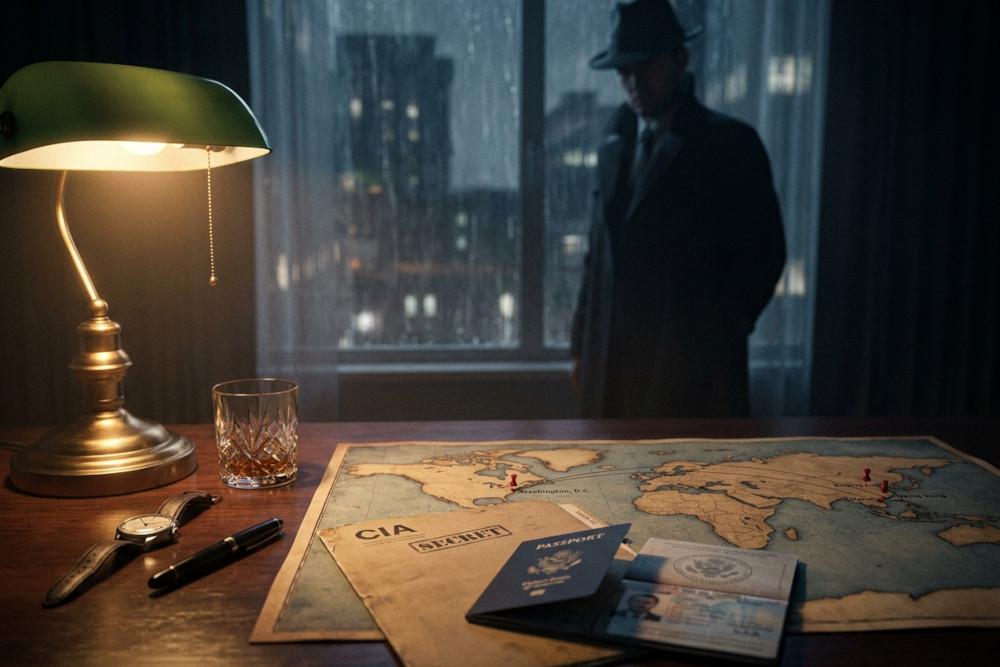
For decades, Larry Wu-Tai Chin lived two lives.
To his colleagues, he was a respected Chinese-language specialist and analyst who served the U.S. intelligence community for nearly 30 years. He had worked for the CIA’s Foreign Broadcast Information Service, earned praise for his performance, and retired with a medal from Deputy Director Bobby Ray Inman.
But according to U.S. investigators, Larry Wu-Tai Chin had also spent much of that same career passing information to Beijing.
The mystery of how he was finally exposed became one of the most intriguing parts of the case. The answer, according to Tod Hoffman’s 2008 book The Spy Within: Larry Chin and China’s Penetration of the CIA, points to Yu Qiangsheng, a senior Chinese intelligence official who secretly worked with the CIA before defecting to the United States.
Yu was not an ordinary source. He came from an elite Chinese Communist Party family and was the elder brother of Yu Zhengsheng, who later became a member of the CCP’s Politburo Standing Committee and chairman of the Chinese People’s Political Consultative Conference before retiring from public office. Yu Qiangsheng’s defection was embarrassing for Beijing, but for U.S. intelligence, it opened a path to uncovering one of the most damaging moles ever found inside the CIA.
The arrest in Alexandria
On the afternoon of November 22, 1985, three FBI agents arrived at Larry Wu-Tai Chin’s home in Alexandria, Virginia, near Washington, D.C. They came in a Plymouth sedan and knocked on the door. Larry Wu-Tai Chin himself answered.
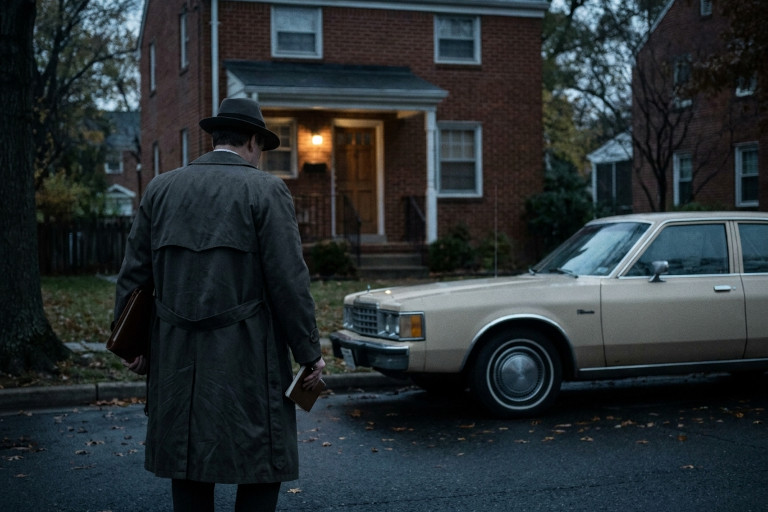
The agents told him they were investigating the leak of classified information to Chinese intelligence and wanted to ask a few questions. Larry Wu-Tai Chin did not appear suspicious. He invited them into the dining room and agreed to talk.
Six hours later, he was under arrest.
The FBI accused Larry Wu-Tai Chin of stealing intelligence for Beijing throughout his long career in U.S. service. Though visibly shaken, he reportedly remained composed. He admitted he had provided information to China for decades and began explaining how his relationship with the Chinese Communist Party had started years earlier, when he was still a student at Yenching University in Beijing.
His arrest stunned Chinese communities in the United States, Taiwan, Hong Kong, and mainland China. The shock deepened three months later, when Larry Wu-Tai Chin died in custody at the Prince William-Manassas Regional Adult Detention Center in Virginia. Officials ruled his death a suicide by suffocation after he was found with a plastic bag over his head, tied with a shoelace.
His death added another layer of mystery to an already extraordinary espionage case.
From Yenching University to U.S. intelligence
Larry Wu-Tai Chin was born in Beijing on August 17, 1922. He entered Yenching University in 1940 and graduated from its journalism department in 1947.
According to his later confession, a left-leaning university roommate introduced him to a CCP worker who encouraged him to take a job with a U.S. office in China and collect information for the Party. Larry Wu-Tai Chin agreed. In 1948, while working at the U.S. Consulate General in Shanghai, he began what investigators later described as a long career in espionage.
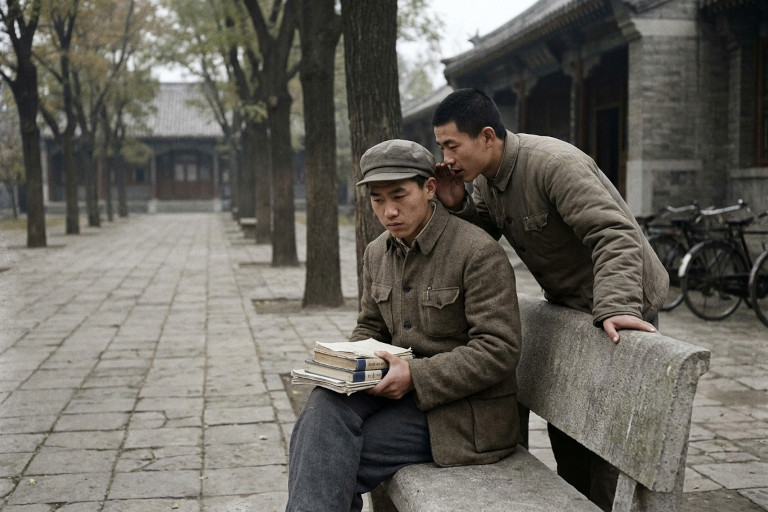
In May 1950, Larry Wu-Tai Chin moved with the U.S. Consulate General from Shanghai to Hong Kong. After the Korean War broke out, he was sent to Korea to help U.S. forces question Chinese prisoners of war. He later told investigators that during the war, he secretly reported information about U.S. military movements and prisoner-of-war camps to Beijing.
In 1952, he was transferred to the CIA-linked Foreign Broadcast Information Service in Okinawa, where he worked as a language specialist until 1960. The following year, he moved to the service’s office in Santa Rosa, California. He became a naturalized U.S. citizen in 1965.
When the Santa Rosa office later closed, Larry Wu-Tai Chin applied for a position at the United Nations in New York, but was not hired due to health concerns. He was instead brought to the Foreign Broadcast Information Service headquarters in Rosslyn, Virginia. In 1970, he was promoted to Chinese-language translator and analyst, a role that gave him access to highly sensitive material.
He retired from the CIA on July 1, 1981. On the surface, he had been a successful and trusted employee. Behind the scenes, however, U.S. intelligence had already begun hearing warnings that a Chinese mole had penetrated the agency.
The defector known as ‘Planesman’
In October 1982, the FBI received an urgent coded message from the CIA. The agency believed a Chinese spy had infiltrated its ranks but had not been able to identify the person. It asked the FBI to help investigate.
The source of the warning was reportedly Yu Qiangsheng, also known as Yu Zhensan. Hoffman’s book refers to him by that name. Yu was a high-ranking official in China’s intelligence system and came from a prominent revolutionary family. His father, Yu Qiwei, also known as Huang Jing, had served as mayor of Tianjin before dying in the late 1950s.
Yu Qiangsheng graduated from the Beijing Institute of International Relations and was said to be the godson of Kang Sheng, one of the CCP’s most feared security and intelligence figures. With Kang’s backing, Yu entered China’s intelligence apparatus.
After President Richard Nixon’s 1972 visit to China, the United States opened a liaison office in Beijing. James Lilley, a veteran CIA officer who later became U.S. ambassador to China, served there from 1973 to 1975. According to Hoffman, Yu was recruited by CIA officers connected to the liaison office, though the book does not say that Lilley personally recruited him. Hoffman suggests Yu may have begun working for the CIA around 1981.
The CIA gave Yu the code name “Planesman.”
Yu did not initially have direct access to Larry Wu-Tai Chin’s file. Given his position within China’s intelligence system, he was not supposed to know about the spy within the CIA. But at the CIA’s direction, he began searching for clues.
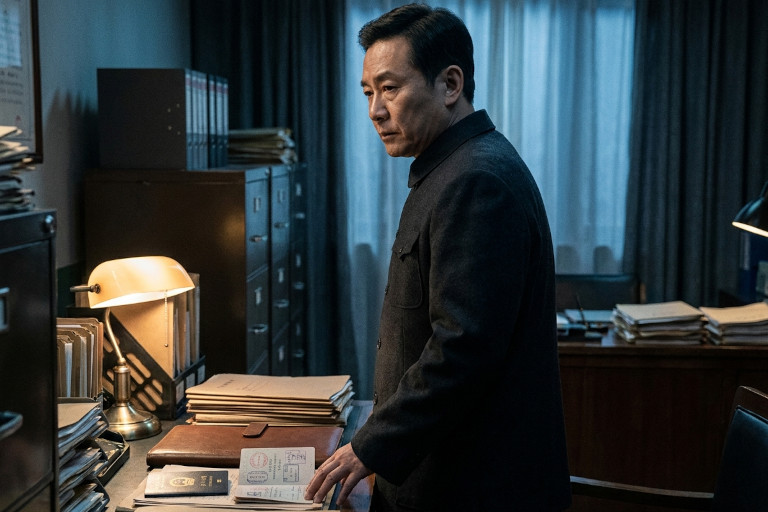
(Image: via Nano Banana)
He discovered that a female intelligence officer surnamed Wang handled records related to Chinese operations in North America. Yu began watching her work closely. One day, he reportedly saw travel details for a Chinese spy working inside the CIA on her desk. The documents included the spy’s planned trip to Hong Kong and Macau, as well as the hotel where he would be staying.
Yu passed the information to CIA officers in Beijing. That clue helped expose Larry Wu-Tai Chin.
A wider intelligence scandal
Yu reportedly gave U.S. intelligence information on more than one Chinese operation. Before Larry Wu-Tai Chin’s exposure, he had also identified a man named Mark Cheung, who posed as a Catholic priest in New York’s Chinatown while allegedly working for the CCP. Cheung left the United States for Hong Kong and later returned to mainland China, where he married and had children.
In 1986, Yu told his CIA handler that he wanted to leave China and go to the United States. The CIA welcomed the request. Yu traveled to Hong Kong while on leave, stayed one night, and was then taken to the United States under CIA arrangement.
On September 1, 1986, Agence France-Presse reported that Yu Qiangsheng had defected to the United States. A few days later, the Los Angeles Times quoted a U.S. government official saying Yu was the person who had exposed Larry Wu-Tai Chin.
Yu then disappeared from public view under CIA protection.
Questions about Larry Wu-Tai Chin’s motives
Although Larry Wu-Tai Chin was accused of giving large amounts of information to Beijing, some people later argued that much of what he provided was filtered analysis rather than raw, highly classified material. He himself insisted that he had not betrayed either country. He claimed he loved both the United States and China and believed that passing information to Beijing helped reduce misunderstanding between them.
He reportedly told the FBI and the court that Mao Zedong became more willing to reach out to the United States after reading information Larry Wu-Tai Chin had supplied. Paul Moore, one of the FBI agents involved in his arrest, later acknowledged that Larry Wu-Tai Chin may have done some things that benefited the United States.
But the FBI also said Larry Wu-Tai Chin received substantial rewards from China over more than 30 years, totaling more than US$1 million. He often traveled to Hong Kong, Macau, Toronto, Beijing, and Vancouver to pass information, with Hong Kong serving as his most frequent contact point. Money was reportedly placed in Hong Kong bank accounts under false names.
Larry Wu-Tai Chin also had expensive habits. He was a gambler who often visited Las Vegas, and he invested heavily in real estate, owning multiple houses and apartments in the Washington, D.C., area.
China denies the connection
Larry Wu-Tai Chin had three children with his first wife, Doris Chiu, whom he divorced in 1959. He later married Cathy Chou Chin, whom he had met while working in broadcasting in Okinawa.
In 1998, Chou published The Death of My Husband Larry Wu-Tai Chin, arguing that questions remained about her husband’s death. She claimed Larry Wu-Tai Chin had asked her to go to Beijing and meet Deng Xiaoping to propose a deal that would allow him to return to China. But the CCP publicly denied any connection to him.
Chinese Foreign Ministry spokesman Li Zhaoxing said at the time: “We have nothing to do with that person; the accusations from the United States are unreasonable.”
Chou later told journalist Lu Keng that she had not known her husband was involved in espionage. “I don’t know whether he was too clever or I was too unaware,” she said. “We were married for so many years. It is strange that I didn’t know what he was doing.”
Swept up by the tide of history
The case of Larry Wu-Tai Chin remains a striking example of Cold War espionage, divided loyalties, and the hidden battles fought between intelligence services. He spent decades inside the U.S. intelligence system while secretly serving Beijing. Yu Qiangsheng, born into the CCP elite, later turned against that same system and helped expose him.
Both men were shaped by the turbulent relationship between China and the United States — a relationship that has often shifted between cooperation, suspicion, and confrontation.
In that sense, Larry Wu-Tai Chin and Yu Qiangsheng were not only players in an intelligence drama. They were also men caught in the dangerous currents of their time.
Translated by Chua BC
Follow us on X, Facebook, or Pinterest
