
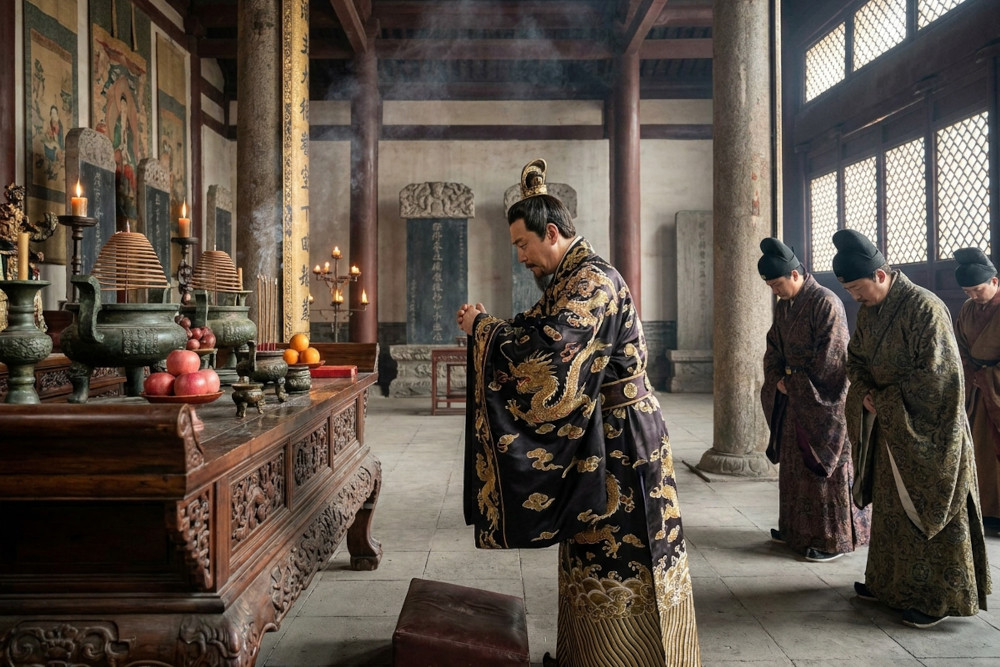
Historical records from China’s Southern Liang Dynasty tell of an emperor who nearly destroyed a temple after his prayers for rain went unanswered. Yet what happened next changed his attitude toward the divine. Later, during a dangerous military crisis, he seemed to witness another miracle — one that helped turn back an invading army.
A drought tests the emperor’s faith
The story appears in the Nanshi, or History of the Southern Dynasties, a historical work compiled by Li Yanshou. The book covers nearly 170 years, beginning with the Liu Song Dynasty and continuing through the Southern Chen Dynasty. It preserves many accounts from a turbulent era when China was divided between northern and southern regimes, and rulers often faced threats from both nature and war.
According to the record, the Southern Liang lands once suffered from a severe drought. In an agricultural society, a long dry spell was more than an inconvenience. It threatened crops, disrupted daily life, and placed great pressure on the court, which was expected to seek relief for the people.
The emperor issued an order for sacrifices and prayers to be offered to a deity known as Emperor Jiang, hoping the drought would end. But after 100 days, no rain had fallen. The emperor grew furious. In anger, he ordered his attendants to gather firewood and take it to the temple so the shrine and its statue could be burned to ashes.
As the men prepared to carry out the order, the sun seemed to blaze even more fiercely than before. Just as they were about to set the fire, a cloud shaped like a ceremonial canopy suddenly appeared above the temple. In an instant, heavy rain poured down from the sky.
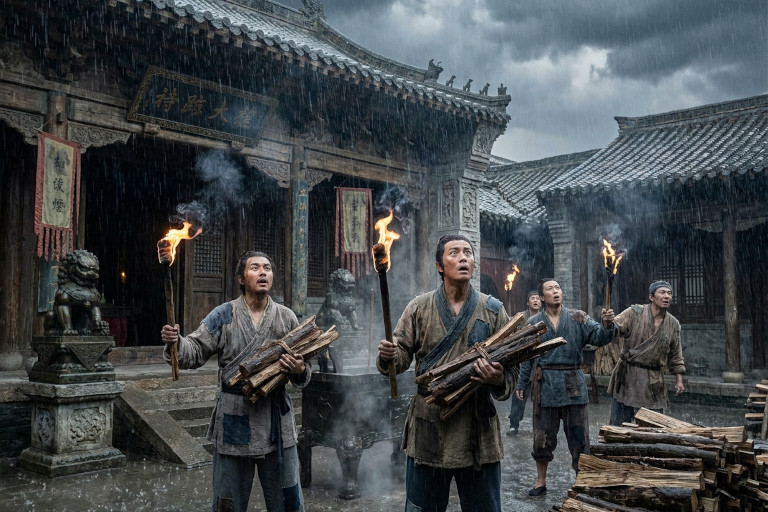
At the same time, the emperor’s grand palace, though built on firm and level ground, began to shake violently. Remembering his command to burn the temple, the emperor quickly issued a second order, sending messengers to stop the destruction. A short while later, the frightening tremors ceased, and the palace returned to calm.
The incident left a deep impression on him. Until then, he had not personally visited the temple since taking the throne. After seeing what had happened, his faith in the divine was restored. He made careful preparations and went to the temple with his civil and military officials to offer sacrifices.
A river rises against the invading army
At that time, the Northern Wei Dynasty still ruled in the north, while Southern Liang controlled territory in the south. The two sides existed in a period of political division and military tension, and border regions could quickly become the focus of armed conflict.
Among Northern Wei’s generals was Yang Dayan, a skilled cavalryman known for his speed and bravery. Even when wearing armor, he could move with remarkable agility, leading charges into battle and striking fear into opposing commanders. His reputation was so intimidating that parents were said to quiet crying children simply by saying: “Yang Dayan is coming.”
Not long after the Southern Liang emperor visited the Temple of Emperor Jiang, Yang Dayan led his army in an attack on the Zhongli region. Faced with this threat, the emperor immediately sent envoys back to the temple to offer sacrifices and ask for divine help.
Then, suddenly, the river water rose by six or seven feet. The rushing flood caught the Northern Wei troops off guard, throwing the army into confusion. Yang Dayan, who had been appointed General of the Imperial Guard by Northern Wei, was forced to abandon the campaign in defeat.
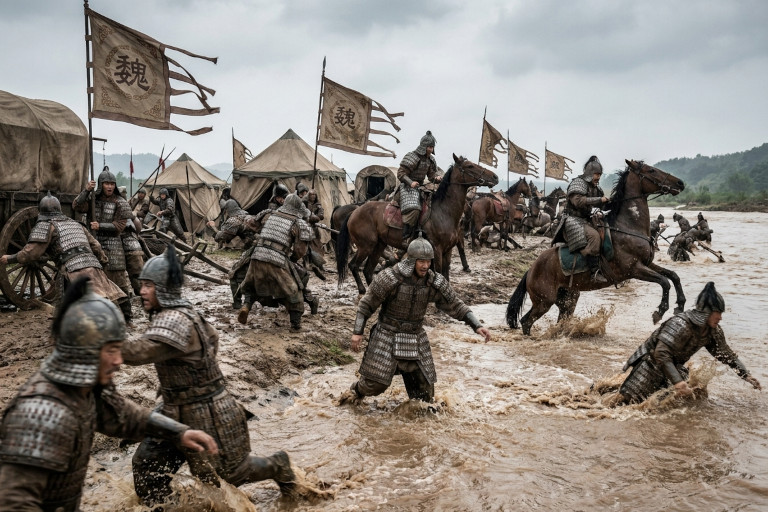
For Southern Liang, the sudden rise of the river came at a crucial moment. What might have become a disastrous invasion instead ended with the attacking army retreating. To those who believed the earlier rain had already revealed divine power, the timing of the flood seemed difficult to dismiss as ordinary chance.
Later, when people visited the Temple of Emperor Jiang, they noticed traces of muddy water at the feet of the deity’s statue. To those who saw it, the sign seemed to suggest that the deity had truly answered the emperor’s prayer and helped drive back the invading army.
In the eyes of those who preserved the story, the lesson was clear: reverence should not depend only on immediate results. The emperor had nearly destroyed the temple in anger, yet after witnessing rain, tremors, and a timely flood, his faith was restored. What began as frustration during a drought became a story remembered as an example of divine protection in a time of crisis.
Translated by Patty Zhang
Follow us on X, Facebook, or Pinterest
