

The mysterious air disaster in Belgium
On the morning of July 4, 1989, a MiG-23 fighter jet took off from a Soviet Air Force base in Poland for a training flight. However, shortly after takeoff, the aircraft experienced a malfunction and began descending uncontrollably. The pilot, Colonel Nikolai Skuridin, decisively ejected and saved his life, yet fate had other plans for his plane.
Strangely, after his escape, the aircraft’s malfunction inexplicably self-corrected. In autopilot mode, it flew westward, crossing Poland and East Germany, and entered NATO airspace. NATO radar quickly detected this unwelcome guest. Two F-15 fighter jets were immediately sent to intercept it over West Germany.
However, the experienced pilots soon discovered that, although the uncrewed aircraft was peculiar, it posed no threat and was unarmed. After communicating with ground control, the pilots abandoned their original plan to shoot it down. Given its flight path, the aircraft would likely run out of fuel and crash into the English Channel, thereby avoiding ground casualties. Thus, this ghost plane flew over West Germany and the Netherlands with NATO’s tacit approval before entering Belgian airspace.
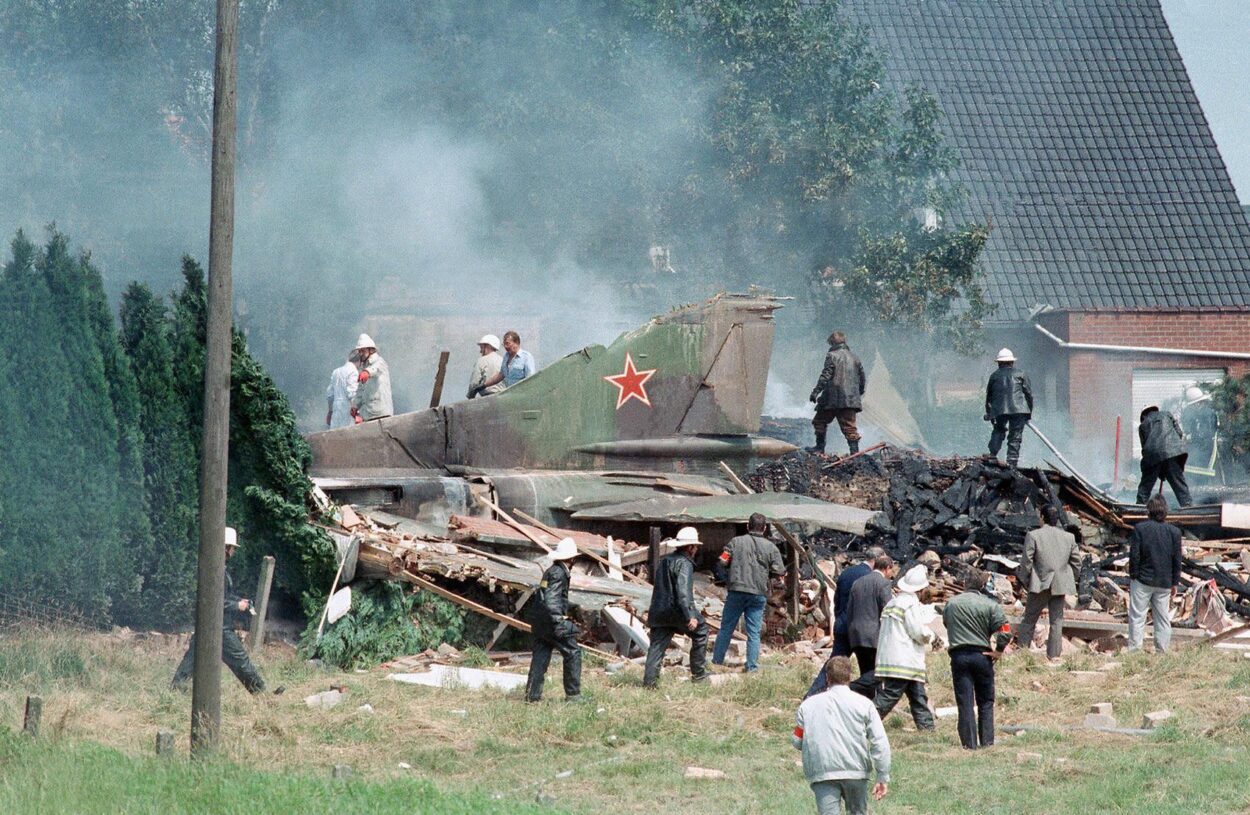
However, in the small town of Kortrijk, Belgium, the jet fighter unexpectedly crashed into a residential home. The homeowner’s 18-year-old son, Wim Delaere, couldn’t escape his fate and was killed instantly. His brother, Yves Delaere, later told a local newspaper that Wim had initially planned to go shopping with him and their mother, but changed his mind at the last moment and decided to take a nap at home instead. Little did he know that he would meet this tragic fate. When he was found, a beige blanket was still wrapped around him, and the word “airplane” (Avion) was clearly visible on his clothing.
After the incident was widely reported, many lamented that Wim had such bad luck, with some people being hit by falling objects from the sky and others by falling planes. Particularly intriguing was the word “airplane” on his clothing, which seemed to hint at fate’s silent message.
As the story spread, a prequel emerged, claiming that the young man had consulted a fortune teller who warned him of a potential air disaster within six months. He thought to himself that if he didn’t travel far or fly, he could avoid it. However, what was meant to happen would happen. This prequel added a layer of mystery to the story and resonated with many readers. People commented: “Yes, it’s true; ‘blessings do not require evasion, but misfortunes cannot be avoided.’ Many things are indeed predestined.”
The story of a nationalist officer
When we discussed the idea that “fate is predetermined,” a friend of mine shared a true story from her family history.
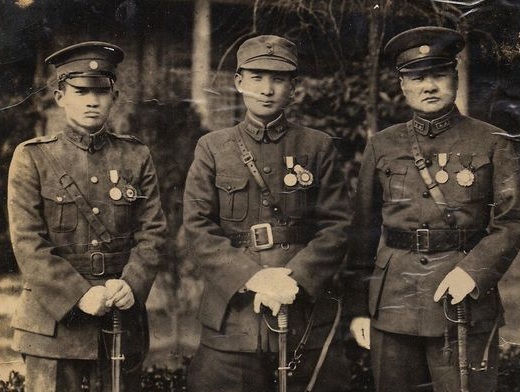
Her grandfather served as a military supply officer in the Nationalist Government when he was young. At that time, he was full of ambition and encountered a fortune teller who was said to be remarkably accurate. Her grandmother asked the fortune teller to predict her grandfather’s future. To her surprise, the fortune teller pondered for a long time and said that this gentleman’s fate meant he was destined to die of hunger. Her grandmother was furious, threw down the fee, and took her grandfather away.
Later, when the Communist Party took power, her grandfather returned to his hometown in Jiangnan with his family. His hometown was an ancient town with a thousand-year-old history, where traditional families with four generations under one roof were common and local customs were simple and honest. Although her grandfather was labeled a “counter-revolutionary” and had to show his face at every political movement, no one truly troubled him, nor did anyone physically harm him. Thus, he lived peacefully until the end of the Cultural Revolution, enjoying a life surrounded by grandchildren and family.
However, fate took an unexpected turn. One day, her grandfather went to see a doctor for a sore throat and was diagnosed with esophageal cancer. A few months later, he passed away. In the last two weeks of his life, he could hardly swallow anything. Watching her husband’s increasingly emaciated face, her grandmother remembered the fortune teller’s prediction and couldn’t help but shed tears, realizing that everything had been predetermined long ago.
Later, her grandmother often said that her husband, during the war, managed military supplies for thousands and, during times of scarcity, remained honest and incorruptible, thus accumulating some good karma. He survived the Cultural Revolution’s great calamity. Yet it seemed that the fate of dying from hunger was something he could not escape. Such stories are quite common in our lives. If you ask your elders at home, you’ll find that there are always a few past events in the family that can only be explained by the words “predestined fate.”
Translated by Joseph Wu and edited by Maria
Follow us on X, Facebook, or Pinterest
