
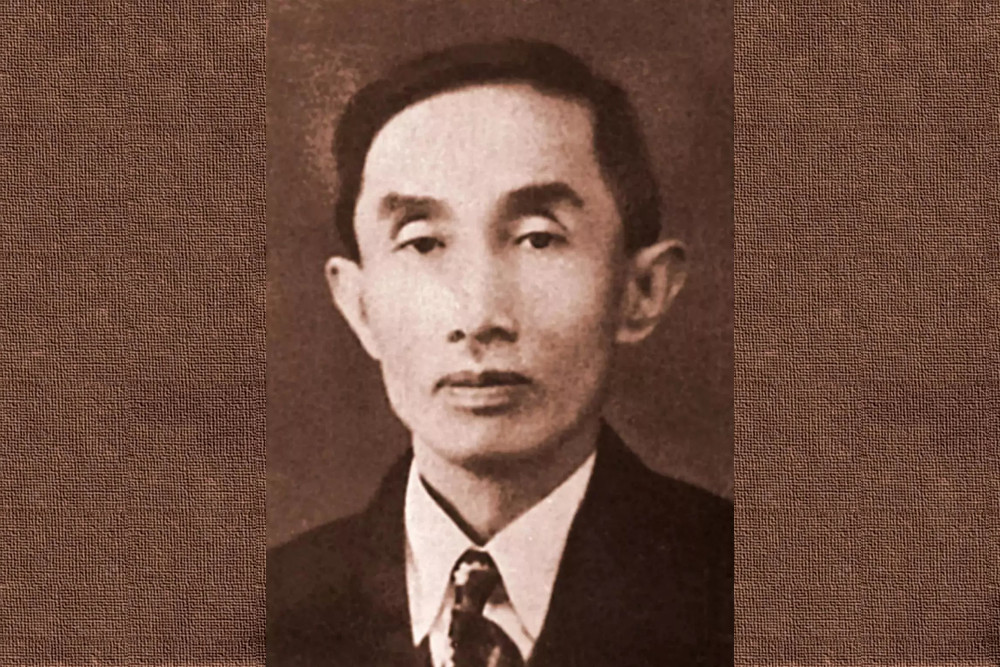
Lu Zuofu was one of modern China’s most influential entrepreneurs. Known as the “Chinese shipping king,” he built Minsheng Company into a major force on the Yangtze River, safeguarded China’s shipping industry during wartime, and left a lasting mark on Chongqing’s development. His story is one of ambition, patriotism, and a fateful decision that would change the course of his life.
A pioneer in China’s shipping industry
In 1926, Lu Zuofu founded Minsheng Company and gradually unified shipping along the Sichuan River, forcing foreign shipping powers to withdraw from the upper Yangtze. Over a decade later, during the Second Sino-Japanese War — when Japan’s invasion of China was at its height — he oversaw the mass evacuation of Yichang, a crucial river port city on the Yangtze. Under his leadership, Minsheng Company moved more than 1.5 million people to safety in just 40 days.
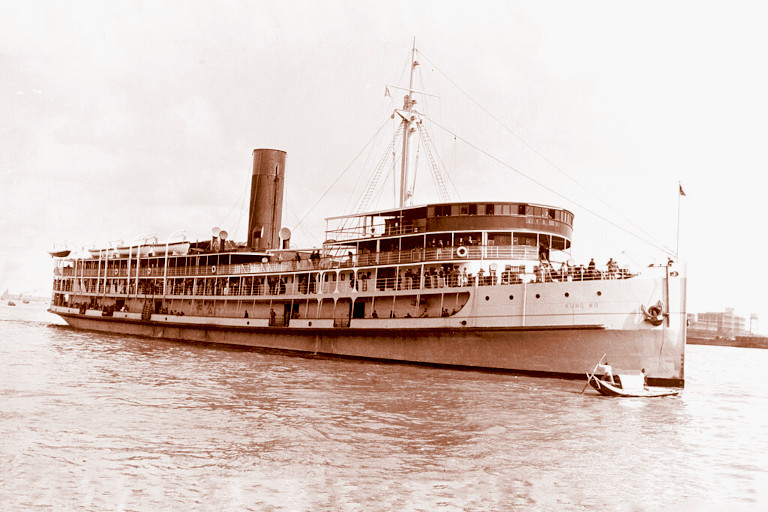
In addition to evacuating civilians, Minsheng transported over 1 million tons of industrial equipment and supplies. Historians later compared this feat to the Dunkirk evacuation in World War II — a desperate but successful operation that saved the core of China’s wartime industry and kept Japan from crippling the nation’s economy. Lu Zuofu’s achievement earned him official commendation from the National Government.
Choices that shaped his fate
When the mainland changed hands in 1949, Lu Zuofu found himself at a crossroads. As general manager of Minsheng Company, he remained in Hong Kong. At the same time, both the Republic of China and the Chinese Communist Party (CCP) sought his allegiance — one hoping he would continue his work in Taiwan, the other eager to seize Minsheng’s assets.
Lu Zuofu also considered leaving for the United States to write his memoirs, reflecting on decades of building Minsheng Company and developing Beibei. He was often called the “Father of Beibei” for transforming this rural area in Chongqing into a thriving cultural and educational hub with schools, libraries, factories, and public amenities. He could also have kept his fleet in Hong Kong, where it remained outside Communist control, and continued running his shipping business independently.
But on June 10, 1950, persuaded by CCP underground operatives, Lu Zuofu led his fleet north. He did not yet realize that this decision would set him on a path toward tragedy.
Early honors and new responsibilities
After returning to the mainland, Lu Zuofu attended the first session of the National Committee of the Chinese People’s Political Consultative Conference (CPPCC). He was warmly received by Mao Zedong and Zhou Enlai, re-elected as a CPPCC member, and later appointed to the Southwest Military and Political Committee.
These honors, however, did little to shield Minsheng Company from the mounting pressures of the new political order.
Operational difficulties under “sandwiching”
Even during wartime, Minsheng had grown from a single steamboat into a major enterprise with over 140 vessels, nearly 10,000 employees, and more than 70 affiliated businesses.
But after the Communist takeover, the economic landscape changed completely. The CCP implemented a policy sometimes described as “sandwiching” private enterprise — placing companies in a financial stranglehold by controlling every aspect of production and finance.
All raw materials, sales channels, and corporate funds were placed under state control. Private firms were required to deposit all cash into government banks and were barred from taking loans from private sources. This meant that even well-run companies could not pay wages or service their debts without government approval.
As the squeeze tightened, many businesses faced financial collapse. The state then offered “public-private partnerships” as a supposed solution — but these were essentially forced takeovers. Owners were allowed to stay on in name, but they gradually lost decision-making power as state representatives moved in to control operations.
Inviting wolves into the house
For Lu Zuofu, whose company was now struggling to meet payroll, joining such a partnership seemed like the only way to keep Minsheng afloat. He reluctantly agreed to bring in government-appointed “public share representatives” to oversee the transition.
But their presence quickly transformed the company. These officials took charge of hiring and firing, launched political campaigns and purges, and even ordered arrests. Lu Zuofu watched helplessly as his trusted managers were detained, dismissed, or — in the case of factory director Tao Jianzhong — executed.
This was devastating for Lu Zuofu, who had spent his life building not just a business but a team and a spirit of enterprise known as the “Minsheng spirit.” Now, one by one, the people who had helped him create that legacy were being removed, and he was powerless to stop it.
In Part 2, we’ll see how a series of accidents, political campaigns, and betrayals pushed Lu Zuofu to the breaking point — leading to one of the most tragic chapters in modern Chinese business history.
See Part 2 here
Translated by Joseph Wu
Follow us on X, Facebook, or Pinterest
