
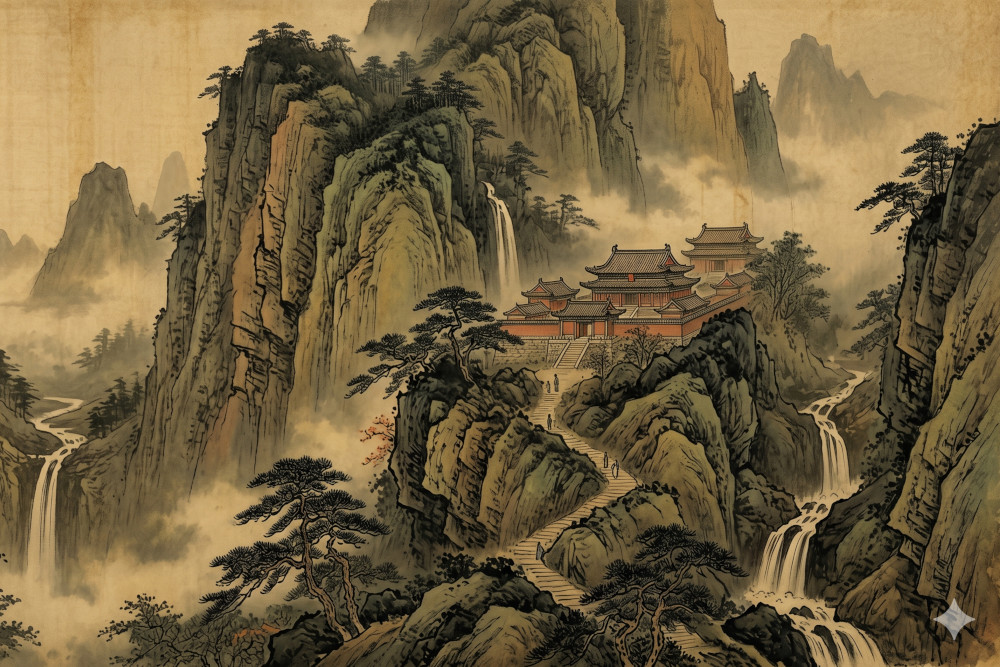
People with power and influence may seem able to control almost anything, but traditional Chinese culture has long held that no one can escape the laws of life, illness, aging, death, and moral consequence. Money and status may solve many problems in the human world, yet they cannot erase the results of one’s actions. A strange account from the Tang Dynasty tells of a powerful military governor whose suffering could not be cured by any physician because the true cause of his illness did not lie in the body at all.
An illness no doctor could cure
During the Huichang era of the Tang Dynasty, a man named Wang Yao passed down an unusual story he had heard from an ancestor. This ancestor, identified simply as Wang, was from Qingzhou and once served under the military governor of Pinglu. In Tang times, a military governor, or jiedushi, was a high-ranking regional authority who held both military and administrative power.
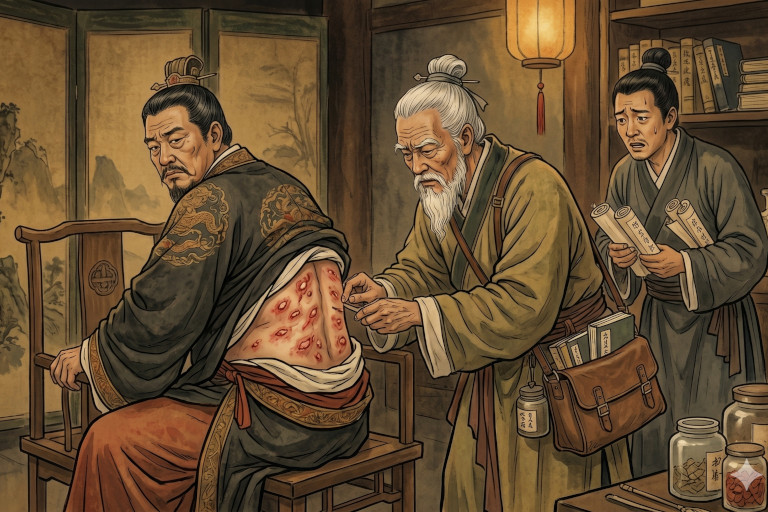
The governor Wang served was surnamed Li. His personal name had been forgotten over time, but one detail remained unforgettable: he suffered terribly from recurring sores on his back. The wounds caused him constant pain, and the condition would not heal.
Because of Li’s rank, he had access to the best doctors available. Yet none of them could cure him. No treatment brought lasting relief, and the illness continued to torment him.
Wang, distressed by his lord’s condition, decided to do what medicine had failed to do. After obtaining permission, he prepared offerings and made the long journey to Mount Tai, one of China’s most sacred mountains, to pray at the temple of the mountain deity.
A prayer at Mount Tai
At the temple, Wang prayed with complete sincerity. According to the account, his devotion moved the deity of Mount Tai to appear before him. Overwhelmed, Wang repeatedly kowtowed and wept, begging the deity to show mercy and save his master.
But the deity did not grant the request.
Instead, the truth behind the illness was revealed. Governor Li, though powerful and outwardly respected, had not fulfilled his duties with virtue. Behind the scenes, he had committed many wrongful acts and had inflicted punishment recklessly on other living beings. These deeds had created karmic consequences. The wronged spirits had gone to the underworld to accuse him and seek justice.
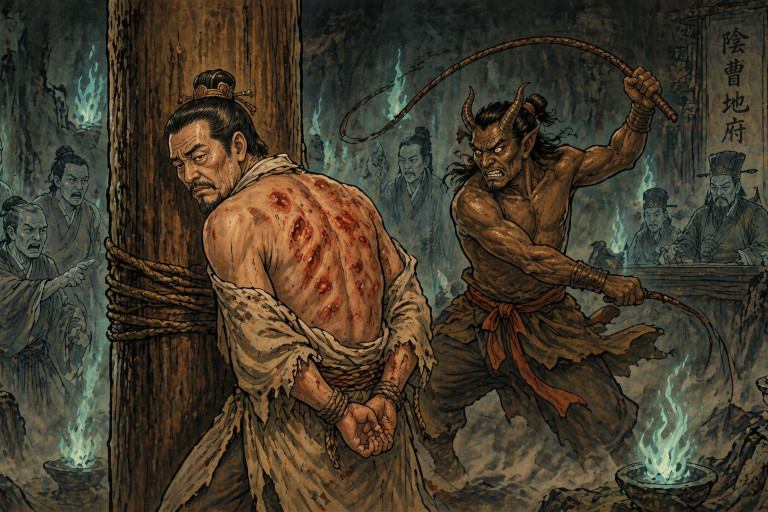
The sores on Li’s back, the deity explained, were the visible result of that punishment. The reason they kept appearing was that in the underworld, Li was being whipped. What showed on his body in the human world reflected what he was enduring there. This was no ordinary sickness, and no earthly physician could cure it. It was a punishment from Heaven, and there would be no recovery.
The truth in the underworld
After learning this, Wang made one further request. He asked if he might see Governor Li.
Later, after returning from Mount Tai, Wang told Li’s family what had happened. By then, the governor had already died of the illness. When Wang reported what he had seen and heard, Li’s wife did not believe him and asked for proof.
Wang said he had been taken to the underworld and had been allowed to meet the governor there. He saw Li bound with ropes. During that meeting, Li tore off a piece of his sleeve and entrusted it to Wang, telling him to bring it back to his family as evidence.
Proof brought back to the family
When Li’s wife received the torn piece of cloth, she went to inspect the clothing her husband had been wearing near the end of his life. There, just as Wang had said, she found damage on the sleeve where the piece had been torn away. Even more striking, the cloth still bore bloodstains from the governor’s sores.
That discovery convinced her that Wang had spoken truthfully.
The story presents illness not simply as physical suffering, but as something that may reflect deeper moral causes. It also serves as a warning: power does not place a person above justice. Even deeds hidden from others’ eyes may still bring consequences in time.
Translated by Joseph Wu
Follow us on X, Facebook, or Pinterest
