
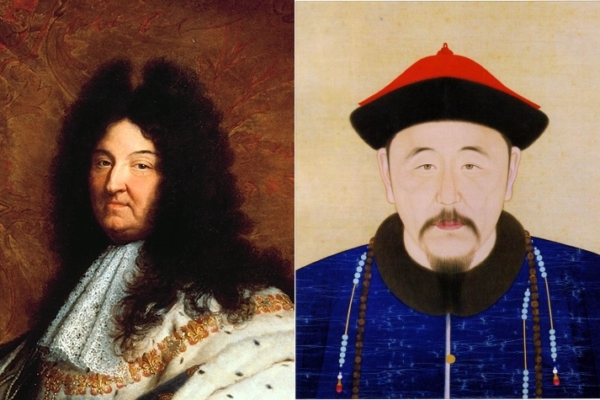
The historical claim that Louis XIV “saved” Emperor Kangxi is rooted in a unique period of 17th-century diplomacy where science, medicine, and mathematics served as the primary currency of international relations. While the two monarchs never met, the “Sun King” of France and the “Greatest Emperor” of the Qing Dynasty shared a mutual respect that profoundly altered the course of Chinese history.
Malaria is an ancient epidemic that has ravaged all nations and ethnic groups across the globe since prehistoric times. To this day, hundreds of millions of people still suffer from malaria every year. Mosquitoes top the list of “animals that kill the most humans annually,” primarily due to their role in spreading malaria.
The Ancient Incas’ ‘Tree of Life’
Legend has it that long, long ago, in Ecuador, South America, an indigenous man contracted malaria. He was gravely ill and on the verge of dying of thirst, so he mustered all his strength to crawl to a small pond, drank plenty of water, and then fell asleep. When he awoke, he found his fever had subsided, and he felt much better.
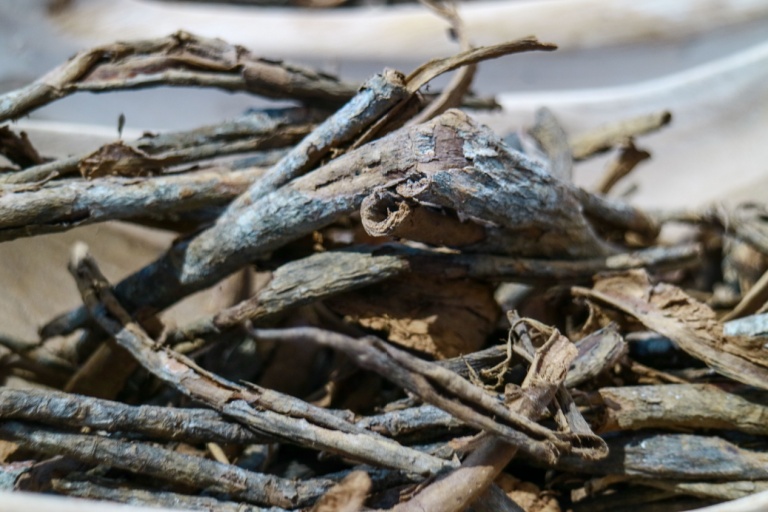
It was then that he noticed many trees submerged in the pond, making the water bitter. He quickly told the other Indians about this. From then on, this tree became known as the “Tree of Life” in the hearts of the Indians. They would peel off the bark, grind it into powder, mix it with water, and drink it to cure malaria.
The beautiful legend of the ‘Cinchona’
This “Tree of Life” is the “Cinchona tree.” There is a legend regarding the origin of the name “Cinchona.” From 1629 to 1639, the Spanish governor stationed in Lima, Peru, was the Count of Chincho, and his wife, Anna, was known as Chinchona according to Spanish custom.
One year, Anna fell ill with malaria and became very sick. She had a maid, a beautiful indigenous girl, who was deeply worried. So she ground the bark of the “Tree of Life” into powder and secretly mixed it into Anna’s medicine, hoping to cure her illness.
However, the Count believed Anna was trying to poison his wife and ordered the maid’s execution. At the critical moment, Anna, having taken the medicine, felt a marked improvement in her condition and pleaded that the Indian maid not be executed. Later, Anna recovered, and the maid was spared.
The Count brought the bark back to Europe, and thus it came to be known as “Chinchona Bark.” In 1742, Carl Linnaeus, the founder of modern botanical nomenclature, named the tree Cinchona, a name that has been in use ever since.
Cinchona sweeps Europe
But it was another person who truly made Cinchona bark powder popular across Europe. After Spain conquered the Inca Empire, it established vast colonies in South America. In the 17th century, large numbers of Europeans immigrated to Lima, the capital of Peru, including the Italian Jesuit priest Agostino Salumbrino.
It was during this period that a major malaria epidemic struck Rome, claiming the lives of several popes and cardinals in quick succession, which sparked alarm and panic among Catholic clergy worldwide. Salumbrino, who was serving as a missionary in Peru, observed the remarkable efficacy of powdered cinchona bark in treating febrile illnesses among the local people.
In 1631, he sent a small quantity of the bark powder back to Rome for use in treating malaria. Because of its remarkable efficacy, cinchona bark powder spread throughout Europe over the following decades, becoming a highly sought-after and expensive medicine — the most valuable commodity imported from Peru.
Europeans of the time gave this miracle cure for malaria a name: “Jesuit’s bark.” In England, there was a pharmacist named Robert Talbor who was particularly skilled at treating malaria and achieved exceptional results, earning him widespread fame — all thanks to this “Jesuit’s bark.”
Talbor’s fame eventually reached the ears of the British king at the time, the debonair monarch known as “the Merry King,” Charles II. The king sent for him and had his “secret formula” tested on several malaria patients, with excellent results. Charles II was delighted and appointed him as his personal physician.
Coincidentally, the following year (1679), Charles II himself contracted malaria and was cured using his own secret formula. From then on, Talbot traveled throughout Europe — including France and Spain — as a renowned physician, treating royalty and nobility, and reaping both fame and fortune.
Even Louis XIV, the King of France known as the “Sun King,” went to great lengths to purchase Talbot’s secret formula at a high price. Later, Louis XIV dispatched two French Jesuit priests on a mission to China to pay homage to the Kangxi Emperor of the East.
The missionary who saved the Emperor
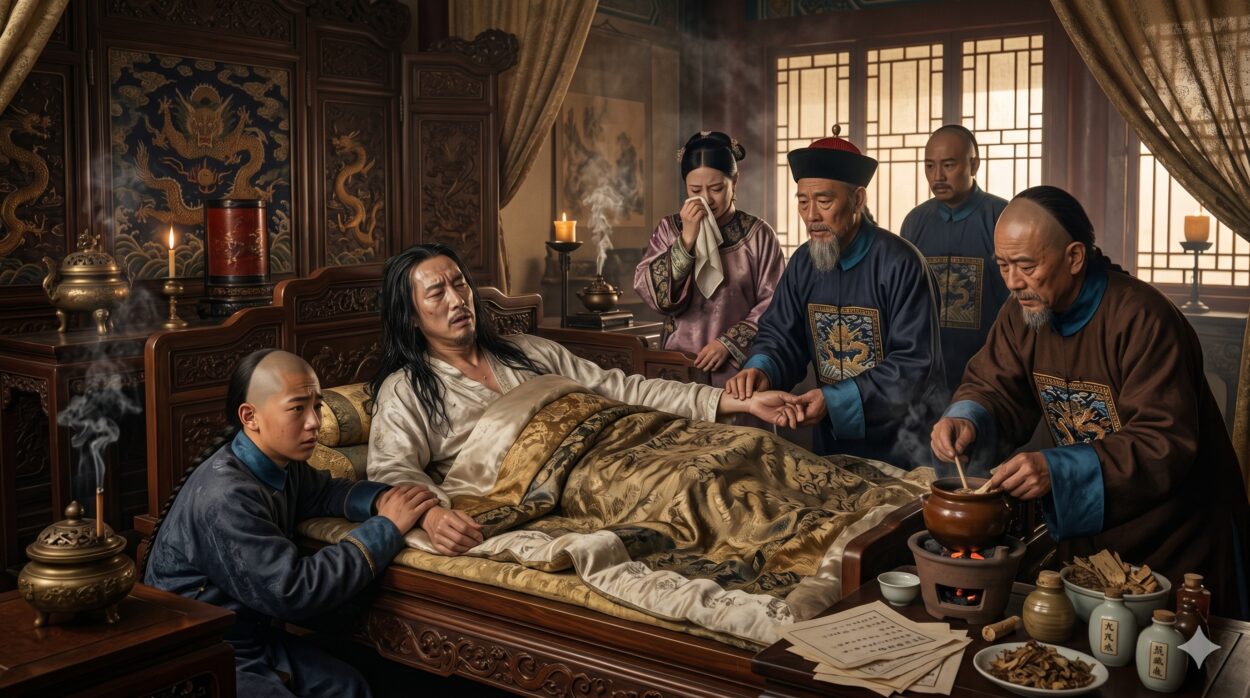
In 1693, 39-year-old Emperor Kangxi contracted a “malignant fever” (malaria). Suffering from high fever, chills, and violent shaking, he was on the verge of death. The imperial physicians tried every possible remedy, even seeking folk remedies from the common people, but none worked.
Just as the imperial physicians were at a loss, Kangxi suddenly recalled that he had previously heard from other Jesuit missionaries from France that there was a miracle cure for this type of malaria in France called “Golden Rooster’s Claw.”
Coincidentally, two French priests, Jean de Fontaney and Claude de Visdelou, had just received a new shipment of Golden Rooster’s Claw from France. The Emperor immediately issued an urgent decree, summoning the two, who were then preaching in Guangdong, to travel to the capital through the night to “save His Majesty.”
But when the two priests, having traveled all the way to the Forbidden City with the Golden Rooster, presented themselves before the Emperor of the Qing Dynasty, they were met with resistance from all the imperial physicians — in their view, how could foreigners possibly possess a miraculous elixir that even China’s ancient ancestors had never left behind? Besides, missionaries weren’t doctors; what did they know!
Kangxi was furious. Traditional Chinese medicine wasn’t working, yet they wouldn’t even let him try Western medicine — what was he supposed to do?! Tormented by his illness and unable to bear it any longer, Kangxi decided he couldn’t be so picky. He first had some other malaria patients try the medicine, and their conditions improved immediately.
This greatly boosted Kangxi’s confidence, and he took the Golden Rooster’s Claw with peace of mind. As expected, he was fully recovered shortly thereafter.
The turning point
Kangxi developed a particular fondness for “Western medicine and pharmaceuticals” and vigorously promoted them. From then on, he maintained a keen interest in Western science and culture. That severe bout of malaria became a catalyst: he quickly realized that Western knowledge held practical value.
From then on, he permitted missionaries to practice medicine within the palace and showed a marked interest in anatomy, pharmacology, and diagnostic methods. Furthermore, Kangxi vigorously promoted the most profound and systematic fields of “Western learning” — astronomy, calendrics, and mathematics. It created a body of technical literature that blended Chinese and Western knowledge and played a significant role in promoting the adoption of Western technology.
Without the medical and scientific intervention sponsored by the Sun King, the reign of Kangxi – and the trajectory of the Qing Dynasty- might have been much shorter and more chaotic.
To be continued
Translated by Audrey Wang and edited by Helen London
Follow us on X, Facebook, or Pinterest
