
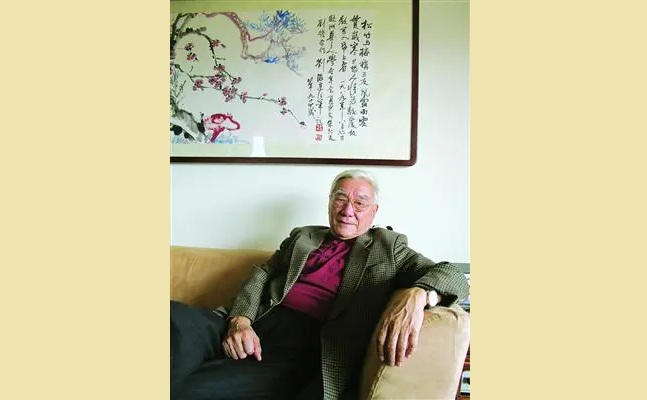
In the annals of the Cultural Revolution, few stories capture the convergence of desperation and destiny as vividly as Guan Yuqian (Yu-chien Kuan). A man of immense intellect and high-level connections, Guan Yuqian found himself trapped in a political machine that demanded his total submission or his life. His decision to flee was not a premeditated plan, but a lightning strike of intuition — a ten-minute choice that turned a 99.9% certainty of death into a miracle of freedom.
Guan Yuqian was Deng Xiaoping’s Russian translator. As a columnist, he was closely followed by Zhu Rongji, who would later become the Chinese Premier. Guan Yuqian lived in Hamburg from 1969 until his passing in 2018. Because he was a prominent bridge between German and Chinese cultures, his escape story is frequently republished in German outlets to mark anniversaries of the Cultural Revolution or to profile influential Chinese-Germans.
A renowned scholar at the University of Hamburg in Germany, he published works in multiple languages, including Chinese, German, English, Italian, and Russian. He became a world-renowned ambassador for cultural exchange, a survivor of the Cultural Revolution, a desperate escapee fighting for survival, and one of China’s most famous and fortunate “traitors”.
Guan Yuqian’s early life
Guan Yuqian was born in February 1931 in Fenghuang Village, Guangzhou. His father was a teacher at Lingnan University, and his mother came from a scholarly family. His mother was a descendant of Yan Yan, a disciple of Confucius. She patiently guided her children and taught them by example, enabling them and their siblings to receive a good education.
Later, his family moved to Shanghai. There, he attended St. Francis Xavier’s School, a church school in Shanghai. In 1945, he transferred to Shanghai West Middle School. Shortly after the establishment of the Chinese Communist Party regime, he entered the Beijing Foreign Studies Institute run by the Ministry of Foreign Affairs, where he studied English, and later switched to Russian.
At the age of 22, Guan Yuqian, who had shown outstanding performance, graduated early and was assigned to work in the Soviet Experts Studio of the Central Ministry of Finance. He served as a Russian translator between the central leaders and Soviet experts. He translated for central leaders, including Deng Xiaoping. In his spare time, he also translated several Russian economic books and literary works, demonstrating his talent and ambition.
Swept up and suffering in nationwide movements
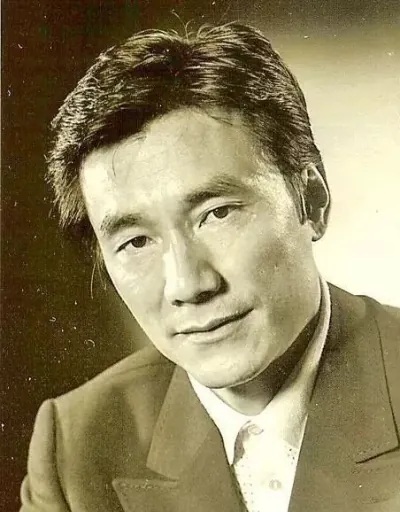
At the age of 25, his life was swept up in Mao Zedong’s 100 Flowers Campaign, which launched in 1956. The nationwide movement expected everyone to share. Unfortunately, the following year’s “Great Famine” caused a severe food shortage in Qinghai. The Qinghai Provincial Party Committee transferred him to catch fish in the extremely harsh conditions of Qinghai Lake. Guan Yuqian nearly starved to death several times, and his body suffered from the effects of severe malnutrition; he experienced numerous ailments.
In 1959, the “Anti-Rightist Opportunism” campaign swept across China. Guan Yuqian was “purged” for his past misdeeds. He was sent to work on the summit of Riyue Mountain in Huangyuan County, an even more remote and desolate place. However, he was determined and managed to break free through sheer willpower. In 1960, the “Qinghai Daily” hired him as a reporter, and he returned to the big city of Xining to live a stable life.
It was not until 1962 that he was transferred back to Beijing to work at the “Chinese People’s Committee for the Defense of World Peace,” where he was responsible for external liaison work. One might think that he was finally going to have a better life, but, actually, his misfortunes were far from over.
In 1966, the Cultural Revolution began. Guan Yuqian was once again caught up in the political tide and became a key target of struggle. He was criticized and targeted every day, living a life worse than death, having to write self-criticism and public humiliation.
In February 1968, he was once again ordered to stay alone in the office to write a self-criticism and await public criticism. He decided that this time he was completely finished, and did not know what fate had in store – hundreds more criticism sessions or exile to the frontier again?
The thought of this undignified life terrified him. The thought of those who would kick him while he was down, expose him, write big-character posters about him, and demand that he divorce his wife filled him with despair. In utter despair, he began to rummage through his desk drawers, looking for the means to end his life. However, what caught his eye was the passports of several international friends who resided in China.
International connections
In his ordinary work, Guan Yuqian usually handled the entry and exit procedures for foreign guests in China, and all their passports were in his possession. The one at the top was the passport of a Japanese national named Saionji Kazuhiro. Saionji Kazuhiro’s father, Saionji Koichi, was a guest of honor at Mao Zedong’s side and was praised by Zhou Enlai as Japan’s unofficial ambassador to China. He was also called a “friend of the Chinese people” by the Chinese Communist Party.
Guan Yuqian flipped through the passport and saw a fleeting photo of Saionji. The more he looked at it, the more he felt the resemblance to himself. Even more astonishingly, the passport contained visas for Egypt and France. A wild idea popped into his head: impersonation. A voice inside him kept repeating: “Go! Go as far away as possible. This place isn’t for you. Go! Go! The faster the better! The further away the better!” However, it was likely he would be shot dead by the border police, with no chance of escaping.
The great escape plan
He made his decision in just 10 minutes based on the facts that staying meant no dignity, a fate worse than death, impersonating someone and being discovered meant certain death, and taking a gamble might offer hope. He decided to gamble on that elusive 0.01% of freedom, or give up!
It was already past three o’clock in the afternoon when he called the airline booking office. He said to the booking office that the Japanese guest had made a last-minute decision to travel abroad the next day and asked them to book an international flight ticket as quickly as possible. The other Party initially refused outright, but upon hearing that Saionji Koichi’s son was traveling, they immediately tried to secure a ticket for him before the 6 o’clock closing time.
He slumped into his chair, picked up his cup, took a sip of the cold tea left in it, and bit his index finger hard, trying to calm himself down. Then, as if making a work plan, he began writing down what he needed to do: take his passport to the Public Security Bureau to get the exit stamp. Go to the finance department to collect the check. Pick up his plane ticket after work at six o’clock. Burn the letters from his friends at home to avoid implicating them if something happened. Pack some basic luggage.
But how could someone holding a Japanese passport but not speaking a word of Japanese possibly overcome all the obstacles?” He himself found the idea utterly unbelievable. Caught in a dilemma, he gritted his teeth and continued down the path of no return that he had hastily chosen.
He rushed to the police station on his bicycle before he got off work, claiming that he had filled out the application form for foreign visitors to leave the country, but had left it in the office, and would bring it over first thing the next morning. After some persuasion, he managed to get the foreign affairs police to endorse the exit stamp despite there being no application form.
After the police station, Guan Yuqian hurried to the finance department of his workplace to collect the check. He prayed silently that he would not run into the troublesome Section Chief Wang, his sworn enemy who always picked on him. But fate had other plans. Just as he entered, Section Chief Wang arrived. But this time, for some reason, Wang turned his head and walked away as soon as he saw Guan Yuqian. If Section Chief Wang had paid attention to his documents, the escape plan would have been exposed.
Picking up the plane ticket went smoothly. Guan Yuqian even managed to squeeze in time to withdraw 200 yuan from his bank savings for urgent needs. Coincidences kept happening one after another, and it was as if he had been given the green light, getting everything done unimpeded. What usually takes at least three days was completed in just three hours on one day.
That night, he tossed and turned, unable to fall asleep. In the quiet of the night, he took out his passport and examined it closely. This time, the more he looked, the less the person in the photo resembled him. So he peeled off the original photo, replaced it with his own, and even used his fingernail to trace the outline of a stamp on the photo.
The next day, he arrived at the airport. Due to the absurd incident of the “Red Guards” burning down the British embassy, fewer and fewer foreigners were coming to China, and the waiting hall was deserted. As soon as he appeared, Jin, the customs inspector handling the departure procedures for foreign guests, greeted him warmly from afar: “Guan, seeing off a foreign guest?” he asked.
Guan Yuqian was extremely nervous. At that moment, he was hoping that Jin would not open the suitcase for inspection. So he tried to appear calm, placed the suitcase on the luggage rack, and casually replied: “Yes, it is the ambassador’s son who is going abroad.” Upon hearing this, Jin, without saying a word, stamped “Inspection-Free” on the luggage slip.
Before leaving, Jin winked mischievously, saying: “There’s no reason to check the luggage of foreign guests.” However, this was only the first hurdle. The next step was to hand over the passport to the border police. If it had been Liu, whom he knew, on duty, he would definitely have been recognized.

The impersonation
However, the person on duty that day was a new, young border policeman whom he had never met before. After handing over the passport, he calmly went to the basement toilet, took off his uniform, tucked it behind the toilet cistern, then took out a floral tie he had prepared beforehand and tied it skilfully.
A short while later, a “foreign gentleman” emerged from the restroom. The man was dressed in a suit and tie, wearing black-rimmed glasses and a dust mask commonly used in Beijing to protect against sandstorms. That day, he was the only one sitting in the vast waiting room for foreign guests.
Guan Yuqian waited until ten minutes before the plane took off, but the new border police officer had not returned his passport. He was on the verge of a breakdown. Could it be that the police had found something suspicious in his passport? He had even prepared to deliberately run towards the exit as soon as he saw the military or police surrounding him. That way, the military or police would shoot him on the spot, and he could die a quick death instead of being tortured and interrogated day and night.
Finally, the border police came looking for him, but it was not the newcomer he had seen earlier. It was Liu, an acquaintance he often joked with. He was completely terrified and could only watch helplessly as Liu turned to the page in the passport with his photo. A chill ran through him as he awaited his “death sentence.”
He regained his composure only when Liu asked him in English whether it was his passport. It turned out that Liu did not recognize him. He struggled to control his trembling voice and answered Liu’s question in English, once again miraculously escaping danger. Now, finally, at the last hurdle — the boarding gate. Beyond the gate lies boundless freedom, but would he be as lucky as before?
At each of the three boarding gates, two female attendants stood guard. He knew almost all of them. Whenever he sent off foreign guests, he would joke with them; if any one of them recognized him, all his efforts would be in vain. Just when he was waiting anxiously, there was an announcement over the loudspeaker saying: “The chief is here. All staff, please immediately go to Gate 2 to welcome him!” The flight attendants quickly withdrew, leaving the boarding gate unguarded. He quickly seized this golden opportunity to go through the boarding gate and ran breathlessly to the small passenger plane on the tarmac.
Finally free
The plane took off. As it departed, darkness fell, yet he felt a radiant light before him. He had defied all odds, escaped a seemingly hopeless situation, and turned an impossible gamble into a miracle. He was overwhelmed with emotion, unable to calm down, and even felt like singing loudly. The same phrase kept repeating in his mind: “I am free! I am free!” Finally, he left China, free from being chased, from terror and fear!
Translated by Chua BC and edited by Helen London
Follow us on X, Facebook, or Pinterest
