
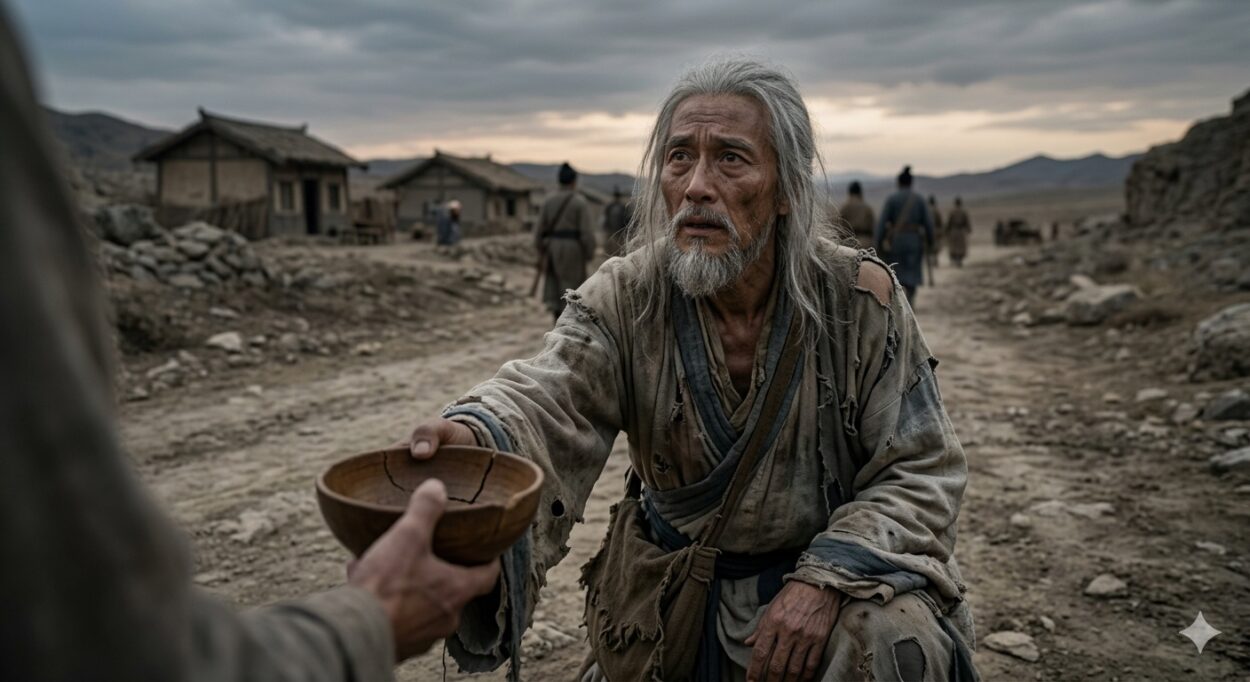
When people think of beggars, they often associate them with negative words such as dirtiness, poverty, and disease. In many cases, this reflects their harsh reality: they rely on others for food, endure exposure to the elements, suffer life’s hardships, and witness society’s changing fortunes from the margins. Yet even in such unforgiving conditions, remarkable individuals have emerged — figures who defied expectation and left a lasting mark on history.
The founder of beggars
“In every profession, there is a founder.” When speaking of the “founder” of beggars, one must mention Wu Zixu, a figure surrounded by countless legendary accounts. Wu Zixu was the son of Wu She, a minister of the State of Chu. Known for his determination to avenge his father and brother, he was forced into exile after falling victim to the tyranny and political chaos under King Ping of Chu, who had Wu She and his family killed.
Fleeing for his life, Wu Zixu survived by begging for food along the way. He endured severe hardship, humiliation, and repeated brushes with death before finally reaching the State of Wu. Once there, he assisted King Helü of Wu in defeating the State of Chu. After victory, he ordered the tomb of King Ping of Chu to be excavated and infamously whipped his corpse, completing his long pursuit of vengeance.
Sima Qian devoted a chapter in Records of the Grand Historian to documenting the life of Wu Zixu, including his experiences as a fugitive who survived by begging. He records: “Before Wu Zixu arrived in Wu, he fell ill and stopped midway, begging for food.” During his flight, Wu Zixu was pursued by officials and soldiers. Weakened by illness and exhaustion, he was forced to stop along the way and beg for food. In that moment, he had truly fallen to his lowest point, struggling for survival on the margins of society.
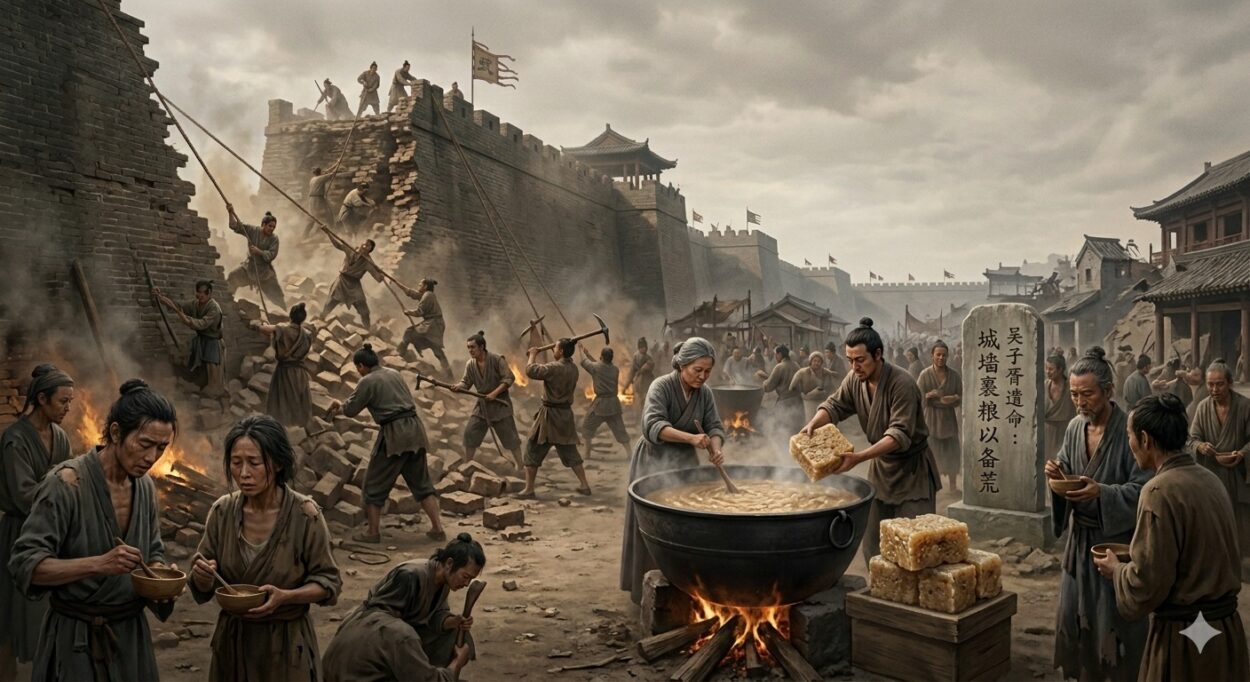
According to legend, when Wu Zixu helped construct the city of Suzhou, he ordered bricks made from glutinous rice to be buried at the base of the city walls. He instructed his subordinates that if the state were ever struck by famine, the walls could be dismantled and the bricks cooked, allowing the people to survive.
After Wu Zixu died unjustly, the State of Yue eventually destroyed the State of Wu. During the ensuing chaos, famine broke out within the city. The people recalled Wu Zixu’s instructions, tore down the city walls, and boiled the glutinous-rice bricks, surviving the period of starvation.
It is said that this act reflected Wu Zixu’s gratitude for the kindness he had once received from the local people during his years of wandering and begging. In return, he sought to protect them even in death. For this reason, beggars in the Suzhou region later came to revere Wu Zixu as a symbolic “founding figure” of their tradition.
The beggar emperor
Like Wu Zixu, who regarded his time as a beggar as only a brief period of hardship, Chinese history also records a “beggar-emperor” whose life experience was perhaps unique.
Zhu Yuanzhang, the founding emperor of the Ming Dynasty, was born into a poor family in an impoverished county. At the age of seventeen, a devastating famine and plague struck his hometown, causing him to lose his parents and siblings in quick succession. So impoverished was he that he could not even afford to bury his family.
In desperation, Zhu entered the Huanguo Temple as a monk. In name, he was ordained; in reality, he served only as a lowly attendant to the monks. Yet even within the temple, the hardship of famine persisted, and food shortages soon became severe. Eventually, Zhu was forced to leave and wander the countryside, surviving by begging for food.
This experience is recorded in the opening of the History of Ming: “In the fourth year of the Zhizheng era, drought and locusts caused widespread famine and plague. At that time, the founding emperor was seventeen years old. His parents and siblings died one after another, leaving him so impoverished that he could not afford to bury them. A local man, Liu Jizu, assisted him with the burial at Fengyang.”
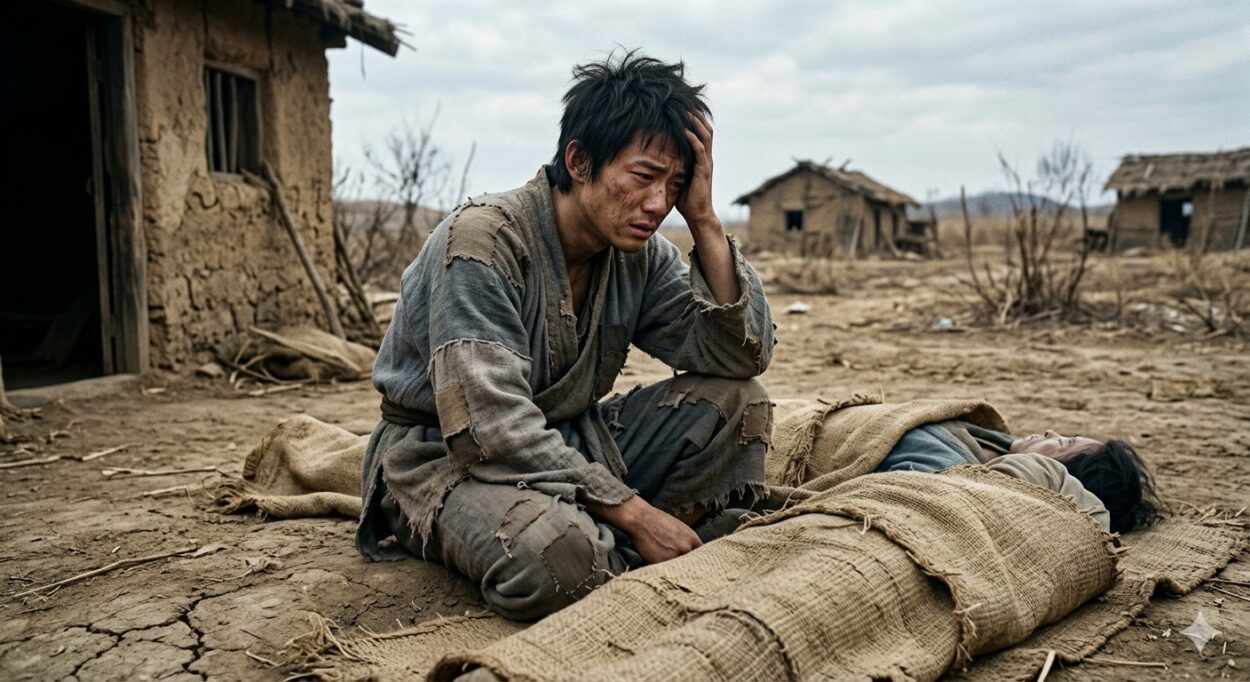
Left alone and without support, the future emperor entered Huanguo Temple and became a monk. After a month, he left the temple and wandered to Hefei in search of food. Along the way, he fell ill. It is recorded that two men in purple robes accompanied him and watched over him until he recovered.
After regaining his health, he lost his way and wandered for years. Over the course of three years, he traveled through the regions of Guang, Gu, Ru, and Ying before eventually returning to the temple. During those three years, he traveled extensively through Anhui and Henan. Living as a wanderer, he endured the elements while begging for food, suffering humiliation, mistreatment, and severe hardship along the way.
While in this state of wandering, he encountered Guo Zixing, who was then beginning to raise a rebellion. Zhu Yuanzhang joined his ranks. His abilities quickly drew Guo Zixing’s attention, and he was soon entrusted with increasing responsibility. Within two months, he was promoted within the command structure, marking the beginning of his extraordinary rise. From this point onward, his life entered a dramatically different course — one akin to a novel.
To be continued
Translated by Joseph Wu and edited by Tatiana Denning
Follow us on X, Facebook, or Pinterest
