
The greatest physicians are remembered not only for what they discover, but for the values they embody. Nearly two thousand years after Hua Tuo’s time, his name continues to inspire because his approach to medicine was built on more than skill — it was guided by compassion, integrity, and a sincere commitment to patients. In this final part of our three-part series, we look at the enduring legacy of Hua Tuo and the wisdom his life continues to offer.
More than just medical skills passed down through the ages
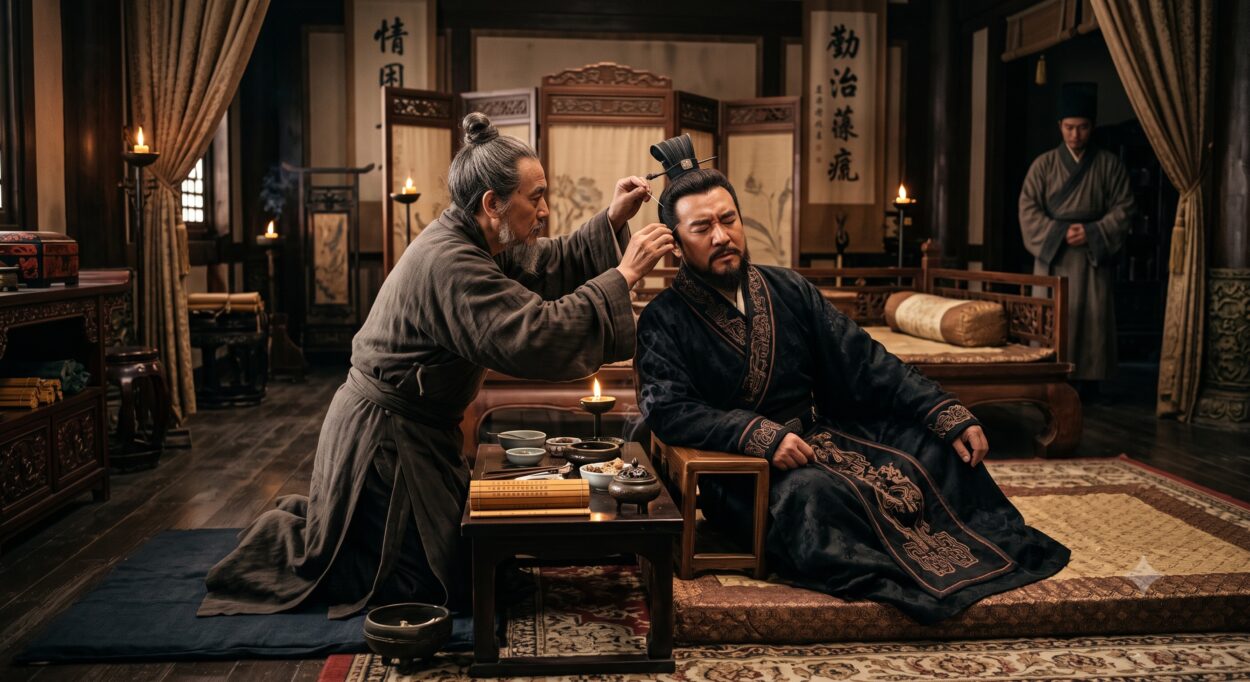
Throughout his life, Hua Tuo treated countless patients, most famously Cao Cao, the powerful warlord and statesman of the Three Kingdoms period. According to the Records of the Three Kingdoms, Cao suffered from chronic headaches that caused severe discomfort and dizziness whenever they flared up. After hearing of Hua Tuo’s remarkable medical abilities, Cao summoned him for treatment. Hua Tuo used acupuncture, which reportedly brought quick relief and earned Cao’s respect.
Yet Hua Tuo was never simply interested in serving the powerful. He was reluctant to remain at court for long and believed that a physician’s duty was to help all people, not become merely a tool for those in positions of authority. According to the Records of the Three Kingdoms, he repeatedly requested permission to return home, at one point citing his wife’s illness as the reason for delaying his return. After waiting a long time for Hua Tuo to return, Cao grew suspicious and believed Hua Tuo was making excuses. The situation eventually led to Hua Tuo’s imprisonment and execution.
The later novel Romance of the Three Kingdoms added a more dramatic version of this story, portraying Hua Tuo as suggesting a dangerous cranial operation under anesthesia — a proposal that Cao misunderstood as an assassination attempt. The account contributed greatly to Hua Tuo’s lasting fame. Regardless of the exact historical details, the story of Hua Tuo and Cao Cao offers an enduring lesson: medicine depends not only on knowledge and technical skill, but also on trust, ethics, and communication between physician and patient.
Today, as medicine enters the era of artificial intelligence, genetic sequencing, and precision medicine, technology continues to expand what doctors can do. Yet it cannot replace the human connection at the heart of healing — the physician’s judgment, the patient’s trust, and the honest communication between them.
Medical books lost, spirit endures
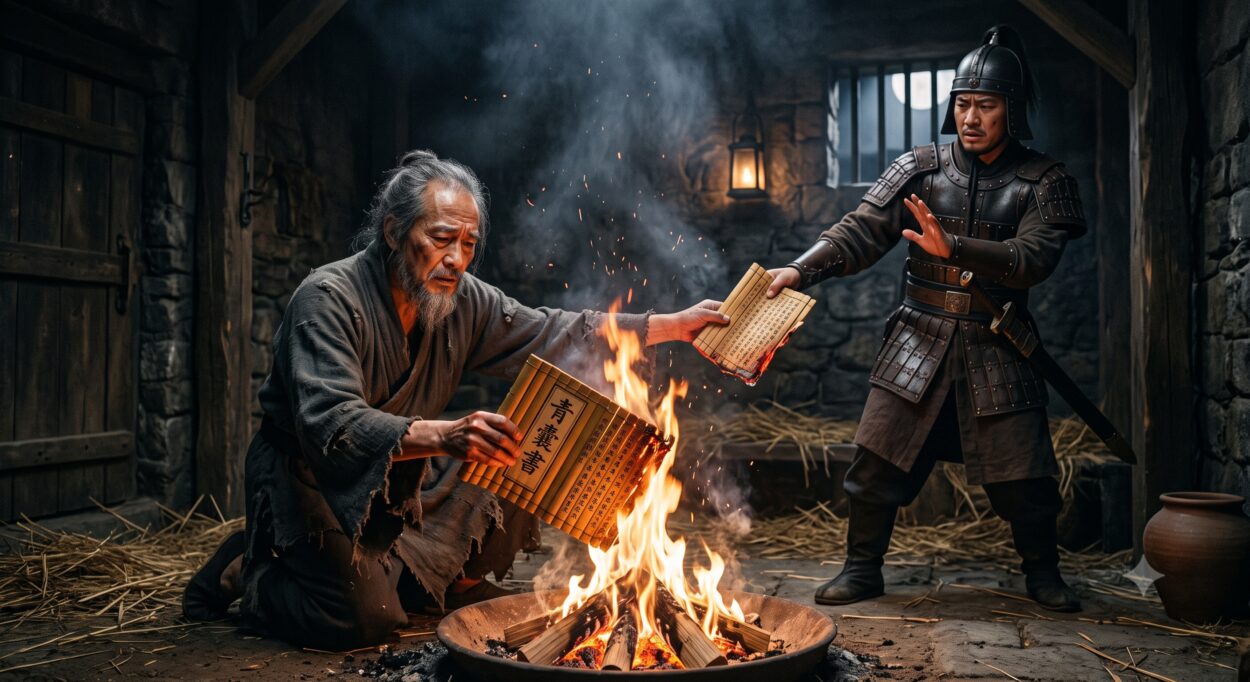
According to historical accounts, before his death, Hua Tuo compiled his life’s medical knowledge into a book known as the Qing Nang Shu (Blue Bag Book), hoping that it would be preserved for future generations. However, the prison guard who was offered the manuscript feared the consequences of accepting it and refused. Hua Tuo then burned the book, and so much of the medical knowledge it contained was lost.
For centuries, people have wondered what the Qing Nang Shu may have included — perhaps the formula for Ma Fei San, surgical techniques, or other clinical experiences that were never passed down. The true contents of the book may never be known. Yet Hua Tuo’s most important legacy is not simply a lost medical text, but the spirit of a physician who devoted his life to healing others.
He was courageous in pursuing medical innovation, combining anesthesia with surgery and expanding the possibilities of treatment in his time. His Jiaji acupoint therapy continues to influence acupuncture practice today. He promoted regular exercise, emphasized proper recovery after illness, and recognized the importance of maintaining health before disease occurred — ideas that continue to resonate with modern approaches to health.
Medical books may disappear, and techniques may evolve with each generation. But the values at the heart of medicine endure: respect for life, compassion for patients, the quest for knowledge, and an unwavering commitment to placing patients’ well-being first.
A divine doctor across 1,800 years
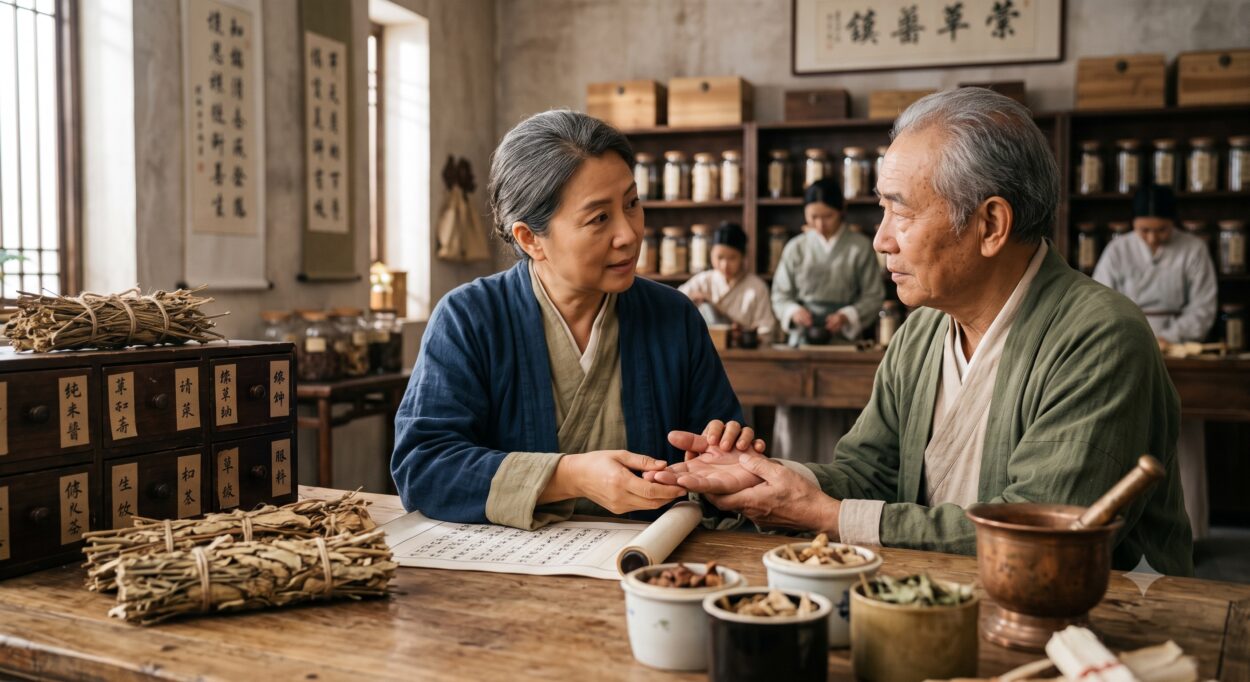
Today, we possess diagnostic tools unimaginable in Hua Tuo’s time and can perform treatments that would have seemed impossible nearly two thousand years ago. Yet the more medicine advances, the more we are reminded that excellent care has never been defined by technology alone. Patients need not only effective treatments and precise instruments, but also physicians who listen carefully, observe thoughtfully, and remain dedicated to their patients’ well-being.
Looking back on Hua Tuo’s life, we see that his greatest concern was not simply demonstrating medical skill, but reducing suffering and helping people achieve lasting health. From easing the pain of surgery with Ma Fei San, to recognizing illness through careful observation, to creating the Five Animal Frolics and emphasizing proper recovery, his work reflected a broader philosophy: medicine should not only treat disease, but also preserve health.
Although nearly two thousand years have passed, the principles behind Hua Tuo’s approach remain relevant. His greatest legacy is not only the medical knowledge attributed to him, but the enduring values that guide true healing: compassion, innovation, careful observation, prevention, and respect for life.
The enduring lessons from Hua Tuo’s approach to medicine can be summarized in five principles:
- Prevention is better than cure: Many diseases do not appear suddenly but develop through long-term accumulation. Recognizing risks early and improving daily habits can be more valuable than treating illness after it occurs.
- Health is built through daily choices: A balanced diet, regular exercise, sufficient sleep, and effective stress management form the foundation of lasting health.
- The body and mind are connected: Emotions and stress influence not only mental well-being but also sleep, immune function, cardiovascular health, and overall physical condition. Caring for the mind is also caring for the body.
- Recovery requires patience: The disappearance of symptoms does not always mean complete healing. The body needs time, rest, and gradual return to normal activities to fully recover.
- A great physician puts patients first: Medical knowledge and technical skill are essential, but the finest physicians are those who respect life, listen to patients, and remain committed to their long-term well-being.
Translated by Joseph Wu and reviewed by Tatiana Denning
Follow us on X, Facebook, or Pinterest
See Part 1 here
See Part 2 here
