
More than 1,800 years ago, long before the development of modern anesthesia, antiseptic techniques, and medical imaging, the renowned Chinese physician Hua Tuo was already performing abdominal surgery using general anesthesia. He developed the Jiaji acupoint therapy, which remains widely used in acupuncture today, and championed ideas such as regular exercise, proper recovery after illness, and the principle that prevention is better than cure — concepts that closely align with modern approaches to health.
Yet what has preserved Hua Tuo’s legacy for nearly two millennia is not simply his remarkable medical achievements. He was not only an innovative physician but also a deeply compassionate one who consistently placed his patients’ well-being first. Whether creating Ma Fei San to ease the pain of surgery, detecting disease from the subtlest of signs, searching for the underlying cause of illness rather than merely treating symptoms, or encouraging exercise and thoughtful recuperation, Hua Tuo’s focus extended beyond curing disease to preventing suffering and improving people’s quality of life.
Today, medicine has entered the age of artificial intelligence, precision medicine, and extraordinary technological advances. Yet many of Hua Tuo’s insights remain surprisingly relevant. His life reminds us that exceptional medical care depends not only on scientific innovation, but also on wisdom, compassion, and a deep respect for human life. In this article, we’ll explore five timeless health insights from Hua Tuo that continue to offer practical guidance for healthy living today.
Meticulous observation: A great physician examines the person
Hua Tuo devoted himself to the study of medicine, combining extensive knowledge of classical medical texts with years of clinical experience. He became especially renowned for his skill in observation — the ability to assess a patient’s condition by noticing subtle changes in facial expression, complexion, posture, and overall appearance.
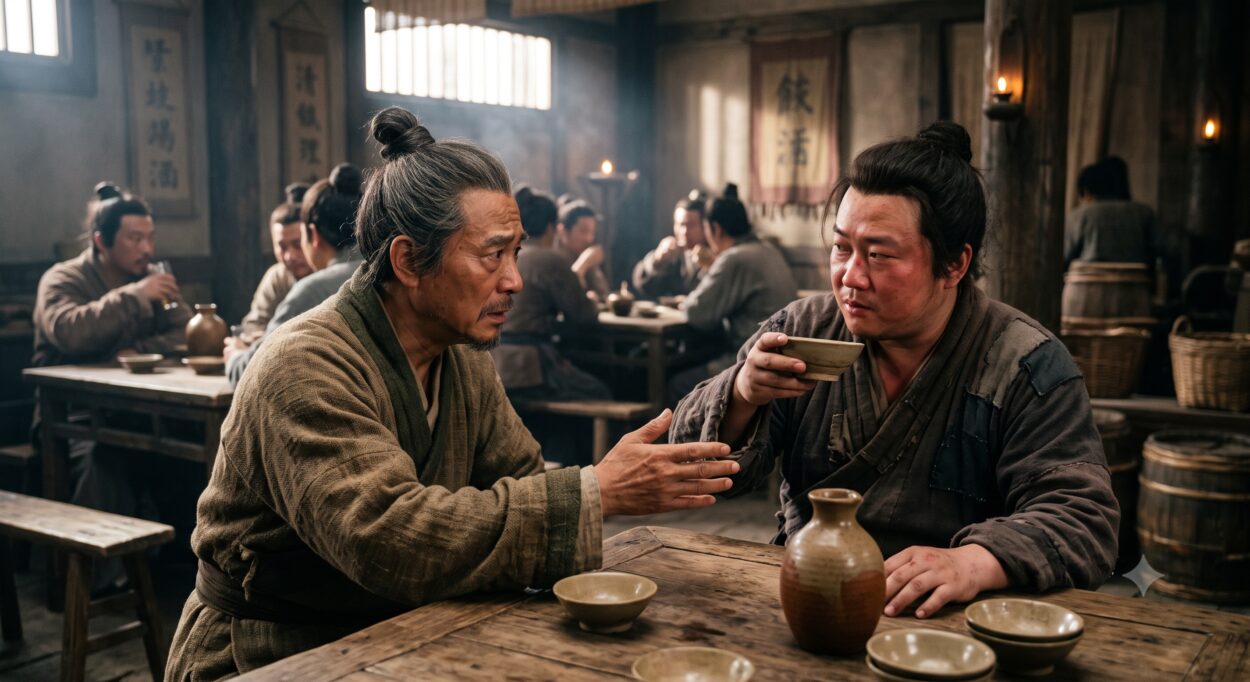
One well-known story illustrates this remarkable ability. While visiting a tavern in Yandu (modern-day Yancheng, Jiangsu), Hua Tuo noticed a man named Yan Xin drinking. After carefully observing him, he warned, “You are showing signs of a serious illness and may be at risk of a stroke. You must stop drinking.” Yan ignored the warning. On his way home, he suddenly collapsed and died the following day. Although the account has a legendary quality, it reflects Hua Tuo’s reputation for extraordinary diagnostic insight. In an era without blood tests, medical imaging, or other modern diagnostic technologies, he relied on careful observation, thoughtful questioning, pulse diagnosis, and years of clinical experience to recognize internal disease from outward signs.
Modern medicine now has access to sophisticated laboratory tests and advanced imaging, yet careful clinical observation remains an essential part of excellent patient care. Many diseases develop silently, producing only subtle clues long before obvious symptoms appear. Changes in facial color, weight, posture, gait, and energy level can all provide valuable diagnostic clues. Hua Tuo’s approach reminds us that great physicians do more than diagnose disease — they carefully observe the whole person, recognize early warning signs, and intervene before illness progresses.
Ma Fei San and Jiaji acupoints: Medical innovation rooted in compassion
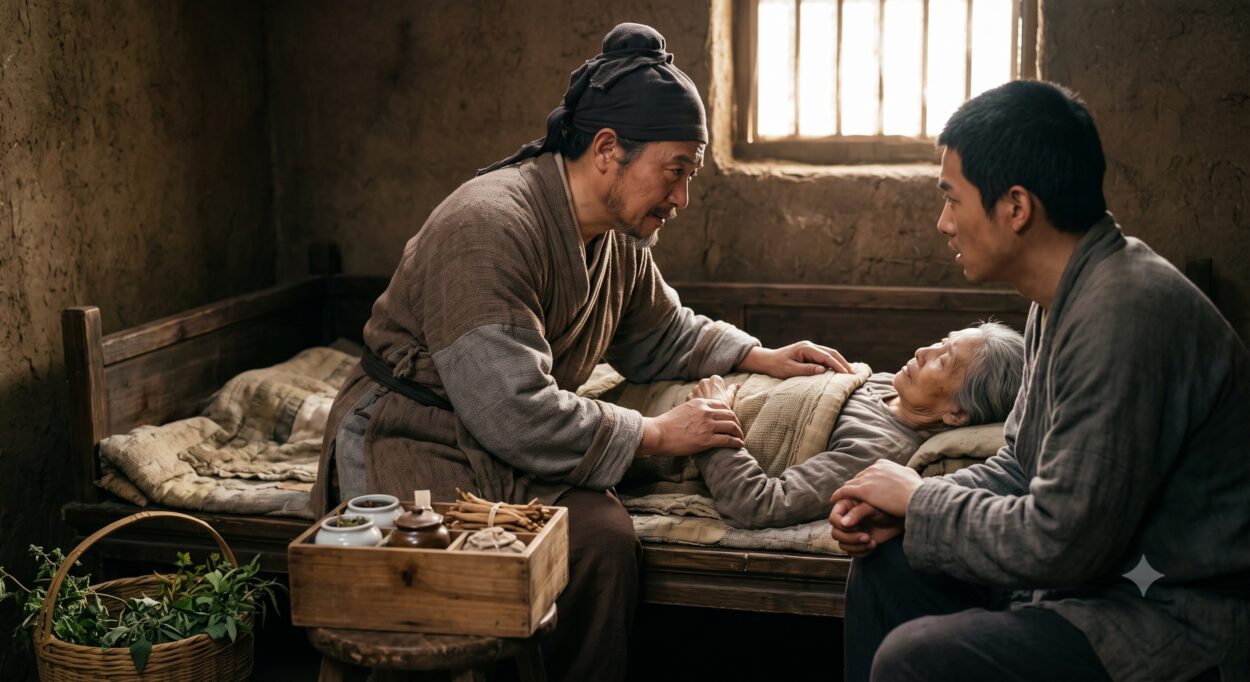
Hua Tuo is best known for his remarkable contributions to surgery. According to the Records of the Three Kingdoms, when tumors or other internal conditions could not be treated with acupuncture or herbal medicine, he recommended surgical removal. To ease the patient’s suffering, he first administered an anesthetic known as Ma Fei San. Once the patient had fallen into a deep, sleep-like state, Hua Tuo would perform the operation to remove the diseased tissue. If the illness involved the stomach or intestines, he would open the abdomen, cleanse the affected area, suture the incision, and apply medicine to promote healing. Historical accounts state that many patients were able to get out of bed within 4 or 5 days and recovered fully within about a month.
If these records are accurate, Hua Tuo may have been one of the earliest physicians in history to combine general anesthesia with surgery. Although the exact formula of Ma Fei San has been lost and the details of his procedures can no longer be fully reconstructed, historical accounts point to something even more enduring than the techniques themselves. In an era without modern anesthesia, pain medications, or aseptic surgical techniques, surgery often meant excruciating pain and carried a high risk of death from shock or infection. Hua Tuo’s effort to relieve surgical pain, therefore, represented more than a remarkable medical innovation — it reflected a profound compassion for those in his care. More than eighteen centuries later, anesthesiology continues to pursue the same goal: minimizing pain while maximizing patient safety. In this sense, Hua Tuo left behind not only a legacy of surgical innovation, but also a philosophy of medicine that places the patient’s well-being at its center.
His compassion was reflected not only in his surgical work, but also in his contributions to acupuncture. According to the Hua Tuo Biezhuan (Biography of Hua Tuo), a man who had become paralyzed and was unable to walk sought Hua Tuo’s treatment. After carefully examining him, Hua Tuo identified several points along both sides of the spine and treated them with moxibustion. Once the treatment wounds had healed, the man reportedly regained the ability to walk. These spinal points later became known as the Hua Tuo Jiaji acupoints.
Today, the Jiaji acupoints remain an important part of clinical acupuncture. Depending on their location, they are used to help treat conditions such as neck and shoulder pain, low back pain, sciatica, and certain nerve compression disorders. Yet Hua Tuo’s most enduring contribution extends beyond any individual acupoint. His approach emphasized looking beyond the site of pain to evaluate the patient as a whole and select the treatment best suited to that individual’s condition. This emphasis on comprehensive assessment and personalized care remains a cornerstone of good clinical practice today.
Tracing to its source: Treating the root cause of disease
Hua Tuo is often honored in Chinese tradition as a “Divine Doctor” (Shenyi, 神医), a title reflecting the extraordinary medical abilities attributed to him in historical accounts. He was remembered not only for his innovations in surgery and acupuncture, but also for his remarkable diagnostic insight — the ability to recognize the hidden causes of illness through subtle signs that others might overlook. Rather than treating symptoms alone, Hua Tuo sought to understand the underlying source of disease before determining the appropriate treatment.
One account in the Records of the Three Kingdoms tells of his treatment of the renowned statesman Chen Deng, who sought medical care for chest discomfort, facial flushing, and a loss of appetite. Chen Deng was a brilliant strategist who played an important role during the Three Kingdoms period, helping Liu Bei gain control of Xuzhou and later assisting Cao Cao in defeating Lü Bu and resisting Sun Ce. Skilled at reading the complex political landscape of his time, he nevertheless paid too little attention to his own health.
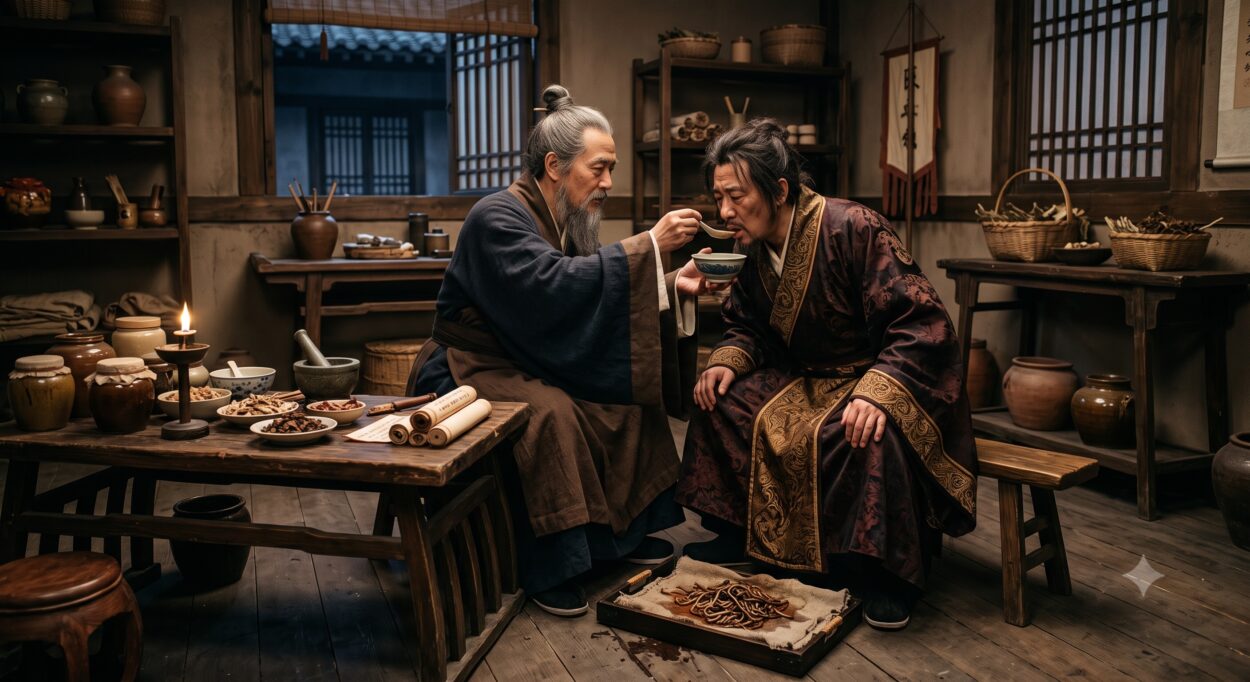
After examining Chen, Hua Tuo did not immediately prescribe medicine. Instead, he asked a seemingly unrelated question: “Do you enjoy eating raw fish?” When Chen replied that he did, Hua Tuo concluded that parasites were the source of his illness. He prepared two doses of medicine, after which Chen reportedly expelled a large number of parasites. His chest discomfort and loss of appetite soon disappeared, and he felt much better.
Although Chen and his family celebrated the recovery, Hua Tuo offered a sobering warning: “This treatment has relieved your illness, but the root of the disease remains. In three years, it may return. If you can find another skilled physician, then there may still be hope.” According to the historical account, Chen’s illness did recur three years later. By that time, Hua Tuo had already passed away, and Chen eventually died from the disease.
Whether every detail of this story is historically accurate is difficult to determine. Yet it illustrates an enduring principle of good medicine: lasting health requires more than relieving symptoms. Effective treatment seeks to identify and address the underlying cause whenever possible.
Perhaps the most remarkable aspect of this account is not simply Hua Tuo’s diagnosis, but his way of thinking. He recognized that treating the immediate problem alone was not enough if the conditions that allowed the illness to develop remained unchanged. True healing requires looking beyond symptoms to understand what caused the disease in the first place.
This principle remains just as relevant today. Research has shown that many chronic diseases — including obesity, type 2 diabetes, hypertension, fatty liver disease, and cardiovascular disease — are closely linked to long-term lifestyle factors such as diet, physical activity, sleep, and stress management. Medications play a vital role, but without addressing these underlying contributors, they often control disease rather than reduce its long-term risk. Although Hua Tuo lived nearly two thousand years before the concept of lifestyle medicine emerged, his emphasis on identifying root causes and preventing recurrence reflects a philosophy that continues to shape modern medical practice today.
See Part 2 here
Translated by Joseph Wu and reviewed by Tatiana Denning
Follow us on X, Facebook, or Pinterest
