
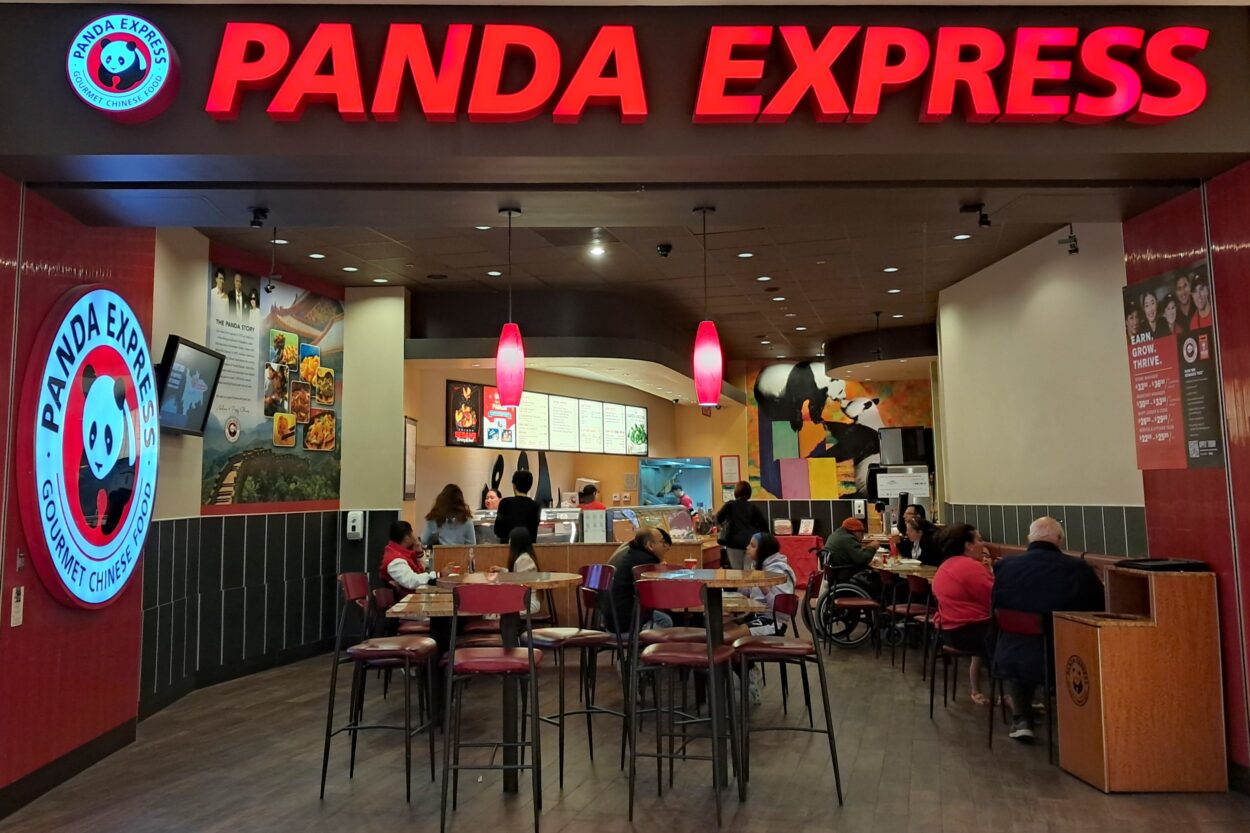
If you were to ask who the two leading overseas Chinese restaurants were, most customers would likely give similar answers: Din Tai Fung and Panda Express.
Interestingly, while both Din Tai Fung and Panda Express are Chinese restaurants and both are highly successful, they offer completely different experiences: one requires you to patiently queue, even waiting one or two hours for a basket of xiaolongbao (soup dumplings); the other invites you into a shopping mall food court, where you can grab a serving of orange chicken and leave within five minutes.
Funnily, both brands are backed by self-made Chinese immigrant families, and both insist on remaining private, unwilling to let the capital market dictate their tastes. Each has built its own legend in the U.S. using completely opposite business philosophies.
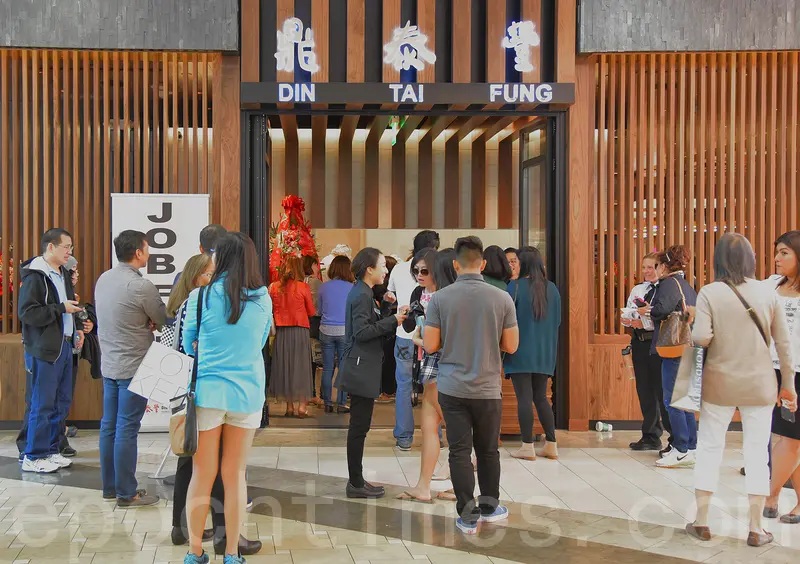
Din Tai Fung: The art of perfecting xiaolongbao
Din Tai Fung’s founder, Yang Bingyi, was born in Shanxi in 1927. During the Chinese Civil War in 1948, he traveled alone by ship to Taiwan and initially worked as a deliveryman for the Heng Tai Feng oil shop in Taipei. In 1958, Heng Tai Feng went bankrupt due to poor management. Yang Bingyi and his wife started their own business, Din Tai Fung Oil Shop, named after their supplier, Ding Mei, and their former employer, Heng Tai Feng, in remembrance of their past friendship.
In 1972, as bottled salad oil became widely available, the oil shop’s business plummeted. Following a friend’s advice, Yang Bingyi converted half of the shop into a Shanghai dim sum shop, where xiao long bao (soup dumplings) unexpectedly became very popular, relying entirely on word of mouth without any advertising. In 1974, Din Tai Fung completely closed its oil shop business and became a restaurant.
In 1993, Din Tai Fung was named one of the “World’s Top Ten Restaurants” by The New York Times. In 1995, Mr. and Mrs. Yang Bingyi retired, and their eldest son, Yang Jihua, took over. They standardized the production of xiaolongbao (soup dumplings), establishing specifications of 5 grams of dough, 6.5 cm in diameter, 16 grams of filling, and 18 folds – the standard that is now known as the famous “Golden Eighteen Folds.” In 2010, the Hong Kong branch earned a Michelin star, the first time a Taiwanese restaurant had received this honor.
Din Tai Fung remains a privately held company to this day. The Yang family says this helps avoid being forced to cut labor costs and sacrifice quality after going public. The company allocates 56% of its revenue to employee salaries, far exceeding the industry average. Currently, Din Tai Fung operates more than 170 branches across more than ten countries and regions worldwide. Founder Yang Bing-Yi passed away on March 25, 2023, at the age of 96.
Panda Express: Bring Chinese food to shopping malls
Panda Express founder Andrew Cherng was born in Yangzhou, Jiangsu Province, in 1948. In 1949, he moved to Taiwan with his parents. His father, Cherng Ming-tsai, was a master chef of Sichuan-Yang cuisine (a fusion of Sichuan and Huaiyang cuisines), and had previously worked as a chef at the Grand Hotel Taipei. It is said that he also cooked for President Chiang Kai-shek.
In 1963, Cherng immigrated to Yokohama, Japan with his family. In 1966, he received a scholarship to study mathematics at Baker University in Kansas, where he met Peggy Cherng, a fellow international student — born in Burma and raised in Hong Kong who later earned a Ph.D. in electrical engineering from the University of Missouri.
On June 8, 1973, Andrew Cherng and his father opened their first Chinese restaurant, “Panda Inn,” in Pasadena, California. On New Year’s Eve 1982, Terry Donahue, the UCLA football coach, and his family dined at Panda Express. They were so impressed with the food that they suggested Andrew open a fast-food version in the food court of a new shopping center in Glendale.
In 1983, the first Panda Express opened, featuring a counter-style, quick-pickup service. In 1987, Chef Andy Kao developed the signature Orange Chicken at the Hawaii branch, solidifying Panda Express’s status as an Americanized Chinese restaurant.
Panda Express has remained private, operating all its U.S. locations as company-owned stores without offering franchises. Peggy Cheng’s background as an engineer allowed her to single-handedly establish the company’s computerized ordering, inventory, and human resources systems, making it one of the first restaurant chains to adopt computerized management. Today, Panda Express has opened more than 2,500 locations worldwide and is the largest Asian-owned, family-operated restaurant chain in the United States.
Two opposite approaches
Both started from scratch but made opposite choices. Din Tai Fung focused on subtraction: perfecting one thing (xiaolongbao), using craftsmanship and service to create a sense of scarcity, making customers willing to queue. Panda Express focused on addition: standardizing and scaling up Chinese cuisine, bringing it to shopping malls, airports, and university campuses, making “eating Chinese food” a simple, everyday activity that could be completed in five minutes.
Interestingly, Andrew Cherng grew up near the kitchen of the Grand Hotel Taipei, sharing the same culinary culture as Din Tai Fung, which later became world-renowned for its exquisite xiaolongbao — one focused on slow, deliberate perfection, the other on rapid, fast-paced perfection. These are perhaps the most intriguing answers to the challenges of Chinese cuisine taking root overseas.
Translated by Elaine and reviewed by Maria.
Follow us on X, Facebook, or Pinterest
