
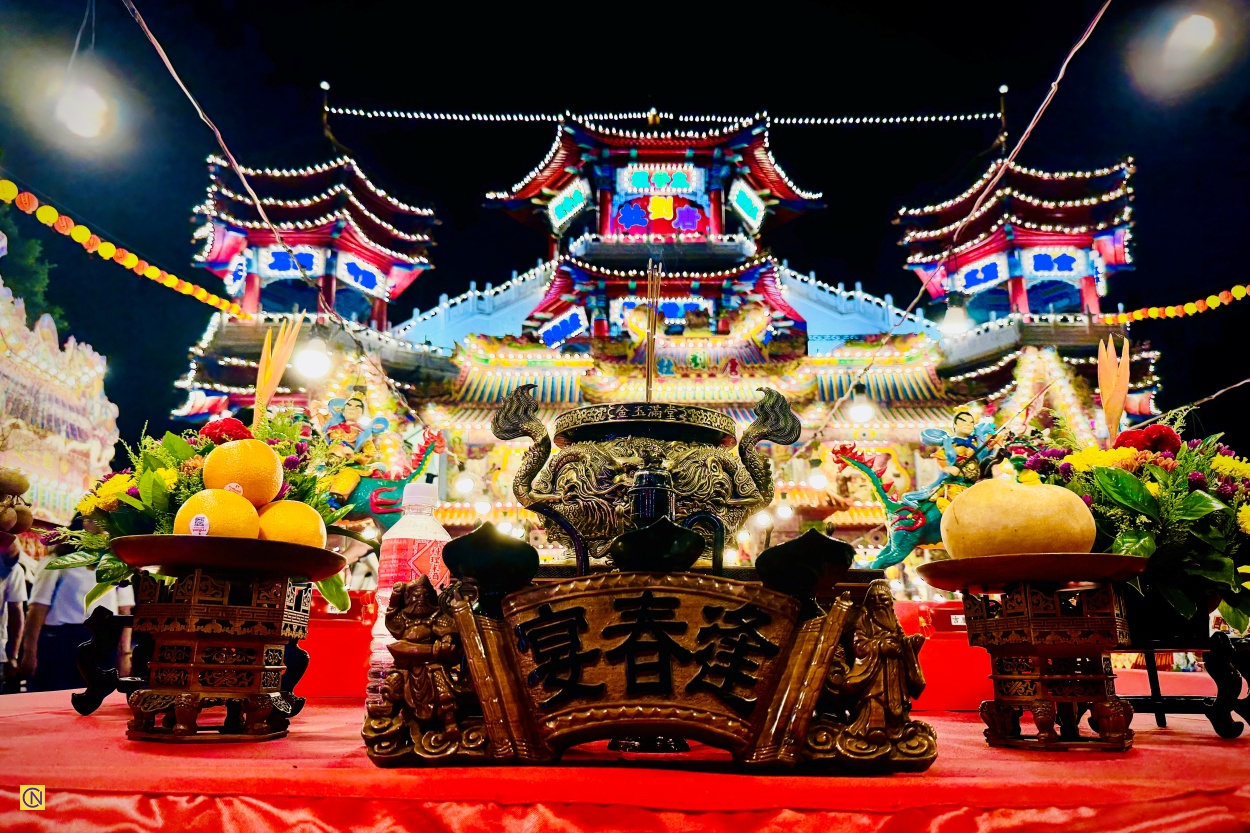
Keelung is a port city in northern Taiwan whose history has been shaped by generations of immigrants, particularly those from Zhangzhou and Quanzhou in Fujian Province, Southern China. Every year during the seventh lunar month, the city comes alive with lanterns, traditional performances, marching bands, and elaborate processions for the Keelung Ghost Festival, also known as the Keelung Mid-Autumn Festival. Established in 1855, the festival celebrated its 172nd year in 2026, with the Liu-Tang-Du Clan Association serving as the rotating main organizer.
The festival emerged from a difficult chapter in Keelung’s history. Conflicts between immigrants from Zhangzhou and Quanzhou over land, water resources, and regional interests once led to violent clashes and considerable loss of life. To prevent further bloodshed, local leaders sought a way to reconcile the communities and honor those who had died. They gradually established a system in which different clan associations took turns organizing communal rituals to pray for the dead and provide offerings to wandering spirits.
In this way, a history of confrontation became a tradition of cooperation. What might once have been settled through violence was gradually replaced by ceremonial competition, traditional performances, and communal participation. The festival thus became a remarkable example of how a society can turn historical wounds into a shared culture of peace and coexistence.
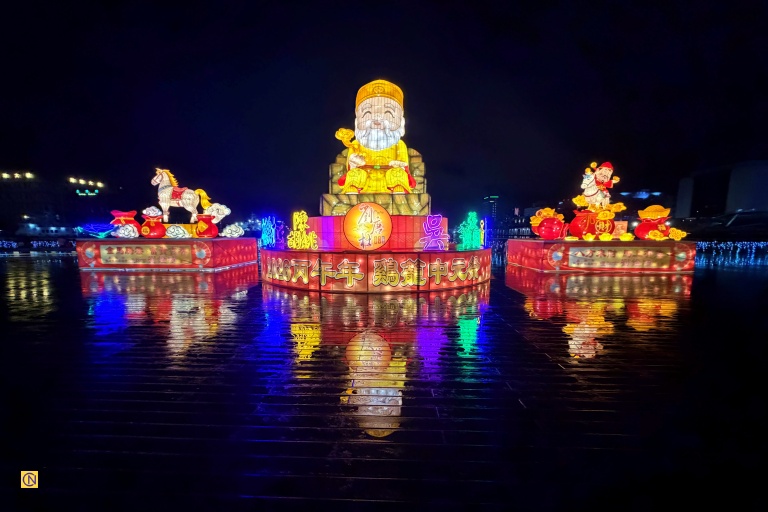
The rotating clan system: A tradition of cultural continuity
One of the Keelung Ghost Festival’s most distinctive features is its rotating system of main organizers. Fifteen clan associations take turns serving as the principal organizer, each assuming responsibility for the annual ceremonies and related activities.
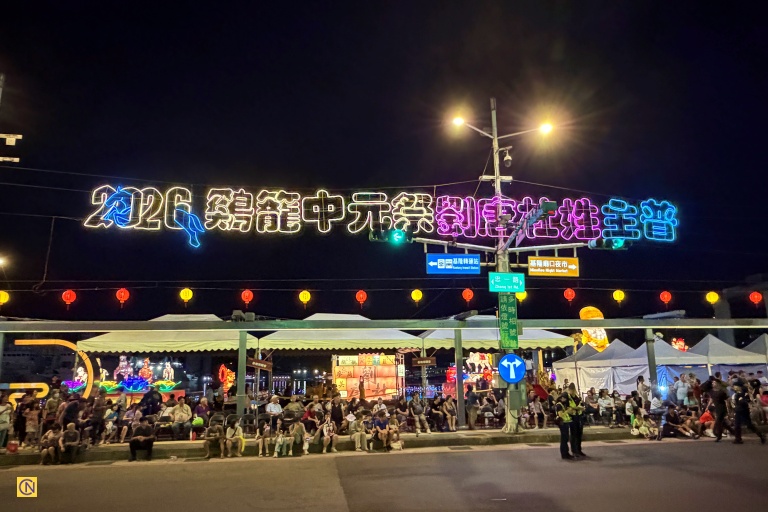
In 2026, the Liu-Tang-Du Clan Association took the lead. However, the festival is far more than the responsibility of one clan. Other clan associations, community organizations, performers, volunteers, and government agencies all help bring the month-long celebration to life.
The annual handover represents more than an administrative transition. It is a cultural relay passed from one generation to another, ensuring that a tradition more than a century and a half old remains a living part of Keelung’s identity.
A month of rituals, lanterns, and processions
The 2026 festival runs from August 12 to September 11, beginning with the Opening Lantern Night and concluding with the closing of the shrine doors and the ceremonial transfer of the incense burner.
Among the major events are the Opening of the Shrine Gates, the Lighting of the Lanterns, the Welcoming of the Dipper Lanterns, the Grand Water Lantern Procession, and the General Salvation ceremony. Together, these rituals form a month-long cultural journey that blends solemn religious traditions with spectacular public celebrations.
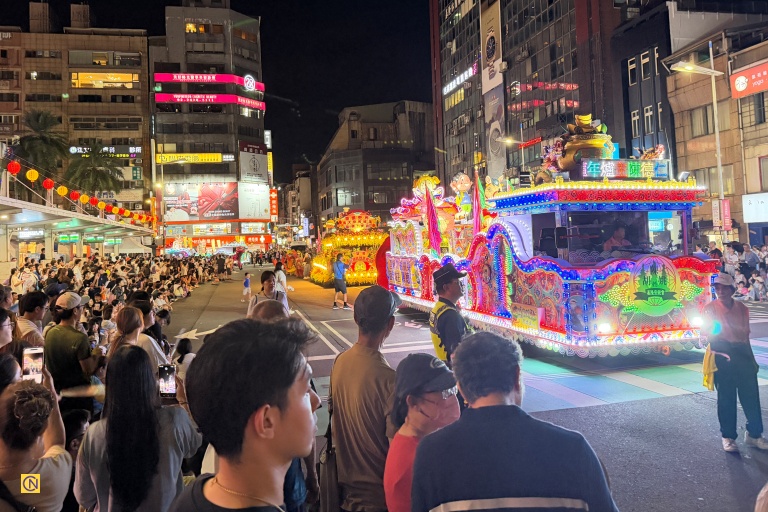
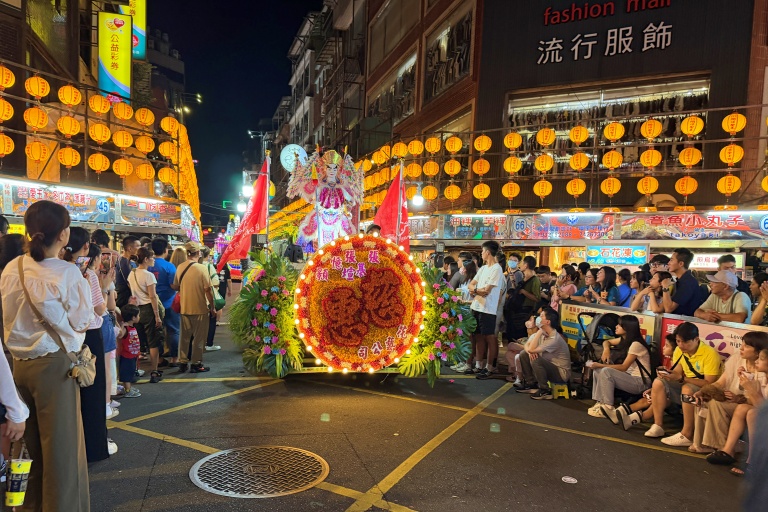
The Grand Water Lantern Procession on the 14th day of the seventh lunar month is perhaps the most spectacular event. Elaborately decorated floats, traditional performing troupes, drummers, musicians, and towering water-lantern heads wind their way through the streets of Keelung. After the procession, the lantern heads are carried to Wanghaixiang in Badouzi, where they are set ablaze and released toward the sea.
The drifting lanterns symbolize sending prayers and blessings to deceased ancestors and wandering spirits. Traditionally, the farther a lantern travels and the stronger its flames burn, the more auspicious the signs are believed to be.
The main altar shines through the night
The solemnity of the water-lantern ceremony continues into the following day at the Main Altar, or Zhupu Altar (主普壇). Meticulously decorated with thousands of twinkling lights, the Main Altar becomes one of Keelung’s most striking nighttime landmarks, creating a magnificent contrast between traditional ritual and contemporary visual spectacle.
At the Main Altar, the General Salvation ceremony is held to pray for and provide offerings to wandering spirits and those without descendants to care for them. The ceremony reflects the central spirit of the Ghost Festival — compassion extending beyond family and clan boundaries to embrace all souls.
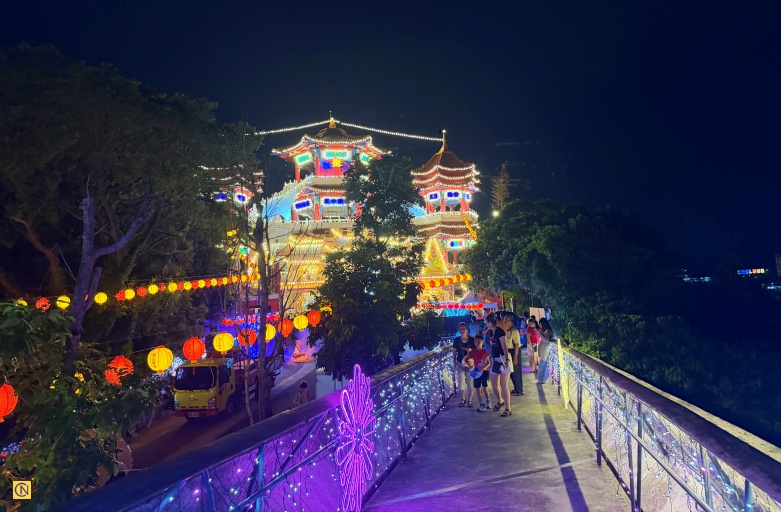
For visitors, the scene offers more than a spectacular display of lights. Beneath the brilliant illumination lies a deeply rooted cultural message: remembrance, compassion, and respect for the deceased are shared community responsibilities. The Main Altar therefore serves as both the festival’s spiritual heart and a powerful symbol of Keelung’s tradition of inclusiveness.
When tradition meets contemporary creativity
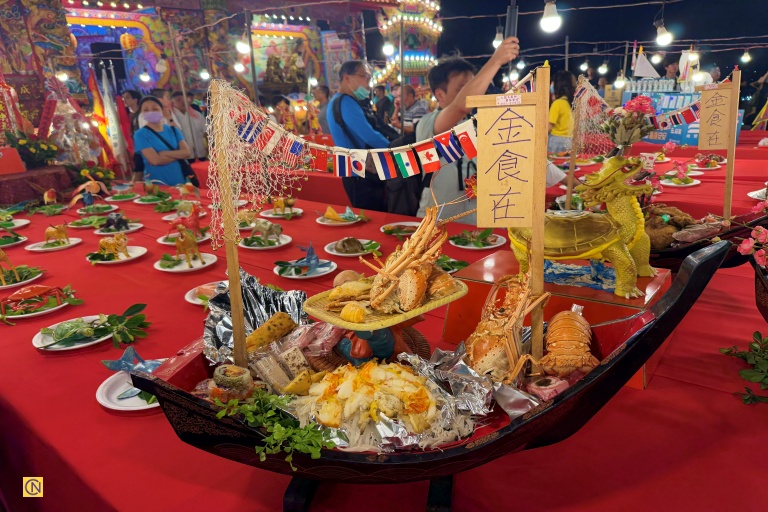
The 2026 festival also demonstrates that preserving tradition does not mean keeping it frozen in time. Alongside centuries-old rituals, the festival incorporates art installations, cultural performances, music events, and themed pop-up activities.
Contemporary artistic interpretations of traditional symbols, particularly lanterns and water-related imagery, connect Keelung’s folk traditions with its identity as an ocean city. Traditional processions, Beiguan music, elaborate floats, and ceremonial rituals now coexist with contemporary art and creative events, offering younger generations new ways to encounter their cultural heritage.
A living heritage of reconciliation
The deeper significance of the Keelung Ghost Festival lies not simply in its 172-year history, but in the values it represents. What began as an effort to heal divisions has evolved into a tradition that brings different clans, communities, and generations together.
The festival is Taiwan’s first traditional custom to be designated a National Important Folk Custom. The Tourism Administration has also recognized it as one of Taiwan’s 12 major local festivals and selected it as an international-level event in the 2026–2027 Taiwan Tourism Calendar.
After 172 years, the Keelung Ghost Festival is far more than a religious ceremony or historical remembrance. It is a living expression of the city itself — connecting the past with the present, tradition with creativity, and historical differences with a shared future.
When lanterns illuminate the harbor, drums echo through the streets, the Main Altar glows against the night sky, and water lanterns drift toward the open sea, Keelung once again tells a story that began more than a century and a half ago: tradition survives not simply because rituals are preserved, but because their spirit continues to bring people together.
Follow us on X, Facebook, or Pinterest
