

The table in the Beijing restaurant had been loud a moment before. Then the visitor, waiting for the next dish, pushed his chopsticks upright into his bowl of rice and let go. They stood there, two thin poles rising from the white grains. Nobody said anything. An older woman lifted them out and laid them across the rim of the bowl. He had not been rude. He simply didn’t know that Chinese chopstick etiquette gives that gesture a name.
Most guides hand you a list of don’ts and leave it at that: don’t point, don’t tap, don’t stab. What they rarely tell you is that each of these prohibitions carries a four-character Chinese name, and that every one of those names is a small picture. One describes the boards of a coffin. One describes incense burning on an ancestor’s altar. One describes a beggar knocking an empty bowl for coins. Learn the names, and the rules stop being a minefield of foreign offense. They become something closer to a language: the way generations of Chinese families taught children to notice the people sitting beside them.
What follows are 13 taboos. Twelve come from a widely circulated folk tradition, each with a Chinese name and an image hidden inside it. The 13th is one that Chinese tables have added within living memory.
The 13 chopstick taboos at a glance
- Never lay chopsticks of uneven length on the table (三长两短). The shape recalls a coffin.
- Never point with your chopsticks (仙人指路). Pointing reads as accusing.
- Never suck or lick the ends (品箸留声). A sign of poor upbringing.
- Never tap your bowl or plate (击盏敲盅). This is what beggars did.
- Never hover indecisively over the dishes (执箸巡城). Choose, then reach.
- Never dig through a shared dish (迷箸刨坟). It resembles robbing a grave.
- Never let sauce drip as you carry food (泪箸遗珠). Move slowly, over your own bowl.
- Never eat with the wrong end (颠倒乾坤). It suggests you have abandoned dignity.
- Never stab food with a single chopstick (定海神针). It insults everyone at the table.
- Never stand chopsticks upright in rice (当众上香). This mirrors incense for the dead.
- Never lay your chopsticks crossed (交叉十字). A cross cancels what it touches.
- Never drop chopsticks on the floor (落地惊神). It disturbs the ancestors below.
- Never take from a shared dish without serving chopsticks (公筷). The newest rule of all.
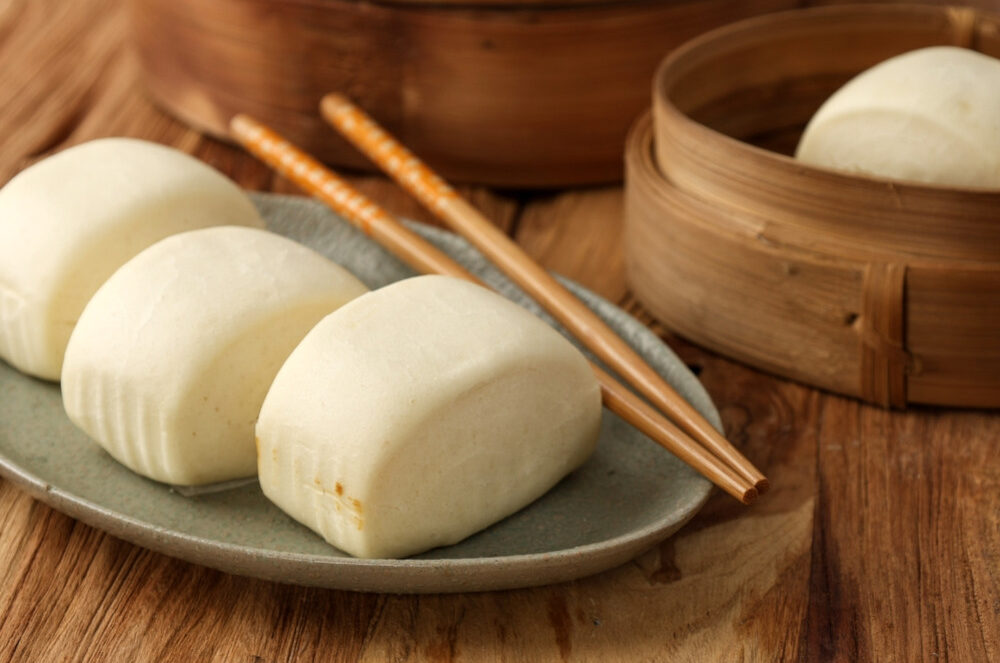
Why Chinese chopstick etiquette carries so much weight
To understand why a pair of bamboo sticks can carry so much meaning, it helps to know how long they have been on the table.
The oldest chopsticks we can actually hold are six bronze rods, roughly 26 centimeters long, excavated from the Ruins of Yin (殷墟, Yinxu) near Anyang in Henan Province. They date to around 1200 BCE, during the Shang Dynasty. Curiously, scholars believe they were not eating utensils at all, but cooking tools used to reach into boiling pots. The oldest surviving instruction for using them is almost as old: the classical Book of Rites (礼记, Lǐjì) tells diners that for broth with vegetables, one uses chopsticks; for broth without, one does not.
People have been told how to handle these things for well over 2,000 years. By the Han Dynasty, chopsticks had joined the spoon at the table. By the Ming Dynasty, they had taken over almost entirely, along with the modern name and shape. Historian Q. Edward Wang traces this whole arc in Chopsticks: A Cultural and Culinary History, the standard scholarly account. If the story itself draws you in, we have explored the long history and legends of chopsticks in more depth elsewhere.
The name changed along the way, and the reason is a superstition. The old word was 箸 (zhù), which sounds exactly like 住 (zhù), meaning “to stop.” Boatmen on China’s rivers wanted nothing to do with a word that wished their journey to a halt. They said 快 (kuài), “fast,” instead. The bamboo radical 竹 was later added on top, and 筷子 (kuàizi) is what a billion people say today. The Ming scholar Lu Rong recorded the habit in his 15th-century notebook Shuyuan Zaji (《菽园杂记》).
That is the crucial thing to grasp. Chinese chopstick etiquette is not fussiness about cutlery. It grew out of a culture that treats objects as capable of picturing things, and pictures as capable of calling things toward you. Behind it sits lǐ (礼), the sense of propriety that Chinese thinkers counted among the anchors of a virtuous life. The table was the first classroom where a child learned it.
Four taboos that speak of death
Four of the 13 taboos have nothing to do with hygiene or noise. They exist because the gesture, held still for a moment, looks like something else.
1. 三长两短 (sān cháng liǎng duǎn): ‘Three Long, Two Short’
Never leave mismatched chopsticks lying on the table, one longer than the other, or a spare stick beside a pair.
The image is a coffin. Before the lid is set in place, a traditional Chinese coffin is five boards: two short ones at the head and foot, three long ones forming the sides and bottom. Three long, two short. The phrase became a standing idiom in Chinese for sudden death or unexpected calamity, and it is still used that way in ordinary speech, far from any dinner table. To lay uneven chopsticks down is to sketch the shape of that box in front of your guests. Straighten them, tips aligned, before you set them down. Chinese folklorists have documented the belief among diaspora families as a living piece of oral tradition, passed from grandmother to grandchild rather than from any book.
2. 当众上香 (dāng zhòng shàng xiāng): ‘Offering Incense in Public’
Never plant your chopsticks upright in a bowl of rice. This is the taboo the visitor in Beijing stumbled into, and the one nearly every guide mentions without explaining.
At a Chinese funeral, and on the household altar afterward, a bowl of rice is offered to the dead with incense standing in it. The joss sticks rise straight from the grain. In Chinese tradition, incense carries a family’s thoughts to its ancestors, which is why its shape matters so much. A pair of chopsticks pushed vertically into a rice bowl reproduces that image exactly. The name of the taboo says so plainly: you are offering incense, in public, to no one.
This is the strictest rule of all, and it holds across the chopstick-using world, from China to Japan, Korea, and Vietnam, wherever a rice offering accompanies the dead. Be especially careful when handing a filled bowl to someone else, where mistakes most often happen. Rest the chopsticks across the rim or on a chopstick rest instead.
3. 交叉十字 (jiāo chā shí zì): ‘Crossing Into a Cross’
Never leave your chopsticks lying crossed on the table like the character 十.
A cross, in the older Chinese imagination, is a mark of cancellation. It is what a teacher draws through a wrong answer, and it is what once appeared on a confession extracted in a magistrate’s court. To cross your chopsticks is to draw that mark across the meal and, by extension, across the company you are keeping. Diners took it as a quiet insult, and as a slight against yourself for permitting it. Lay them parallel instead, tips pointing away from your neighbors.
4. 落地惊神 (luò dì jīng shén): ‘Falling to the Ground, Startling the Spirits’
Never drop your chopsticks on the floor.
The ancestors rest beneath the earth, and they are not to be disturbed. Chopsticks clattering on the ground above them is a small violence against filial piety, the deepest of Chinese family virtues. Should it happen, folk custom offers a remedy rather than a shrug. Pick them up, draw a cross on the ground with them, east to west and then north to south, and offer a quiet apology to the ones below. Then carry on with the meal.
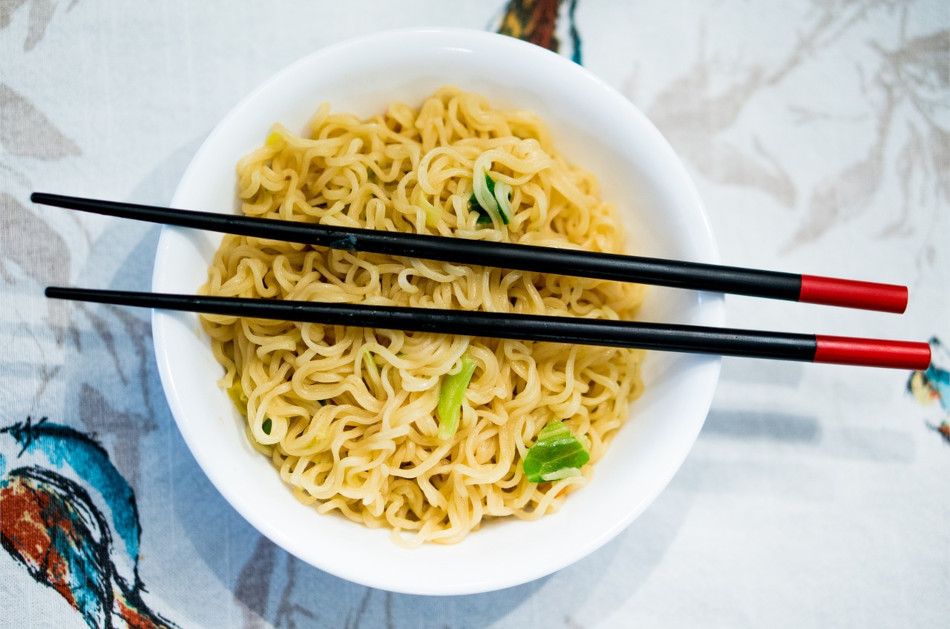
Three taboos that speak of disrespect
Three more concern the living and what your chopsticks are saying to them without your permission.
5. 仙人指路 (xiān rén zhǐ lù): ‘An Immortal Points the Way’
Never point at anyone with your chopsticks, and never let your index finger stretch out along them while you hold them.
The name is gently sarcastic. You are not an immortal, and you are not showing anyone the road. In China, an extended index finger aimed at a person’s face is the gesture of an accusation or a public scolding. The hand that holds the chopsticks correctly keeps that finger curled. Gesture with an open palm if you must gesture at all, and lay the chopsticks down while you talk.
6. 定海神针 (dìng hǎi shén zhēn): ‘The Sea-Calming Divine Needle’
Never spear your food with a single chopstick.
The name borrows the Monkey King’s legendary iron staff, the pillar that held the seas in place. Driving one chopstick into a piece of meat like a harpoon is not clumsiness; it is read as an act aimed at the whole table. Chinese sources compare its force to raising a middle finger in Europe. If a piece of food defeats you, and some do, ask for it to be cut, or use the flat of both chopsticks together beneath it. Never impale it.
7. 击盏敲盅 (jī zhǎn qiāo zhōng): ‘Striking the Cup, Knocking the Bowl’
Never drum on your bowl, plate, or cup with your chopsticks.
Tapping tableware was how beggars once drew the attention of passersby, striking an empty bowl until a coin landed in it. To do it at a laid table is to cast yourself as destitute and your host as slow to feed you. The taboo survives in modern restaurants in a slightly different form: an impatient customer rapping a bowl for service is committing the same offense his great-grandfather would have recognized.
Five taboos that speak of upbringing
The next five say nothing about death or insult. They are quieter than that. In Chinese, a child who breaks them is said to be 没家教, without home teaching, and the judgment falls on the parents as much as the child. Ancient families believed, reasonably enough, that chopstick habits reveal a person’s character.
8. 品箸留声 (pǐn zhù liú shēng): ‘Savoring the Chopsticks, Leaving a Sound’
Never put the ends of your chopsticks in your mouth to suck or chew them, and above all, never make a noise doing it. Chopsticks carry food. They are not the food.
9. 执箸巡城 (zhí zhù xún chéng): ‘Patrolling the City’
Never let your chopsticks wander back and forth above the dishes while you decide. The image is of a sentry pacing the walls, and it announces that your appetite matters more than anyone else’s turn. Look first, choose, then reach once.
10. 迷箸刨坟 (mí zhù páo fén): ‘Lost Chopsticks, Digging a Grave’
Never root around inside a shared dish, turning the food over to find the piece you want. The name is unsparing: you are a grave robber, excavating what belongs to everyone. Take what is nearest, from the top.
11. 泪箸遗珠 (lèi zhù yí zhū): ‘Weeping Chopsticks, Dropping Pearls’
Never let sauce or broth drip from your chopsticks as you carry food back to your bowl. The trail of drops is the “weeping.” Move slowly, keep your own bowl beneath the food as you travel, and lift a small plate to meet it if the distance is long.
12. 颠倒乾坤 (diān dǎo qián kūn): ‘Turning Heaven and Earth Upside Down’
Never eat with the thick, blunt ends of your chopsticks. Hunger is no excuse; the gesture says you were too ravenous to check which way round they were. Heaven and earth, in the name, have swapped places. So has your dignity.
The 13th taboo: Forgetting the serving chopsticks
The 12 taboos above are old. The 13th is not, and that is precisely what makes it worth knowing.
Chinese meals are communal by design. Dishes sit at the center, and everyone reaches. For most of that long history, everyone reached with the chopsticks they were eating from. Over the past few decades, and sharply since 2020, Chinese households and restaurants have embraced 公筷 (gōngkuài), “public chopsticks”: a dedicated pair that lives beside each shared dish and never touches anyone’s mouth. Their counterpart is:
13. 私筷 (sīkuài): ‘Your Own Private Pair’
The etiquette is simple. Serve yourself with the public chopsticks, set them back on the dish, and eat with your own. Never mix the two. Many restaurants now provide pairs in different colors or lengths so the distinction is impossible to miss. Some families keep a spare pair at each place setting.
What makes this taboo remarkable is that you can watch it forming. A culture that spent 3,000 years encoding its table manners into four-character poems has, in one generation, added a 13th rule for reasons that have nothing to do with coffins or ancestors and everything to do with public health. Chinese chopstick etiquette here is not a sealed museum case. It is still being written, which is exactly what living traditions do. The rest of the table has its own grammar too, and we have set out Chinese dining etiquette beyond the chopsticks separately.

Chopstick etiquette in China, Japan, and Korea
Travelers often assume that Chinese chopstick etiquette travels with the utensil. Most of it does, but not all, and visitors slip up on the exceptions. Chopsticks spread outward from China to Korea, Vietnam, and Japan by roughly 500 CE, as the Smithsonian’s history of the utensil recounts, and each culture bent them to its own table. Chinese and Japanese chopsticks differ in shape as much as in the rules that govern them, and Korean practice diverges from both.
| Practice | China | Japan | Korea |
|---|---|---|---|
| Chopsticks upright in rice | Forbidden (funeral incense) | Forbidden (tate-bashi) | Forbidden |
| Passing food chopstick to chopstick | Avoided | Strong taboo (recalls the bone-passing rite after cremation) | Avoided |
| Rubbing disposable chopsticks together | Unremarkable | Rude; implies your host bought cheap chopsticks | Rare; chopsticks are metal |
| Lifting your bowl to eat | Normal and expected | Normal and expected | Rude; the bowl stays on the table |
| Everyday material and shape | Bamboo or wood, longer, blunt tips | Wood or lacquer, shorter, tapered to a point | Metal, flat, always paired with a spoon |
| The spoon | For soup only | Seldom used | Used for rice and soup; chopsticks handle side dishes |
| Tapping bowls | Forbidden (a beggar’s gesture) | Rude | Rude |
Two differences most often catch people out. Rubbing disposable chopsticks together to remove splinters is an ordinary reflex in China and a small insult in Japan. And lifting your rice bowl toward your mouth, which is simply how one eats in China and Japan, is poor manners in Korea, where the bowl stays down, and the spoon does the work.
Questions people ask about chopstick etiquette
Why can’t you stick chopsticks upright in rice?
Standing chopsticks upright in a rice bowl mirrors incense burning in an offering bowl at a funeral or on an ancestor’s altar. The gesture has a name in Chinese, 当众上香, “offering incense in public.” Because it reproduces a rite for the dead, performing it at an ordinary meal is understood as inviting death to the table.
Is it rude to point chopsticks at someone?
Yes. A pointed finger aimed at someone’s face is an accusation in Chinese culture, and chopsticks extend the finger’s reach. The taboo is called 仙人指路, “an immortal points the way.” Set the chopsticks down before you gesture, and keep your index finger curled while holding them.
What does crossing chopsticks mean?
Crossed chopsticks form the character 十, a cross. Historically, a cross marked a wrong answer or a confession made under duress, so the shape carries the sense of cancellation and bad fortune. Laying them crossed on the table (交叉十字) reads as a slight to your companions. Rest them parallel instead.
Why is passing food from chopstick to chopstick taboo?
This prohibition is strongest in Japan, where it recalls kotsuage, the rite in which relatives pass a cremated loved one’s bones from chopstick to chopstick. Chinese diners avoid it too, though the association is less codified. Set the food on the other person’s plate rather than handing it across.
Is it rude to rub disposable chopsticks together?
In China, no; it is a common way to clear splinters from cheap wooden chopsticks. In Japan, yes. Rubbing them in front of your host implies the chopsticks they provided were low quality. When in doubt, examine them quietly and rub only if you truly must.
Where should you rest your chopsticks when not eating?
Use the chopstick rest if one is provided. Otherwise, lay them parallel across the rim of your bowl or on the paper sleeve they came in, tips pointing away from the people beside you. Never leave them standing in food, crossed, or resting on the tablecloth.
The grammar of the table
Read the 13 taboos together and something shifts. Nine of them are not really about chopsticks at all. They are about the coffin you must not sketch in front of a friend, the incense you must not offer at a living table, the beggar you must not make of yourself, the ancestors you must not wake, and the neighbors whose turn at the dish is as good as yours. Chinese chopstick etiquette is a grammar of attention. Every rule points away from the person holding the sticks and toward everyone else in the room. This is why the rules were taught as pictures rather than prohibitions. A child told “don’t tap your bowl” learns a restriction. A child told the name 击盏敲盅, and shown the beggar in it, learns to see. That kind of teaching lasts.
You will not offend anyone by forgetting a rule. In practice, Chinese hosts are gracious and delighted that a guest tried at all. But knowing what your hands are saying is a form of respect that no apology can substitute for, and it is available to anyone willing to look at a pair of bamboo sticks and see five boards, a stick of incense, and a crowded table of people worth noticing. The same care runs through the art of bowing as a study in cultivation, and through much of what tradition asks of the body.
Pick up your chopsticks. Straighten them. Then look up at the people you are eating with. That was always the point. Follow these rules when using chopsticks so you don’t offend anyone.
Follow us on X, Facebook, or Pinterest
