
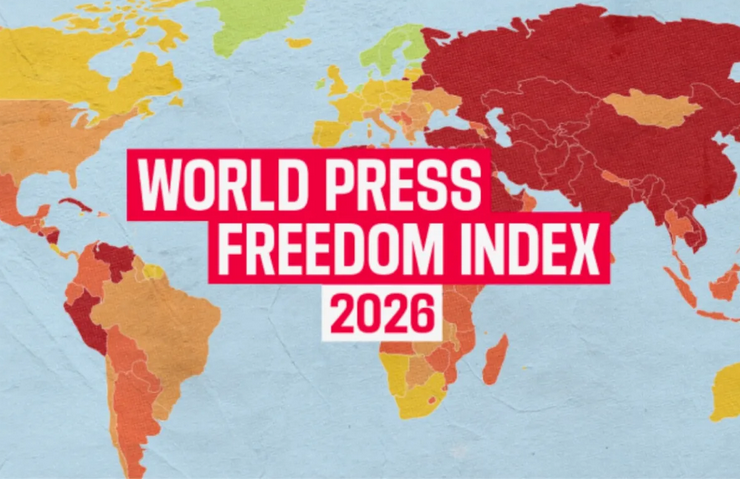
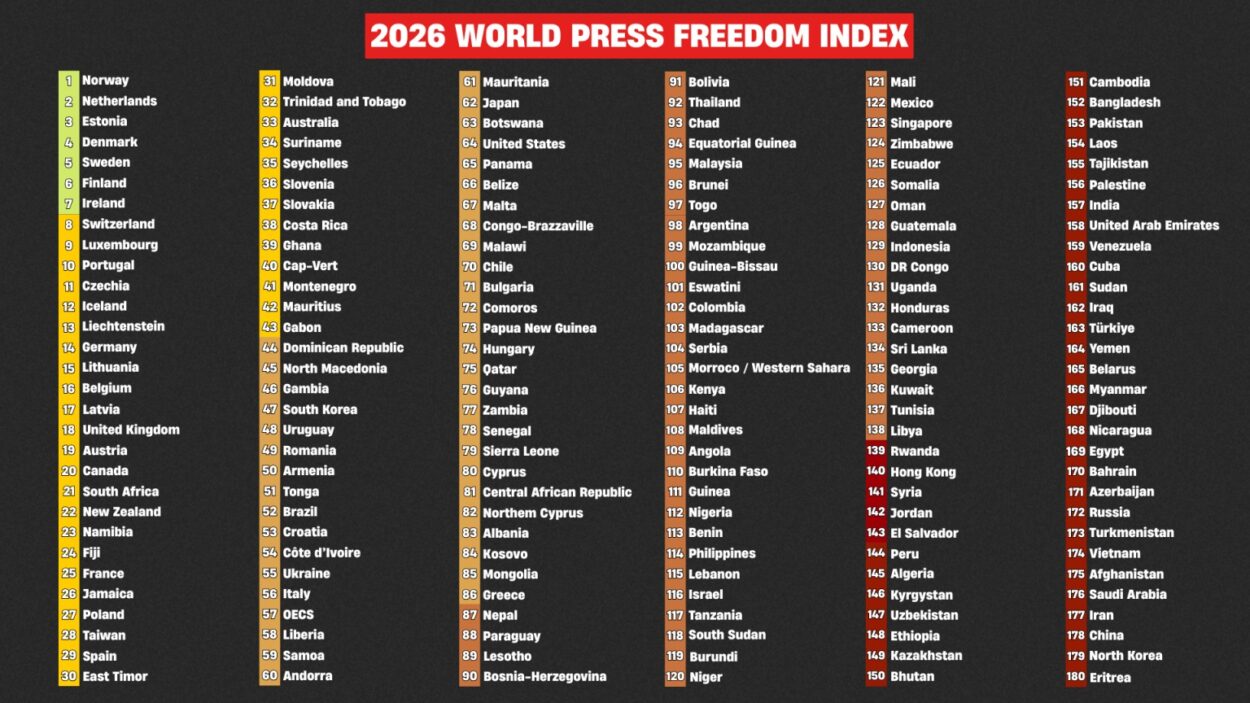
Reporters Without Borders (RSF) released its 2026 World Press Freedom Index, in which Hong Kong ranked 140th and remained in the lowest category, “Very Poor,” while Taiwan ranked 28th, placing first in Asia; China ranked third from the bottom (178th).
Hong Kong rated ‘Very Bad,’ ranked 140th
According to a report by Voice of America, Reporters Without Borders released its 2026 World Press Freedom Index report on April 30. The report shows that among the 32 countries and regions included in the Asia-Pacific rankings, 21 were classified as having “Difficult” or “Very Difficult” levels of press freedom. These regions are among the most repressive in the world, and the situation continues to deteriorate. Alarmingly, authoritarian governments in these regions — led by the Chinese Communist Party — have developed numerous censorship and propaganda tactics that have now even extended across borders into other countries.
The report states that over the past 25 years, the information landscape in some countries has become increasingly restricted due to political upheavals and the growing authoritarianism of their regimes. Take Hong Kong, for example: since Beijing tightened its control, the situation has worsened. Hong Kong has ranked 140th for two consecutive years, with its score dropping slightly from 39.86 last year to 39.49 this year, primarily due to declines in the political, economic, and social indicators.
The report notes that Hong Kong was once a bastion of press freedom; since the implementation of the National Security Law in 2020, press freedom has suffered a series of unprecedented setbacks. The report also notes that Jimmy Lai, founder of Apple Daily, received a heavy sentence under the draconian National Security Law. In February of this year, he was sentenced to 20 years in prison on charges related to the National Security Law, including “conspiracy to collude with foreign forces.”
The Hong Kong Special Administrative Region government strongly condemned the report, calling the rankings unreliable and criticizing Reporters Without Borders for “whitewashing” Jimmy Lai.
China is the world’s largest prison for journalists
The report noted that China ranked 178th (third from the bottom). Due to repression by the Chinese Communist Party, press freedom in China remains unchanged; the country’s major media outlets are still state-owned enterprises directly controlled by the authorities. In the eyes of the Chinese Communist Party, the media serves as the Party’s mouthpiece, spreading government propaganda. Independent journalists and bloggers who dare to report on sensitive issues are frequently subjected to surveillance, harassment, and detention by the authorities, and in some cases, even tortured. The report also notes that China is the world’s largest jailer of journalists, with a total of 121 media professionals currently behind bars.
The report states that press freedom has declined in countries such as Iraq, Sudan, and Yemen due to the impact of war. Russia, which continues to wage war against Ukraine, remains one of the countries with the worst press freedom records (ranked 172nd); Iran (ranked 177th) also remains near the bottom of the list.
Taiwan ranks 28th, topping Asia
The report notes that Taiwan ranks 28th globally, down four spots from 2025, but still tops the list among Asian countries. The report finds that Taiwan faces challenges in maintaining information credibility. In this year’s rankings, Norway retained the top spot for the tenth consecutive year, followed by the Netherlands in second place and Estonia in third. Eritrea ranked last for the third consecutive year, coming in at 180th. As for the United States, its ranking dropped seven places to 64th due to factors such as political pressure.

The global press freedom environment is deteriorating
Reporters Without Borders believes the global press freedom environment is deteriorating overall. This is the first time in the history of the Reporters Without Borders Press Freedom Index that more than half of the world’s countries have been classified as having “difficult” or “very difficult” press freedom conditions, and the overall average score for the countries evaluated is also the lowest on record. The report also noted that among the five indicators used to assess global press freedom—including economic, legal, security, political, and social environments—the legal indicator saw the sharpest decline this year.
Jimmy Lai’s harsh sentence creates a chilling effect
According to a report by Chasing the Light regarding the current state of press freedom in Hong Kong, Yan Baogang, chairman of the Hong Kong Overseas Media Association (HKMO), pointed out that the 140th-place ranking is close to that of authoritarian states, standing in stark contrast to Hong Kong’s former position among the top-ranked nations.
Yim Po-kong said the heavy sentences handed down to Next Media founder Jimmy Lai and senior Apple Daily executives have created a significant chilling effect in the industry. Furthermore, reporters from independent media outlets such as Independent Media have been harassed by unknown individuals, yet law enforcement agencies have turned a blind eye. Deprived of financial support, the Hong Kong team of the credible Yahoo News was ultimately forced to cease operations, highlighting the drastic shrinking of the media’s ability to hold the government accountable.
Translated by Eva and reviewed by Amanda
Follow us on X, Facebook, or Pinterest
